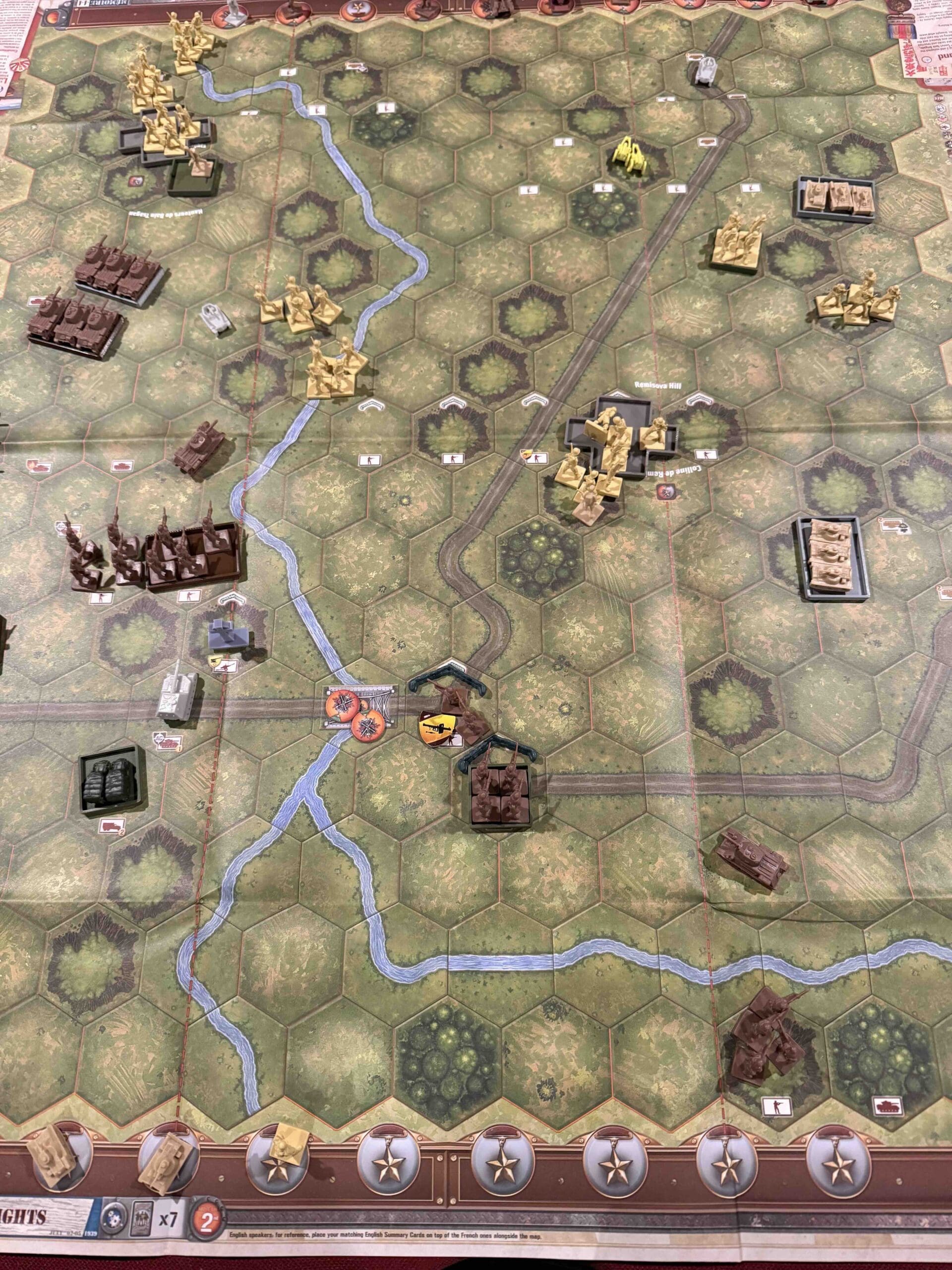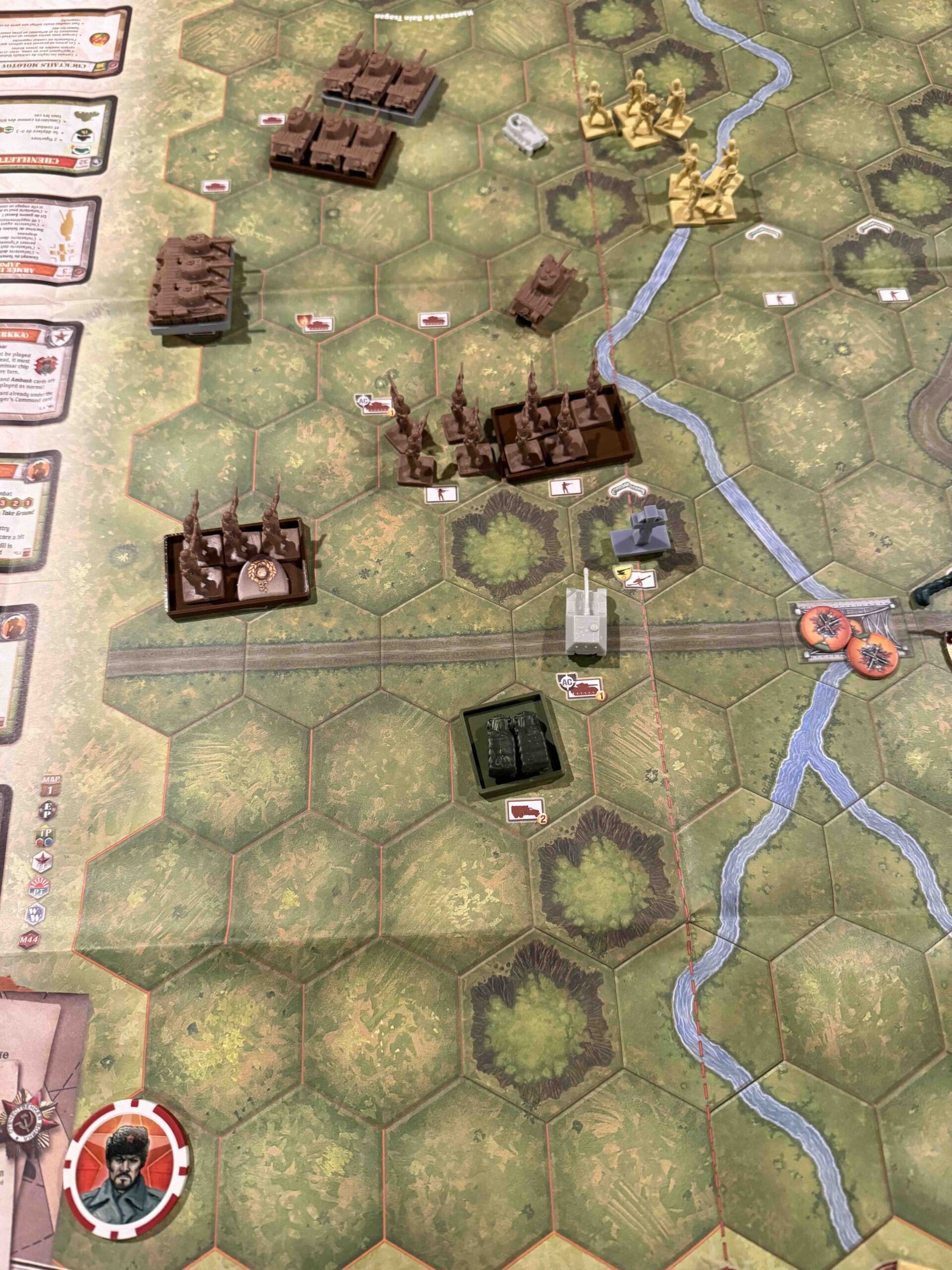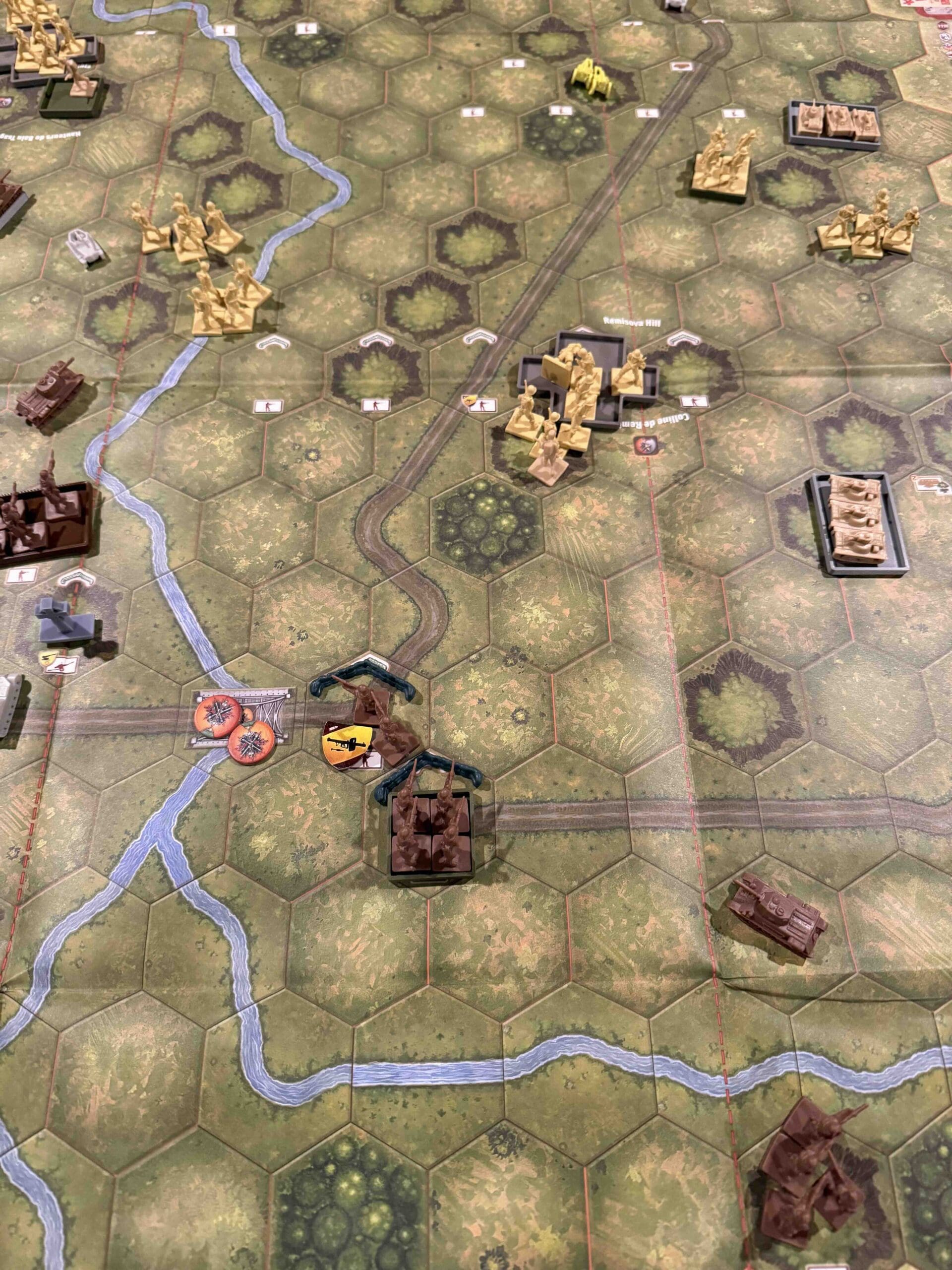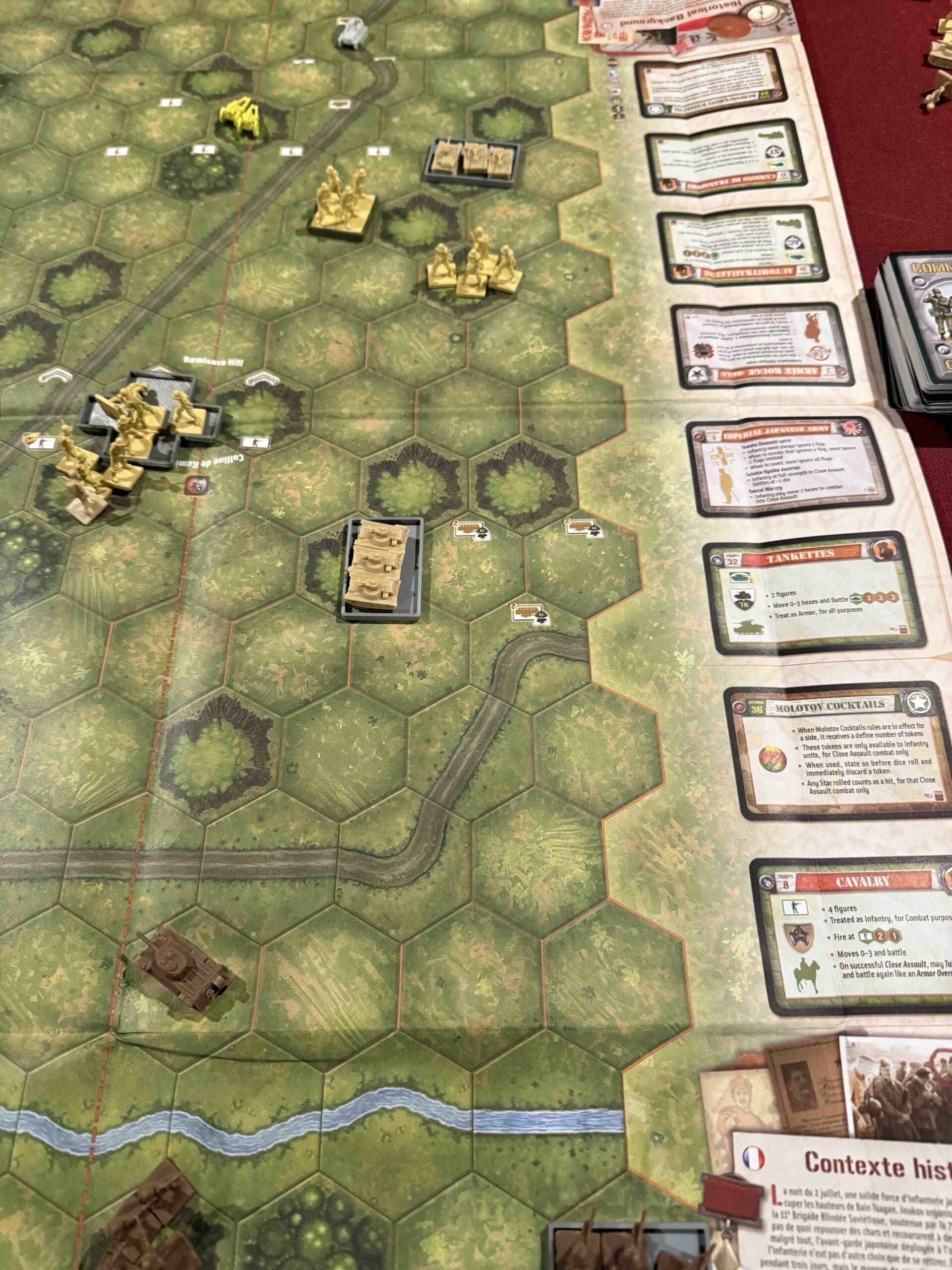
Bain Tsagan Heights

Bain Tsagan Heights
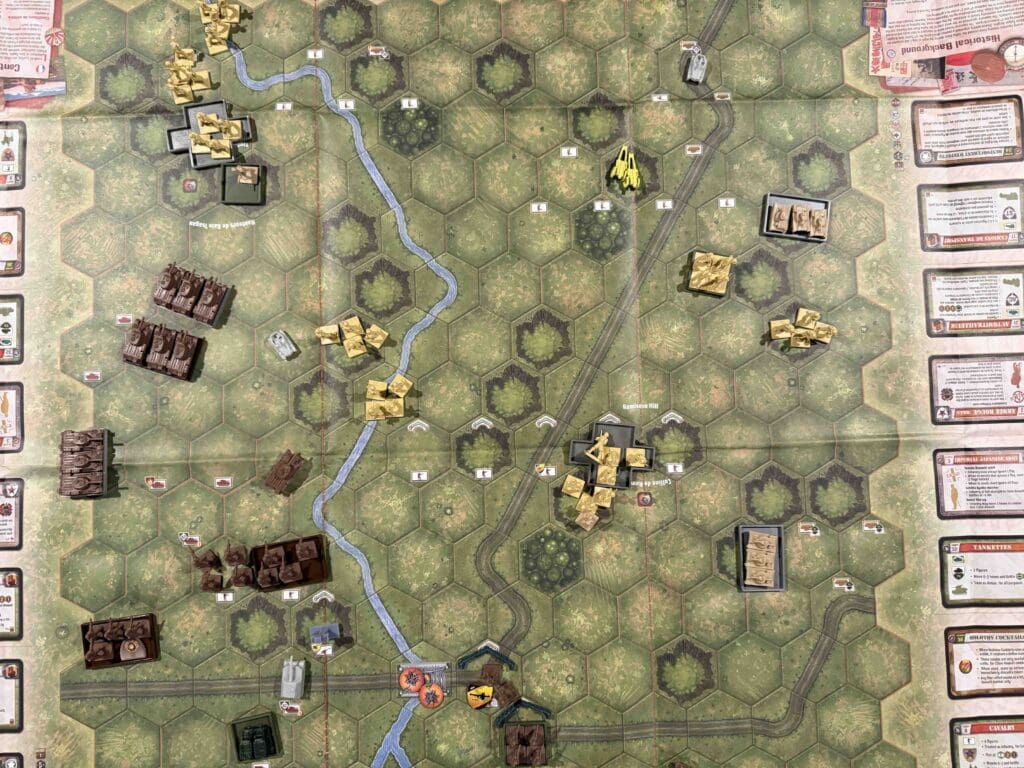
BTH_map_breakthrough_overhead

“Listen up, boys! In early July ‘39, over in the dusty wilderness of Mongolia, the Japanese thought they’d pull a fast one at the Bain Tsagan Heights—cross the river, flank the Soviets, and wrap the whole show up in a bow. But Zhukov wasn’t about to let those plans play out!

Zhukov hit back hard and fast, bringing in tanks, artillery, and infantry to pound those Japanese troops into the dirt. They fought like hell on those heights—bayonets flashing, guns roaring, tanks rolling—and the Soviets broke that flanking move right in half.

This wasn’t just a local scrap, boys—it was a turning point. That Soviet victory at Bain Tsagan sent a clear message: you mess with the Red Army, you pay in blood. It helped push Japan to shift its focus away from Siberia and toward the Pacific, changing the whole game for the coming war.

So remember this—when you see the enemy making a move, you don’t wait—you smash him before he knows what hit him! That’s the way to win!

~~ General Howitzer

10 VP’s

Card Balance:

Allies – 7

Axis – 5

Complexity:

4

Conditions:

Countryside

Context:

Historical

Location:

Siberia

Year:

1939

Theater:

Eastern

Campaign:

Khalkin Gol

Codename:

Summary:

Objectives:

10 VP’s, including four! objective medals; ( two ridges and a 2-medal bridge)

Battlefield:

Countryside with a river cutting through the Allies left flank, and long road cutting at an angle through the terrain directly to the two-medal bridge.

Troops:

Allies (Russia) – 12 Infantry, 9 Armor, including two Armored Cars, plus two Supply Trucks, 1 Big Gun!

Axis (Japan) – 12 Infantry, 7 Armor, including 3 Tankettes, 2 Armored Cars, 1 Artillery.


Allied Strategy:

1.  Big Picture: Allies are initially on the defense, due to the attack by the Japanese.  But they have enormous armor resources at their disposal on their left flank to bring to bear upon the battle in both the left flank and the center section.  And historically, this is what General Zukhov did.  In fact a pivot by the Allied Armor on the left flank over the ridgeline at river will allow them to reign down terror upon the Japanese forces assaulting the Remisova Hill.

2.  Your puny Armor and Infantry forces in the right flank are pretty useless, as they need to cross the river before they can engage the enemy.  But if they can at least move forward one hex, so that they do not get pinned against the backwall, that will be sufficient.

3.  Guard the bridge crossing the river. It is worth two medals.

4.  You have a Big Tom Gun, which has massive range of 8 hexes, and allows you to zero in on forces in a hex and increase your attack strength by another 1D.  Use it early and often.

Axis Strategy

1.  Big Picture Strategy: this was a long-shot for the Japanese historically, which they lost, but they have been known to win this scenario.  Use your Tankettes, which have good movement, to get into the battle and score some wins.  Advance forcefully with your infantry and overwhelm them using your Seishin Kyoiku Doctrine might combined with your Bonzai speed.

Battle Reports

3
BR - Bain Tsagan Heights

Author:

Days of Wonder

Link:

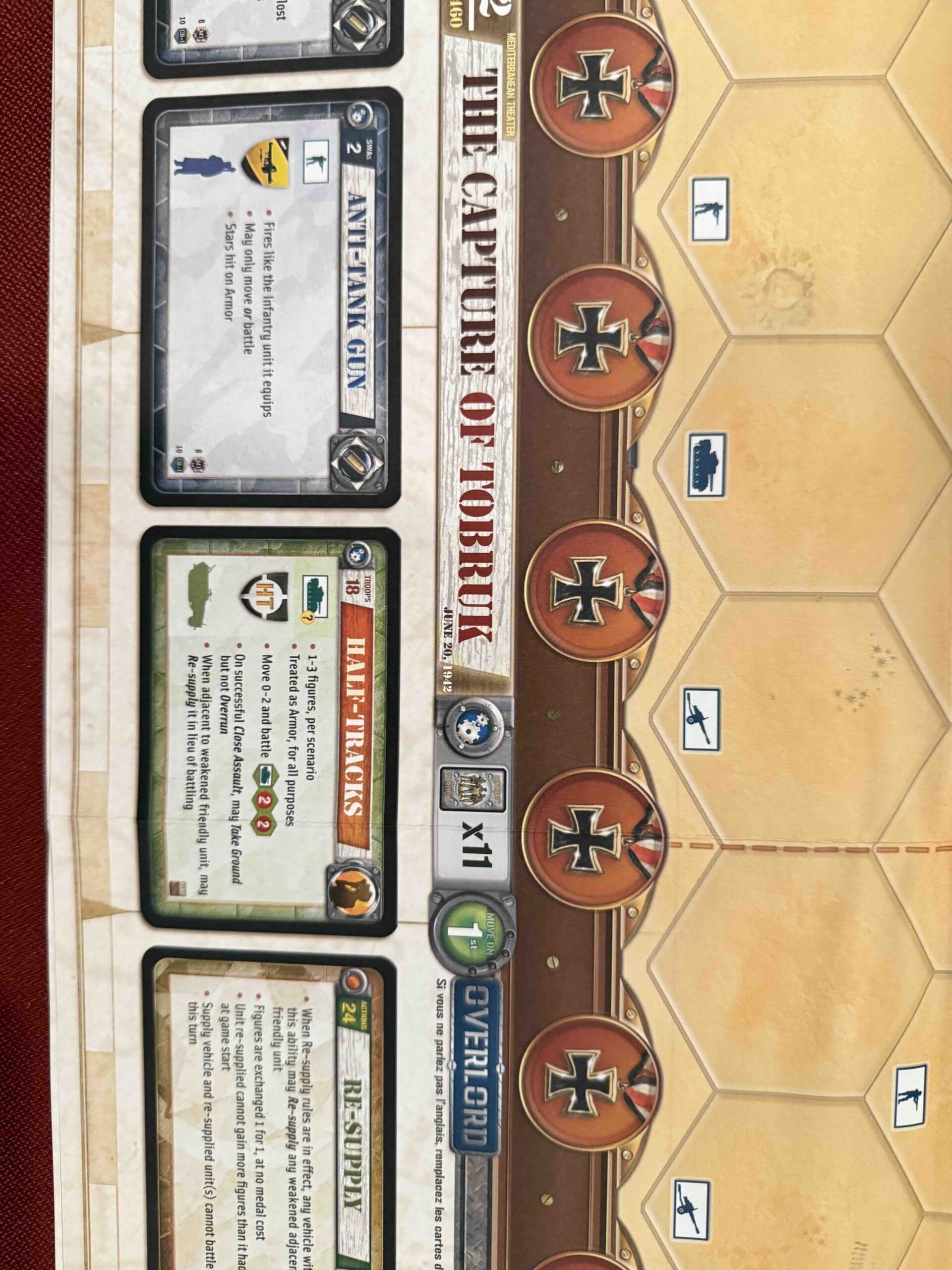
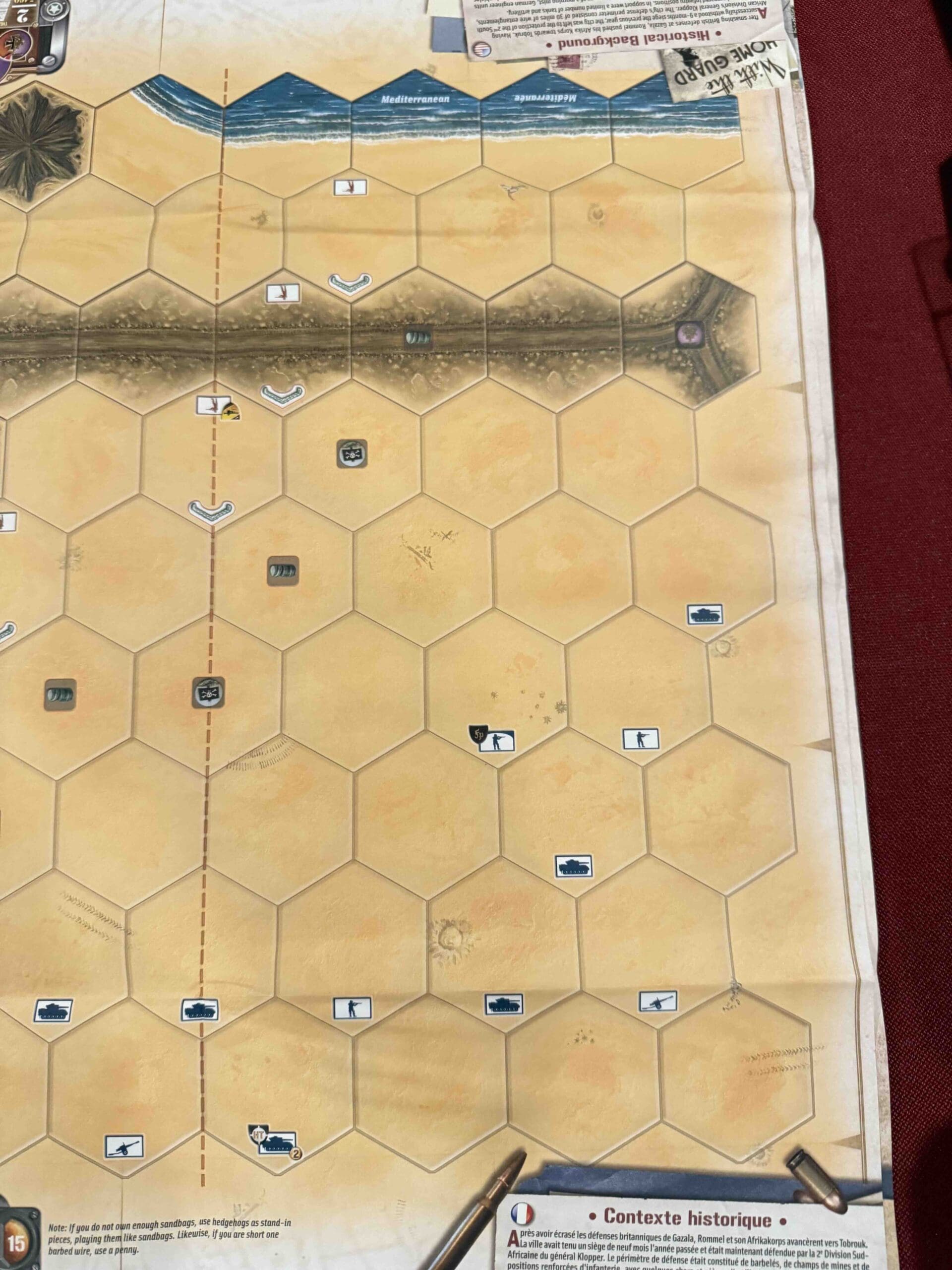
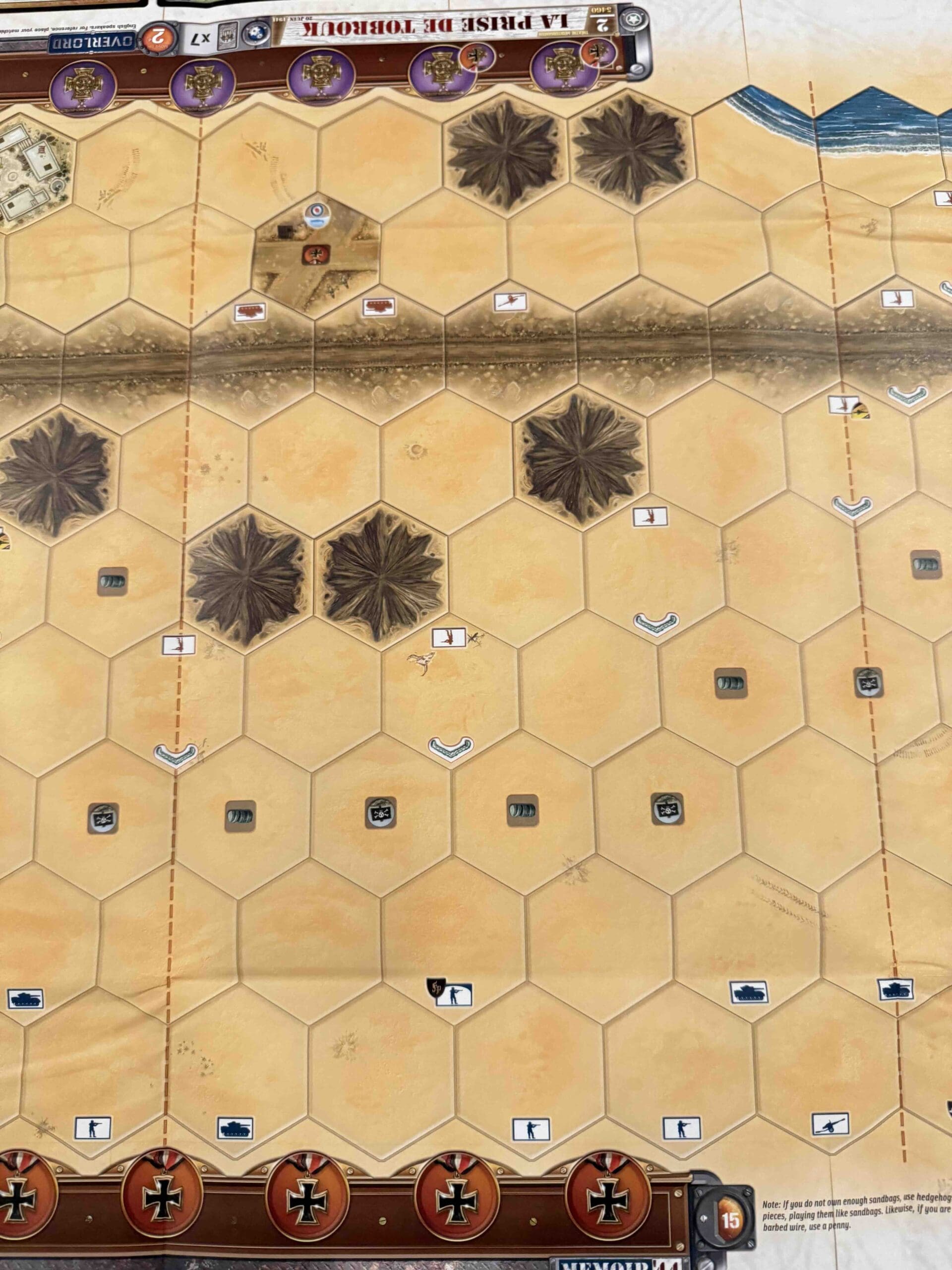
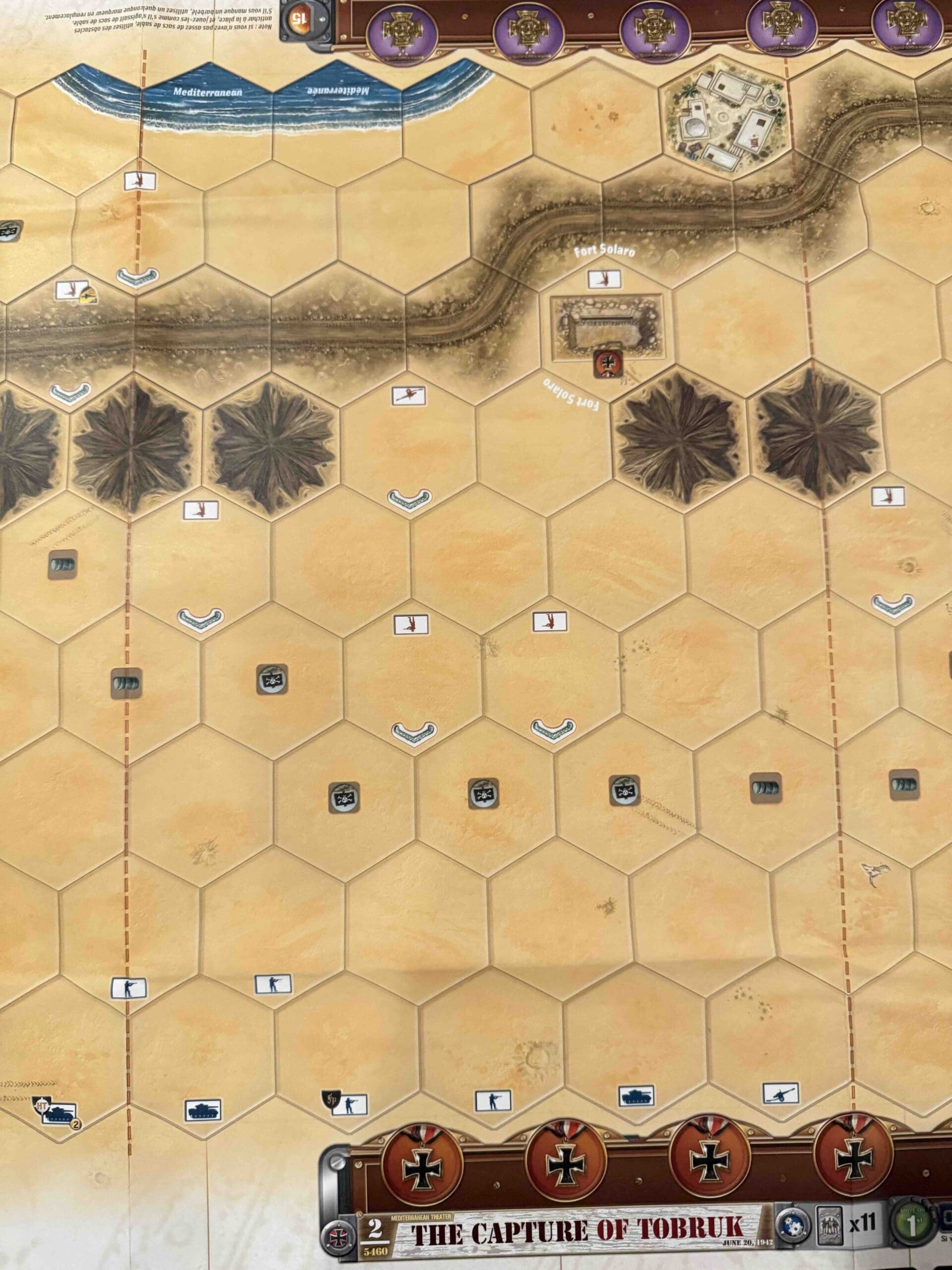
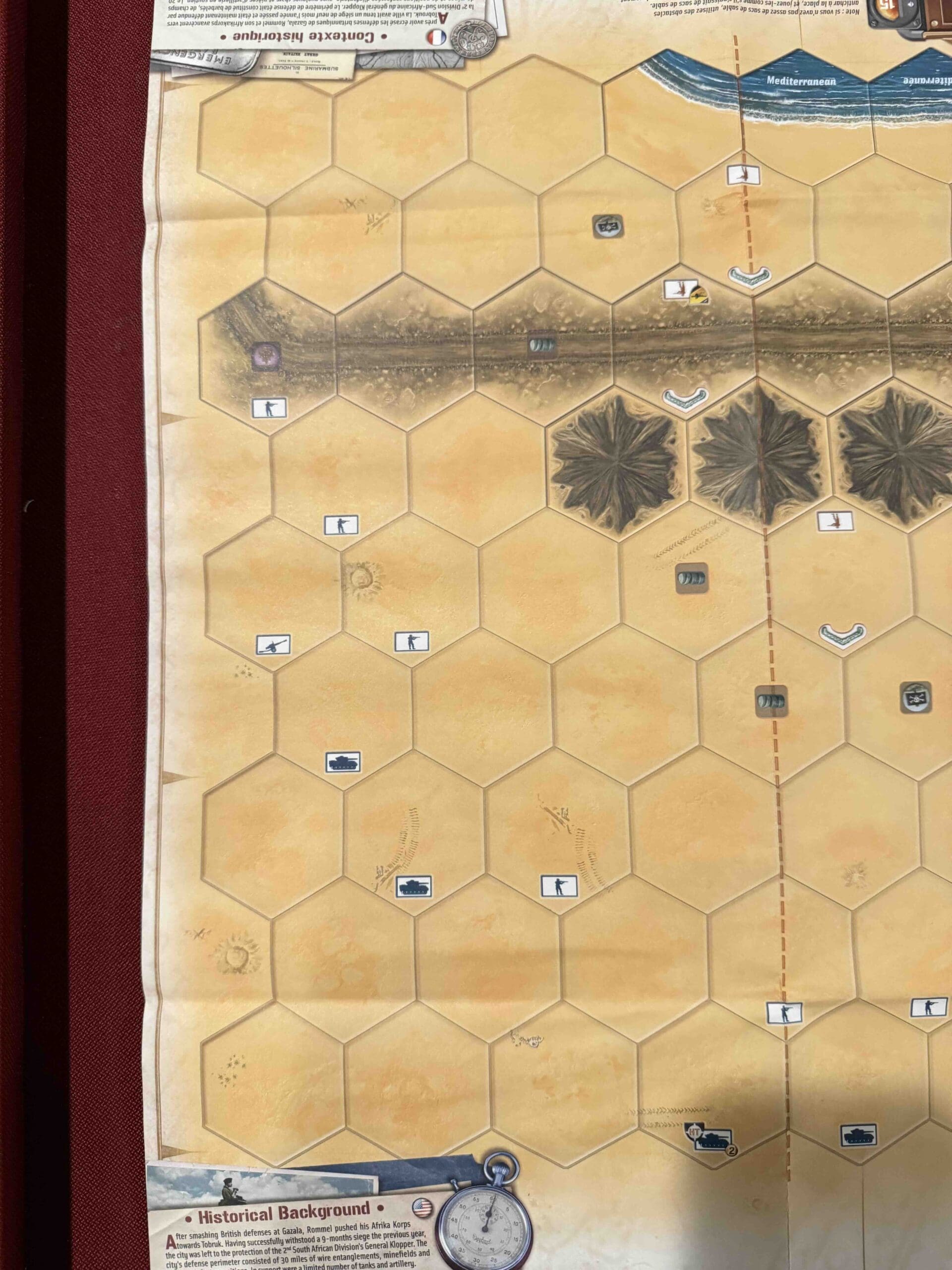
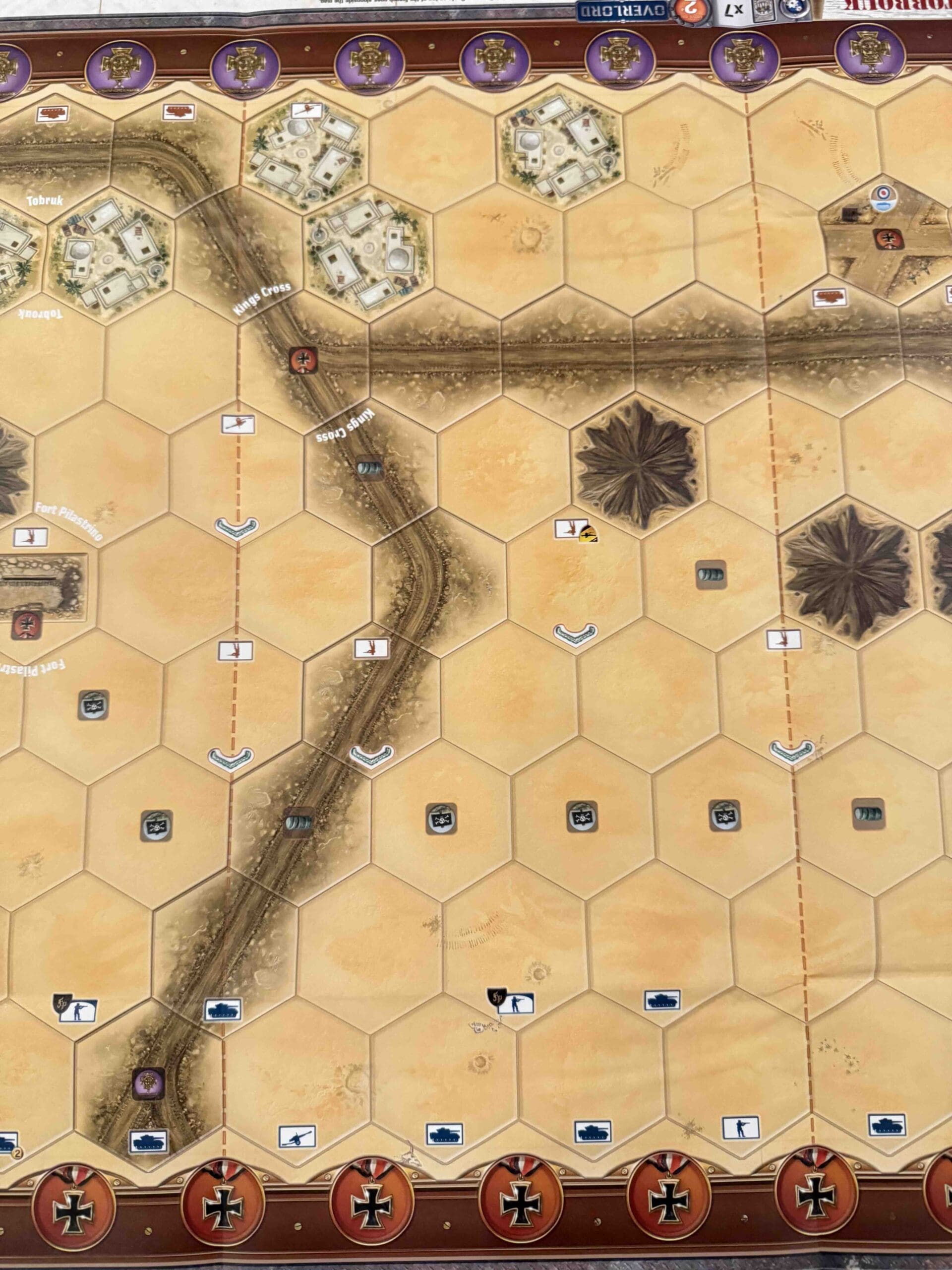
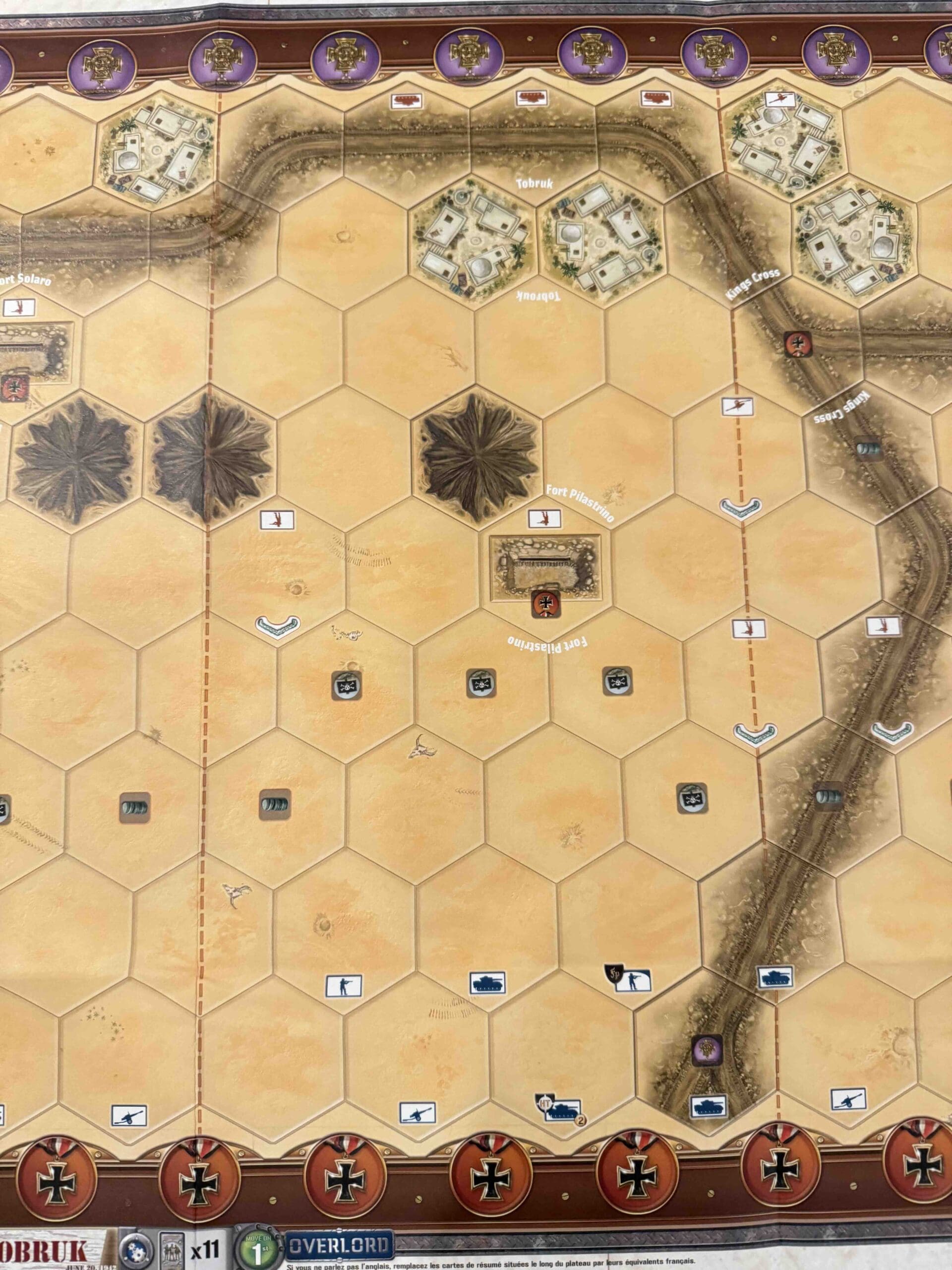
The Capture of Tobruk

The Capture of Tobruk (Overlord Map)

June 21, 1942—Tobruk falls, and Rommel gets his moment in the sun.

The Desert Fox came tearing across North Africa like a bat outta hell, and when he set his sights on Tobruk, he didn’t waste time. That place had held out before—but not this time. Rommel hit it hard, fast, and surgical. In no time flat, he smashed through the lines, bagged 30,000 Allied troops, and scooped up a mountain of supplies.

It was a gut punch to the British—morale wrecked, command shaken, and the enemy thumping their chests from Berlin to Rome. Tobruk was supposed to be a fortress. Instead, it became a prize.

But here’s the truth: Rommel’s victory was real—but it was short-lived. You don’t win a war with flash and headlines. You win it by bleeding the enemy dry, taking ground, and never letting up. And that’s what we did.

By the time we met him again at El Alamein, the tables had turned. Rommel’s advance stalled, and the Allies came back with a vengeance.

You want to take a city? Fine. But you’d better be ready to hold it when the real fight starts.

~~ General Howitzer

15 VP’s

Card Balance:

Allies – 7

Axis – 11

Complexity:

3

Conditions:

Desert

Context:

Historical

Location:

North Africa

Year:

1942

Theater:

Mediterranean

Campaign:

Codename:

Summary:

Objectives:

15 VP’s with many territorial Medal Objectives, some Temporary and some Permanent.

Battlefield:

A desert with a couple of roads crossing the area in both directions

Troops:

Allies  – 17 Infantry some with Special Weapons, 5 Armor, 2 Artillery

Axis  – 17 Infanty, 16 Armor including some Half-Tracks, 6 Artillery


Allied Strategy:

1.  

Axis Strategy

1.  

Classic Battle Reports

45% Allied Wins

0
BR - Capture of Tobruk

Author:

Days of Wonder

Link:

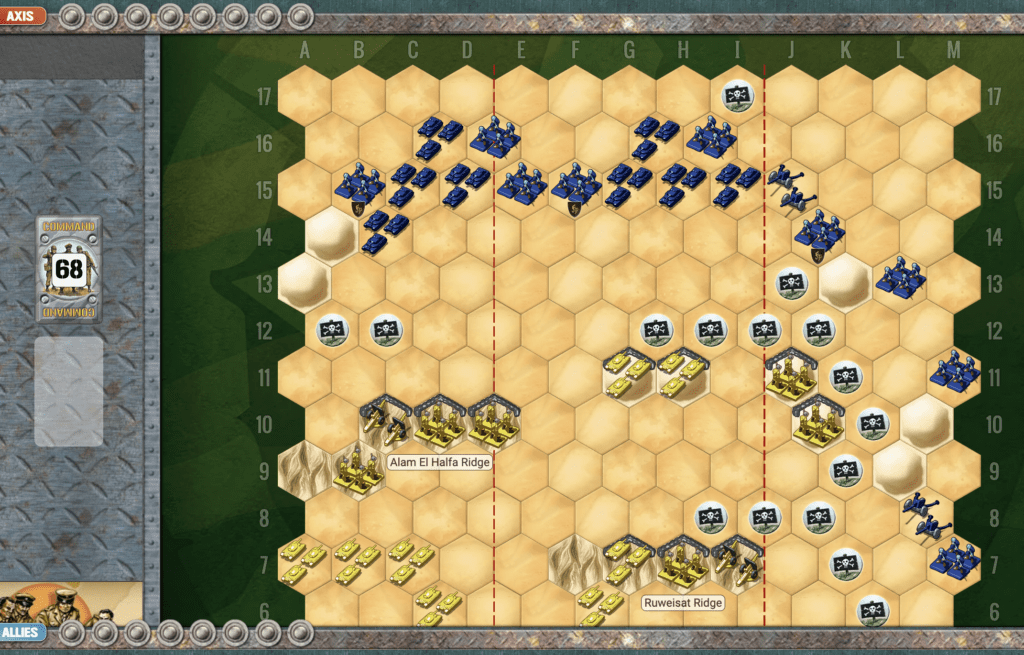
Battle of Alam el Halfa

Battle of Alam el Halfa

scenario_Battle-of-Alam-El-Halfa

Aug 29 – Sep 6, 1942

Alam el Halfa was Rommel’s last real chance to win the desert war and grab Egypt, and he knew it. His numbers were thinning, his supplies were running dry, and time was about to turn against him. So he did what gamblers always do when the clock is running out—he rolled the dice one more time and tried the same wide flanking punch he’d used at Gazala.

But this time, the British weren’t blind. ULTRA told them exactly what was coming, and Montgomery finally did something smart: he stopped chasing glory and prepared to fight on ground of his choosing. He planted his forces on the Alam el Halfa and Ruweisat ridges, dug tanks into the sand like steel bunkers, and told Rommel, “Come get it.”

This wasn’t a battle of fancy maneuvers—it was a battle of discipline. Rommel charged in from the south and smashed straight into prepared defenses, air power, and fuel shortages he couldn’t overcome. His attack burned itself out, and with it went his last hope of victory in North Africa.

The lines are drawn, the enemy is committed, and now it’s your fight. Hold the ground, let the enemy break himself, and remember this: when the enemy makes his last move, you make sure it’s his last mistake.

~~ General Howitzer

VP’s

8

card

Card Balance:

Allies – 6

Axis – 6

Complexity:

3

Conditions:

Desert

Context:

Historical

Location:

North Africa

Year:

1944

Summary:

8 Victory Points:

8 Medals, including three Permanent Medal Objectives for Axis control of three town hexes. 

Terrain:

Desert with some ridges and a railroad track.

Troops:

Allies – 7 Infantry, 8 Armor, 2 Artillery

Axis – 10 Infantry, 8 Armor, 2 Artillery

medal allies

Allies:

medal axis

Axis:

0
BR - Alam El Halfa

Author: Days of Wonder

URL

Medeera Pocket

Medeera Pocket

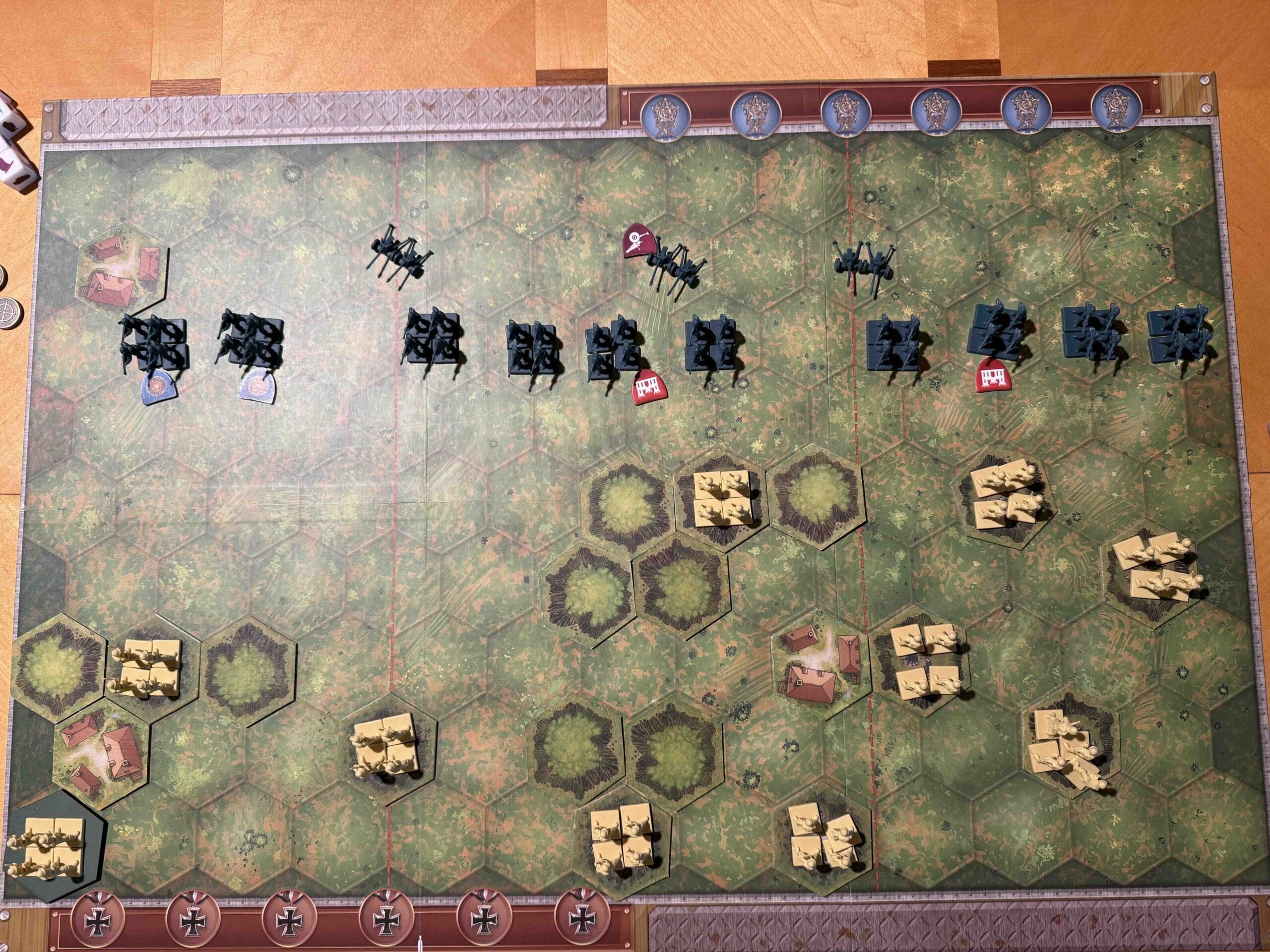
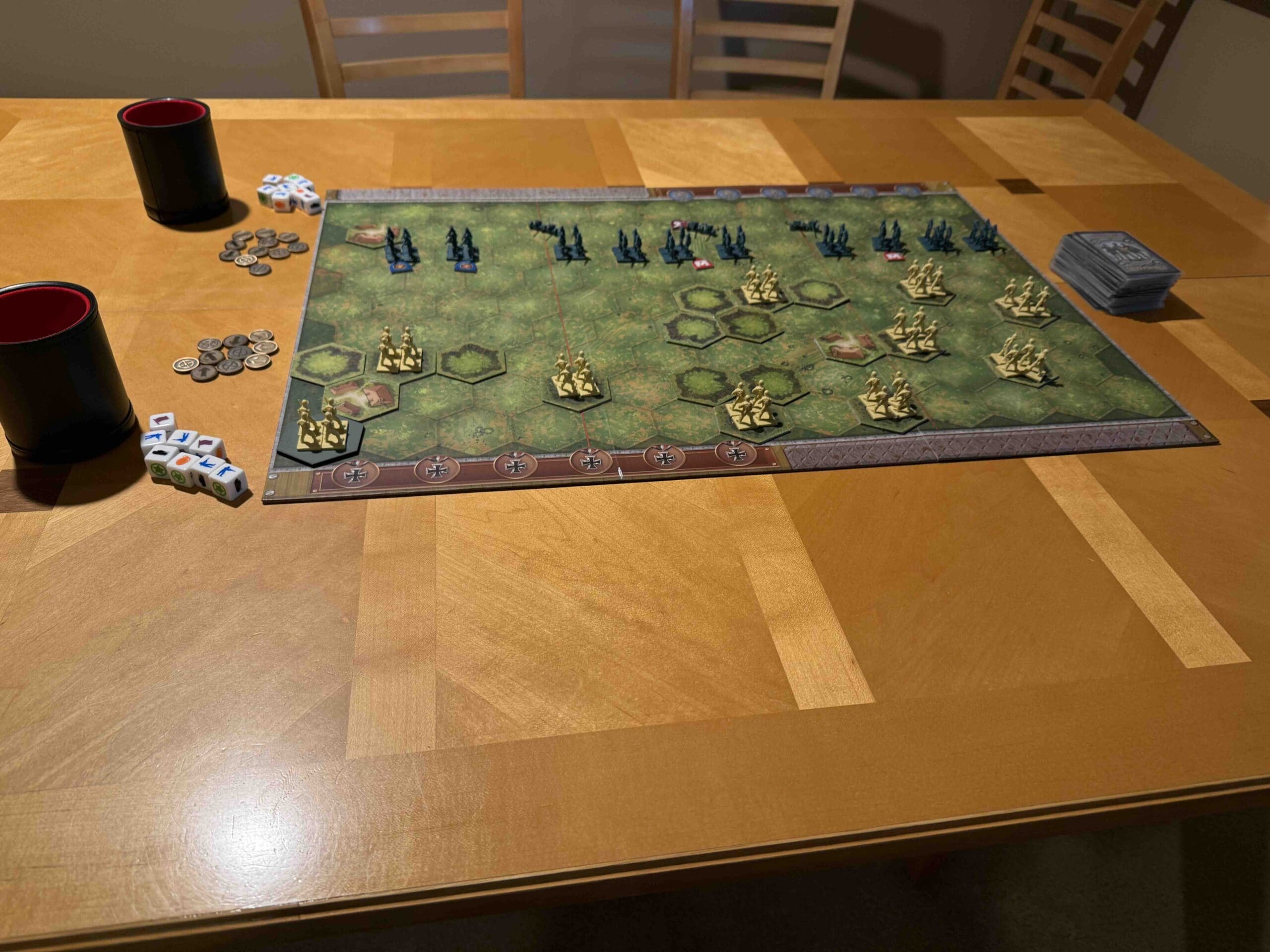
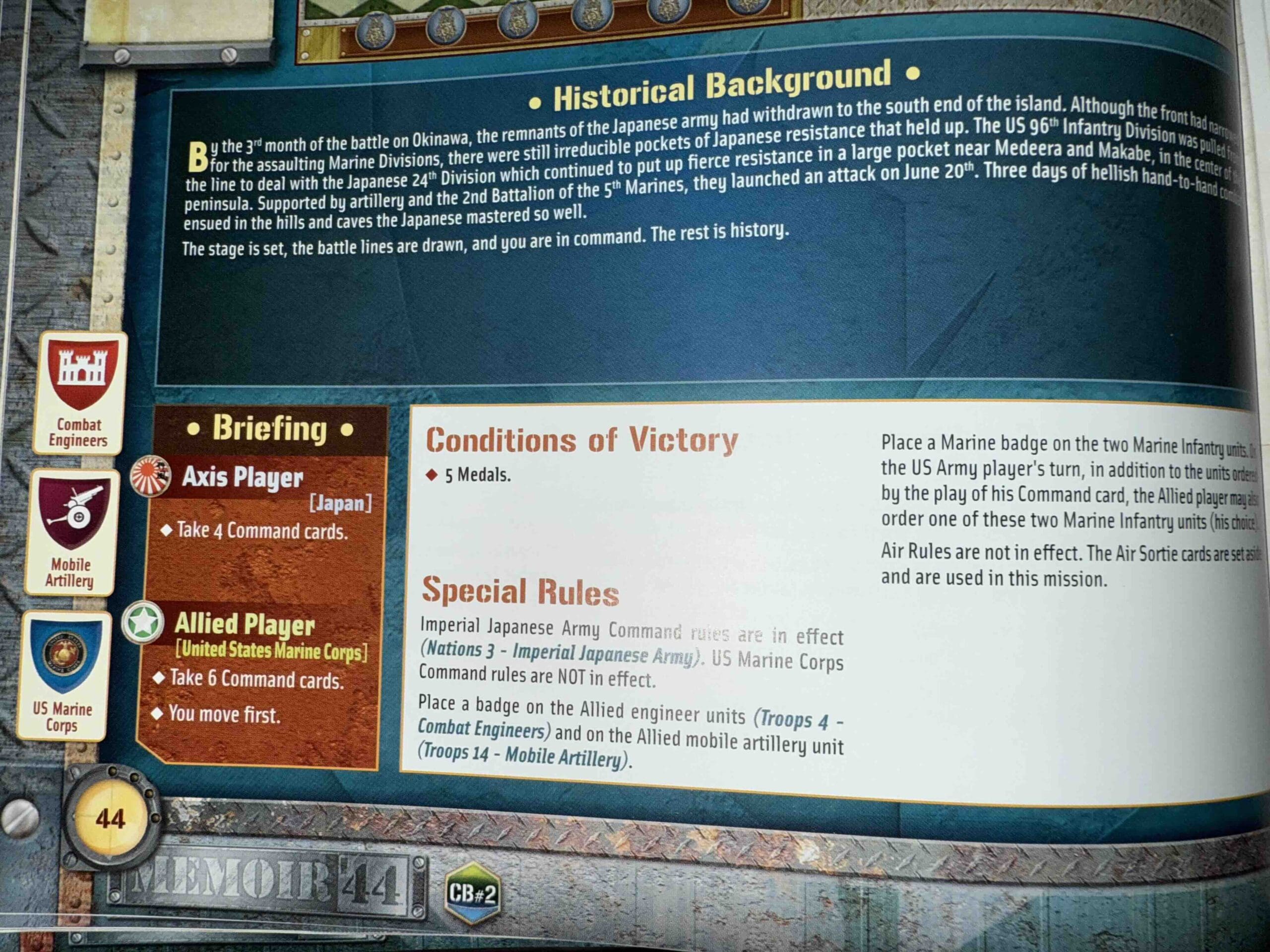
The Battle of the Medeera Pocket in June 1945 was a late-stage engagement during the Marianas and Palau Islands campaign of World War II.

Located on northern Peleliu, the Medeera Pocket was one of the last strongholds of Japanese resistance. U.S. Marines and Army forces faced fierce, dug-in Japanese defenders who refused to surrender, fighting from caves and fortified positions. The battle involved intense close-quarters combat, flamethrowers, explosives, and coordinated assaults to clear the terrain.

Despite being outnumbered and cut off, Japanese troops fought to the death, inflicting significant U.S. casualties before being wiped out.

The elimination of the Medeera Pocket marked the final clearing of organized resistance on Peleliu, securing the island for Allied operations and reinforcing the brutal nature of Pacific island warfare.

General Howitzer summarizes:

The Medeera Pocket was one hell of a last stand—the Japanese  were holed up in caves, dug in deep, and determined to die where they stood.  They fought like fanatics, even when they were cut off and outgunned, but our Army and Marines finished the job. Clearing that pocket sealed Peleliu for good and reminded everyone that in the Pacific, every inch costs blood.

5 VP’s

card

Card Balance:

Allies – 6

Axis – 4

Complexity:

3

Conditions:

Jungle

Context:

Historical

Location:

Palau Islands

Year:

1945

Theater:

Pacific

Campaign:

Codename:

Operation Iceberg

Summary:

Objectives:

5 VP’s 

Battlefield:

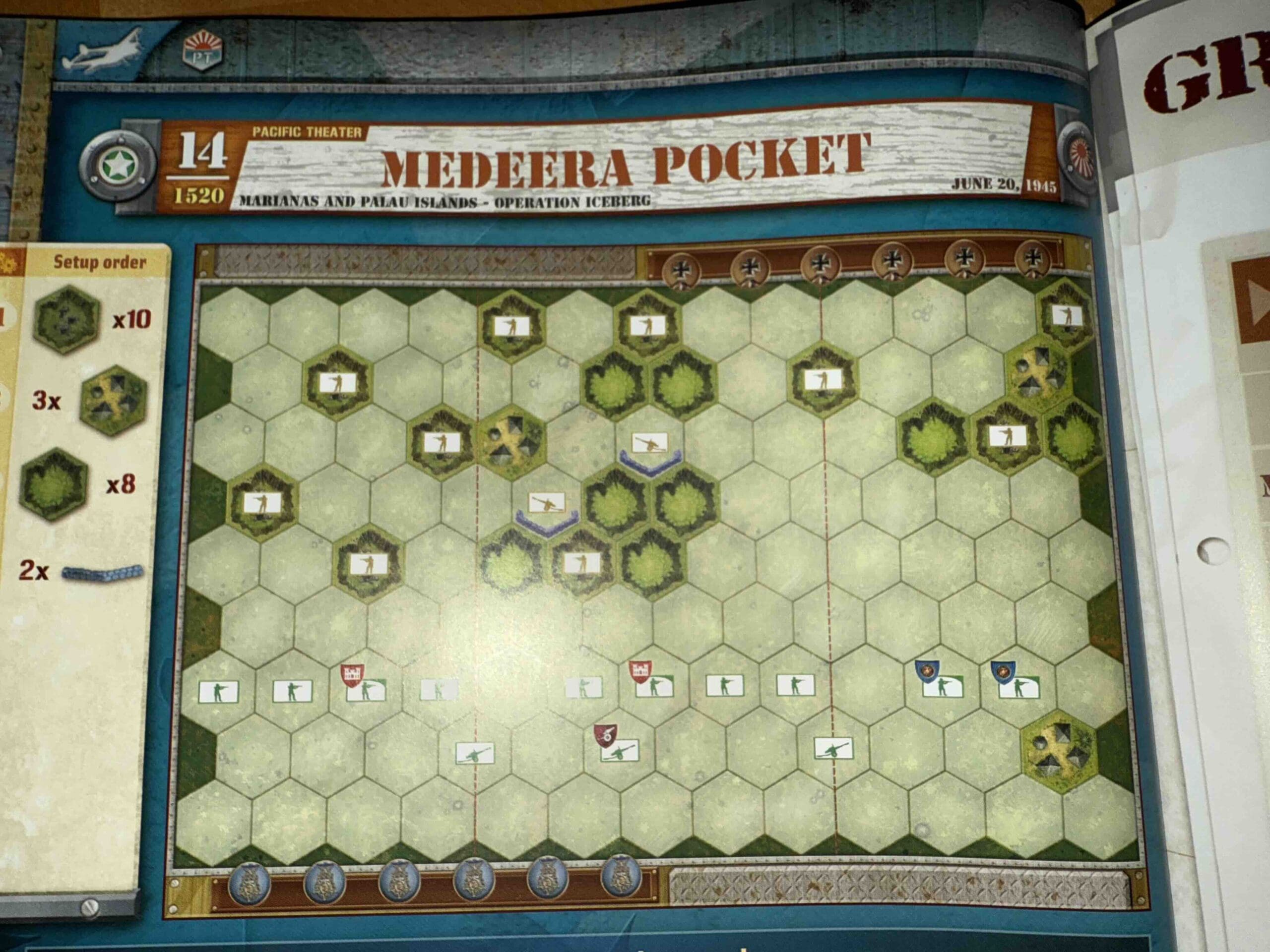
Jungle terrain , hills with caves and some small villages.

Troops:

Allies – 8 Army Infantry, 2 Marine Infantry, 3 Artillery including a Mobile Artillery

Axis – 10 Infantry


medal allies

Allied Strategy:

1.  The center section is the key to victory.  You have a Mobile Artillery, plus two other Artillery units which can all focus their firepower upon the center.  

2.  You have two Engineer units which can overcome the terrain disadvantages of caves on hills.  Use them to clear out the entrenched enemy.

3.  You have two Marine units which can be commanded every single turn, so they can conduct their own operation on your right flank, if they are supported by the Artillery unit on that side. 

medal axis

Axis Strategy

1.  Remember the three special abilities of your Japanese forces (Seishin Kyoiku Doctrine, Yamato Dashi Concept, and the Banzai War Cry).  You will need these to stand up against the enemy.

2.  There are many Caves on Hills which give you both a defensive and mobile advantage.  Infantry units can quickly move from one Cave on a Hill to another one, so that you can rapidly replenish your forces when they are destroyed.  

3.  You have two Artillery units well-protected in the center of the battlefield.  Use them at every opportunity to push back the attacking Infantry, and when it comes into range, to also destroy the Mobile Artillery.

Battle Reports

1
BR - Medeera Pocket

Author:

Days of Wonder

Resource:

Campaign Book, Volume 2

Rats in a Factory

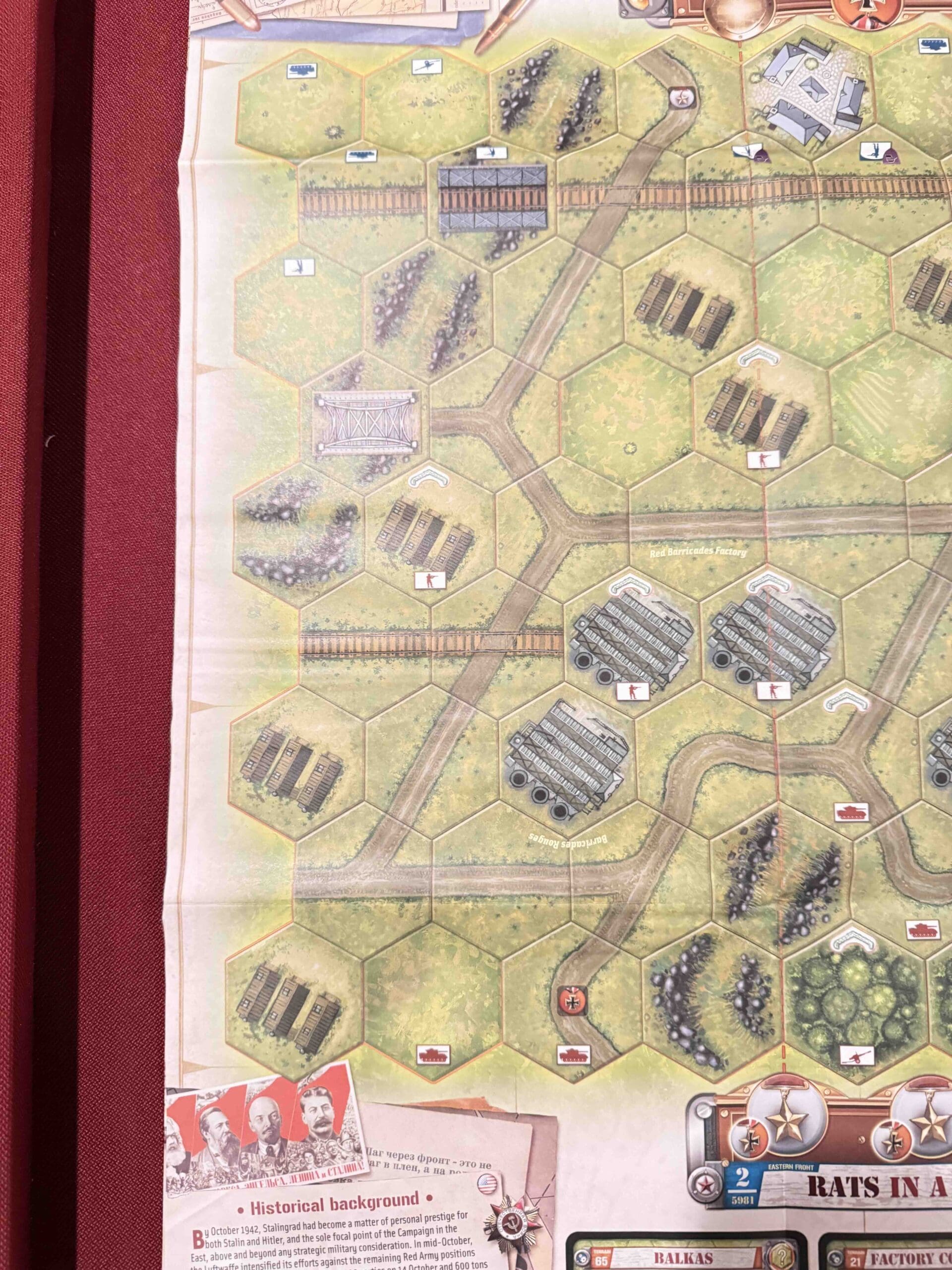
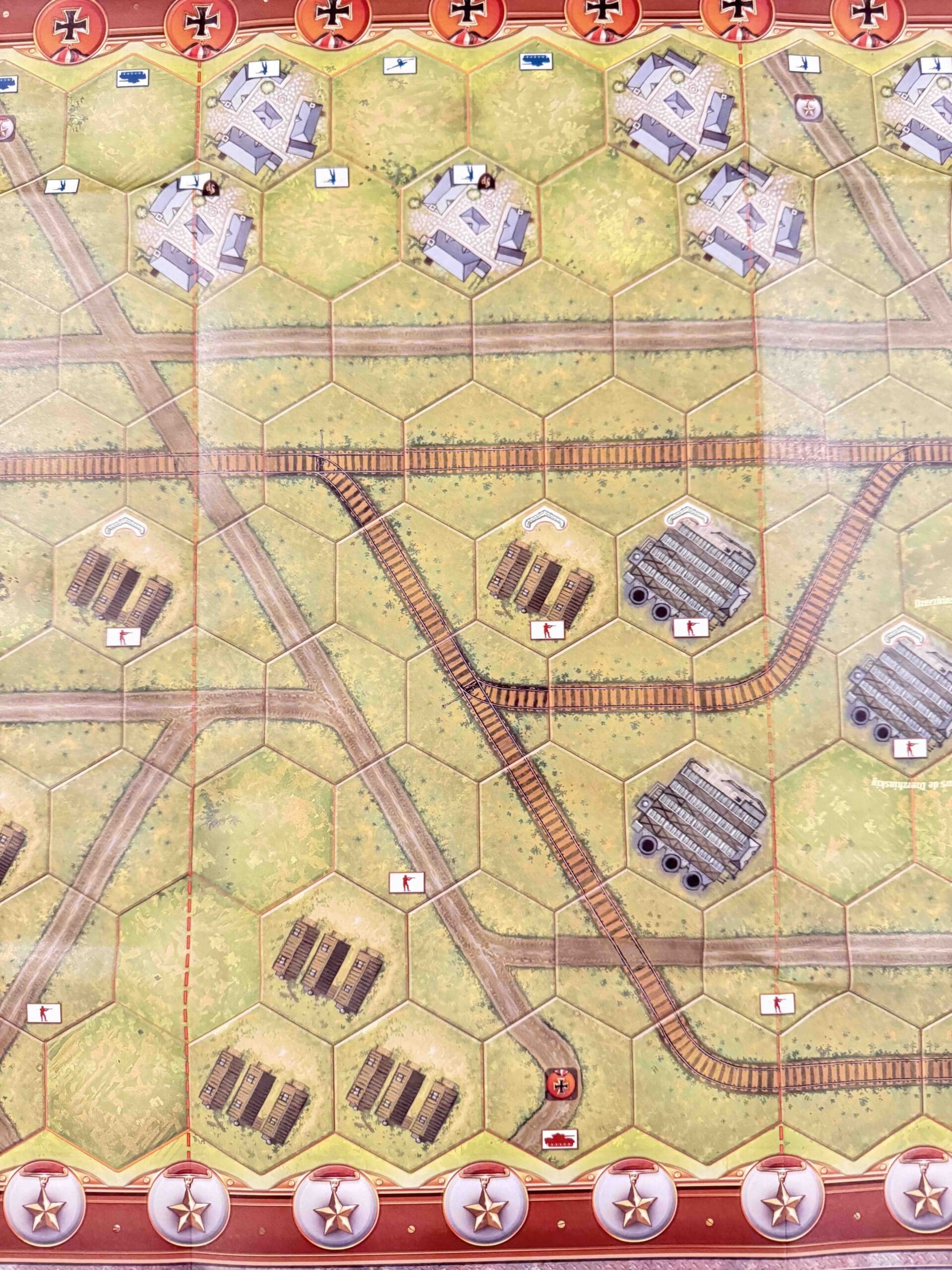
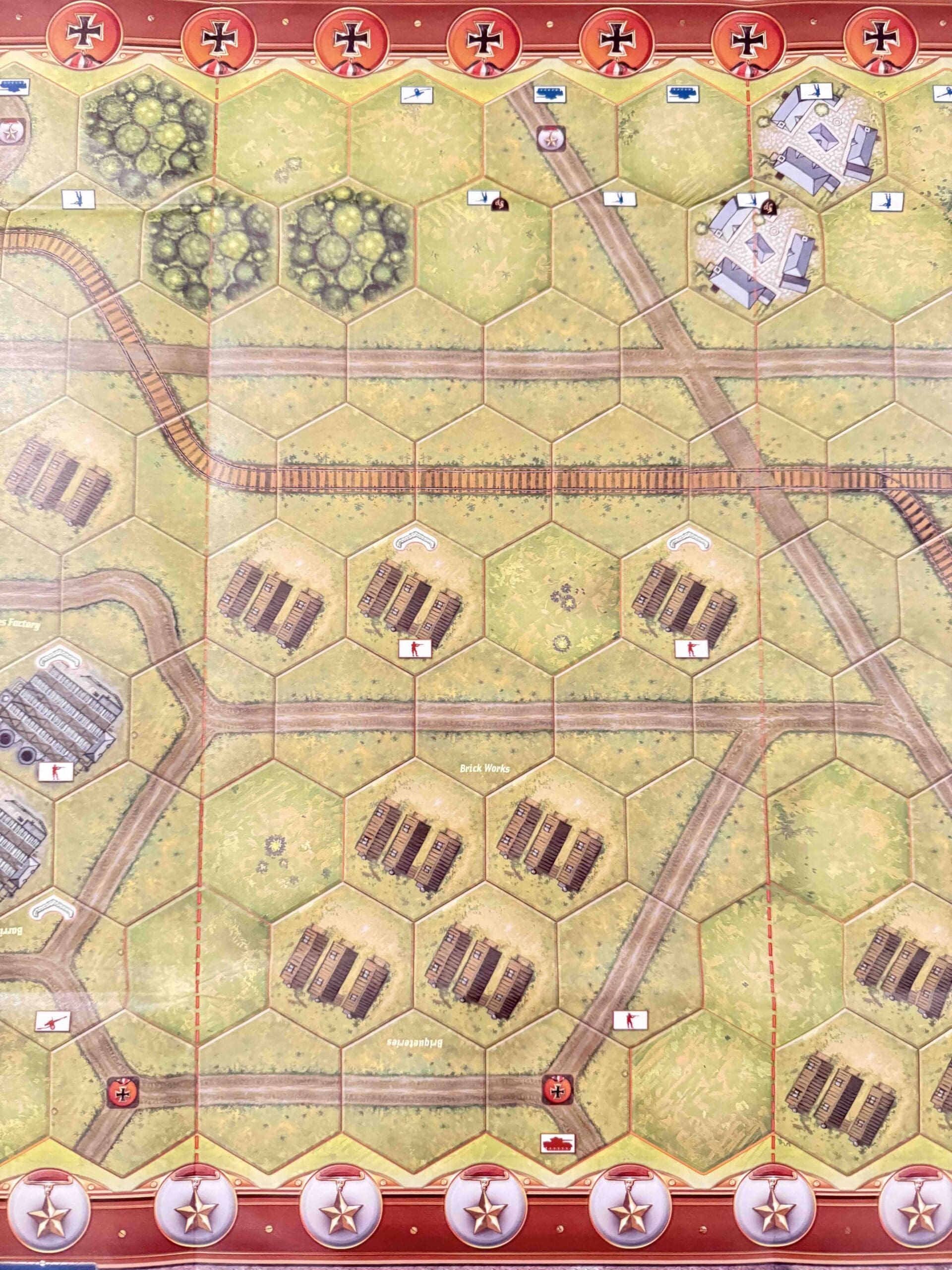
Rats in a Factory [ Overlord ]

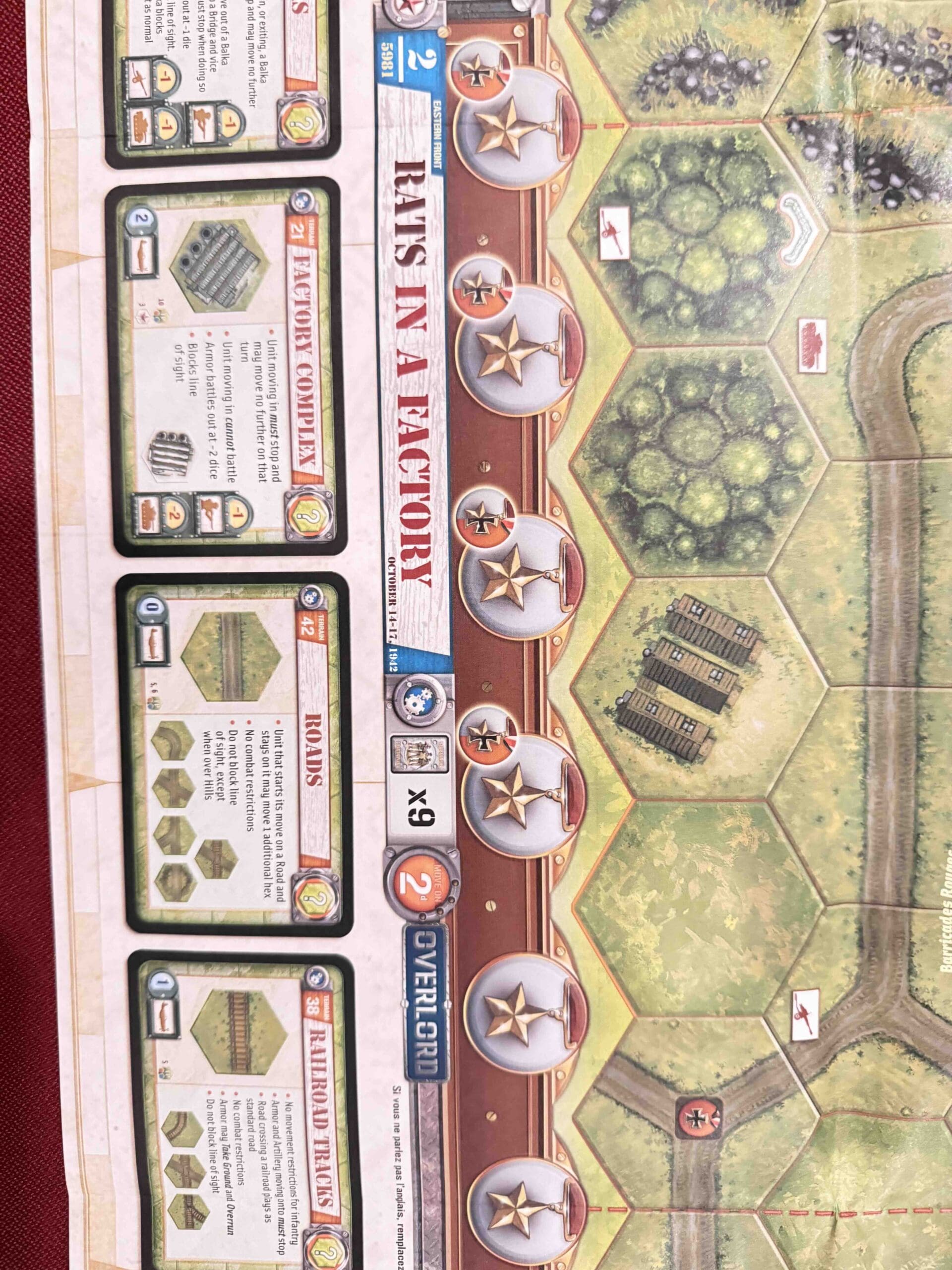
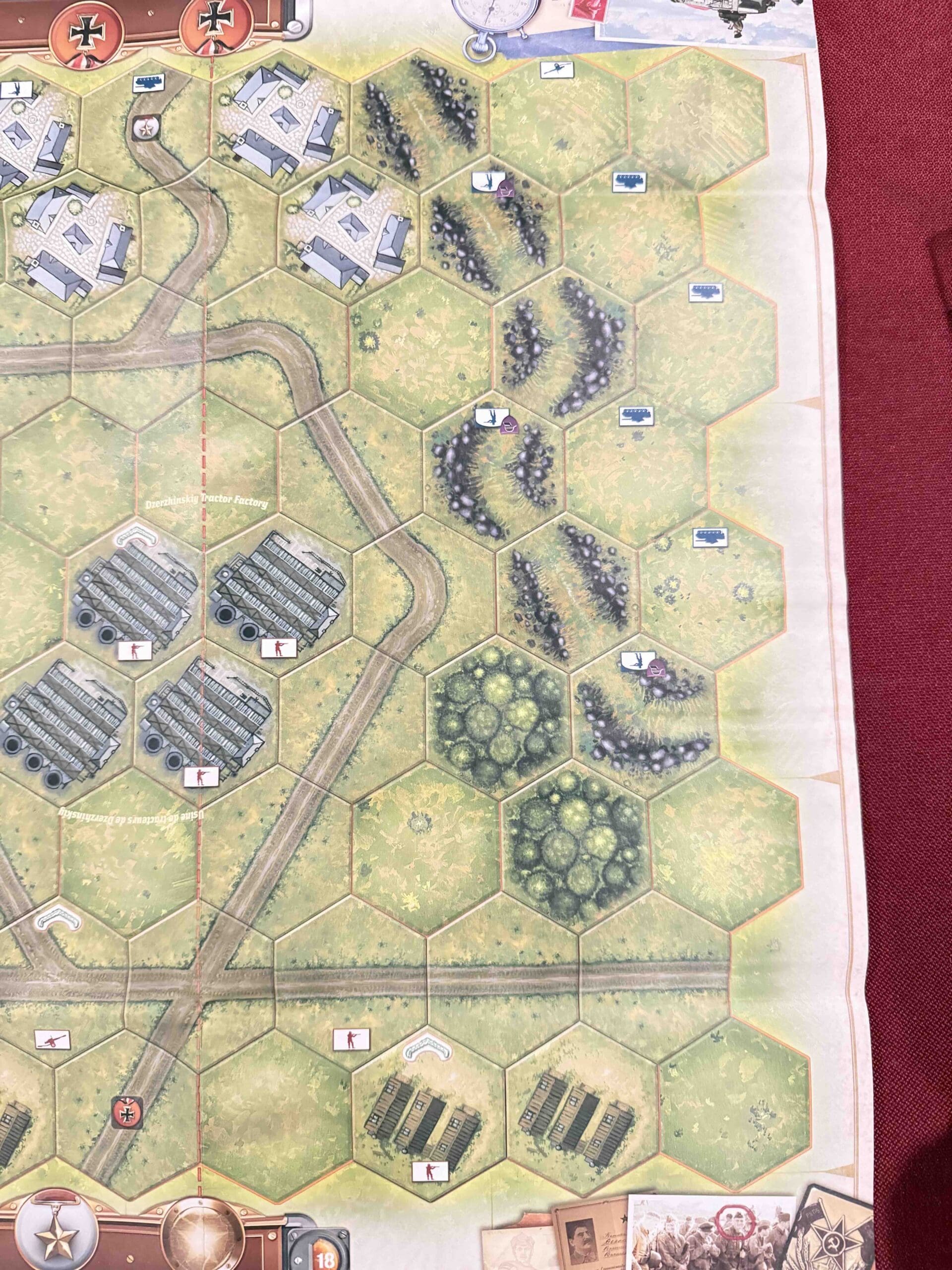
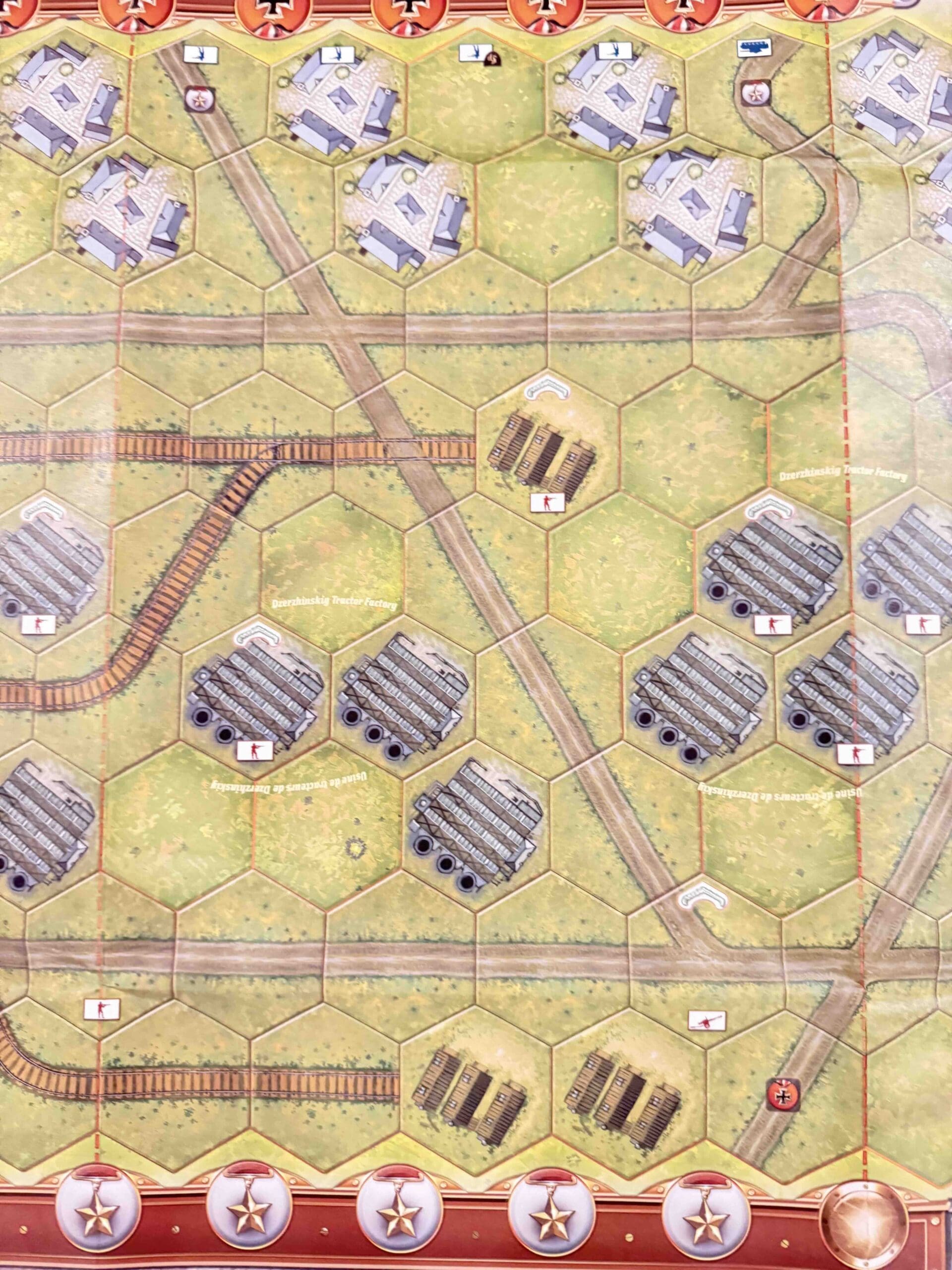
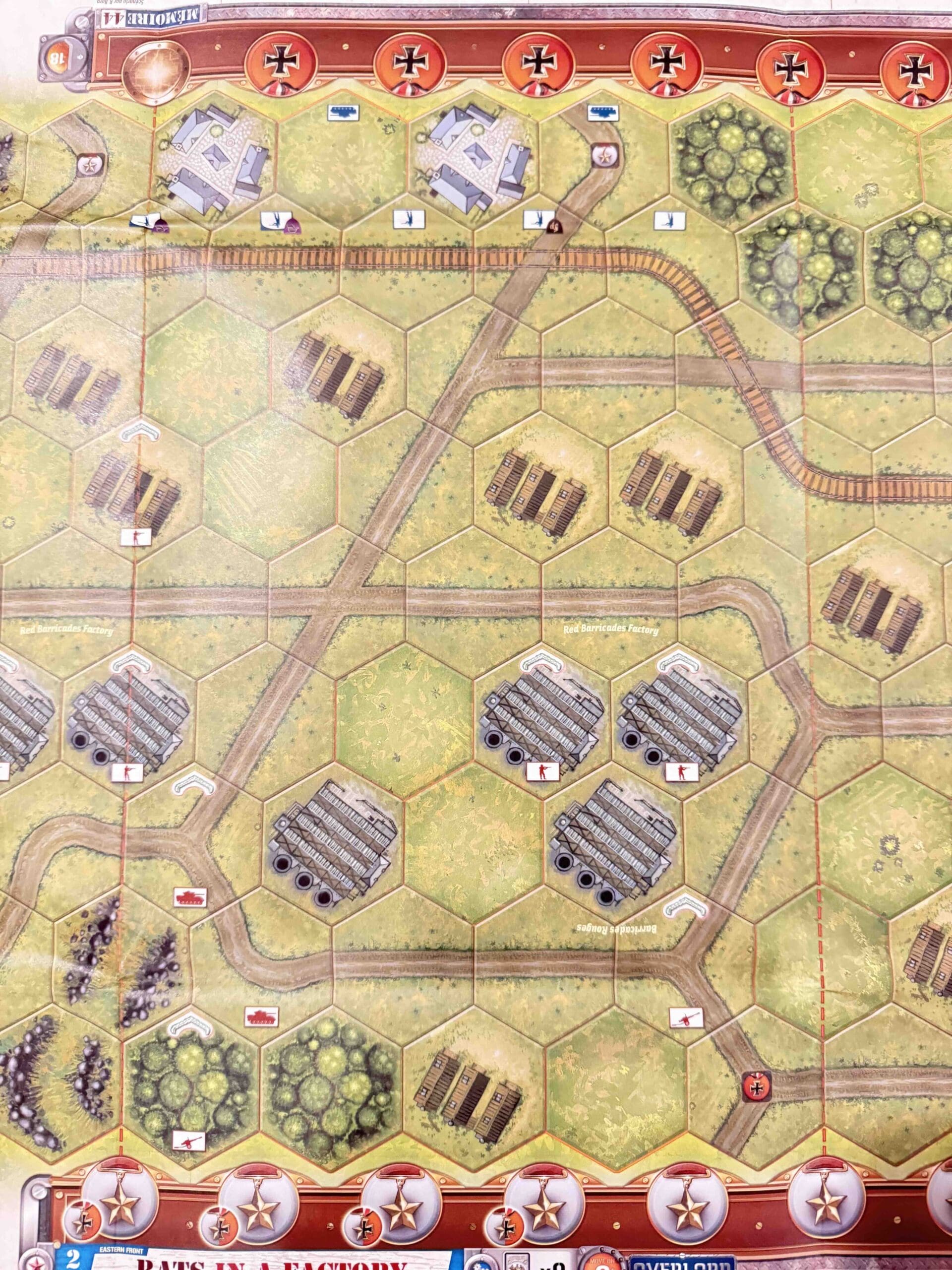
“Rats in a Factory”—Stalingrad, late ’42. You want to know what hell looks like? This was it.

The Germans thought they could storm into those Red October, Barrikady, and Tractor factories like it was just another checkpoint. What they walked into was a damn grinder. Concrete, steel, smoke, and blood—that’s what those factories became.

The Soviets didn’t fight for blocks—they fought for bricks, for stairwells, for every bolt and beam. One room would belong to the Germans, the next to the Soviets. Sometimes they were fighting in the same building—on different floors. It was war in a cage, and every inch came with a cost.

The term “Rats in a Factory” wasn’t poetry—it was reality. Men crawled, fought, and died like animals in a twisted maze of rubble and twisted metal. **Snipers in shadows, ambushes around corners, grenades down stairwells—**no rules, no rest, no mercy.

And guess what? The Soviets held. They bled the German 6th Army dry, right there in that industrial slaughterhouse. That stand helped snap the spine of the Nazi push in the East.

You want a lesson in raw, unbreakable resolve? Look no further. That’s what it means to fight like you’ve got nothing left to lose—and no intention of backing down.

~~ General Howitzer

18 VP’s

card

Card Balance:

Allies – 9 

Axis – 10

Complexity:

5

Conditions:

Urban

Context:

Historical

Location:

Stalingrad

Year:

1942

Theater:

Eastern

Campaign:

Summary:

This is an Overlord game.

Objectives:

  • 18 Medals including both Permanent and Temporary Medal Objectives.
  • The 5 road hexes exiting the Axis player’s baseline are Permanent Medal Objectives for the Allied forces. The Allied player gains the Medal when he occupies the hex at the start of his turn.
  • The 5 road hexes on the Allied player’s baseline are Permanent Medal Objectives for the Axis forces. The Axis player gains the Medal when he occupies the hex at the start of his turn.
  • The 9 factory hexes of the Dzerzhinskiy Tractor Factory form a Temporary Majority Medal Objective worth 2 Medals for whoever controls the majority of its hexes.
  • The 7 factory hexes of the Red Barricades Factory form a Temporary Majority Medal Objective worth 2 Medals for whoever controls the majority of its hexes.

Terrain:

Urban factory complex with any factory and city hexes.

Troops:

Allies – 21 Infantry, 6 Armor, 3 Artillery

Axis – 20 Infantry, 12 Armo, 4 Artillery

Special Rules:

1.  Temporary Medal Objectives   

2.  Permanent Medal Objectives

3.  Temporary Majority Medal Objectives


medal allies 

Allied Strategy:

1.

medal axis

Axis Strategy

1.  

0
BR - Rats in a Factory

Author:

Days of Wonder

Link:

[Ukraine] Soviet raid on Grigorevka

Soviet Raid on Grigorevka

memoir 44 scenario Raid on Grigorevka

September 1941—Odessa’s under siege, and the Soviets are getting hammered by Romanian artillery. So what do they do? They go on the offensive—hard.

Captain Koren takes the lead at sea with the 3rd Naval Infantry Regiment, nearly 2,000 marines, while a small team of 23 paratroopers drops inland. The plan? Hit ’em from the front and the rear—paralyze their command, cut their lines, and blow those damned guns to hell.

Night of September 21st, the paratroopers jump near Hill 57.3—not clean, not pretty, but they get the job done. Took out a whole Romanian regimental HQ—with two dozen men. Meanwhile, Koren’s marines land at Grigorevka under a curtain of naval fire from the destroyers Bojkij and Bezuprechnyj, and they take those artillery batteries by storm.

By sunrise, they’re linking up with the 421st Rifle Division, and the Romanians? They’re pulling back—the 13th and 15th Divisions, thrown into reverse. That’s pressure off Odessa, and a big black eye for the Axis.

This wasn’t some massive Soviet steamroller. This was initiative, coordination, and guts. A rare joint strike—air, land, and sea—and it worked. Captain Koren didn’t wait to be hit—he hit first.

That’s how you win a war. Not by sitting in the trenches—but by getting out, striking hard, and making the enemy bleed where they thought they were safe.

~~ General Howitzer

12 VP’s

Card Balance:

Allies – 5

Axis – 4

Complexity:

4.5

Conditions:

Countryside

countryside

Context:

Historical

Location:

Ukraine

Year:

1941

Theater:

Eastern

Campaign:

Codename:

Summary:

Objectives:

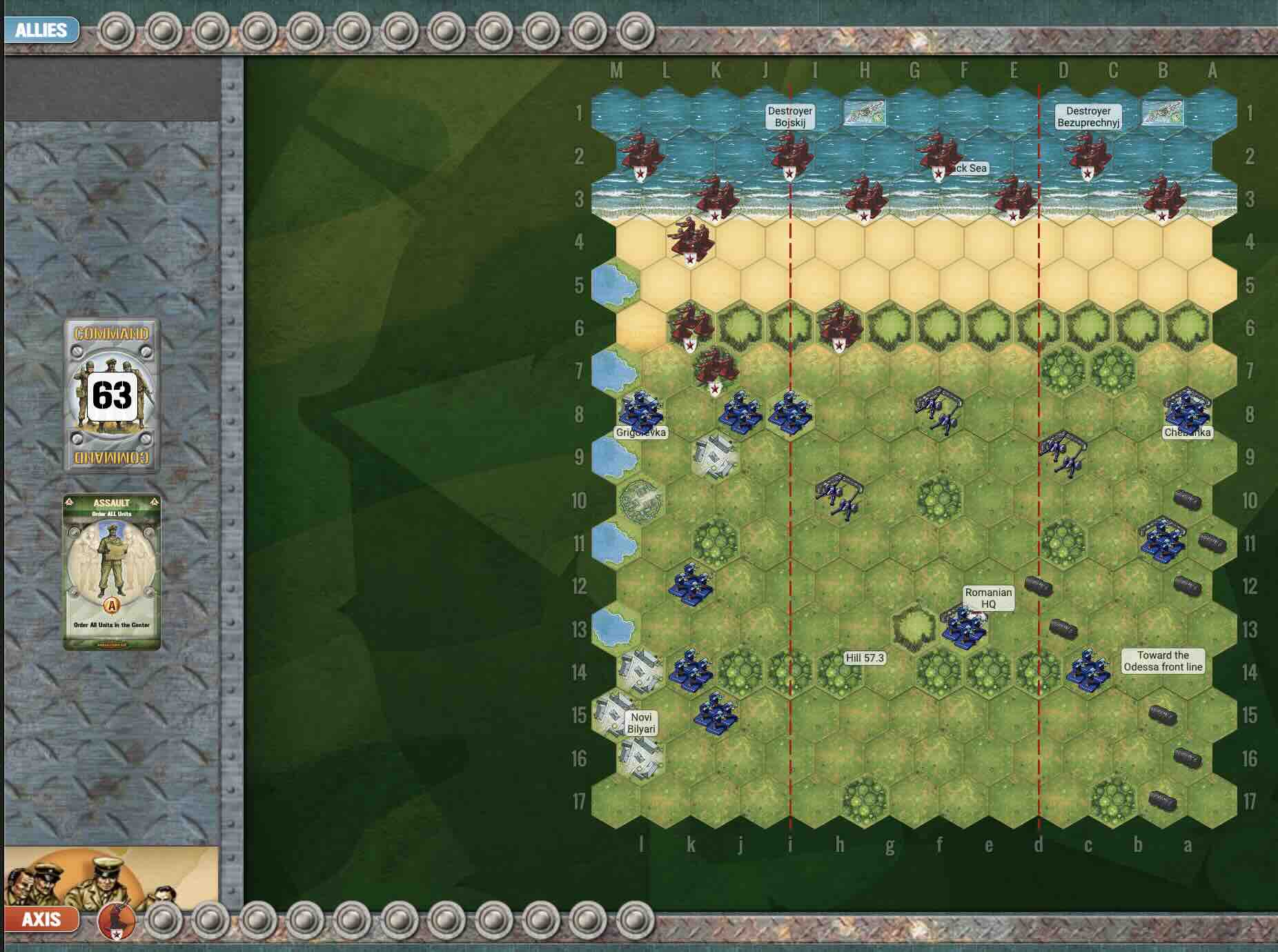
12 VP’s, plus Objective Medals for Allies for the Romanian HQ, and each Artillery battery destroyed.

Battlefield:

Countrsyide  and beach in a deep breakthrough battlemap

Troops:

Allies (Soviet Union) – 14 Infantry, 2 Destroyers!

Axis (Romania ) – 10 Infantry, 3 Artillery


medal allies

Allied Strategy:

1. Soviets, as Allies, do a six unit paradrop.  Drop them where you have the best set of cards to assist your attack.

Also, note that the paratroopers will not battle the first turn they are dropped, so they have to endure one round of enemy fire before they can attack.

2.  The Axis outnumber you on your right flank at the start of the game, and the three forward units are in strong defensive positions, which suggests attacking elsewhere.

3.  As Allies, you have two Destroyers at the start of the game.  Two factors affecting their performance are visibility and location.

Visibility:  Because of the night visibility rules, the Axis units may have time to move out of range of the ship guns before daylight arrives.

Location: This concerns the ability to get the Destroyers onto the border line so they have more flexibility on which section cards can activate them.

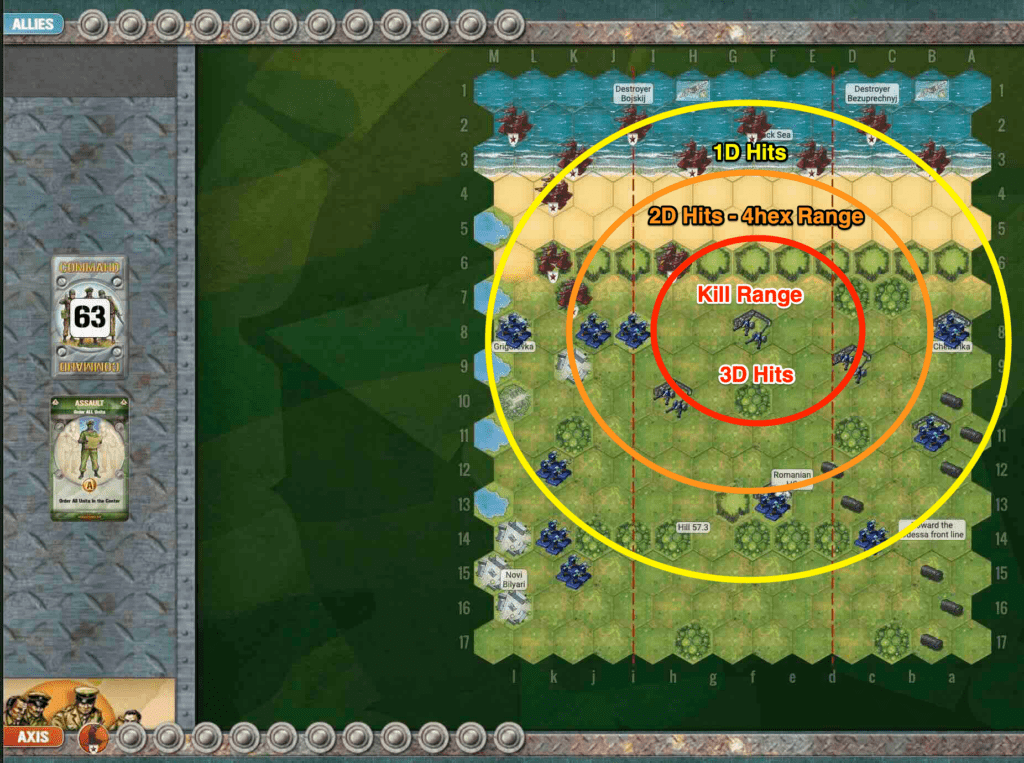
Once daylight arrives the Destroyers have a range of eight hexes, so their maximum firing range is row ten.  Of course, that is their maximum range, but their effective firing range (of 2D attacks), is actually row six.

4.  There is a Temporary Medal Objective at the Romanian HQ on row 13. If you keep pushing in that direction to keep pressure on the enemy, it should afford you some success.

5.  Each of the enemy Artillery is worth two! victory points, so target them when you can.

6.  Because the enemy has three very powerfully placed artillery, and you have a lot of artillery, your plan will have to be to so overwhelm the artillery that you are able to take them out with your superior numbers before they take you out with with their superior firepower. 

7.  Possible Attack Vector: completely by-pass the territory controlled by the enemy Artillery when you do your para-drop.  Aim for the back of the battlefield around the Romanian HQ, and the town of Novi Bilvari. There are plenty of Infantry units to take out, while you wait for daylight to arrive, so that your Destroyers can engage with the Artillery batteries.

Big Picture Strategy:

1.  This is a Breakthrough game. 
The field of battle is very deep. It is more than likely your troops are not going to be placed where they need to be.  Therefore, all the section cards which allow you to attack in one section and then move units anywhere, are your friend.  In the beginning of the game it is actually as important to make use of cards that might have limited attack power (like 1 or 2), but allow you to move two units around.  This will allow you to get them into play.

2.  Nightime attack rules. 
The game starts in complete darkness, where you can only attack units that are next to you.  We know that daylight is definitely an advantage for the Allies, because once you reach full daylight, the power of the Destroyers begins to be felt, as they can reach out to row 10, and pummel you from above.  But what about Nightime settings from 2-5?  These are actually better for the Axis, as it allows them to use their Artillery and attack at a distance any of the Allied Infantry coming for them.  Because the Allied Infantry can move two hexes and still battle, they can very quickly get to the Artillery an overwhelm them.  So allowing some range attacks up to 3 hexes away is good for the Axis Artillery forces.  (See pic2 above)

medal axis

Axis Strategy:

1.  Your first defensive objective is to respond to wherever the Allied paratroopers happen to land.  Respond immediately with available Infantry and Artillery to address the threat.

2.  Bring your reserve units into play as soon as you can by moving the rear units forward on the map.

3.  Because each Artillery unit is worth two! Medals, you will need to protect them in some way.  Either move them back from the Destroyers’ range, or protect them from Infantry attacks by bringing your own Infantry into play.

4.  The enemy forces are elite, so they can move two hexes and still attack. So be aware of this so that a single Infantry unit doesn’t get surrounded and destroyed.

5.  It is going to take an average of six turns before the daylight arrives and the Destroyers are fully activated to row 10. This will give you time, if you want to, to move your Artillery further back on the battlefield out of their range. 

Battle Reports

15
BR - Soviet Raid

Author:

Days of Wonder