Namur

Namur

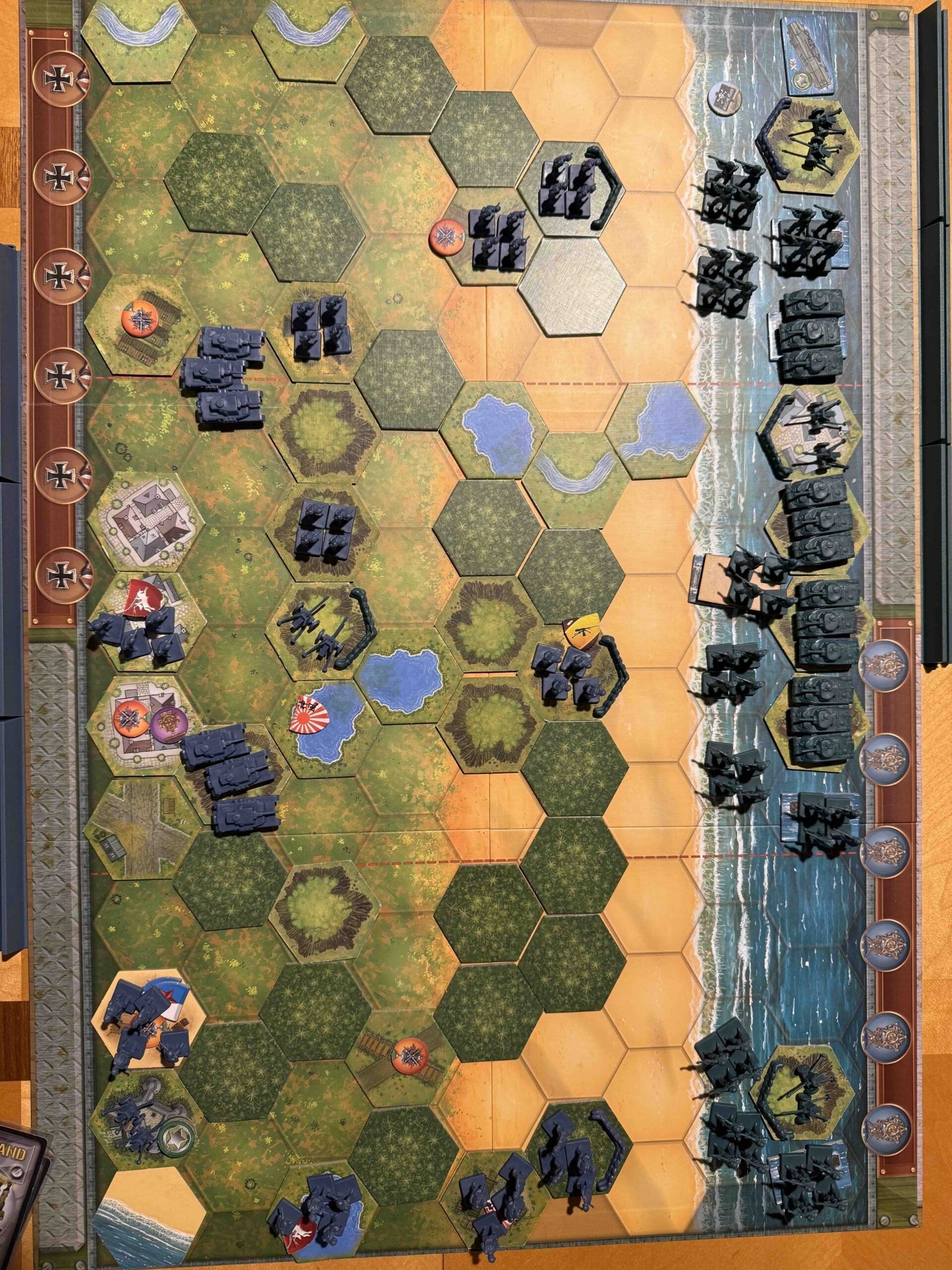
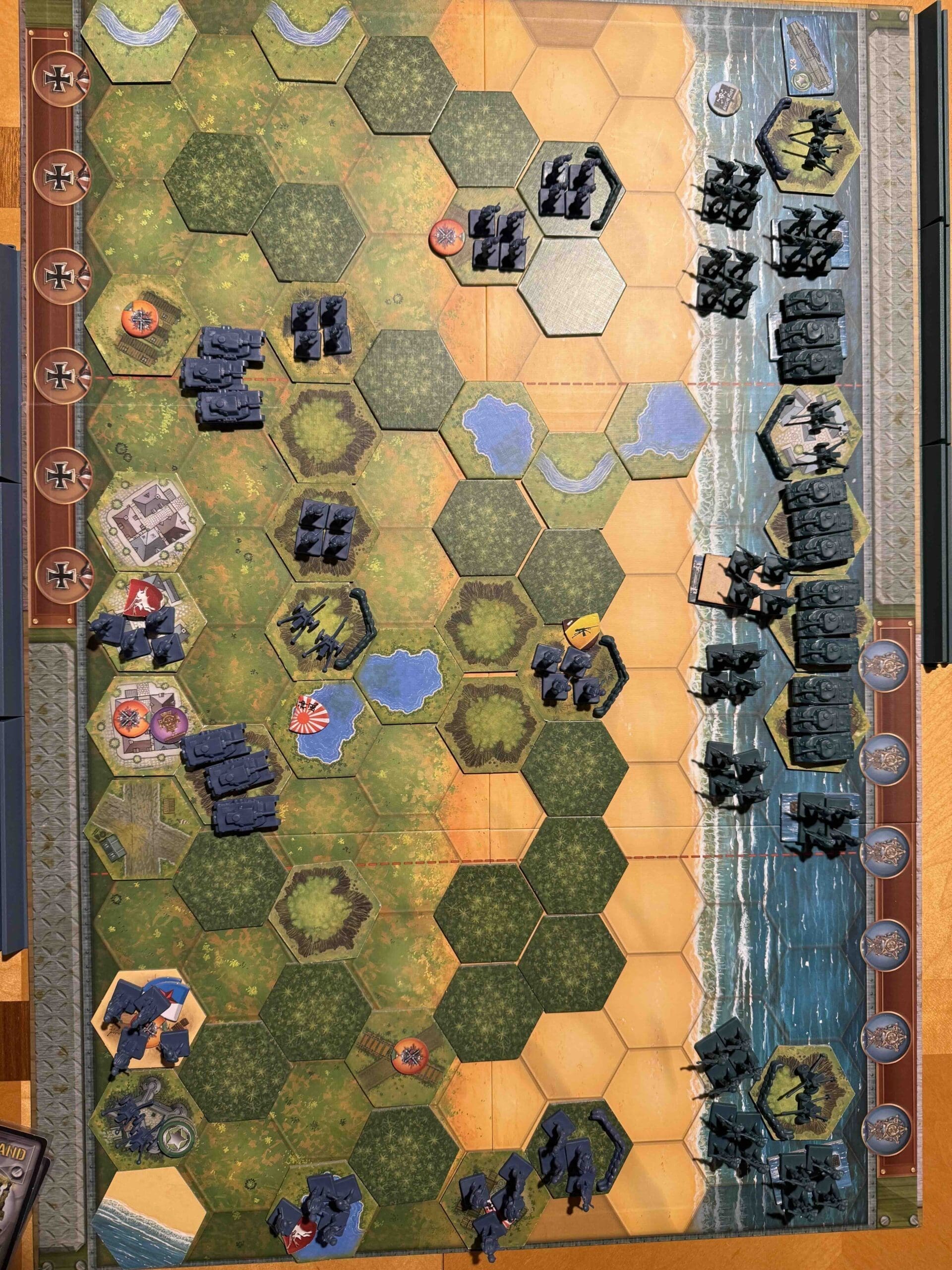
The Battle of Namur took place on February 1–2, 1944, as part of the U.S. assault on the Marshall Islands during World War II. U.S. 2nd Marine Division forces landed on Namur Island, part of the Kwajalein Atoll, facing fierce resistance from well-entrenched Japanese defenders. The battle saw intense close-quarters combat, complicated by Japanese bunkers, sniper fire, and booby traps. A massive explosion at a Japanese ammunition dump—triggered by American fire—caused heavy U.S. casualties but also disrupted enemy defenses. After two days of brutal fighting, the Marines secured the island. Namur’s capture was a key step in the U.S. island-hopping campaign, giving the Allies a critical foothold in the central Pacific and weakening Japan’s outer defensive ring.

General Howitzer’s summary:

Namur was a two-day slugfest—our 2nd Marines hit the beach and ran headfirst into bunkers, snipers, and traps laid by fanatical Japanese soldiers dug in like ticks. One hell of a blast tore through their ammo dump—and some of our boys with it—but it cracked their line wide open. When the smoke cleared, Namur was ours, and we had a solid damn grip in the Marshalls. Another island down, and one step closer to Tokyo.

5 VP’s

card

Card Balance:

Allies – 5

Axis – 5

Complexity:

3

Conditions:

Jungle Beach

Context:

Historical

Location:

Marshall Islands

Year:

1944

Theater:

Pacific

Campaign:

Codename:

Operation Flintlock

Summary:

Objectives:

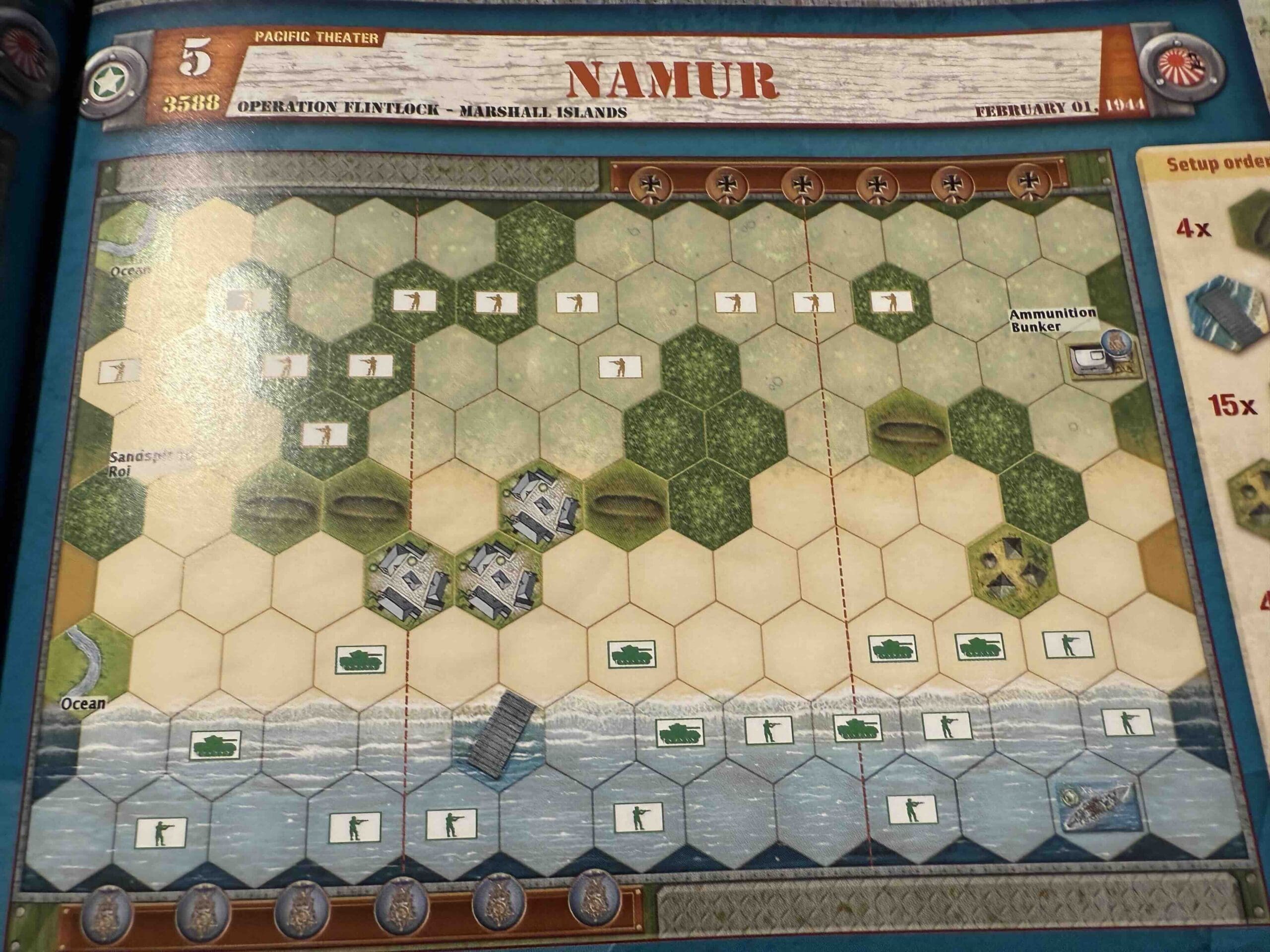
5 VP’s plus the Ammunition Bunker Permanent Medal Objective

Battlefield:

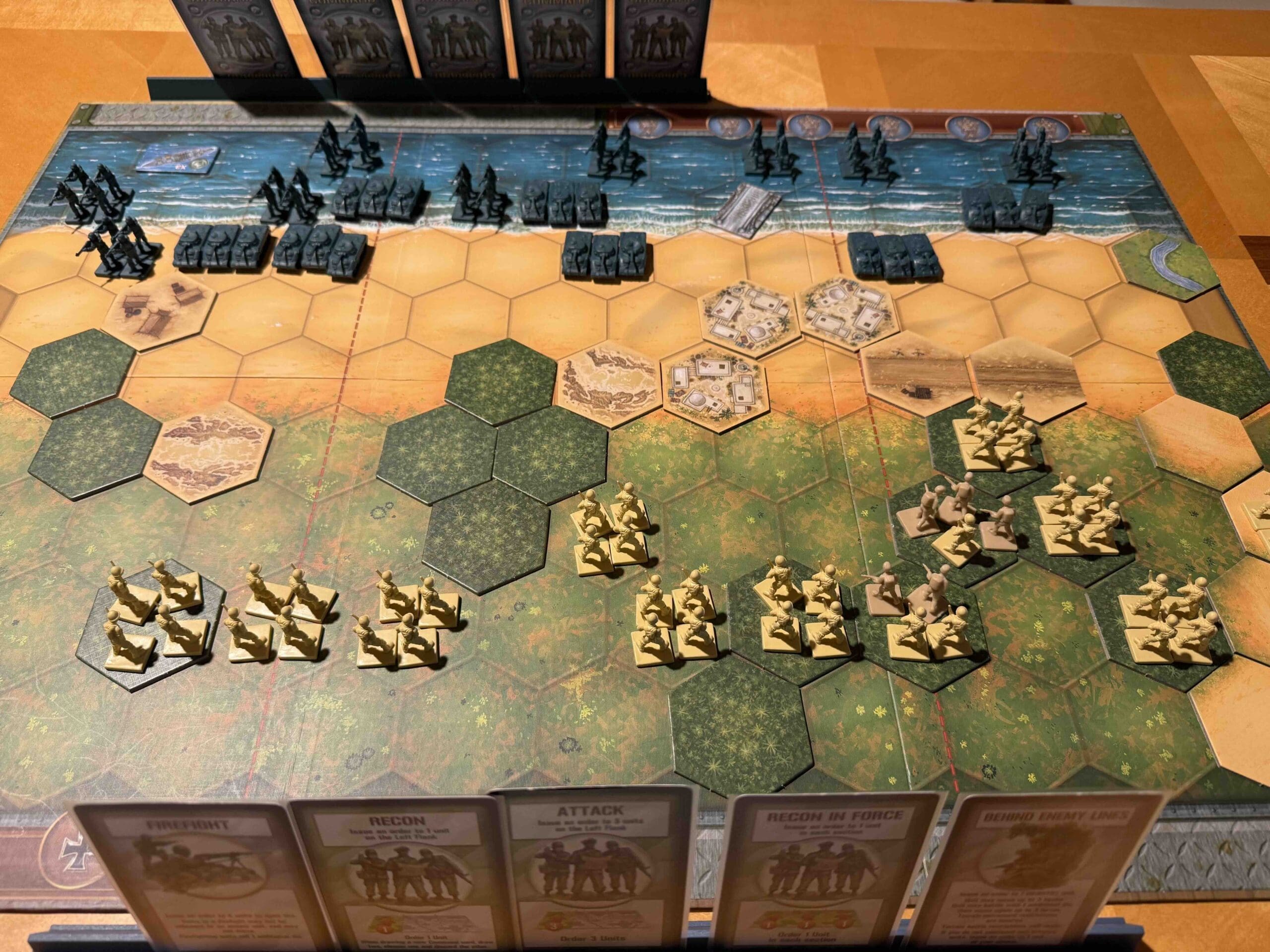
Combination of beach assault and jungle terrain with some small villages.

Troops:

Allies – 9 Infantry, 7 Armor, and a Destroyer ship

Axis – 12 Infantry


medal allies

🔥 Winning as Allies

1.  Like all beach scenarios, the first objective is to get off of the beach as quickly as possible and assemble all of your forces into a cohesive fighting unit. 

2.  You have a Destroyer which has an attack range and power of 3,3,2,2,1,1,1,1; so 8 hexes deep!  Plus with a successful hit you gain a targetting reticule upon the hex, which increases the dice by one until the hex is destroyed or vacated.   Use it!

3.  Use your Armor to soften up the enemy at a distance, should any of them venture near the shore.  Remember that because of the Seishin Kyoiku principle, and full-force Japanese units attack with four dice at Close Range.  So hit each one at least once before venturing near them.

4.  The Ammunition Bunker is a Permanent Medal Objective(!) – if you can blow it up.  So occupy it and roll two dice, and hope for a star; but a grenade will kill one of your Marine figures, so be careful!

medal axis

🔥 Winning as Axis

1.  You have superior numbers on your right flank and central section.  So move your forces into the jungles and town hexes to hold off the enemy forces.

2.  Get close and then by combining the Banzai two-hex Close Assault attack with any full-force units, you can hit them with the Seishin Kyoiku princple and roll four-dice with each attack.

3.  Guard the ammunition bunker so that the enemy does not get an easy Permanent Medal Objective.

4.  With all of the enemy tanks in the area, do not get any of your forces caught in the open.

Battle Reports

1
BR - Namur

Author:

Days of Wonder

Resource:

Campaign Book, Volume 2
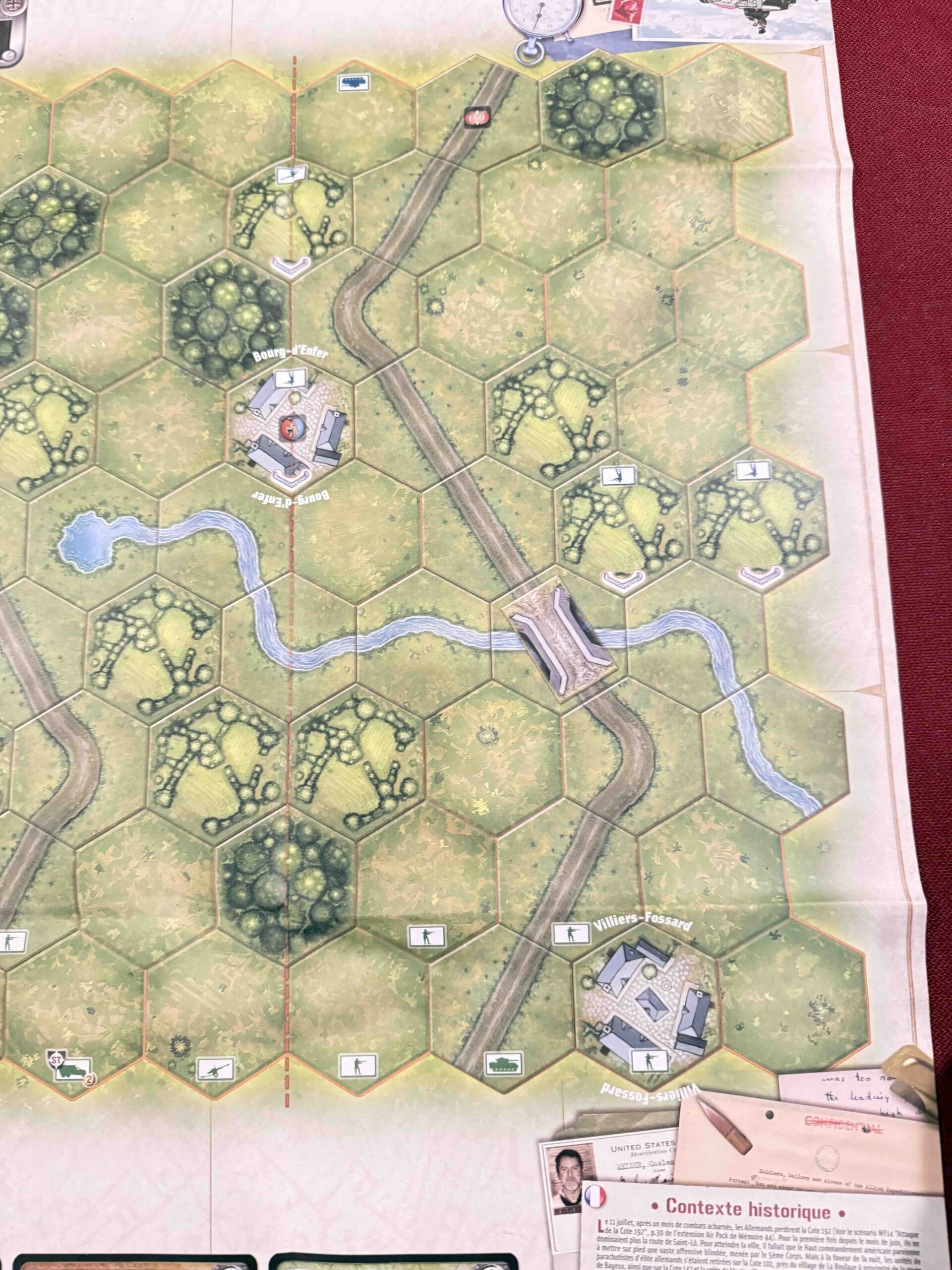
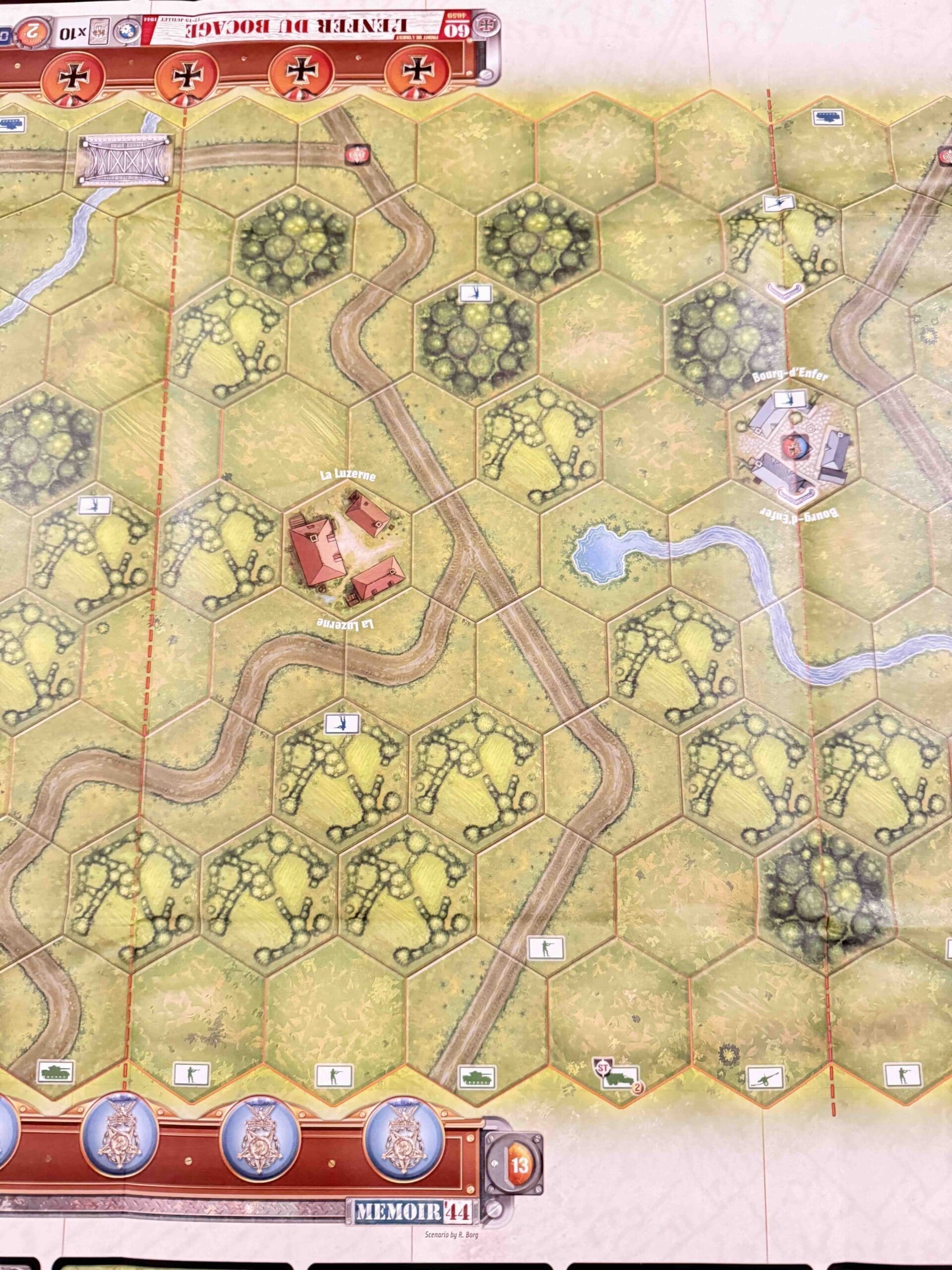
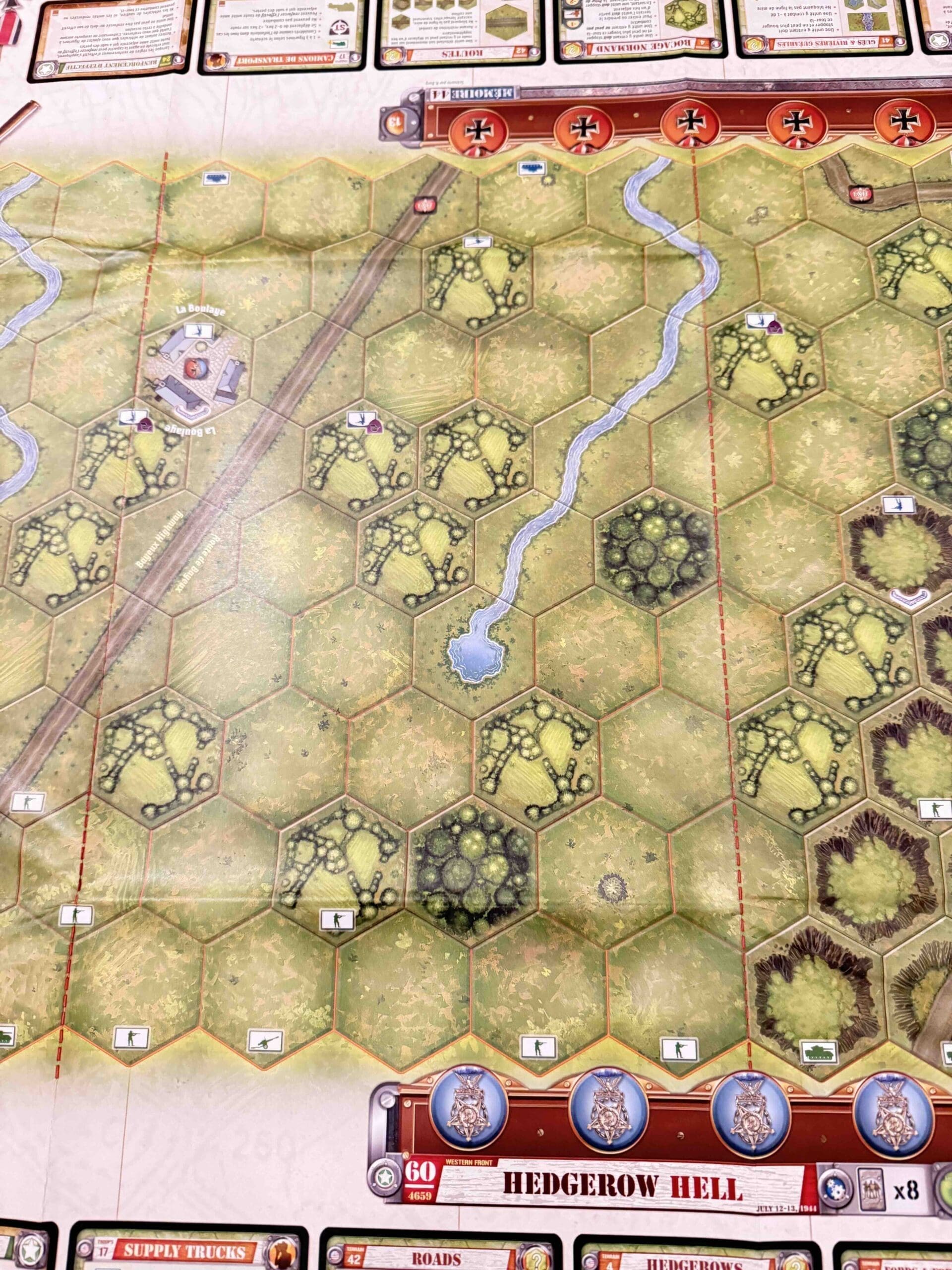
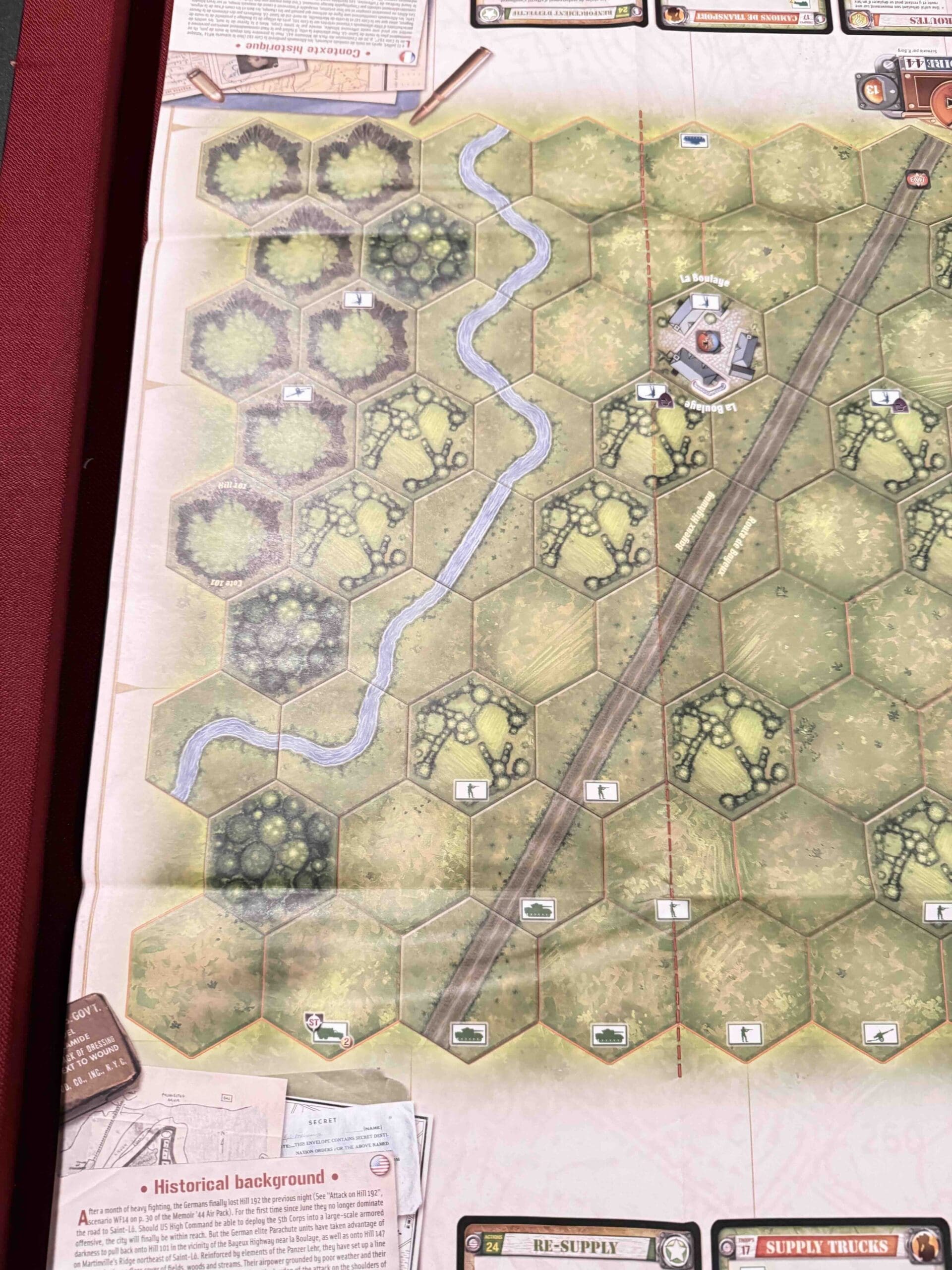
Hedgerow Hell

Hedgerow Hell

Here’s a brief summary of the Battle of Hedgerow Hell in July 1944:

  • When & Where:
    July 1944, in the dense hedgerow country of Normandy, France.

  • Context:
    After the D-Day landings, U.S. forces faced stiff German resistance in the bocage (hedgerow) terrain, which made attacks and movements extremely difficult.

  • The Battle:
    Fighting was slow and brutal—close-quarters combat with tanks and infantry often forced to blast through thick hedgerows. German forces used the terrain to launch ambushes and hold up the American advance.

  • Outcome:
    Despite the difficulties, American troops adapted with new tactics and overcame German defenses, breaking out of the hedgerows and paving the way for the later launch of Operation Cobra.

Here is General Howitzer’s comments on it:

“Listen up, men! July ‘44 in Normandy—the damn hedgerows were like fighting in a jungle made of dirt and stone, and the Germans knew every inch of it. We called it Hedgerow Hell, and that’s exactly what it was.

We started on July 1st, smashing forward, inch by inch, day by day. Those Germans were dug in like ticks, every hedgerow a fortress, every field a killing ground. But our boys didn’t back down—they learned to blow holes in those hedgerows with explosives, and we turned those obstacles into stepping stones.

Week by week, we kept at it—infantry, tanks, engineers working together, and by the end of July, we’d beaten the bastards back. We learned to fight smarter, and we learned to hit ‘em so hard they couldn’t catch their breath.

July 25th—Operation Cobra—that was the payoff, boys! We broke out of that green hell and took the fight back to where they didn’t have those hedgerows to hide in.

So remember this—no matter how tough the terrain or how deep the enemy’s dug in, we keep pushing, keep killing, and never let the bastards stop us!

13 VP’s

card

Card Balance:

Allies – 8

Axis – 10

Complexity:

5

Conditions:

Countryside

countryside

Context:

Historical

Location:

Normandy, France

Year:

1944

Theater:

Western

Campaign:

Normandy

Codename:

Summary:

Objectives:

13 VP’s, plus Territorial Objective Medals for each side, and Exit hexes for the Allies.

Battlefield:

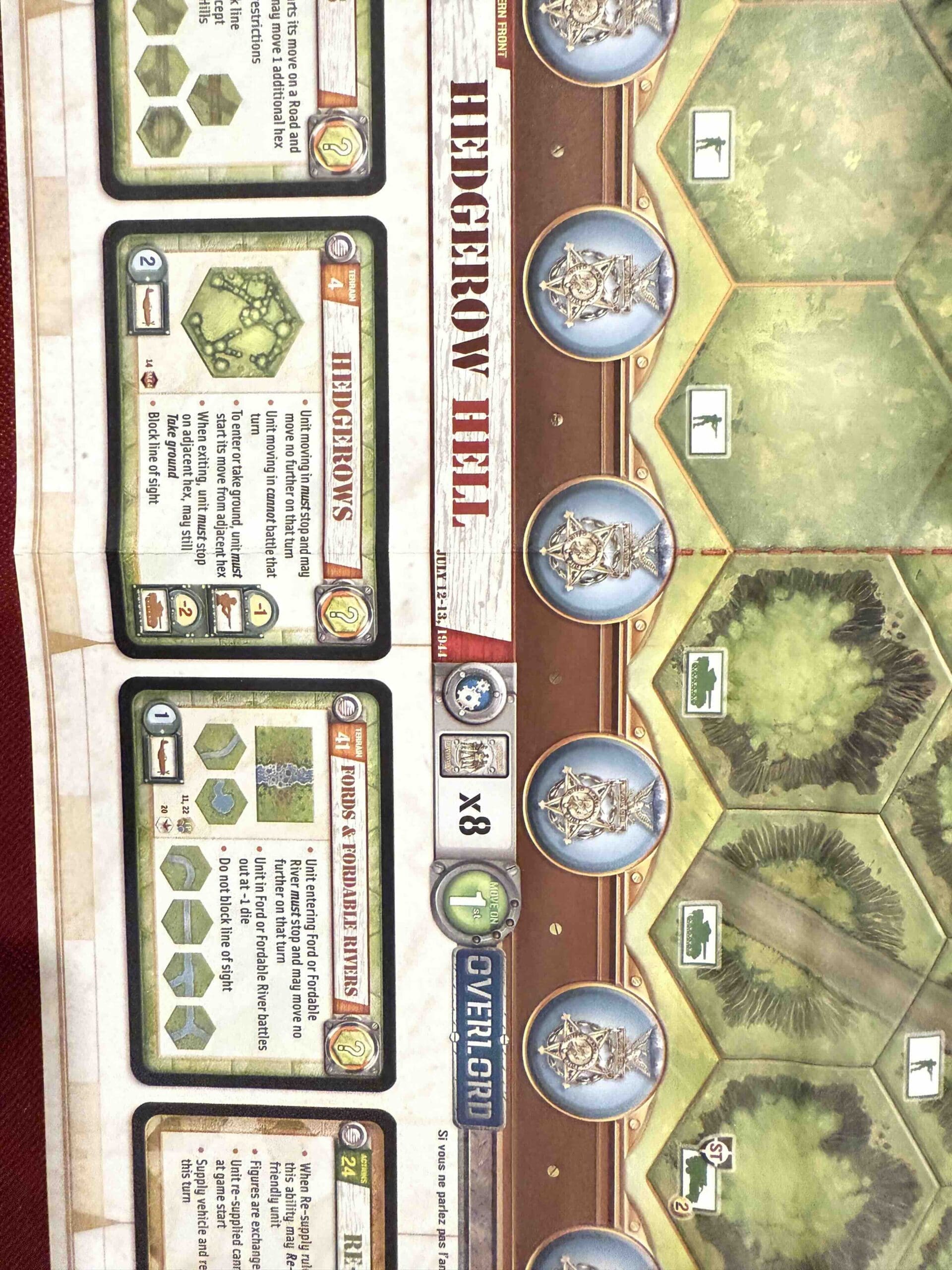
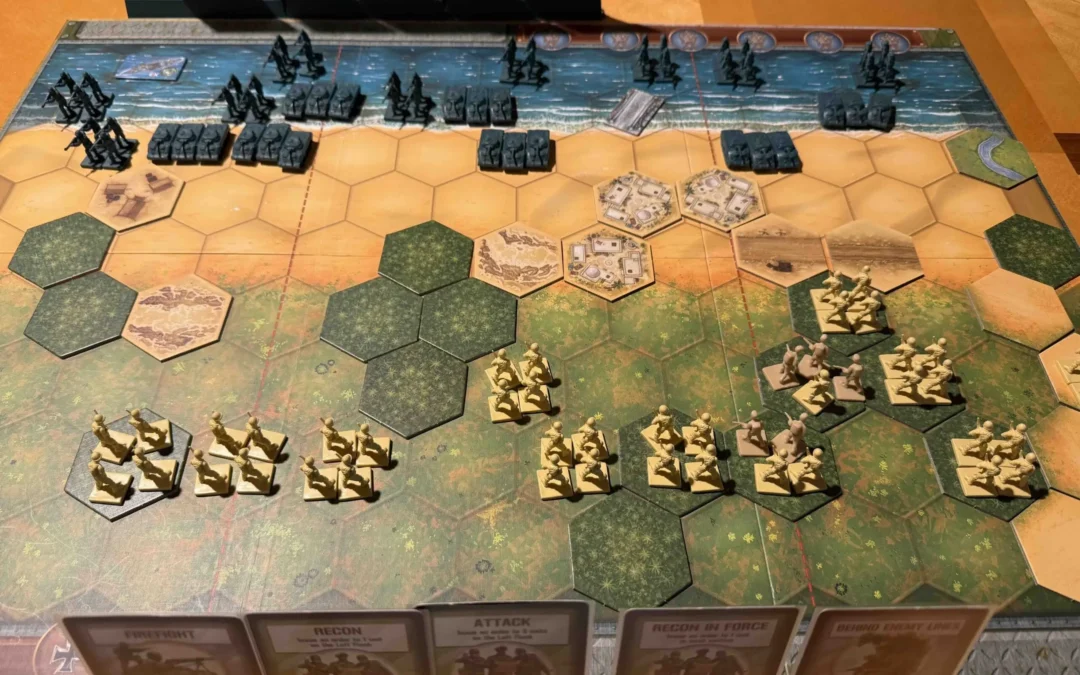
Countryside with rivers, roads, hills, and many hedgerows.

Troops:

Allies – 21 Infantry, 8 Armor and some Trucks, 3 Artillery

Axis – 14 Infantry, 5 Armor, 4 Artillery


medal allies

Allied Strategy:

1.

medal axis

Axis Strategy

1. 

Battle Reports

0
BR - Hedgerow Hell

Author:

Days of Wonder

Tightening the Noose

Tightening the Noose

“Listen up! In August ‘39, the Red Army under that tough son of a gun, Zhukov, went to work along the Khalkhin-Gol River—right on the border of Mongolia and Manchuria. The Japanese wanted to push their luck and bite off a chunk of land, but Zhukov wasn’t about to let that happen.

He took tanks, infantry, artillery, and air power, and he tightened that noose like a hangman on payday! Those Japanese 23rd Division boys didn’t know what hit ‘em—no way out, no way to retreat, just the iron hammer of the Soviets crushing them from every side.

The result? A total victory for Zhukov and his Red Army, driving the Japanese back and showing the world that these Russians could fight, surround, and destroy like nobody’s business. That’s the kind of operation I like, boys—surround ‘em, cut ‘em down, and don’t stop until the job’s done!

~~ General Howitzer

8 VP’s

Card Balance:

Allies – 7

Axis – 4

Complexity:

4

Conditions:

Countryside

countryside

Context:

Historical

Location:

Mongolia

Year:

1939

Theater:

Eastern

Campaign:

Codename:

Summary:

Objectives:

8 VP’s, plus Territorial Objective Medals for each side

Battlefield:

Countrsyide with a road and a river stretching up and down the battlefield

Troops:

Allies (Soviet Union) – 9 Infantry, 9 Armor, 3 Artillery

Axis (Japanese ) – 10 Infantry, 2 Armor, 1 Artillery


medal allies

Allied Strategy:

1.

medal axis

Axis Strategy

1. 

Battle Reports

0
BR - Tightening the Noose

Author:

Days of Wonder

Operation Crusader

Operation Crusader

“Listen up, men! In November ‘41, the British Eighth Army—under the command of General Auchinleck—thundered across the sands of the Marmaric Desert like a damn hurricane, aimed straight at those Italian-German armored divisions. Cunningham’s boys rolled out with 700 tanks, ready to grind the Germans and their Italian buddies into the dirt and lift the siege at Tobruk.

For three weeks, it was a seesaw slugfest around Sidi Rezegh, with that garrison at Tobruk busting out to join the main show. The German Panzergruppe fought like devils, but they were no match for the sheer weight of British armor and artillery.

Rommel might have been a cagey fox, but even he had to admit defeat when he saw the Eight Army rolling over his battered panzers. He ordered the survivors to pull back to Gazala, leaving Tobruk free and the British in charge of the field. That’s what happens when you bring overwhelming firepower to a knife fight, boys—you don’t just win, you drive the enemy clean out of the desert!

~~ General Howitzer

12 VP’s

Card Balance:

Allies – 6

Axis – 6

Complexity:

4

Conditions:

Desert

Context:

Historical

Location:

Libya

Year:

1941

Theater:

Mediterranean

Campaign:

Tobruk Breakout

Codename:

Operation Crusader

Summary:

Objectives:

12 VP’s, plus a Territorial Objective Medal for the Axis.

Battlefield:

Desert with a ridge of hills in the center of the battlefield.

Troops:

Allies  – 10 Infantry, 8 Armor, 3 Artillery (Big Guns and Mobile)

Axis  – 10 Infantry, 5 Armor, 3 Artillery (including a Flak88 and a Big Gun)

Special Rules:

1.  The German Medal in the Campaign Headquarters on the Allied baseline [F1] is a Permanent Medal Objective for the Axis player.

2.  Oasis Recovery rules are in effect at Bir el Chleta, Bir el Gobi and Gabr Saleh, and each sides HQ tent.

3.  The Allied player lays out the minefields around Tobruk and the Axis player everywhere else.

4.  The Axis Artillery at L3 is a Flak 88, and hits at 2,2,2,2.  It must have line of site, and can ignore terrain protections. 

medal allies

🔥 Winning as Allies

1.  Make use of your Tobruk forces and especially the Artillery as much as possible.

2.  You have a massive force gathered together in the center section.  You will need to peel off a few to deal with the isolated Axis forces at hex 6 and 7 on your right section, and the rest towards the Axis forces on the other side.

Overall Strategy

1.  Both sides have to make immediate decisions on overall strategy. Do the Allies move straight for Tobrouk, or the Axis main force, or do they clean up the battlefield from A to M as they go?  [~Admiral Frigate] 

2.  There are four Oasis hexes; two primarily in Allied territory and two mainly in the Axis territory.  This is a long scenario, so take the opportunity to restore your units back to strength. 

3.  ADVICE FROM JDROMMEL, THE CREATOR OF THIS SCENARIO:

  • About Crusader, the best way, if possible, is an attack in force and continue for the British side on any section (Bir el Gobi, or Halfaya or in the center).
  • For the Axis side, the best is to resist first and then counter-attack with Afrika-Korps units.

medal axis

🔥 Winning as Axis

1.  If you can surround and wipe out the forces at Tobrouk quickly, then your forces can swing around and assist your brothers at arms further north.

2.  Your Big Gun at I15 is in range to attack the units in Tobruk.  Once you get one hit, your permanent targeting reticule will give you one extra dice roll for that hex.  Through the course of a long game, you can earn one or two medals this way if you faithfully fire it at every opportunity given.

3.  You have a Mobile Artillery, keep moving it forward at every opportunity. You can make for the hills to your right. It will serve you well against the mass of Allied forces headed your way.

Battle Reports

28
BR - Crusader

Author: Jdrommel

Link:

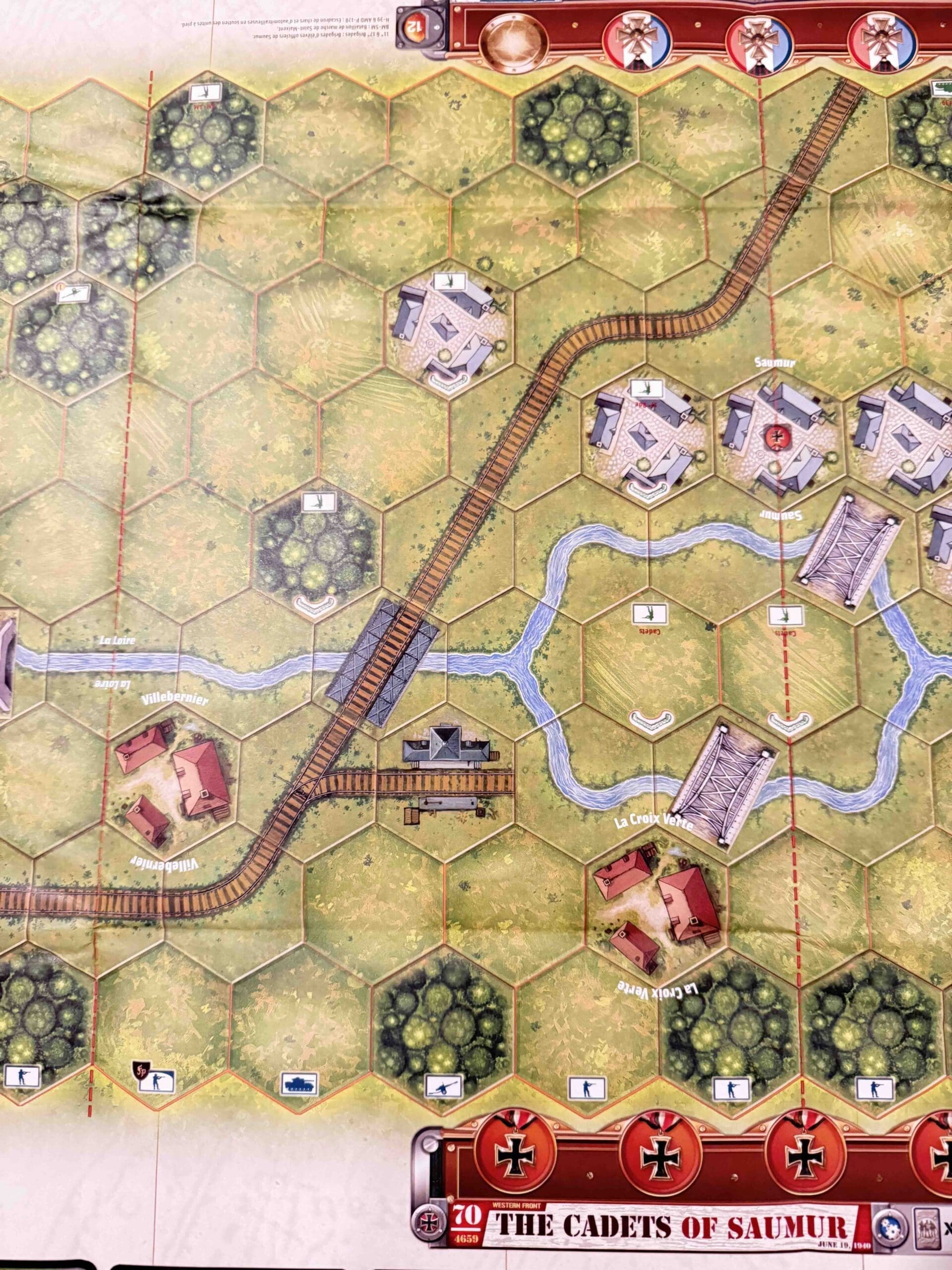
The Cadets of Saumur

The Cadets of Saumur (Overlord Map)

“Let me give it to you straight, boys—back in ‘39, before the big show kicked off in Europe, there was a damn fine brawl brewing out east along the Khalkhin-Gol River. The Soviets, under that iron bastard Zhukov, took on the Japanese who were itching for a scrap in the borderlands.

Those Russians didn’t just trade blows—they went for the kill. They wrapped the Japanese 23rd Division up tight in a steel trap—tanks on the flanks, artillery in the rear, and air power pounding them into the dirt. No escape, no second chances—just one big, smoking ruin when the Red Army was done.

The result? The Japanese learned a lesson in modern warfare and didn’t forget it, and Zhukov walked out of there with a reputation as the man who could gut an enemy army whole. That’s how you fight a battle, boys—encircle, crush, and leave nothing but wreckage behind!

~~ General Howitzer

Timeline of the Battle:

  • June 17, 1940
    German forces approach the Loire River as French defenses collapse elsewhere. Cadets at Saumur are ordered to hold the bridges.

  • June 18, 1940
    The cadets and their instructors begin preparing defenses, mining bridges, and setting up strongpoints.

  • June 19, 1940
    German troops launch assaults to seize the Saumur bridges. The cadets, though heavily outnumbered, fiercely resist throughout the day and destroy bridges to slow the advance.

  • June 20, 1940
    After holding for two days and inflicting delays on the Germans, the cadets receive orders to withdraw. German forces occupy Saumur later that day.

12 VP’s

Card Balance:

Allies (France) – 8

Axis – 10

Complexity:

4

Conditions:

Countryside

countryside

Context:

Historical

Location:

France

Year:

1940

Theater:

Western

Campaign:

Codename:

Summary:

Objectives:

12 VP’s with two Permanent Medal Objectives for the Axis.

Battlefield:

Countryside with many rivers, railroad,  and towns

Troops:

Allies  – 17 Infantry, 2 Armor, 3 Artillery

Axis  – 20 Infanty, 3 Armor, 3 Artillery


Allied Strategy:

1.  

Axis Strategy

1.  

Battle Reports

0
BR - Cadets

Author: Jdrommel

Link:

Cape Torokina Landings

Cape Torokina Landings (Overlord Map)

“Listen up, men! On November 1st, 1943, our boys hit those beaches at Cape Torokina like a thunderbolt. Those Marines of the 1st and 3rd Divisions didn’t blink at the sight of jungle, mud, and dug-in enemy troops. They took that beachhead by the throat and held on like bulldogs!

This wasn’t just another island—it was the gateway to busting open Rabaul and cutting off those Japanese forces. The jungle was a green hell, but we cut through it, took the ground, and started building the airstrips and supply bases to keep the hammer coming down.

That’s how you do it, boys—land hard, fight harder, and don’t stop until you’ve got a fortress behind you and the enemy on the run. That’s what those Marines did at Cape Torokina—they paved the road to victory in the Pacific!

~~ General Howitzer

Timeline of the Cape Torokina Landings (Bougainville)

  • November 1, 1943D-Day for Cape Torokina:
    U.S. 1st and 3rd Marine Divisions land at Cape Torokina. Initial beachhead secured despite Japanese resistance and tough jungle terrain.

  • November 2–3, 1943
    Marines expand the perimeter, clearing Japanese defenses in nearby jungle areas.

  • Mid-November 1943
    Seabees and engineers begin constructing airfields and supply bases within the beachhead.

  • December 1943–January 1944
    Marines fortify positions, repel repeated Japanese counterattacks.
    Japanese strongpoints isolated and bypassed.

  • March–April 1944
    U.S. Army relieves Marines; continuing operations to expand and secure the beachhead.

15 VP’s

Card Balance:

Allies (Marines) – 9

Axis (Japan) – 8

Complexity:

4

Conditions:

Beach

Context:

Historical

Location:

Solomon Islands

Year:

1943

Theater:

Pacific

Campaign:

Bougainville

Codename:

Summary:

Objectives:

15 VP’s with various Medal Objectives for various territorial control.

Battlefield:

Islands with many rivers, roads, jungles, and hills

Troops:

Allies  – 21 Infantry, 4 Armor, 2 Destroyers, with Landing Crafts to bring them ashore

Axis  – 18 Infantry some with Special Weapons, 1 Armor, 1 Artillery


medal allies

🔥 Winning as Allies

1.  There are a number of special rules which you need to be aware as commander of the Allied forces.  First, there are two islands (Torokina & Puruata), which must be taken. Because the enemy begins the battle with forces on the islands, they start the battle with two victory medals.  As soon as you eliminate the enemy from an island, you will cause them to lose a victory medal, but you will NOT gain one.    Also note that because the Landing Crafts (LC’s) leave after dropping off your troops, they will be stranded on that island. So make sure you commit enough troops to win, but not too many.

2.  There are also three Field Bunkers which provide Temporary Territorial Medals to whichever side occupies them.  But you must remain in the bunker to keep the medals. 

3.  What this means then, is that although you begin the battle with overwhelming force, in order to clear the islands, and then occupy the Field Bunkers, you will need to be leaving troops at each of those locations.  So your attack force will be diminished for each parcel of land which you capture.  This must be factored into your planning commander!

medal axis

🔥 Winning as Axis

1.  Your primary role in this battle is a defensive one, but that does not mean passive.  You have troops which need to be prepared to fight and brought into the battle arena.

2.  You have an Armor unit stuck in the corner in the right flank. Get it into the action as soon as you can.

3.  You also have an Artillery which you should use at every opportunity to attack the enemy as they come ashore.

4.  Make use of the Seishin Kyoiku doctrine to attack with your full force units at every opportunity in order to maximize your extra firepower while they are still strong.

5. You have a lot of forces on the two islands.  Make the enemy pay for every inch of ground they take on the islands in order to reduce their main attack force.

Battle Reports

1
BR - Torokina

Author:

Days of Wonder

Link: