


The Sausage War [Winter War]
The Sausage War [Winter War]

Victory
6 Medals
Card Balance
Finnish: 5
Soviet: 5
First Player
Soviet
Conditions
Winter
Date: December 10–11, 1939 Location: Finland
Theater: Eastern Front Campaign: Winter War
Historical Background
On the evening of Sunday 10 December, as the Finns continued to hold the vital Tolvajärvi village, news of a threat to their rear reached Commander Talvela. After a long march, the Soviet 718th Rifle Regiment had finally arrived in the area. Instead of settling down to rest, these troops had immediately pressed on. Swinging west around the side of Tolvajärvi village, they were now about to encircle the Finns, threatening the undefended supply columns.
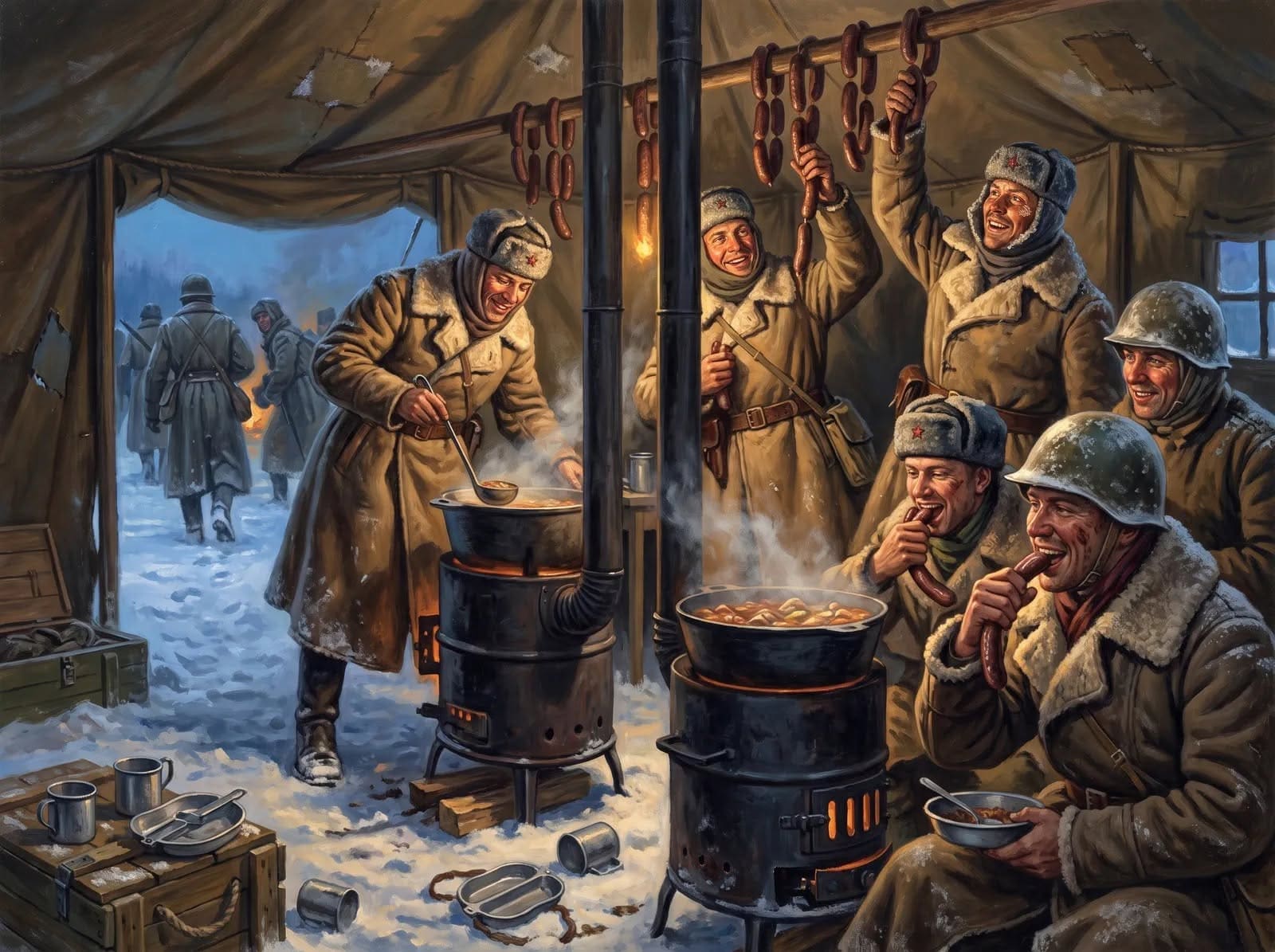
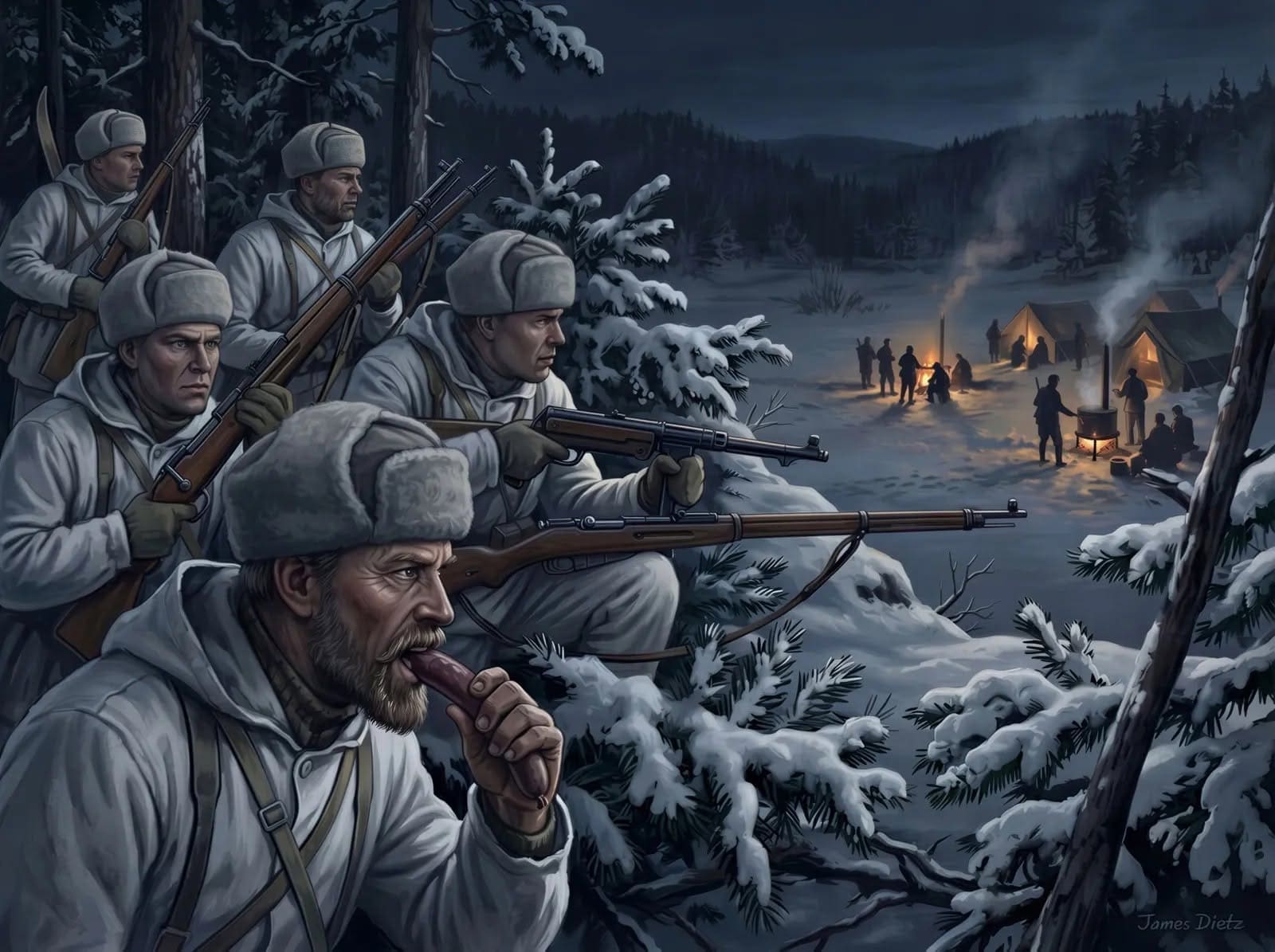
Despite their initial success in overcoming the surprised defenders, the Soviet attack halted as soon as the Finnish soup kitchens had been secured. After their five-day forced march, the men of the 718th Rifle Regiment were so hungry and tired that they now forgot all about fighting and proceeded to gorge on hot sausage stew.
As luck would have it, Commander Pajari also happened to be in the area. The unwitting Soviets had given the Finns the respite needed to organise their defences by pausing their attack to feast. Now, with his usual alacrity, Pajari formed up a couple of ragtag companies from cooks, clerks and other rear-echelon staff who had been previously scattered by the Soviet assault.
In the dead of night, the Finns began their counter-attack; this soon turned into fierce hand-to-hand combat.
In the cold light of dawn, it came apparent that the supply troops had emphatically blocked this Soviet pincer movement. During the fighting, the Finns had lost 20 dead and 55 wounded, but left over 100 dead Red Army troops on the field. Pieces of sausages were recovered from the freezing bodies of the fallen foes; the surprise had been so complete that some had even died with food still in their mouths. This episode was spoken of afterwards by the Finns as the “Sausage War”.
Briefing
Finnish Player: Take 5 Command Cards.
Soviet Player: Take 5 Command Cards. You move first.
Conditions of Victory
6 Medals
Tolvajärvi village is a Temporary Objective Victory Medal for the Soviet Player.
The kitchen trench is a Temporary Objective Victory Medal for both players.
Special Rules
Russian Command Rules [Nations 2] are in effect.
Finnish Ski Troops [Troops 9] rules are in effect for only the Finnish units marked with the badges. The other three figure units represent the supply and kitchen troops.
Heroic Leader rules [Actions 8] are in effect for the Finnish unit marked with the Battle Star, representing Commander Pajari.
The Marsh hexes represent the frozen lakes. The ice was not thick enough for tanks, so these hexes are impassable for tanks. Infantry may enter the hexes with no effect upon them, except that any unit on a Frozen Lake Hex is considered exposed and is thus also hit by any Stars rolled against it.
When the Soviet Player occupies the kitchen trench hex, flip the Commissar token as you would a coin. On heads, there is no effect; the Commissar keeps the hungry troops in line. If it lands on the star though, that unit may not be ordered on the Soviet players next turn. (It can also not use an Ambush card if targeted by the Finns). At the beginning of the turn, repeat the process to see if they get their act together or keep feasting into the next turn. Repeat the process again next turn if needed.
Source/Authorship: Harley Southwell
Scenario map and text reproduced from the supplied scenario PDF. Symbols & Graphics Copyright (c) 2004–2026 Days of Wonder, Inc. Produced with permission, for non-commercial use only.

