Sword of Stalingrad

Sword of Stalingrad

Sword-Stalingrad

Stalingrad. July ’42 to February ’43. One of the bloodiest, ugliest slugfests in the history of war—and the place where Hitler’s dreams started bleeding out in the snow.

The Germans charged in hard, aiming to take the city and crack open the Soviet underbelly on their way to the Caucasus oil fields. They bombed Stalingrad to rubble, thinking they could steamroll the Soviets in the ashes.

But rubble favors the defender—and the Soviets fought like wild dogs in every street, every cellar, every damn staircase. House-to-house, room-by-room, tooth-and-nail. The Germans took ground, lost it, and bled for every inch.

And then came the real punch: a Soviet counterattack that closed the trap, surrounded the German 6th Army, and squeezed until there was nothing left but cold, hunger, and surrender.

Stalingrad wasn’t just a Soviet victory—it was the beginning of the end for the Nazi war machine. From that frozen hellhole, the Red Army started marching west—and they didn’t stop till they hit Berlin.

You want to talk grit? Talk Stalingrad. That’s what happens when an enemy pushes too far and meets a defender with nothing left to lose.

~~ General Howitzer

17  VP’s

Card Balance:

Allies – 9

Axis – 10

plus Combat Cards

Complexity:

5

Conditions:

Urban

Location:

Russia

Year:

1942

Theater:

Eastern Front

Campaign:

Context:

Historical

Summary:

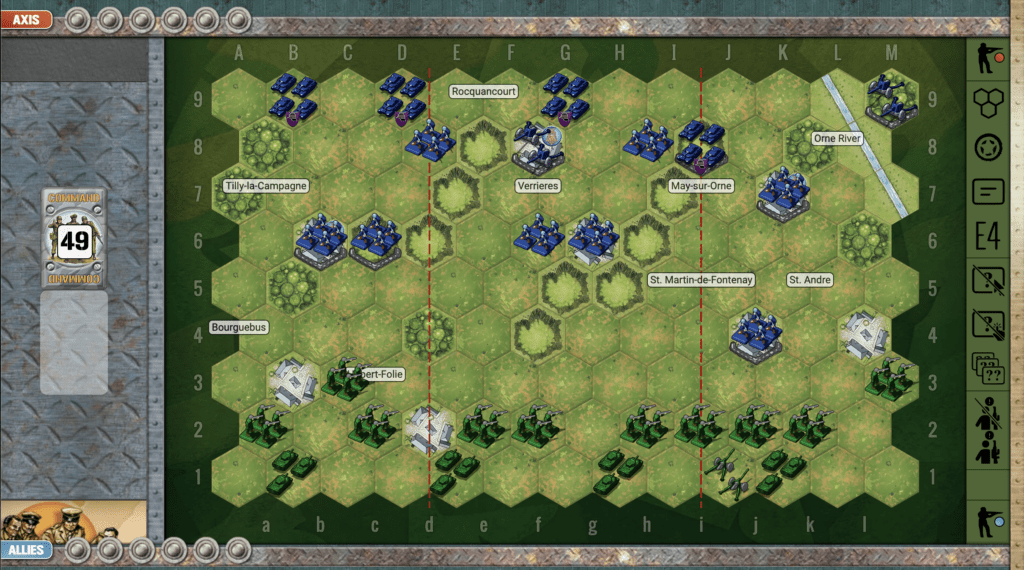
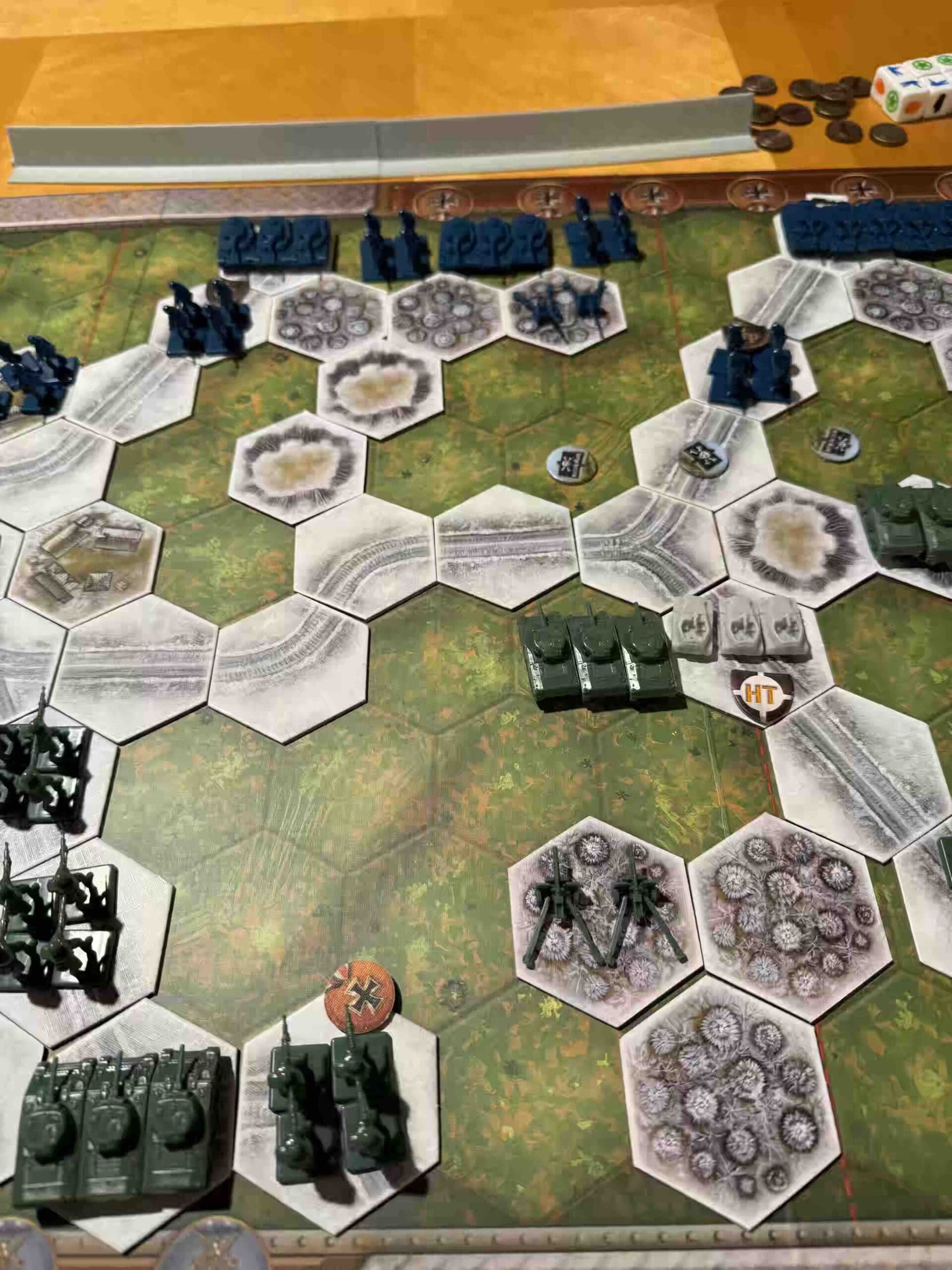
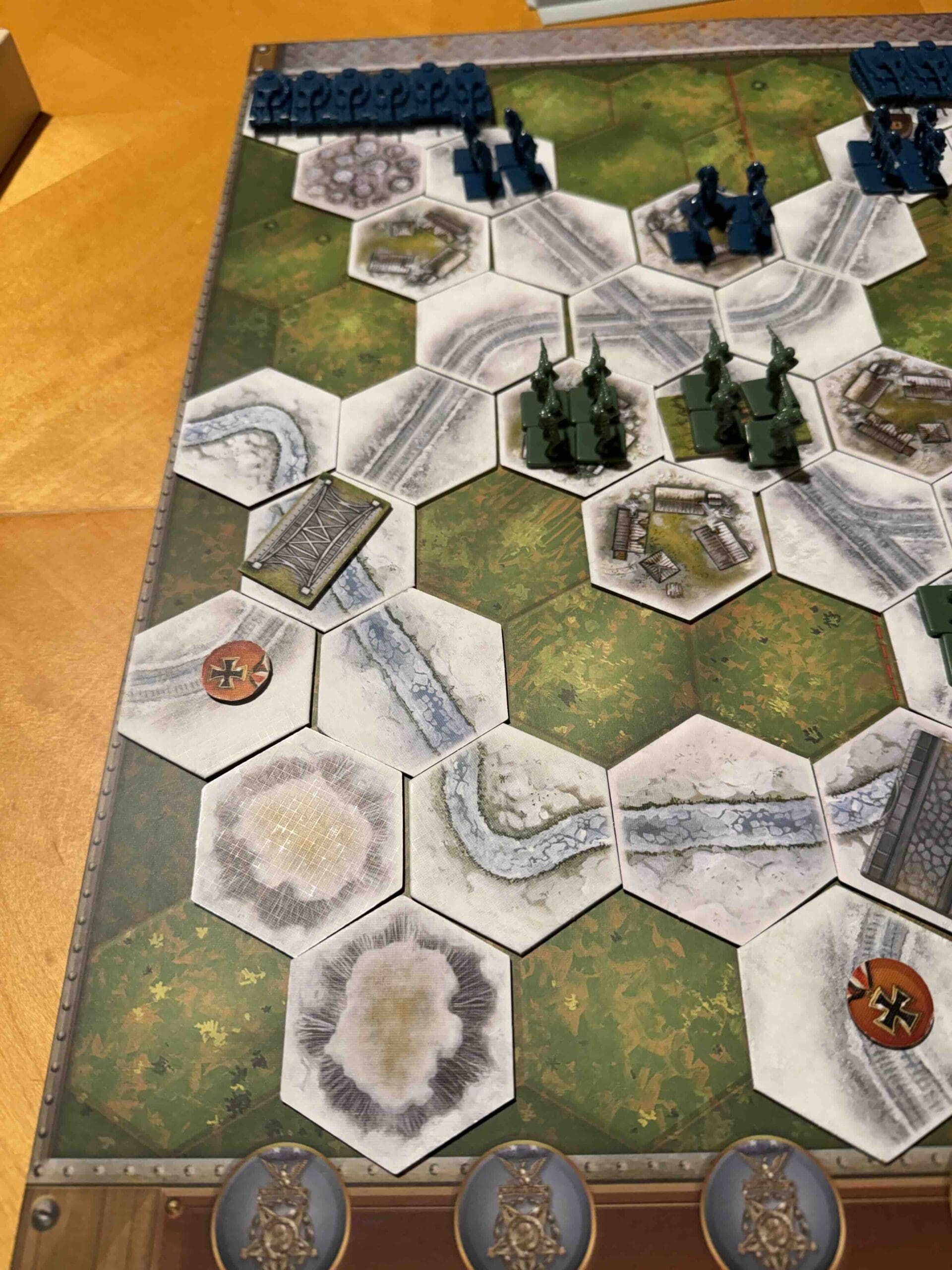
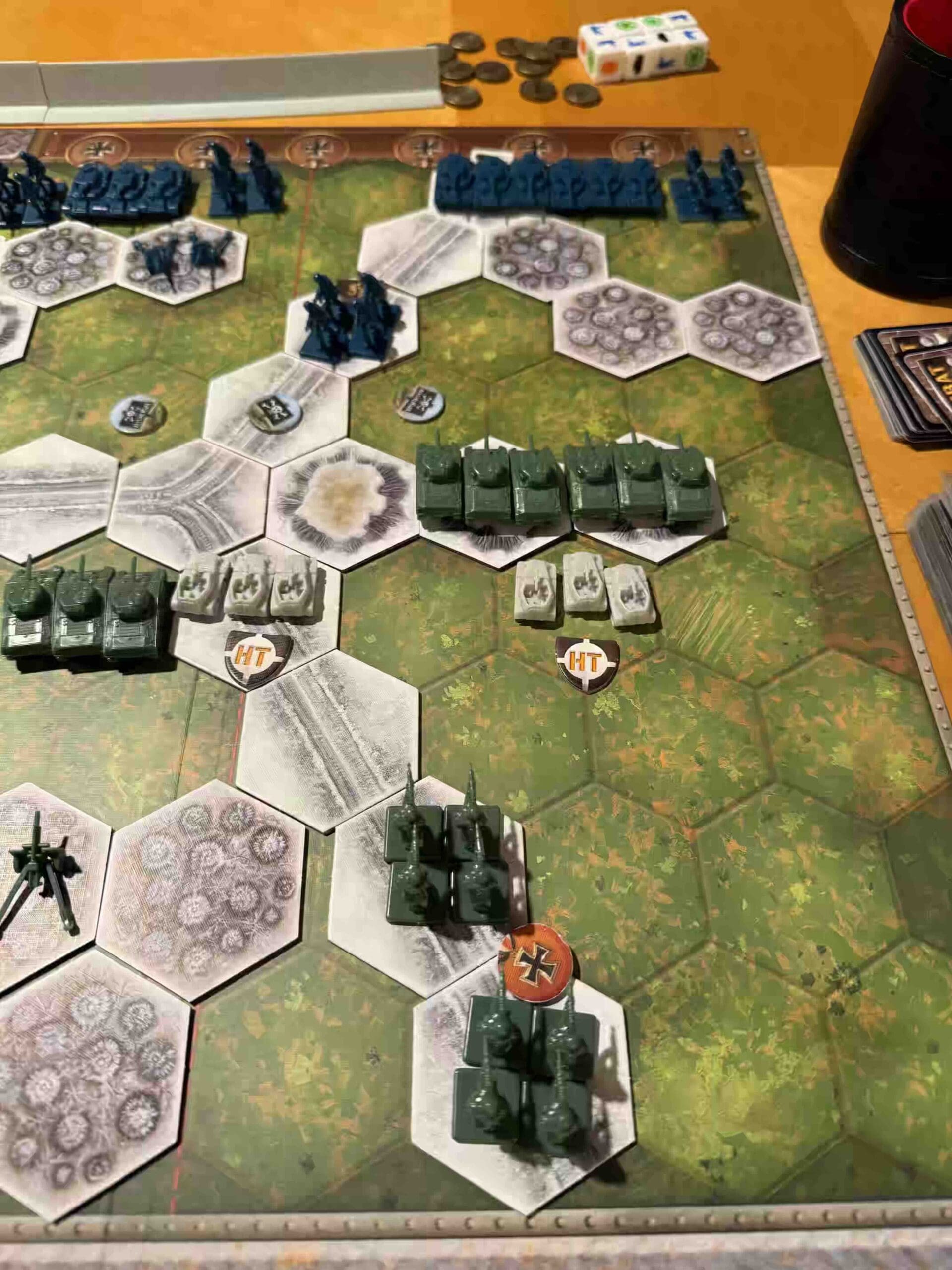
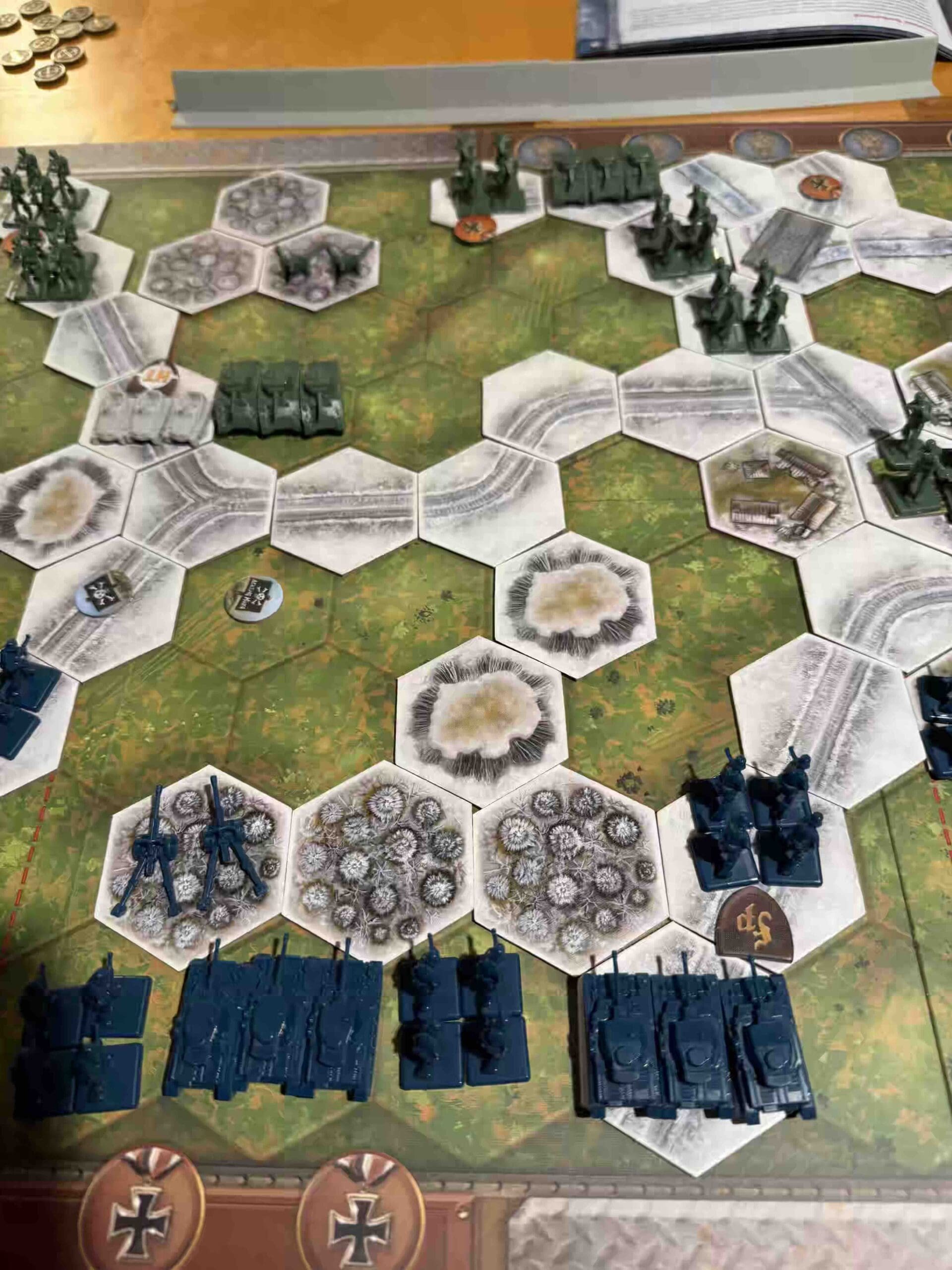
This is a massive and complex scenario with many strategic elements that makes for an exciting and challenging game.

Objectives:

17 VP’s (!), including numerous territorial medals

Battlefield:

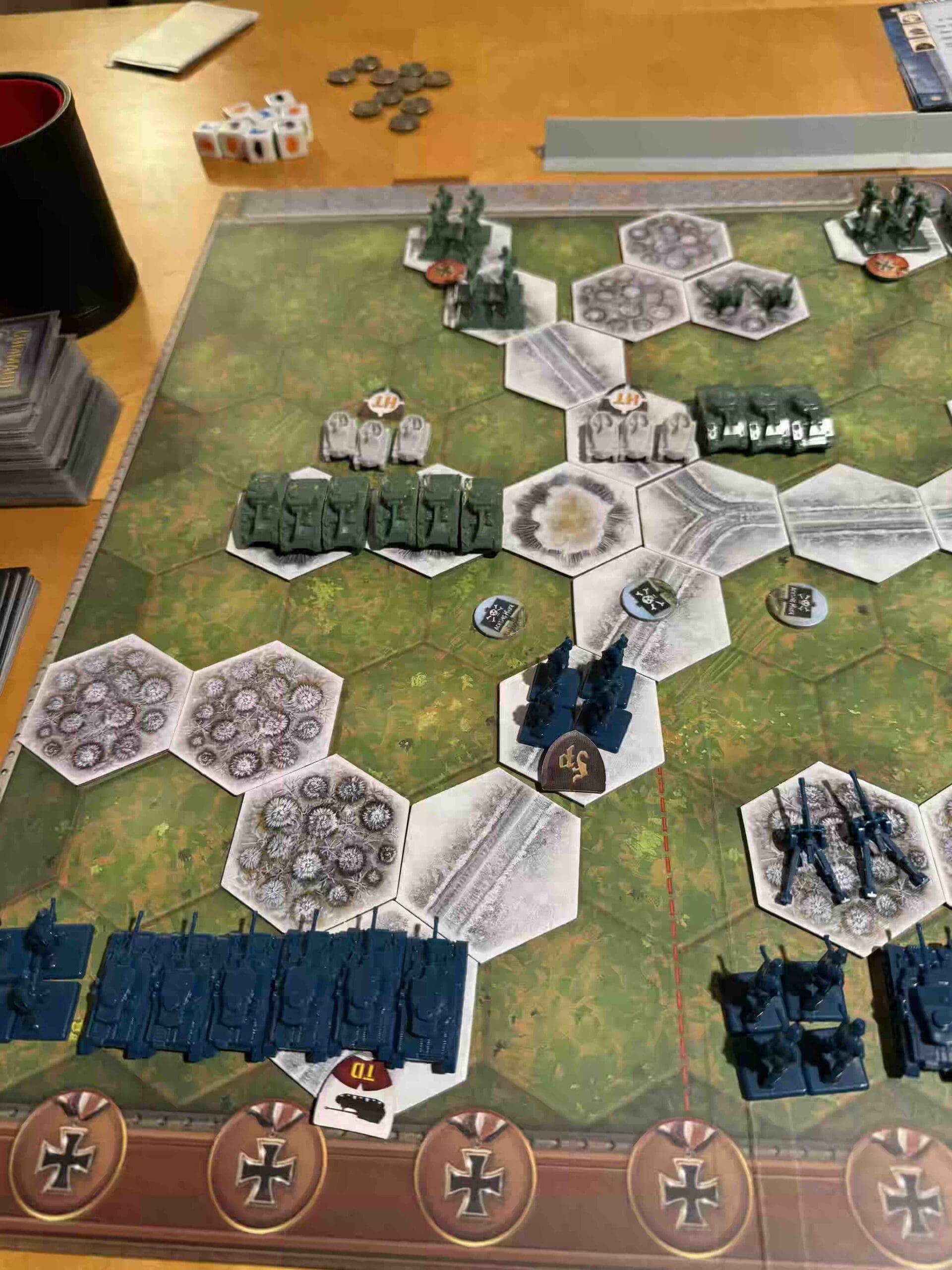
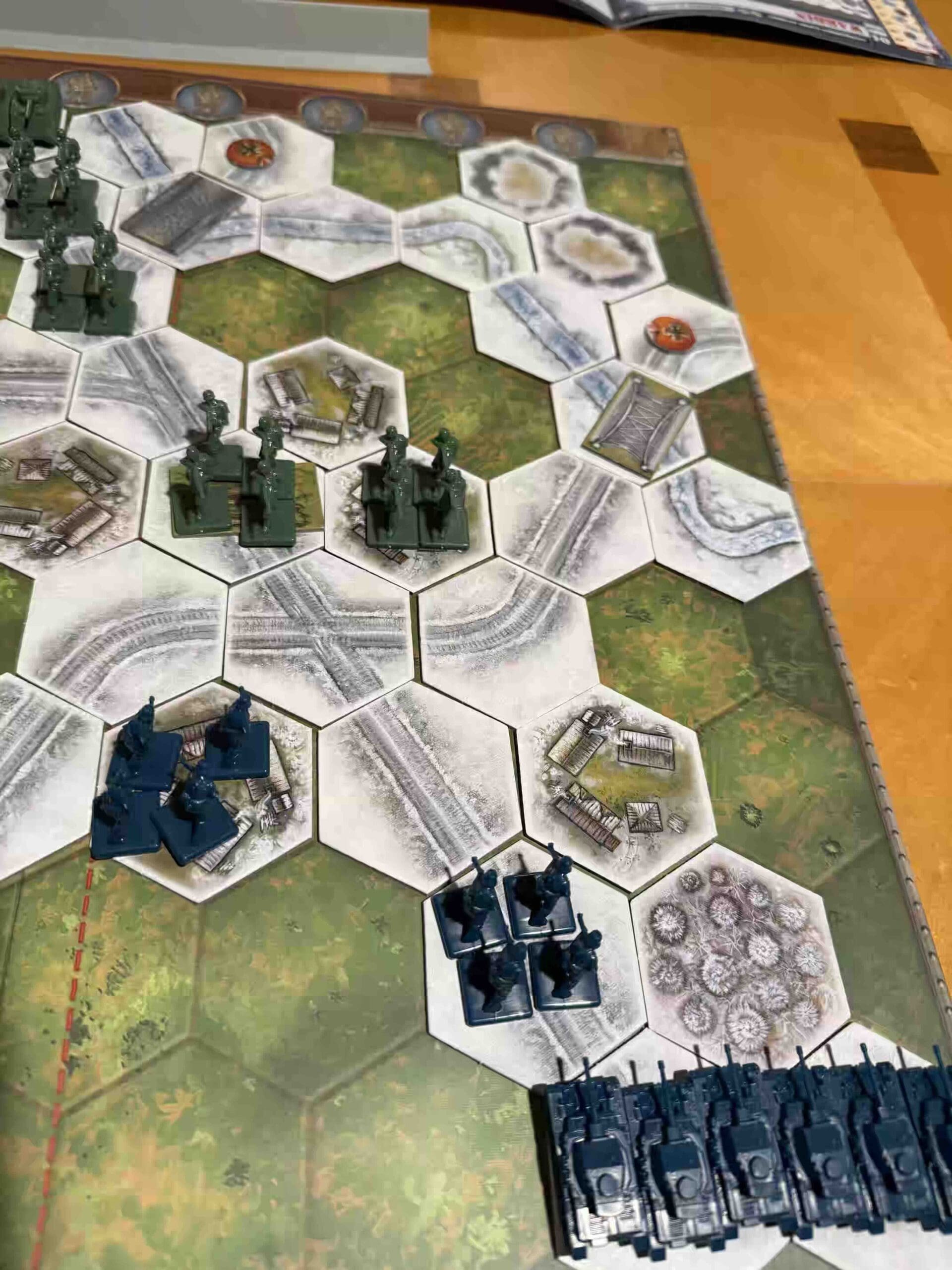
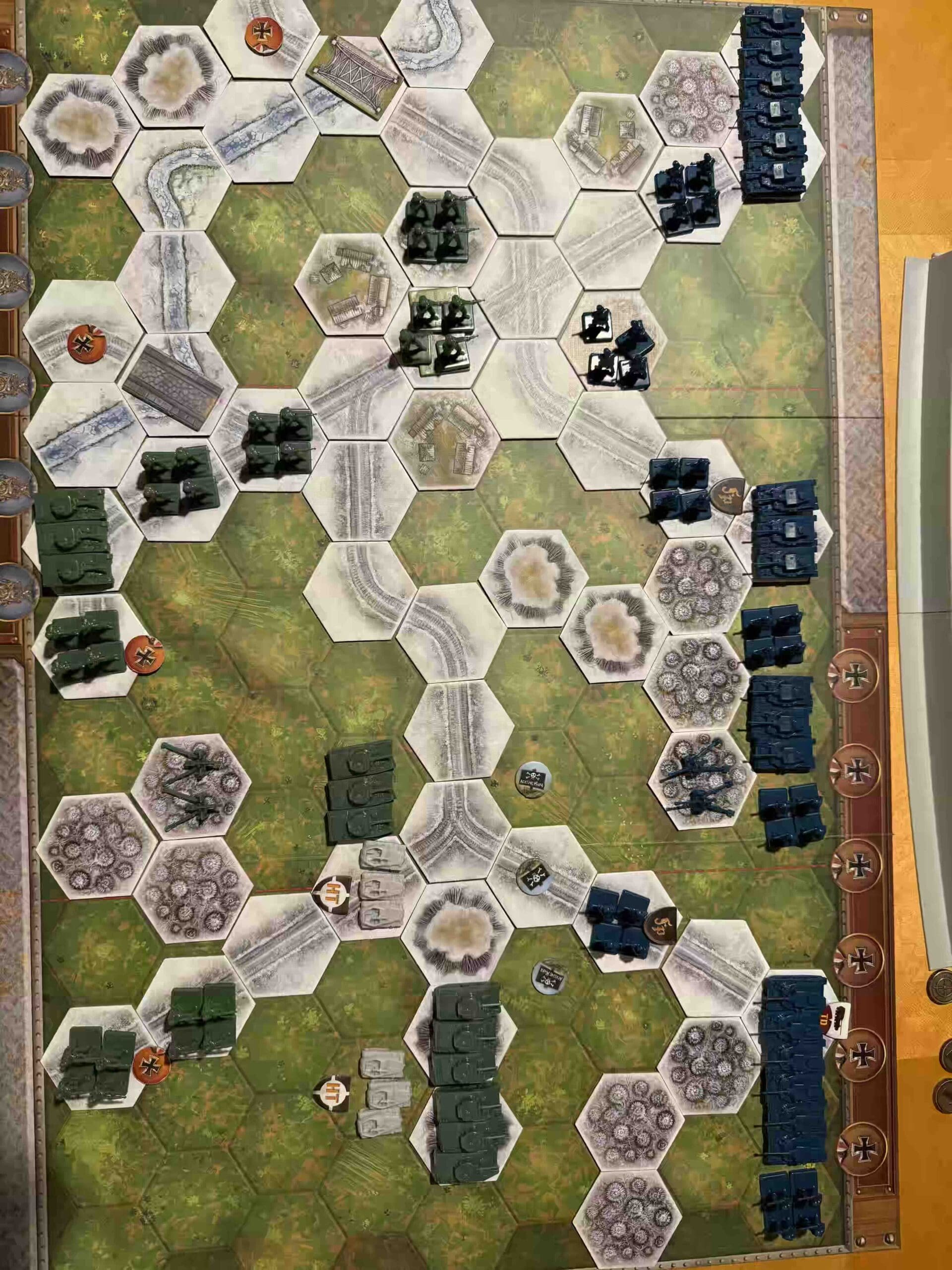
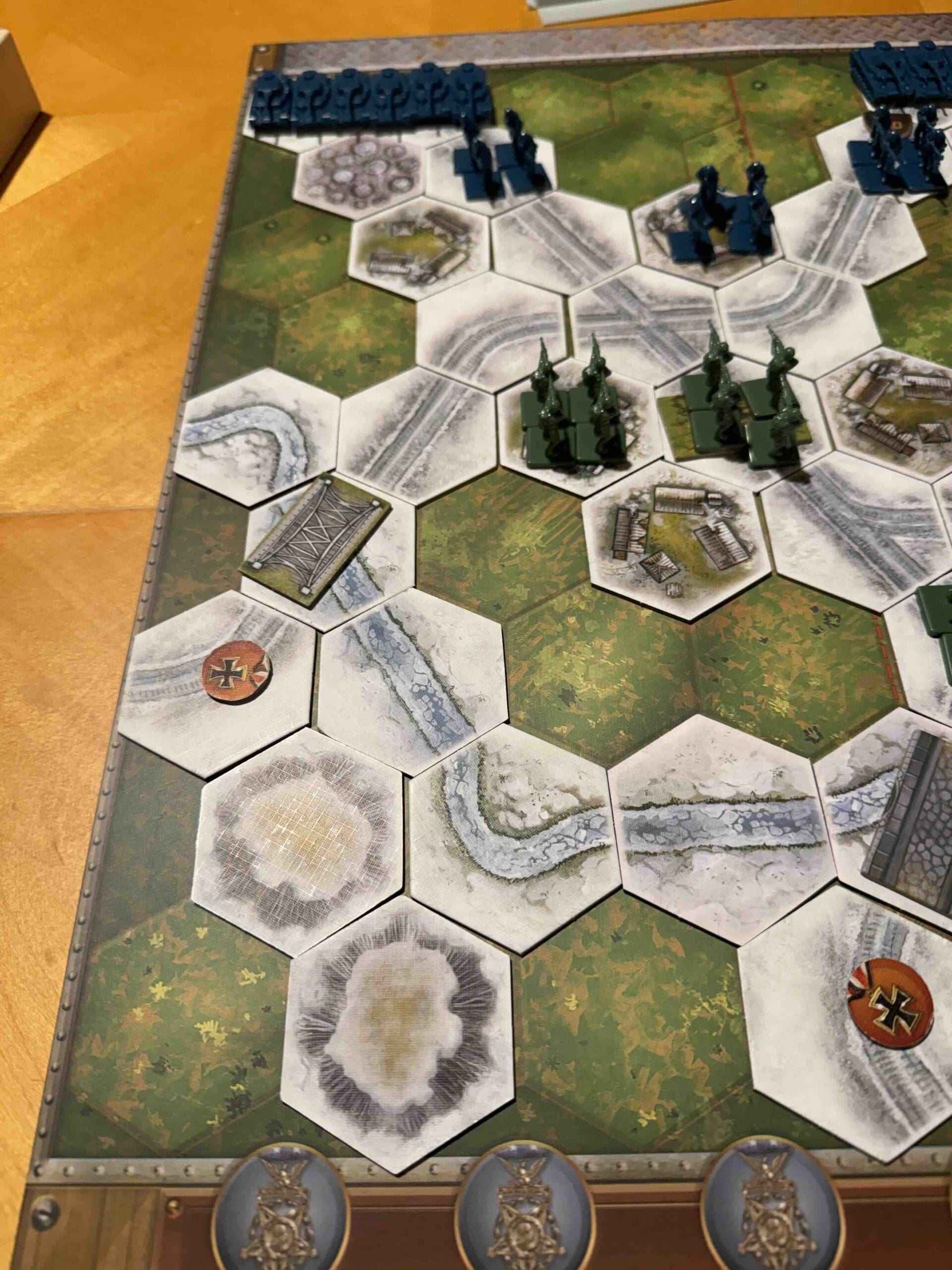
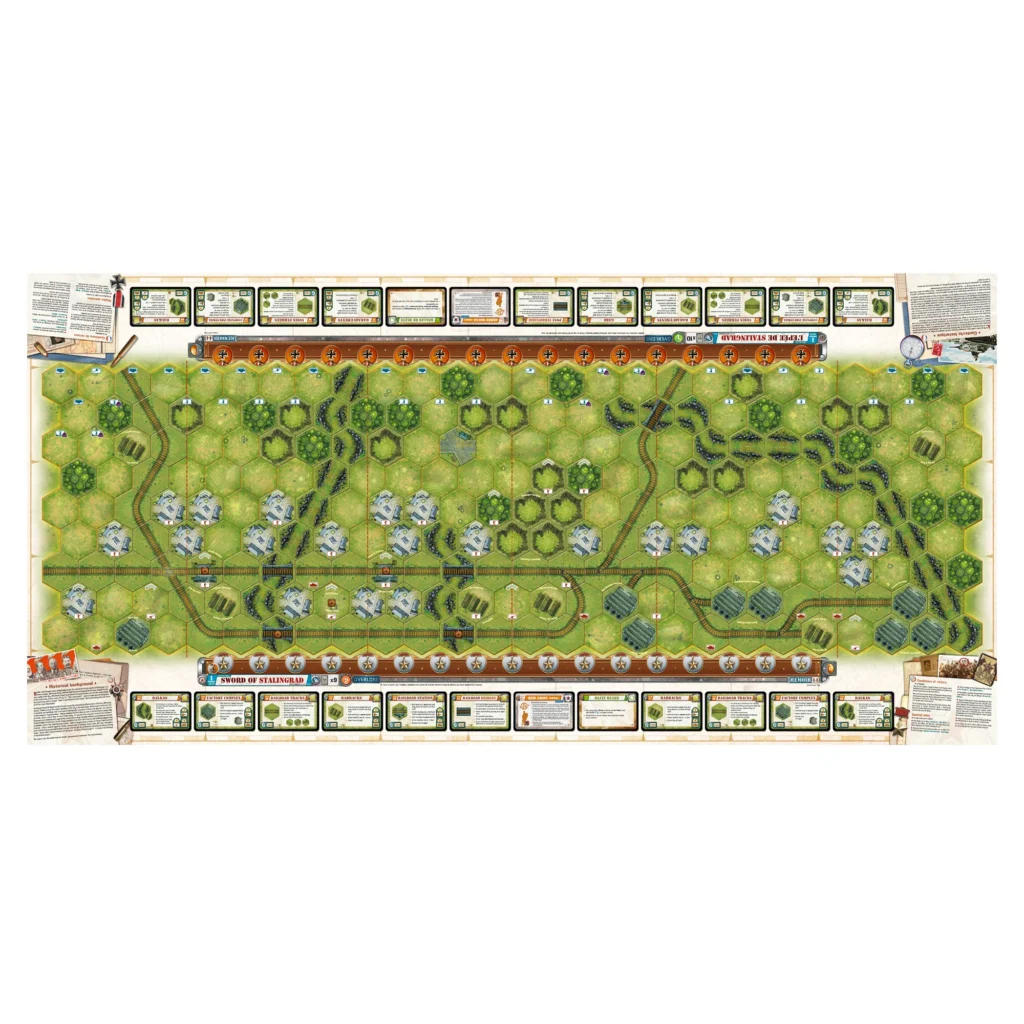
This battlefield has countryside on the Axis side, and urban factories, towns, and other buildings on the Allied side. It is a quite complex battlefield.

Troops:

Allies – Infantry, Armor, Artillery

Axis – Infantry, Armor, Artillery 

Allied Strategy

1.  Historically, the Russians were defending themselves from the Nazi’s, so much of this scenario is spent behind sandbags, attacking the enemy where you can, to degrade their offensive capabilities.

2.  You need to protect the territorial medals which are available to the Axis, should they gain control of various railroad stations, the central hills, or the factory complexes.  At the start of the game, you will be granted control of these and the three medals that go with them. But as the game proceeds it will be increasingly difficult to defend and keep this territory and its medals. 

3.  Your left flank is the most medal-rich area for the Axis to target.  So be prepared for an attack there. Manage your cards so that you can respond to aggression.

Axis Strategy

1. This game is won by making your forces mobile.  Invade the city hexes with your infantry, and get your armor onto the Allied back row to start snatching those territorial medals. 

2. There is a large hill and woods complex in the center section which is worth two VP territorial medals. Control it with both infantry and armor.

0
BR - Sword of Stalingrad

Author:

Days of Wonder

Battle Maps, Vol. 3

Link:

Iwo Jima – The Meat Grinder

The Meat Grinder (Iwo Jima)

The “Meat Grinder” on Iwo Jima was not just a nickname—it was exactly what it sounded like. In February ’45, our Marines walked into a hornet’s nest of bunkers, tunnels, and artillery, all dug in by Japanese defenders who were ready to fight to the last man.

Every yard was paid for in blood. Concealed machine guns, artillery, and traps cut men down as they clawed forward. It wasn’t pretty, it wasn’t quick—it was steel against flesh, and the cost was high. But those Marines never quit. Day after day they smashed into that fortress, until finally the defenses cracked.

Taking the Meat Grinder was hell, but it was necessary. With it in our hands, the island opened up, and the road to victory on Iwo Jima was clear. It was proof again that American grit and guts could chew through anything—even the toughest rock the enemy could throw at us.

~~ General Howitzer

 7 VP’s

Card Balance:

Allies – 5

Axis – 5

Complexity:

3

Conditions:

Jungle


Context:

Historical

Location:

Iwo Jima


Year:

1945


Theater:

Pacific


Summary:

Objectives

7 VP’s

Battlefield:

Island jungles and hills with caves, allowing for quick movement by Japanese

Troops:
Allies – 10 Infantry, 7 Armor, 2 Artillery 

Axis –  9 Infantry, 2 Armor, 3 Artillery

Allied Strategy:

1. Because the Engineers can avoid terrain restrictions during close assault, you need to quickly get them up to the sandbagged hills where the enemy are lodged, and dislodge them!

2.  Use your artillery to soften up the enemy before the assault.

3.  You need 7 VP’s to win, so you are going to have to address the artillery and deal with it.

4.  Your forces on the right and center sections are really bunched together. You need to get some early movement for your infantry, or they will be subjected to some no-retreat hits.

Axis Strategy:

1.  You are outnumbered in the center and right sections. Your left flank has more units than the enemy. If you can get your armor into position to defend the open terrain, it will make it difficult for the enemy to move approach.

2.  You outnumer the enemy with artillery, 3-2, so use it to soften up the enemy as they approach.

3. Make good use of your full-powered units through the Seishin Kyoiko Doctrine (SKD), to advance on the enemy and roll the extra dice to quickly knock them senseless.

Classic Battle Reports:

(percentage of Allied victories)

30%

22
BR - Iwo Jima

Author:

Link:

Breakthrough to Gembloux

Breakthrough to Gembloux

Historical Background

The Breakthrough to Gembloux was part of the early German invasion of Belgium during May 1940, in the larger Battle of France. German Panzer divisions advanced through central Belgium aiming to break Allied lines near Gembloux, where French forces had fortified positions in the so-called Gembloux Gap—one of the few tank-suitable areas in the region.

Fierce fighting erupted between German armored units and French mechanized divisions, resulting in one of the few early confrontations where French forces held their ground and inflicted significant tank losses. However, the battle was ultimately bypassed when German forces broke through further south in the Ardennes, rendering the defense of Gembloux strategically moot.

General Howitzer summarizes:

At Gembloux, the French finally stood their ground and gave the German Panzers a bloody nose—one of the rare times early in the war they didn’t fold. But while they were trading blows up north, the real storm came through the Ardennes. The fight was solid, but it ended up guarding the wrong damn door.

VP’s

12 VPs

Card Balance:

Allies – 5

Axis – 6

Complexity:

4

Conditions:

Countryside

countryside

Context:

Historical

Location:

France 

Date:

May 13, 1940


Theater:

Western

Campaign:

The Battle of France

Codename:

Summary:

Objectives:

12 Victory Points, plus one Exit by an Axis unit

Battlefield:

Deep breakthrough battlefield with countryside terrain

Troops:
Allies – 8 Infantry, 7 Armor, 1 Artillery

Axis –  10 Infantry, 8 Armor, 2 Artillery

Big Picture Strategy

The challenge for the Axis is escaping a unit out the Exit Hex at K1. 
Winning battle is easy; escaping the battlefield is not.

Allied Strategy:

1.  If you want to have any hope of holding out against the Germans, as the French did for two days historically, you will need to hold the line right at the beginning with the three towns on row 13.  Get your armor up their to reinforce your infantry.  The Axis have overwhelming force, so if you retreat, they will be able to pick you off one by one. Make your stand immediately!

2.  Once you get pushed back, the final victory medal for the Axis has to come through escaping on the hex at K1.  Guard that with your armor and infantry, and you have some hope of gaining another medal. 

3. While you may lose a lot of forces as the Axis pushes you back, be sure to have enough forces to make a good stand to guard the final exit hex at K1.  The Axis can be made to suffer much as they try to get one unit out that escape hex.  In fact, once Axis have achieved their 12 victory points,  you can sacrifice as many Allied forces as you need to in order to prevent them from escaping. 

Axis Strategy:

1.  Remember that no matter how many Allied units you destroy, you will have to get one of your units out the exit row at the end of the battlefield.

2.  The very best way to end the game well, and escape your final Axis unit off the board is to save up a Behind Enemy Lines. Then maneuver an infantry within six rows of the border, and make your move. 

Battle Reports:
(percentage of Allied victories)


5
BR - Breakthrough to Gembeloux

Author:

jdrommel

Link:

Wake Island

Wake Island

Wake Island was a little speck in the Pacific, but in December ’41 it became a fortress of American grit. Right after Pearl Harbor, the Japanese thought they’d steamroll it. On the 11th, they charged in—and got their noses bloodied. Our Marines and gunners blasted ships out of the water and sent the enemy packing, the first time in the war a U.S. force had thrown back an amphibious assault.

But the enemy came back heavier on the 23rd, with more ships, more planes, and more men than that tiny garrison could handle. The Marines fought like crazy, but Wake was finally overrun. Even so, their stand proved to the world that Americans don’t just roll over—we fight, we bleed, and we make the enemy pay dearly for every inch. Wake Island was no surrender; it was a warning shot that the United States was in this war to the finish.

~~ General Howitzer

6 VP’s

Card Balance:

5 – 5

Complexity:

2

Conditions:

Beach

Location:

North Pacific

Year:

1941

Theater:

Pacific

Campaign

Codename

Summary:

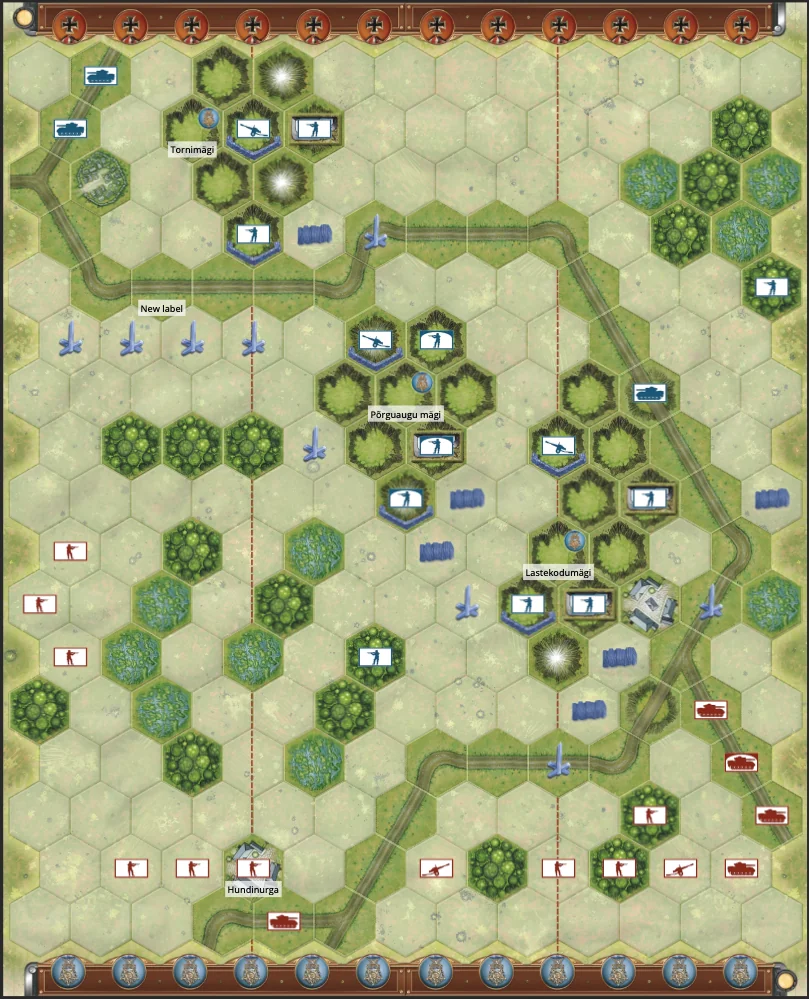
The Wake Island scenario has the Japanese attacking Marines who are defending. The beachfront is barricaded with a row of wire. But if they can get past that barrier, every town and fortress hex is a victory medal objective for them.

Objectives:

6 VP’s, plus the Axis have potentially 10 (!) Medal Objectives.

Battlefield:

A flat beach defended with wire and Marines in bunkers and one artillery.

Troops:

Allies – 5 Infantry, 1 Artillery

Axis – 12 Infantry!

Allied Strategy:

1.  Historically the Allies were overwhelmed in the second attack when 1500 invaders attacked, so the goal is to get some quick hits before they reach the Medal Objectives.

2.  Use your artillery at every opportunity, especially early in the game before they move away from it. 

Axis Strategy:

1.  As a general rule, avoid the artillery in the center-right.  Move your troops to the left and attack the left flank. There are plenty of VP’s available on the left side without even having to go anywhere near the artillery.

2. However if you have the cards for a sustained and rapid attack on the right, do it. The fact that there are two hexes unprotected by wire allows the you to very quickly reach the enemy bunkers. 

3.  You can use your advance infantry unit to quickly gain control of the field bunker at M6, and its VP. Then three more Objective Medals are available to you in the towns.  Then as you quickly bring other infantry forward the advance unit can attack the enemy infantry in the town at K8. That’s a total of 5 VP’s relatively unprotected. If you can survive the artillery attacks while you seek out your 6th VP on the left flank, you could have a win to brag about!

DoW Battle Reports

(percentage of Allied victories):

32%

23
BR - Wake

Author:

Days of Wonder

Link:

Utah Beach

Utah Beach

The invasion of Utah Beach was part of the Allied D-Day landings on June 6, 1944, during World War II. Utah Beach was the westernmost landing area, assigned to U.S. forces, primarily the 4th Infantry Division, under Major General Raymond O. Barton. The objective was to secure the beachhead, push inland, and link up with airborne troops dropped earlier to capture key roads and bridges.

Strong currents caused some landing craft to drift about a mile south of the intended target area. This accidental landing proved advantageous, as it placed the troops in a less heavily defended section of the beach. The U.S. forces quickly overwhelmed the German defenses, suffering relatively few casualties compared to other D-Day beaches.

Listen up.

At Utah we hit fast, secured the sand, and drove inland until we shook hands with the paratroopers. That link-up turned a strip of beach into a springboard—men, guns, and fuel pouring ashore to feed the advance. With the beachhead anchored, momentum was ours. That’s how you start a liberation: seize, link, expand—and keep moving.

~~ General Howitzer

5 VP’s

Card Balance:

Allies – 6

Axis – 4

Complexity:

3

Conditions:

Beach

Location:

Normandy

Year:

1944

Theater:

Western Front

Campaign:

D-day Invasion

Codename

Summary:

The challenge for the Allies in this scenario is to get off the beach as quickly as possible, and exit out one of the three exit hexes. The Axis are protected in towns and bunkers in order to slow down the advance of the Allies.

1. Objectives

This is a 5 VP game, so it moves rather quickly, and the Allies will need to minimize losses while they pick away at the Axis forces inside their bunkers, all the while making their way towards the exit hexes.

2. Battlefield

There are three exit hexes at the top of the battlefield. The Allies can seek two objectives: First to destroy enemy units, Second to exit out the back.

3. Troops

Allies – 10 Infantry, 4 Armor

Axis – 5 Infantry, 1 Artillery

Allied Strategy:

1. Allies begin with their forces congested together in the left and center sections. This is not all bad, as they need to stay away from the artillery in the right flank. But they do need to disengage their forces from one another and create some separation from the shores of the beach.

2. Keep attacking! As you approach the enemy forces in their bunkers, you may be tempted to pause and amass more forces for the attack. This depends on your circumstances. If you are out in the open and under enemy attack with two-dice attacks, you need to just keep attacking with those forces. Create the beachhead by continuing to attack, attack, attack.

3. You can expect to receive a fair number of casualties as you progress up the beach. But as soon as you get your armor out of the water, things will change for any enemy units unfortunate enough to be found outside their bunkers.

4.  The big picture strategy for Utah Beach is to: Stay Left, Take Out the Infantry, Escape out the back.  The scenario only needs 5 VP’s.  All five of those are available to you on the left and middle section.  Take out the three infantry for your first three points; then send two units out the escape hexes, and you are golden!

Axis Strategy:

1. The general rule for this scenario, is to stay in your bunkers! With no hilly ridge slowing the movement of the Allies onto the beach, they are able to very quickly reach your bunkers and begin attacking. If you make a fool-hardy rush forward in an attempt to knock out a few more figures, they will make you pay with an overwhelming retaliation of their forces. The only exception to this is your infantry unit in the bunker at M7 on your left flank. The Allies are going to avoid much of that section due to your artillery at J7, so it is best to get that unit into play in the central section as soon as you can. Also, there are so many wire bails in your left flank, that they will severely slow down any troops who try to come in there, allowing your artillery to demolish them.

2. The goal for Axis is to slow down their movement. Besides actual hits, retreat flags on the Allies are your friend, as it will push them back and give you more time to build up your deck with powerful attack cards. A last ditch effort, if needed would be to move your infantry onto or in front of the exit hexes, to prevent the Allies from escaping before you have given them a good beating.

3. Your one saving grace as the Axis player is your artillery. Use it as much as you can, especially while the enemy is still in the water, where retreat flags count as hits.

18
BR - Utah

Author:

Days of Wonder

Link:

Twin Villages

Twin Villages

Memoir 44

The Battle of the Twin Villages took place in December 1944, during the Battle of the Bulge in World War II. Located near Krinkelt and Rocherath in Belgium, these “twin villages” became key defensive positions for American forces as German troops launched a surprise offensive in the Ardennes.

U.S. infantry and armored units held strong defensive positions in the villages, facing fierce attacks from German forces, including tanks and infantry. Despite being heavily outnumbered and subjected to intense artillery fire, the American defenders managed to delay the German advance through skillful use of terrain and resilient fighting.

At Krinkelt-Rocherath the Germans thought they could roll through and keep their offensive charging forward—but the men dug in there had other ideas. Those towns became roadblocks of fire and steel. The resistance was fierce enough to choke the enemy’s advance, bleed their momentum, and give the rest of our forces time to regroup and fortify the Ardennes. That stand wasn’t just stubborn defense—it was the kind of fight that blunted the Bulge and helped turn the tide toward ultimate Allied victory.

~~ General Howitzer

6 VP’s

Card Balance:

Allies – 6

Axis – 4

Complexity:

3

Conditions:

Winter / Countryside

Context:

Historical

Location:

Belgium

Year:

1944

Theater:

Western Front

Campaign:

Ardennes

“Battle of the Bulge”

Codename:

Unternehmen Wacht am Rhein 

Summary:

In Twin Villages, the Axis commander begins with almost all of their forces locked behind a wall of forest. The goal for Axis is to get out of the forest as quickly as possible in order to be prepared for battle. For Allies, the goal is to take out as many Axis units as possible before they break free.

Objectives:

6 VP’s ; no territorial medals

Battlefield:

The twin villages of Krinkekt and Rocherath are in the center of the map, and provide cover for whomever can control them. There is a large forest towards the Axis side, blocking their initial movement.

Troops:

Allies – Infantry 9, Armor 3, Artillery 1

Axis – Infantry 9, Armor 5

Allied Strategy

1.  Remember, that historically, the Allies are on the defensive early in this campaign. But you have the opportunity to score some hits with your advance Infantry units, before you are forced to pull back. Once you remove (or lose) your Infantry at the Lausdell Crossroads, the path is clear for your tank to blast any enemy units that attempt to make their way up through the gap in the trees.

2. Early goals are to get your Infantry into the Twin villages, prepared to defend. Also, get your tanks mobile on the flanks to prevent any advances from the enemy.

Axis Strategy

1.  Mobility is the first order of the day. Your Infantry and Armor are congested and need to start advancing.

2. Your infantry at h8 is only two hexes from the enemy, with no means of retreat. You need to move and attack with that unit ASAP.

3.  Your right flank is very weak, with just a single infantry unit. Do not launch attack there until you move more units into the section. Once the infantry advances into the woods, your back row will be clear for the armor to move out into attack position on the right flank.

4. An early goal will be to target the two advance Allies infantry near the Lausdell Crossroads.

5.  Until you get the gap cleared on the way to the Crossroads, your armor is trapped in the woods, and it will take you two turns to get them into play.

Battle Reports

(percentage of Allied victories):

57%

9
BR - Twins

Author:

Days of Wonder

Link: