Taukkyan Roadblock

Taukkyan Roadblock

Taukkyan-Roadblock

The Battle of the Taukkyan Roadblock? That was a brutal wake-up call in the jungles of Burma.

It was April 1942, and the British were pulling out of Rangoon, trying to stay one step ahead of a fast and ruthless Japanese advance. But they weren’t sitting back—they were moving like ghosts through the jungle, and they slammed a roadblock right down at Taukkyan, a vital choke point on the only damn road out.

It was a classic ambush—sliced right through the retreating columns. Trucks jammed, units scattered, and bullets flying like hellfire. The 17th Indian Division fought like lions to break through, but the jungle was tight, the fire was heavy, and the enemy was dug in and deadly.

A lot of brave men didn’t make it. That roadblock caused chaos, real chaos. It wasn’t just a firefight—it was the kind of sharp, surgical move that the Japanese were damn good at: fast, quiet, deadly. It wasn’t just a fight—it was a message.

The collapse at Taukkyan was a key reason why southern Burma slipped right through our fingers. It forced the Allies to fall back all the way into India. But mark my words—every inch we lost, we learned from. And when we came back, we came back with fire in our guts and iron in our fists.

~~ General Howitzer

5 VP’s

Card Balance:

Allies – 5 + 2 Combat Cards

Axis – 5 + 2 Combat Cards

Complexity:

3

Conditions:

Jungle

Context:

Historical

Location:

Burma

Year:

1939

Theater:

Pacific

Campaign:

Burma Campaign

Codename:

Summary:

Objectives:

5 VP’s

Battlefield:

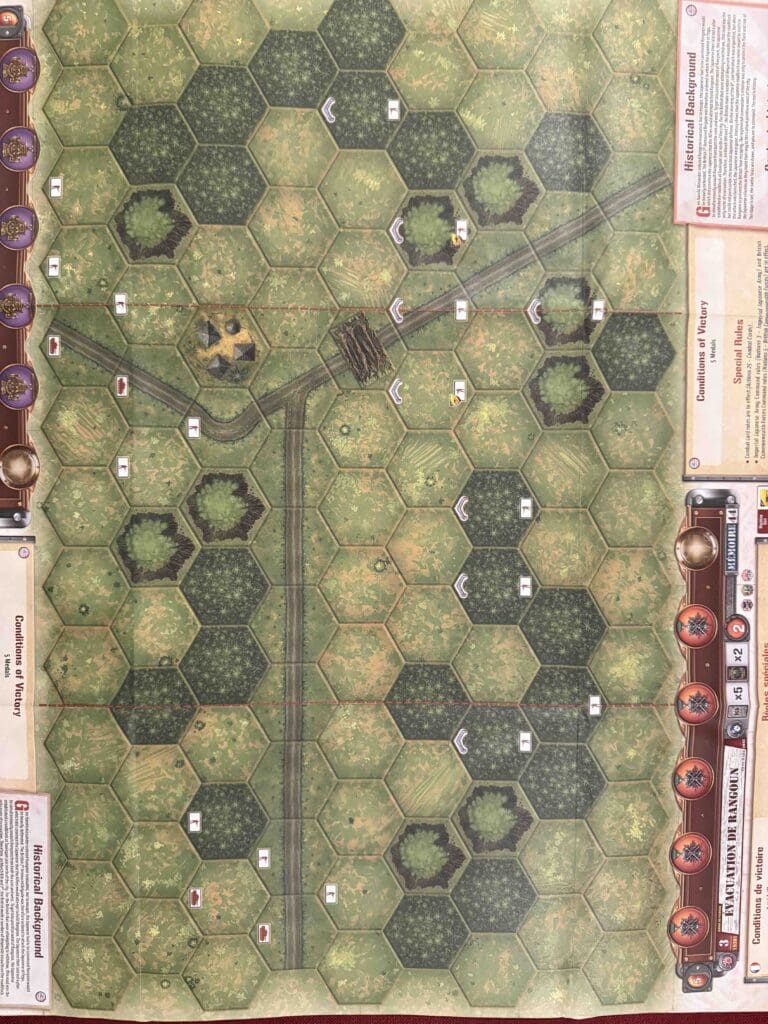
Jungle with two intersecting roads, a roadblock, a village, and some hills.

Troops:

Allies  – 8 Infantry, 4 Armor

Axis (Japan) – 9 Infantry with some machine guns and anti-tank special weapons.


Allied Strategy:

1.  Big Picture: while you do not have to get through the roadblock, it does present a challenge for the British as a rallying point for the enemy.

2.  Before you attempt an Infantry attack, use your Armor units to attack the Japanese units at a distance, and reduce each unit by at least one figure, in order to eliminate their Seishin Kyoiku Doctrine power. 

3.  You have some powerful forces on your right section.  Get the Infantry moved forward and into the nearby jungle, so that the roadway is clear to allow your Armor to advance and get into the attack.

 Axis Strategy

1.  Big Picture Strategy:  with their special weapons of machine guns and anti-tank guns, plus the roadblock present a significant opportunity for the Japanese to hold off the Brits.

2.  Because of the British tanks, you cannot just stay behind your sandbags the whole time. They will slowly pick you off, and degrade your attack ability.  You will have to deal with the tanks, perhaps through specialized cards such as Barrage, Air Power, Behind Enemy Lines, or the Combat Card ‘Giretsu’, the Japanese BEL card. 

3.  With the right set of cards, and as long as most all of your forces are still at full ‘Seishin Kyoiku Doctrine’ strength, a full scale assault on your right flank could prove successful.   

Battle Reports

2
BR - Taukkyan

Author:

Days of Wonder

Link:

Bardia

Bardia

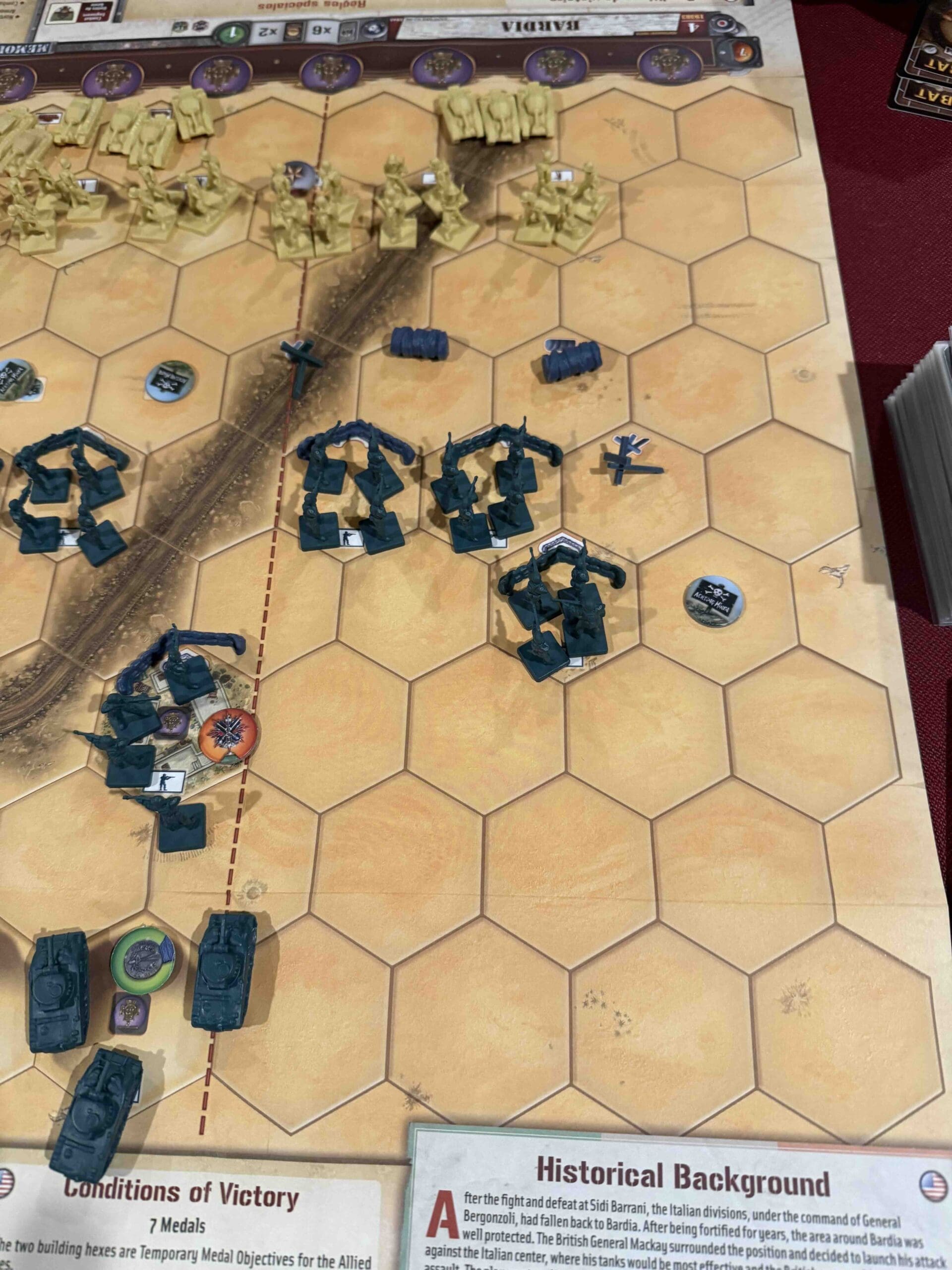
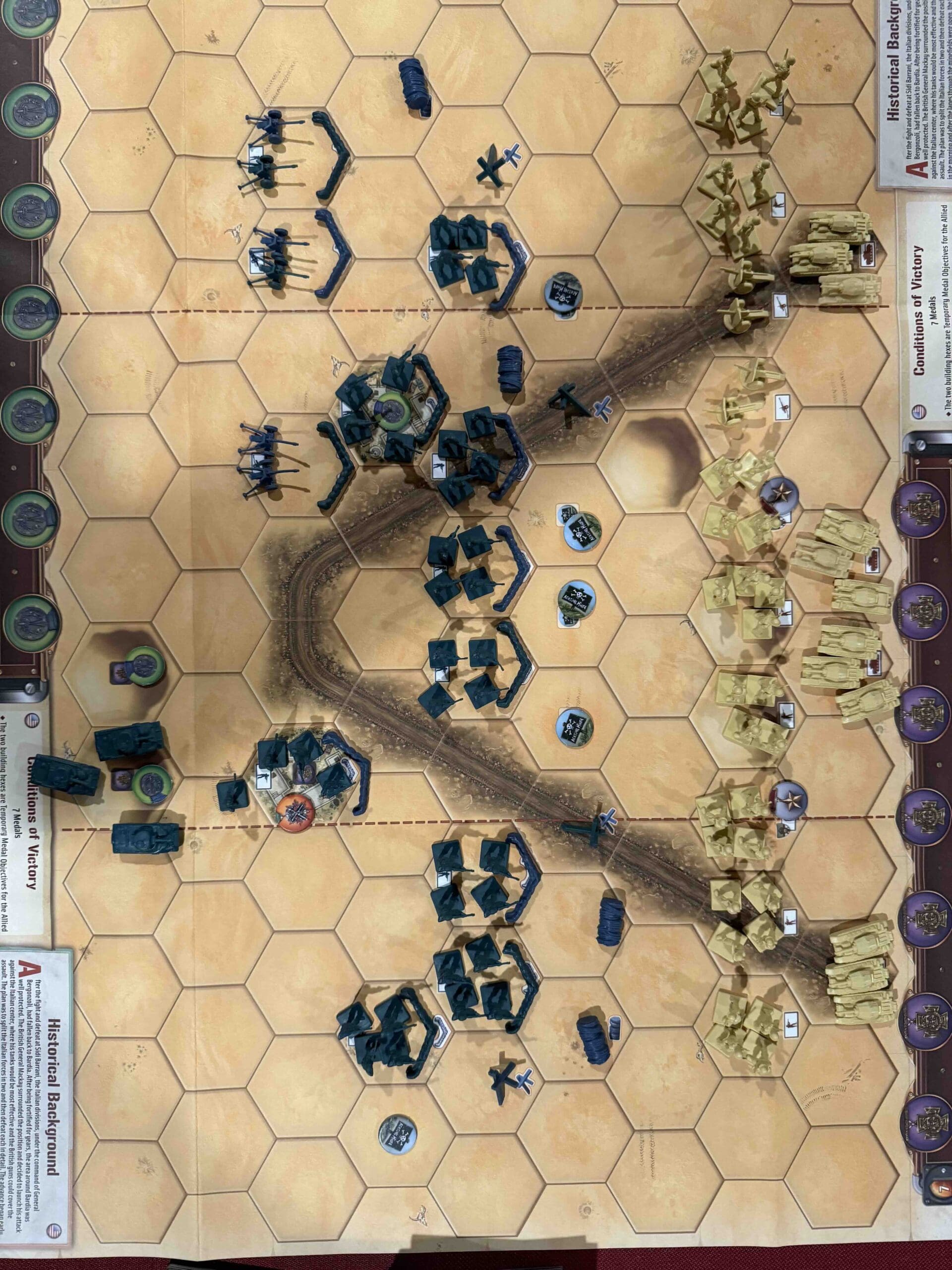
Bardia, January 1941—now that was a proper kick in the teeth for the Italians, and the Aussies delivered it with style.

This was the first big ground fight cooked up and led by an Australian outfit—6th Australian Division, under General Mackay—and let me tell you, those boys weren’t there to play games. Their target? Bardia, a heavily fortified Italian stronghold in Libya. Italians thought they were sitting pretty behind wire, guns, and concrete. Big mistake.

The 16th Brigade hit ’em from the west—smart move, weakest spot in the line. The engineers crawled through hell, cut through barbed wire, filled anti-tank ditches, and cleared a path like pros. Then came the punch: Matilda II tanks from the Brits’ 7th Royal Tank Regiment rolled in with the infantry. After that, it was a hammer-and-anvil job—17th and 19th Brigades came crashing in to finish the job.

By the end, Bardia was ours. Thousands of Italians surrendered, and the whole damn front cracked wide open. That victory let the Allies charge deeper into Libya and gave Rommel a reason to pack his bags for North Africa.

The Aussies proved two things at Bardia: one, they could plan and fight like hell; and two, when you combine tanks, grit, and coordination—you win. That’s the kind of war I like: fast, bold, and overwhelming.

~~ General Howitzer

7 VP’s

card

Card Balance:

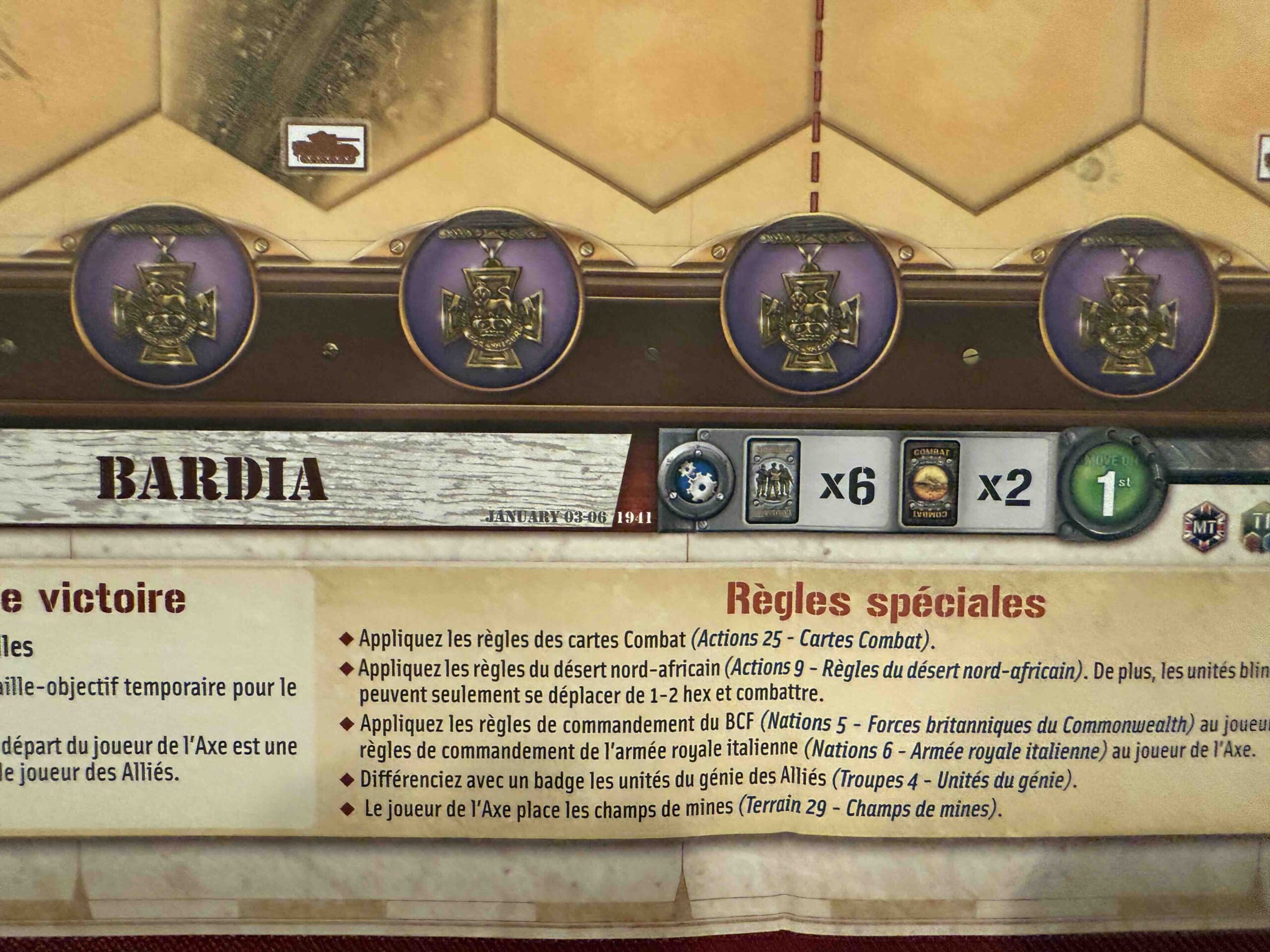
Allies – 6 + 2 Combat Cards

Axis – 6 + 2 Combat Cards
(Note that Italian rules call for a loss of one Command Card for every Italian unit/hex lost, until 3 remain.)

Complexity:

2

Conditions:

Desert

Context:

Historical

Location:

Libya

Year:

1943

Theater:

Mediterranean

Campaign:

Western Desert Campaign

Codename:

It was part of Operation Compass

Summary:

Objectives:

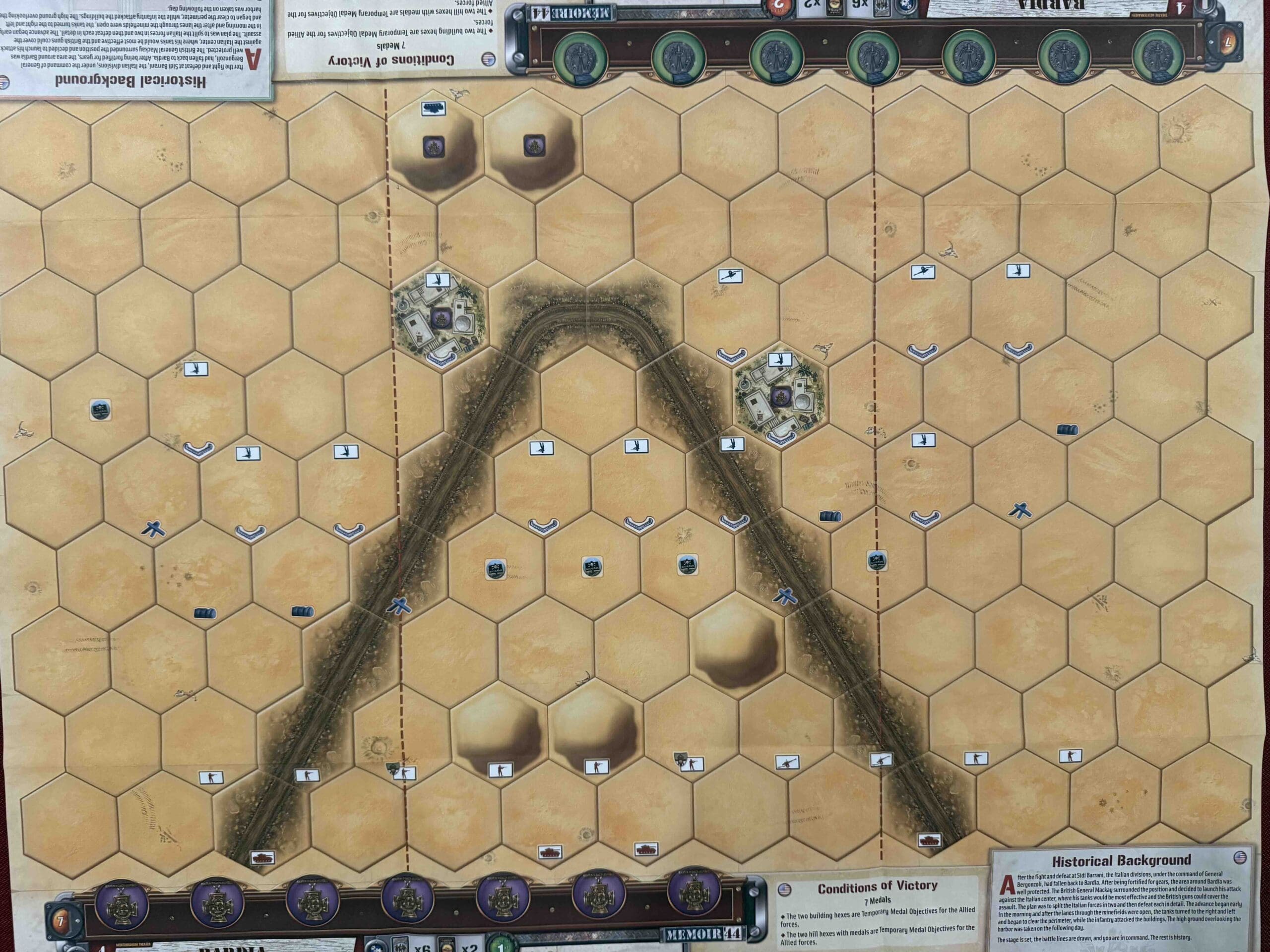
7 VP’s, including two building territorial objectives and two hill territorial objectives for the Allies

Battlefield:

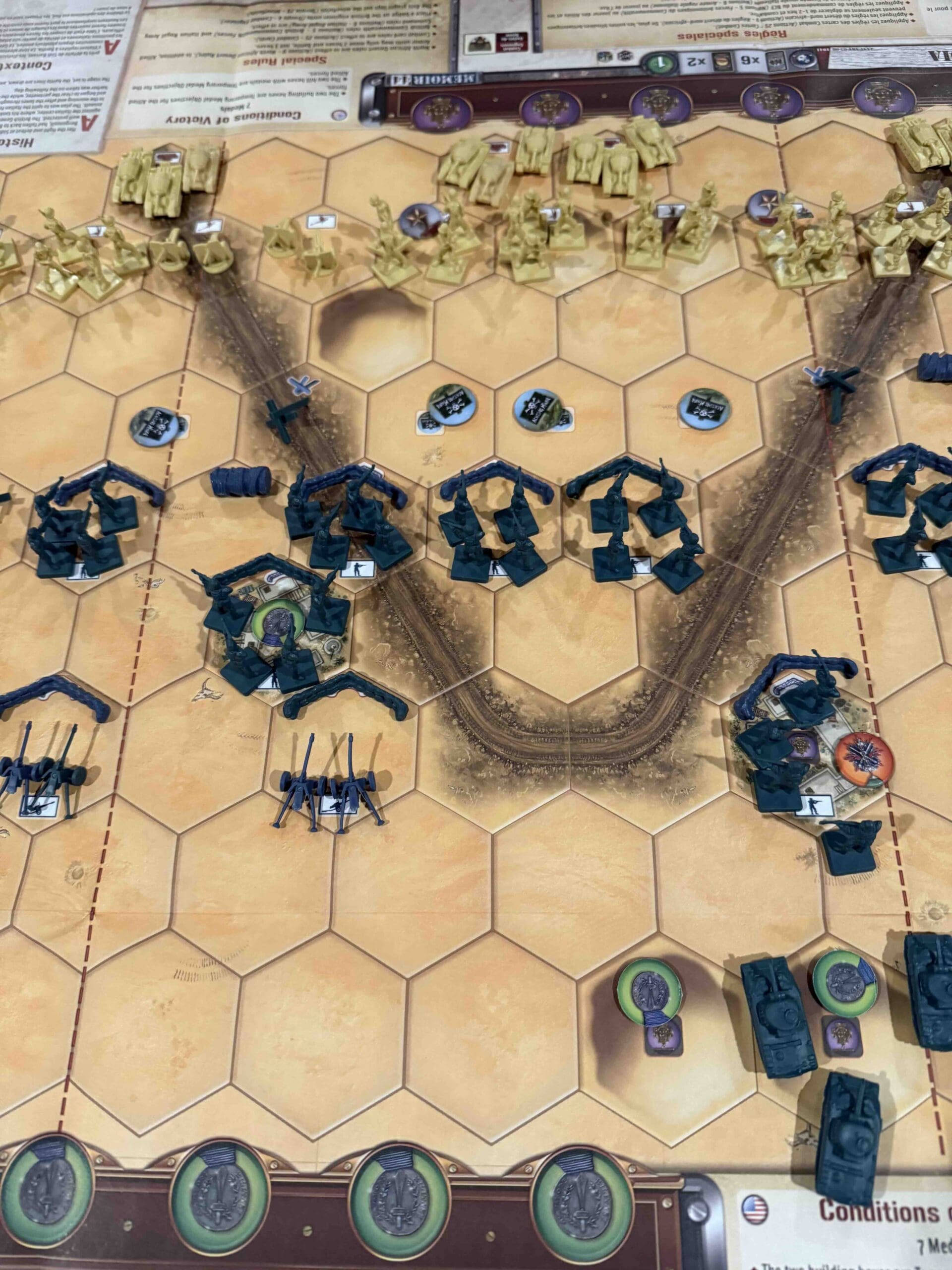
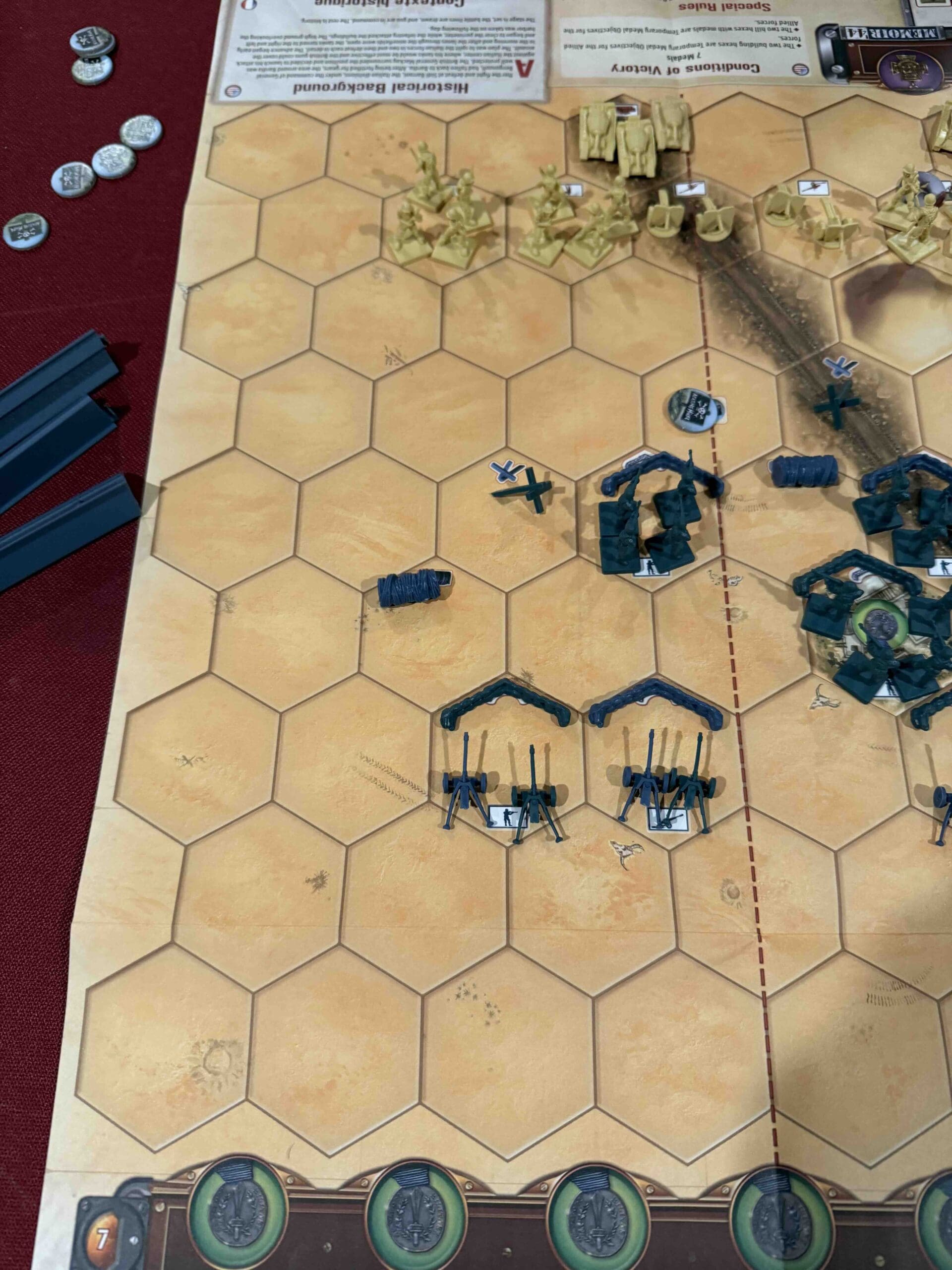
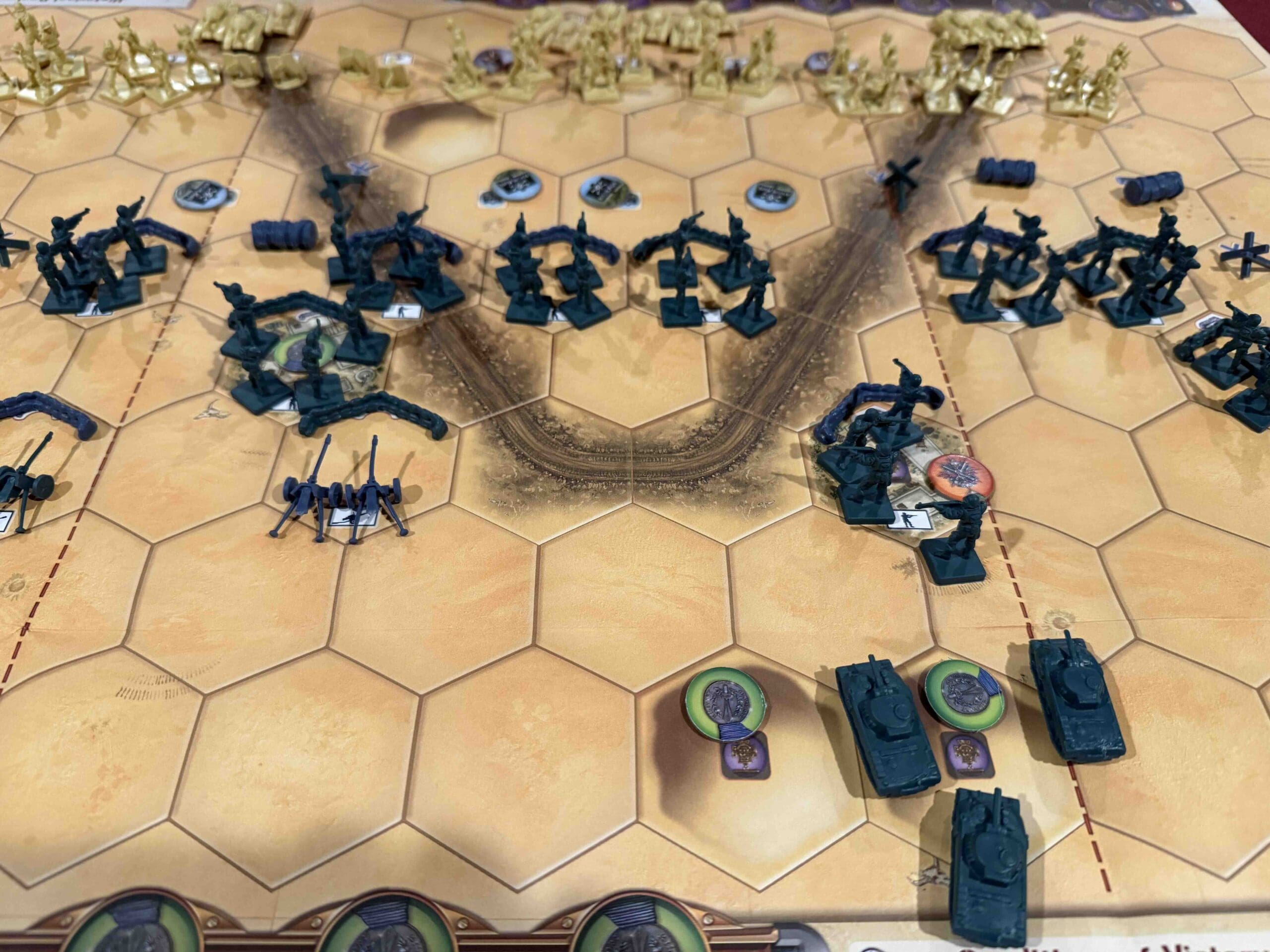
Desert terrain with a branching roads running through it, and some dunes.

Troops:

Allies – 8 Infantry, 4 Armor, 2 Artillery

Axis – 10 Infantry, 1 Armor, 2 Artillery


medal allies

Allied Strategy:

1.  Big Picture Strategy:  follow the roads that points like an arrow to your targets in the center section, which contains four territorial medals awaiting you at the two towns and two hills.

2.  Watch out for your right half of the battlefield which is dominated by the Italian artillery.  

medal axis

Axis Strategy

1.  Big Picture Strategy: stay behind the sandbags!  The Italians are in a defensive posture, and tactical wins are not worth the cost to your forces should you venture forth from your sandbags.

2.  Be aware that the rules of engagement for the Italian nation is that for every unit/hex which gets destroyed, you lose one command card, down to three cards in your hand.  This makes the loss of any unit devastating to your offensive capabilities.

3.  You have a strong set of Artillery on the left side of the battlefield. Use them at every opportunity.

Battle Reports

1
BR - Bardia

Author:

Days of Wonder

Link:
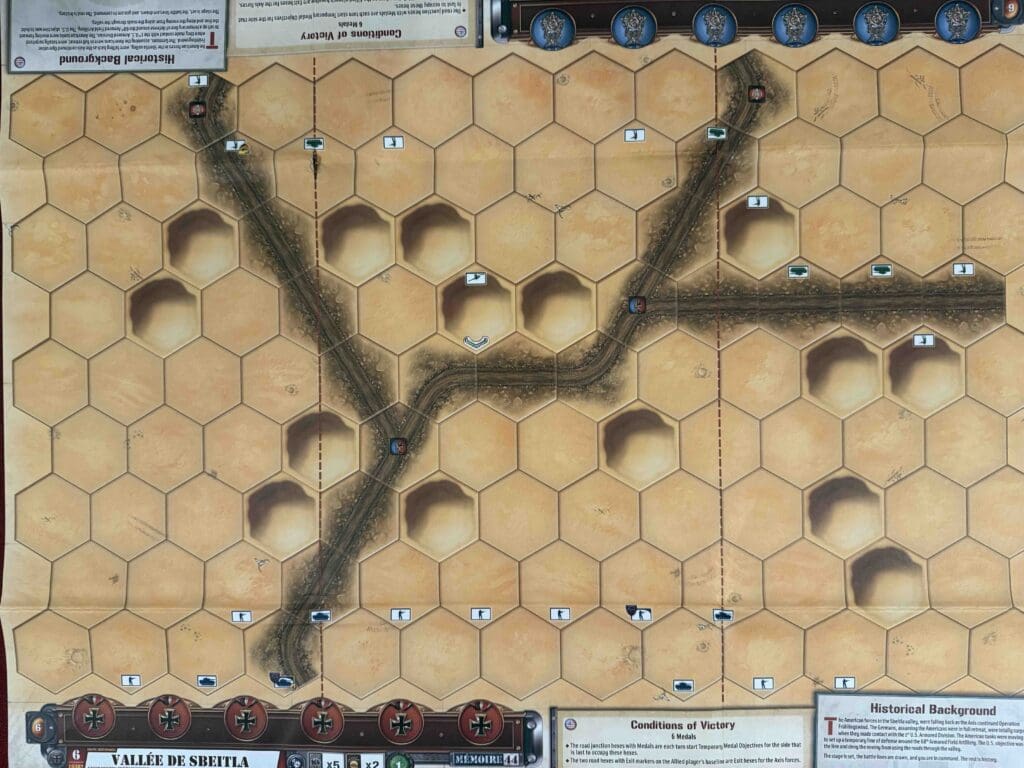
Sbeitla Tunisia

Sbeitla Tunisia

Sbeitla Tunisia

Operation Frühlingswind—February 1943. The Krauts thought they had us dead to rights in central Tunisia. They were wrong.

Rommel’s boys hit us hard at Sidi Bou Zid, busted through, and kept pushing west toward Sbeitla. On February 17, they grabbed the town—but that’s where the party stopped.

Because in rolled the 1st U.S. Armored Division—Combat Command B—and they didn’t come to retreat. They dug in, fought smart, and hit the Germans with a counterattack they didn’t see coming. It wasn’t perfect, but it was bold—and it threw a wrench into the Nazi gears. They didn’t push any farther.

Sure, we took our lumps. Our tactics were green, our command still learning the ropes. But what matters is we learned. Fast. That fight at Sbeitla was a baptism by fire—and it forged better soldiers, better leadership, and a better army.

The message was clear: the Americans might get hit, but by God, we hit back—and next time, we’d be coming out swinging.

~~ General Howitzer

6 VP’s

Card Balance:

Allies – 5 + 2 Combat Cards

Axis – 5 + 2 Combat Cards

Complexity:

2

Conditions:

Desert

Context:

Historical

Location:

Tunisia

Year:

1943

Theater:

Mediterranean

Campaign:

Tunisia Campaign

Codename:

Operation Frühlingswind (Spring Wind)

Summary:

Objectives:

6 VP’s, including territorial objectives, and exit hexes.

Battlefield:

Desert terrain with a branching roads running through it, and dunes everywhere.

Troops:

Allies – 7 Infantry, 4 Armor, 1 Artillery

Axis – 8 Infantry, 5 Armor


Allied Strategy:

1.  

Axis Strategy

1. 

Battle Reports

2
BR - Sbeitla Tunisia

Author:

Days of Wonder

Link:
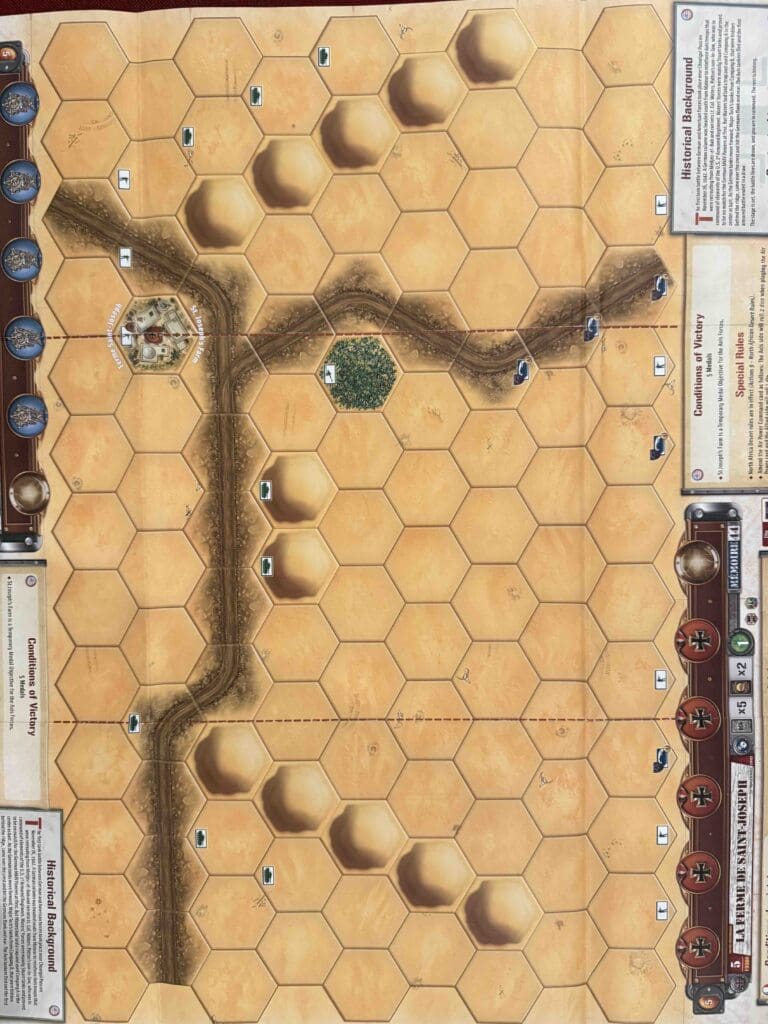
St. Joseph’s Farm

St. Joseph's Farm

St. Joseph's Farm

Chouigui Pass—November 1942. One hell of a day for the U.S. Army, and the first time our boys showed the Krauts what American steel could do.

We were green, no doubt about it. The 1st Battalion, 1st Armored Regiment—part of my beloved 1st Armored Division—rolled into action near a place called Chouigui Pass, northwest of Tebourba. The brass might call it St. Joseph’s Farm, but I’ll tell you—there was nothing holy about what went down there.

Our men, riding those M3 Stuarts and M4 Shermans, spotted a German convoy and didn’t hesitate. They tore into it with everything they had. And wouldn’t you know it? A short time later, they ran into the 10th Panzer Division—real hardened bastards—but our boys didn’t back down.

We hit ’em hard. Burned up their vehicles, shattered their lines, and let ’em know the Americans were here and we weren’t playing. It wasn’t some grand campaign-ending victory, but it mattered. It was the first time U.S. armor took the fight to the Wehrmacht and came out standing.

That fight at Chouigui Pass proved something: our tanks could run, our boys could fight, and American grit was just getting started. North Africa wasn’t going to be easy—but after that day, the Germans knew we were in the game.

And from there, we only got meaner, faster, and a whole lot more dangerous.

~~ General Howitzer

5 VP’s

Card Balance:

Allies – 5 + 2 Combat Cards

Axis – 5 + 2 Combat Cards

Complexity:

2

Conditions:

Desert

Context:

Historical

Location:

Tunisia

Year:

1942

Theater:

Mediterranean

Campaign:

Tunisia Campaign

Codename:

Summary:

Objectives:

5 VP’s, including St. Joseph’s Farm as a Temporary Objective for the Axis.

Battlefield:

Desert terrain with a branching road running through it, and ridges on each flank, which provide the defensive surprise that historically occurred.

Troops:

Allies – 3 Infantry, 8 Armor, 1 Artillery

Axis – 5 Infantry, 5 Armor


Allied Strategy:

1.   Historically, the Allies surprised the Germans by hiding their Armor reserves behind the ridges.  In this scenario, the enemy obviously knows you are there, but you can still use the ridges as defensive protection until the Axis Armor gets close enough for you to launch your Armor assault, and maybe recreate history with an Allied victory. 

Axis Strategy

1. Historically, the Axis were surprised by the Allied forces hiding behind the ridges.  You know they are there, and they outnumber your forces, so you will need to score some quick hits against the forces in the center, to take them out of the action before their support shows up on the flanks.  

Battle Reports

0
BR - St. Joseph's Farm

Author:

Days of Wonder

Link:
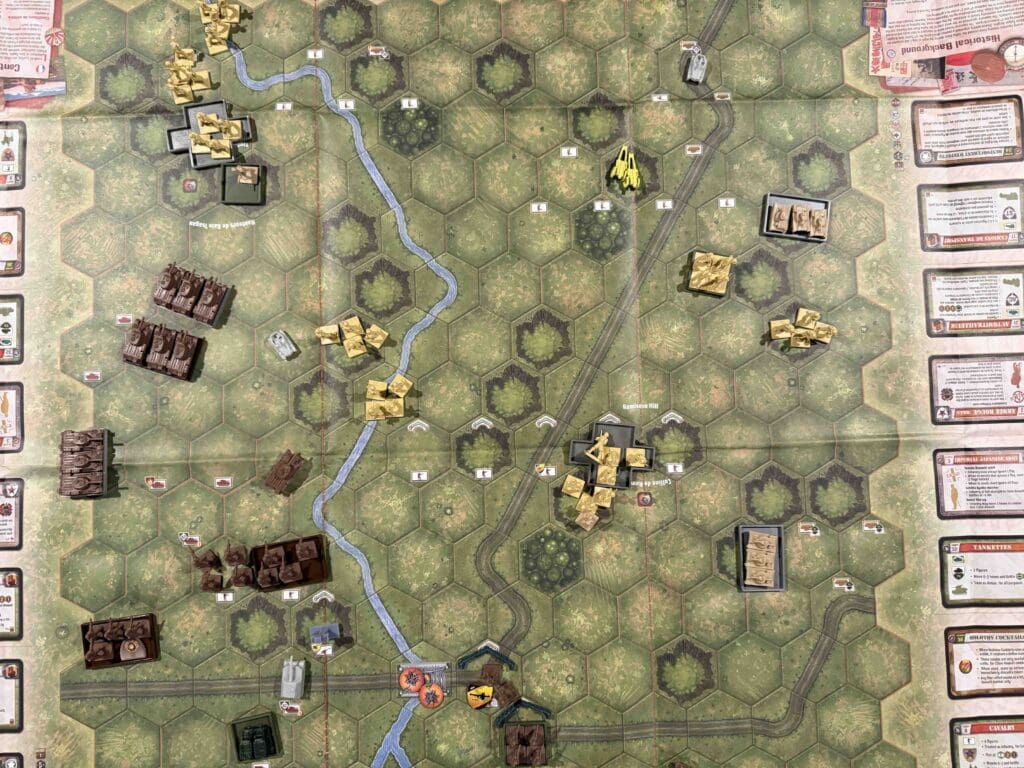
Bain Tsagan Heights

Bain Tsagan Heights

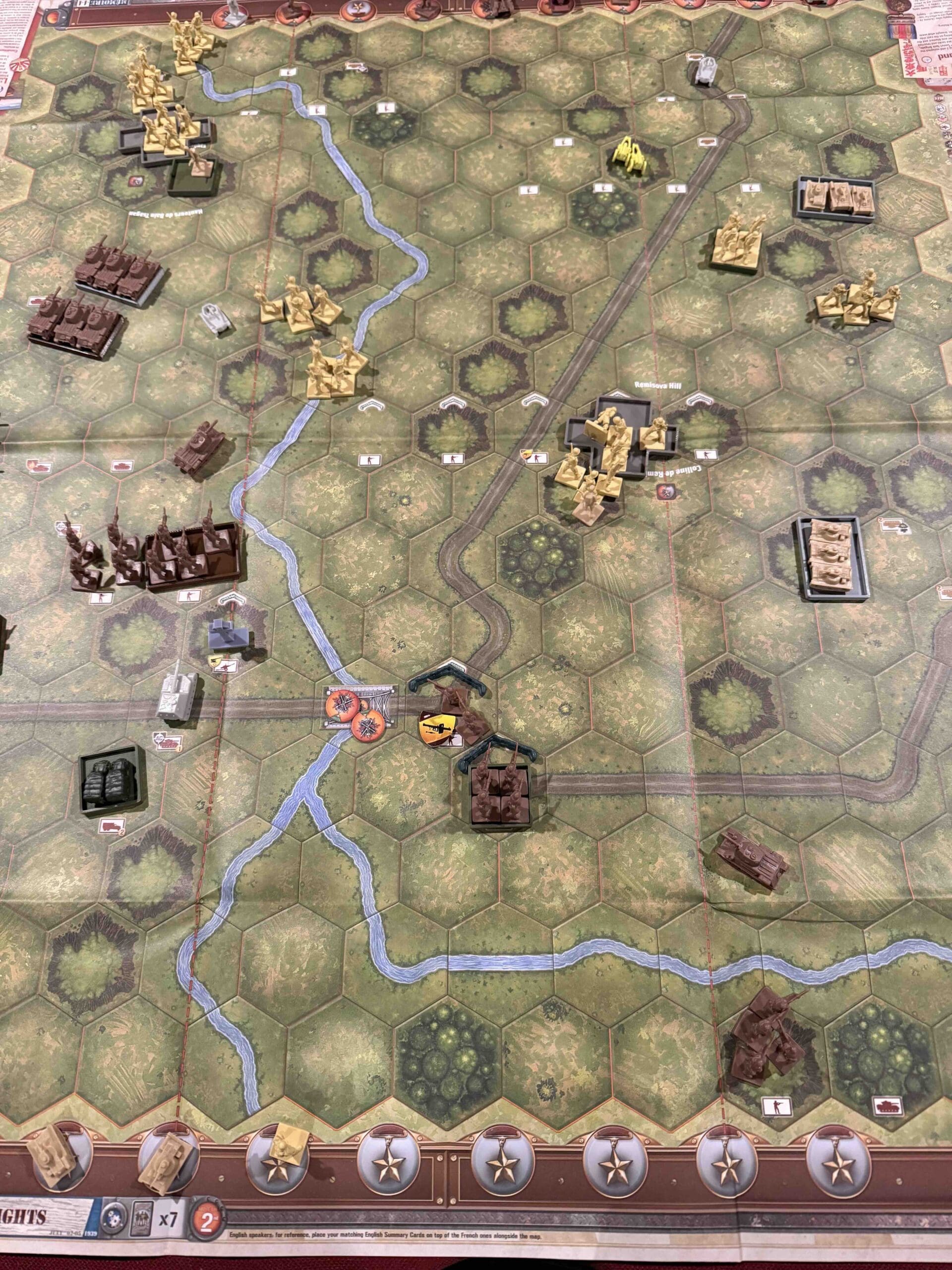
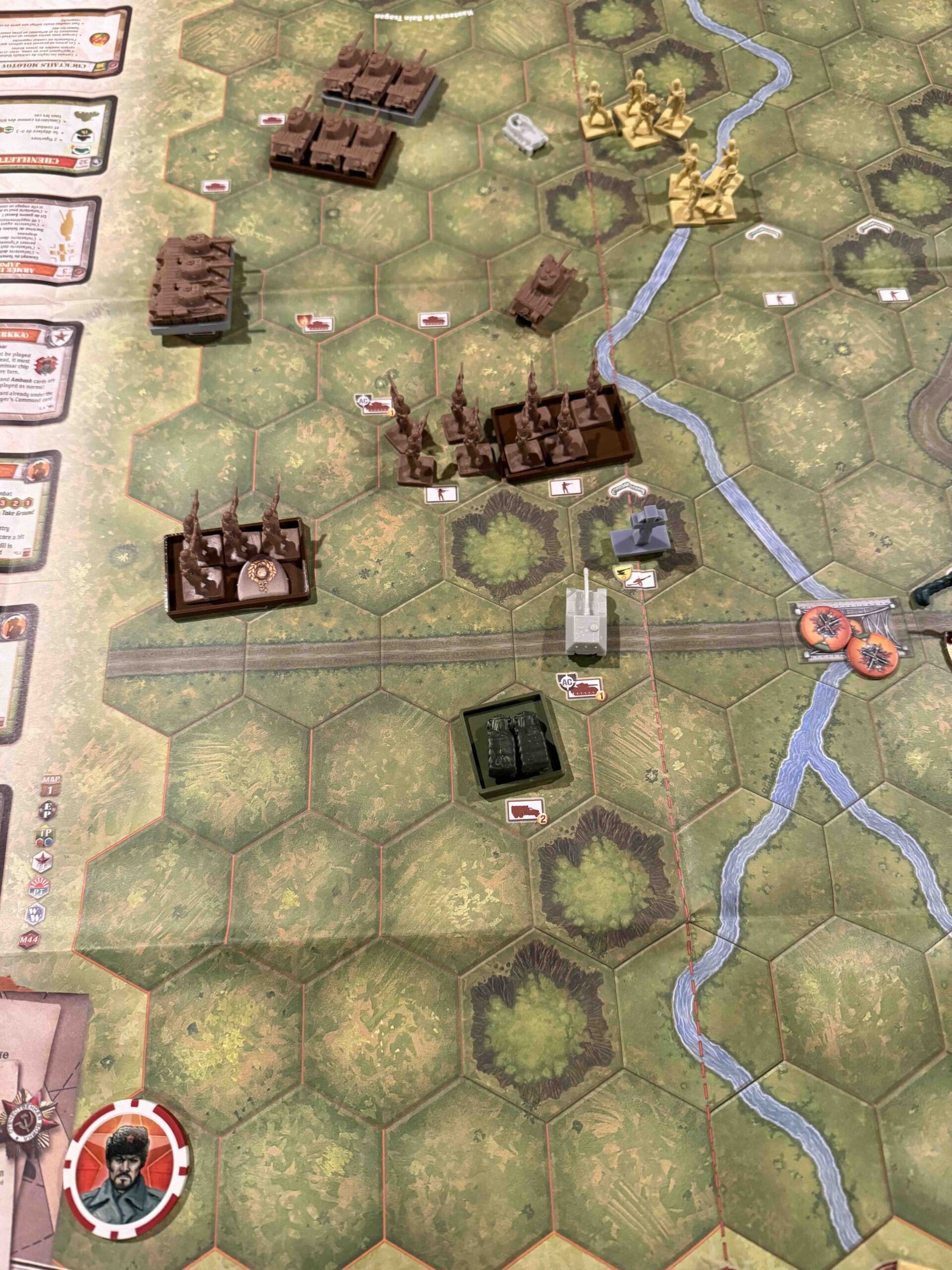
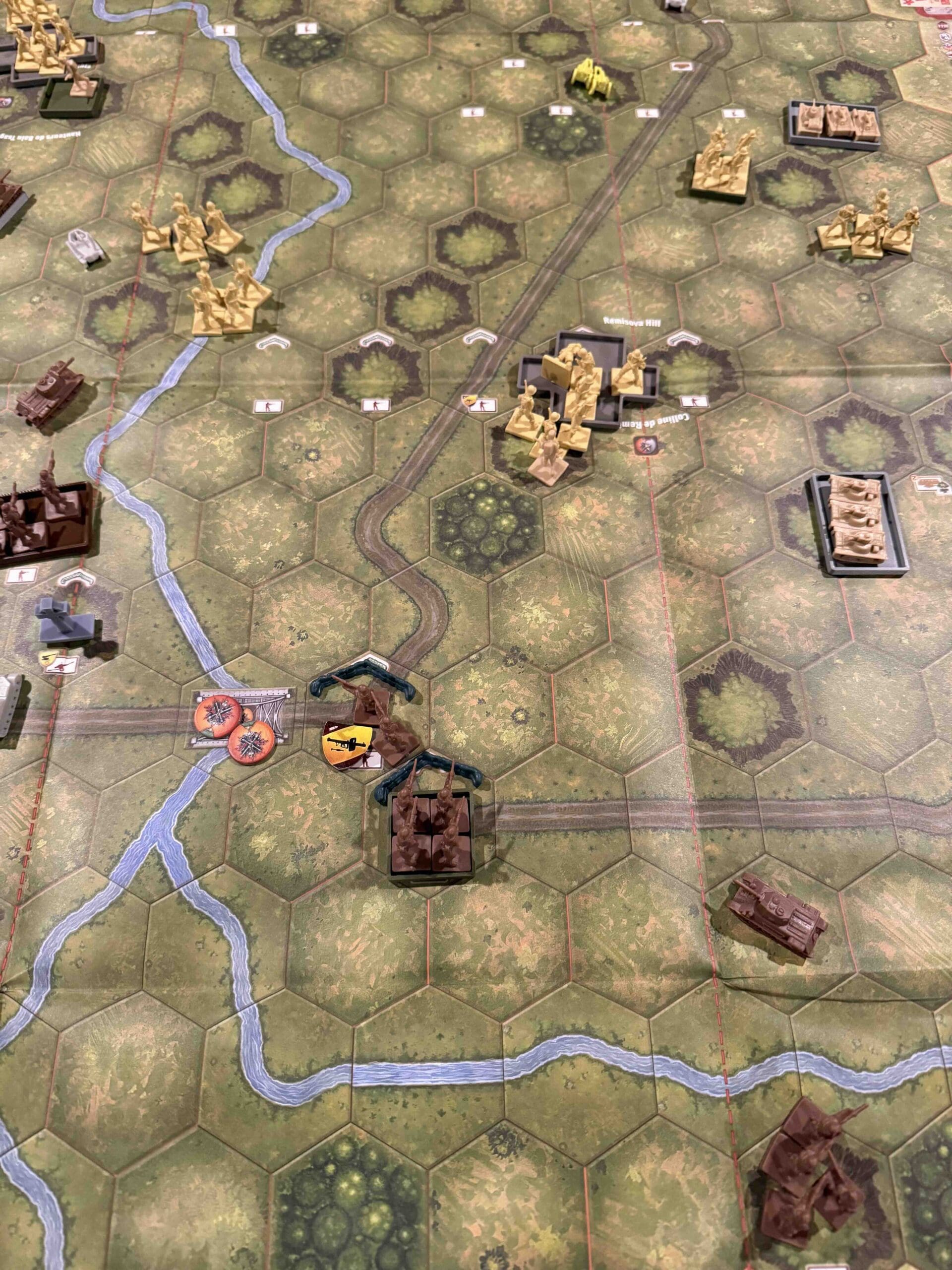
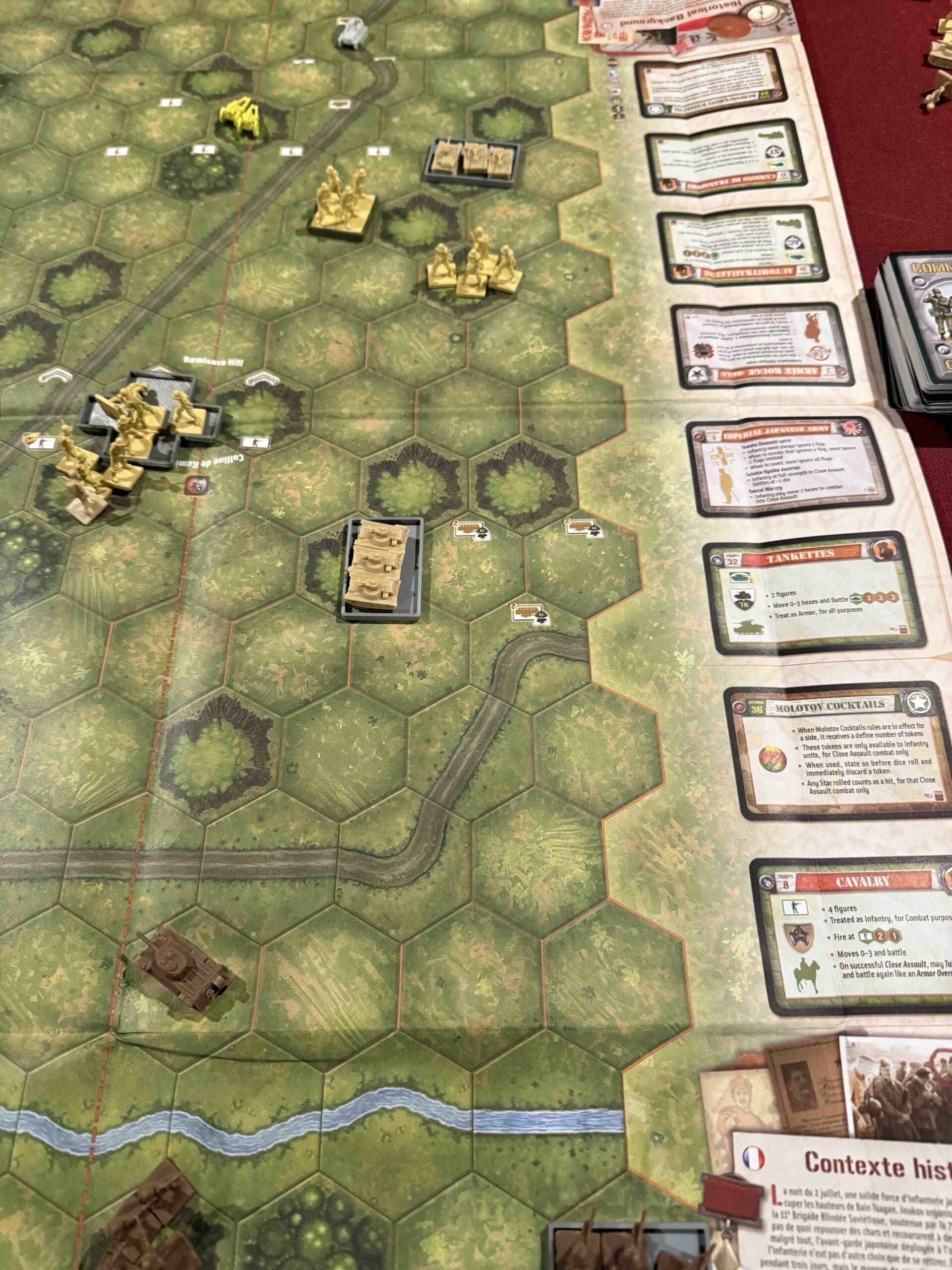
BTH_map_breakthrough_overhead

“Listen up, boys! In early July ‘39, over in the dusty wilderness of Mongolia, the Japanese thought they’d pull a fast one at the Bain Tsagan Heights—cross the river, flank the Soviets, and wrap the whole show up in a bow. But Zhukov wasn’t about to let those plans play out!

Zhukov hit back hard and fast, bringing in tanks, artillery, and infantry to pound those Japanese troops into the dirt. They fought like hell on those heights—bayonets flashing, guns roaring, tanks rolling—and the Soviets broke that flanking move right in half.

This wasn’t just a local scrap, boys—it was a turning point. That Soviet victory at Bain Tsagan sent a clear message: you mess with the Red Army, you pay in blood. It helped push Japan to shift its focus away from Siberia and toward the Pacific, changing the whole game for the coming war.

So remember this—when you see the enemy making a move, you don’t wait—you smash him before he knows what hit him! That’s the way to win!

~~ General Howitzer

10 VP’s

Card Balance:

Allies – 7

Axis – 5

Complexity:

4

Conditions:

Countryside

Context:

Historical

Location:

Siberia

Year:

1939

Theater:

Eastern

Campaign:

Khalkin Gol

Codename:

Summary:

Objectives:

10 VP’s, including four! objective medals; ( two ridges and a 2-medal bridge)

Battlefield:

Countryside with a river cutting through the Allies left flank, and long road cutting at an angle through the terrain directly to the two-medal bridge.

Troops:

Allies (Russia) – 12 Infantry, 9 Armor, including two Armored Cars, plus two Supply Trucks, 1 Big Gun!

Axis (Japan) – 12 Infantry, 7 Armor, including 3 Tankettes, 2 Armored Cars, 1 Artillery.


Allied Strategy:

1.  Big Picture: Allies are initially on the defense, due to the attack by the Japanese.  But they have enormous armor resources at their disposal on their left flank to bring to bear upon the battle in both the left flank and the center section.  And historically, this is what General Zukhov did.  In fact a pivot by the Allied Armor on the left flank over the ridgeline at river will allow them to reign down terror upon the Japanese forces assaulting the Remisova Hill.

2.  Your puny Armor and Infantry forces in the right flank are pretty useless, as they need to cross the river before they can engage the enemy.  But if they can at least move forward one hex, so that they do not get pinned against the backwall, that will be sufficient.

3.  Guard the bridge crossing the river. It is worth two medals.

4.  You have a Big Tom Gun, which has massive range of 8 hexes, and allows you to zero in on forces in a hex and increase your attack strength by another 1D.  Use it early and often.

Axis Strategy

1.  Big Picture Strategy: this was a long-shot for the Japanese historically, which they lost, but they have been known to win this scenario.  Use your Tankettes, which have good movement, to get into the battle and score some wins.  Advance forcefully with your infantry and overwhelm them using your Seishin Kyoiku Doctrine might combined with your Bonzai speed.

Battle Reports

3
BR - Bain Tsagan Heights

Author:

Days of Wonder

Link: