Capturing the Crossing

Capturing the Crossing
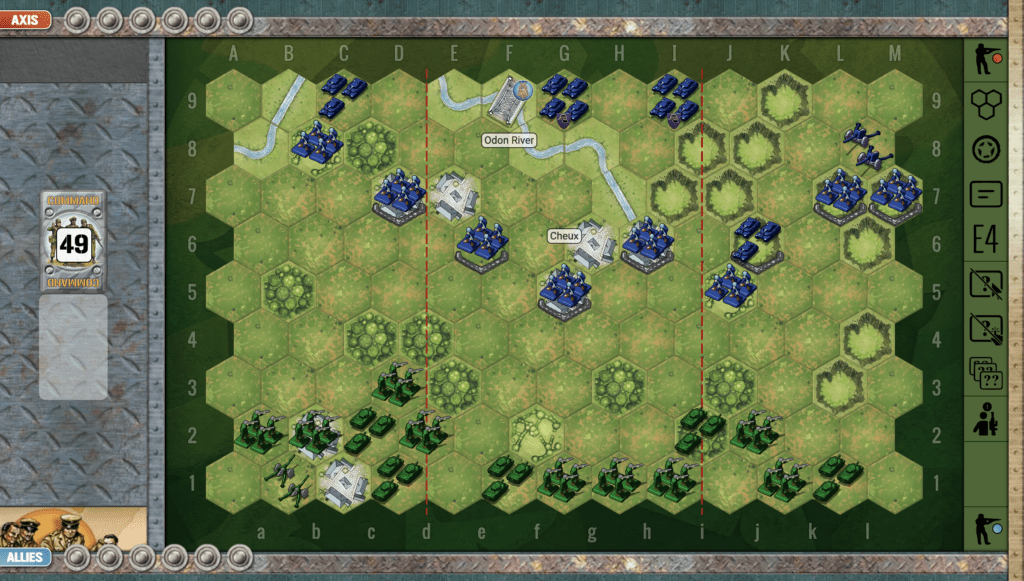
scenario_CapturingTheCrossing_start

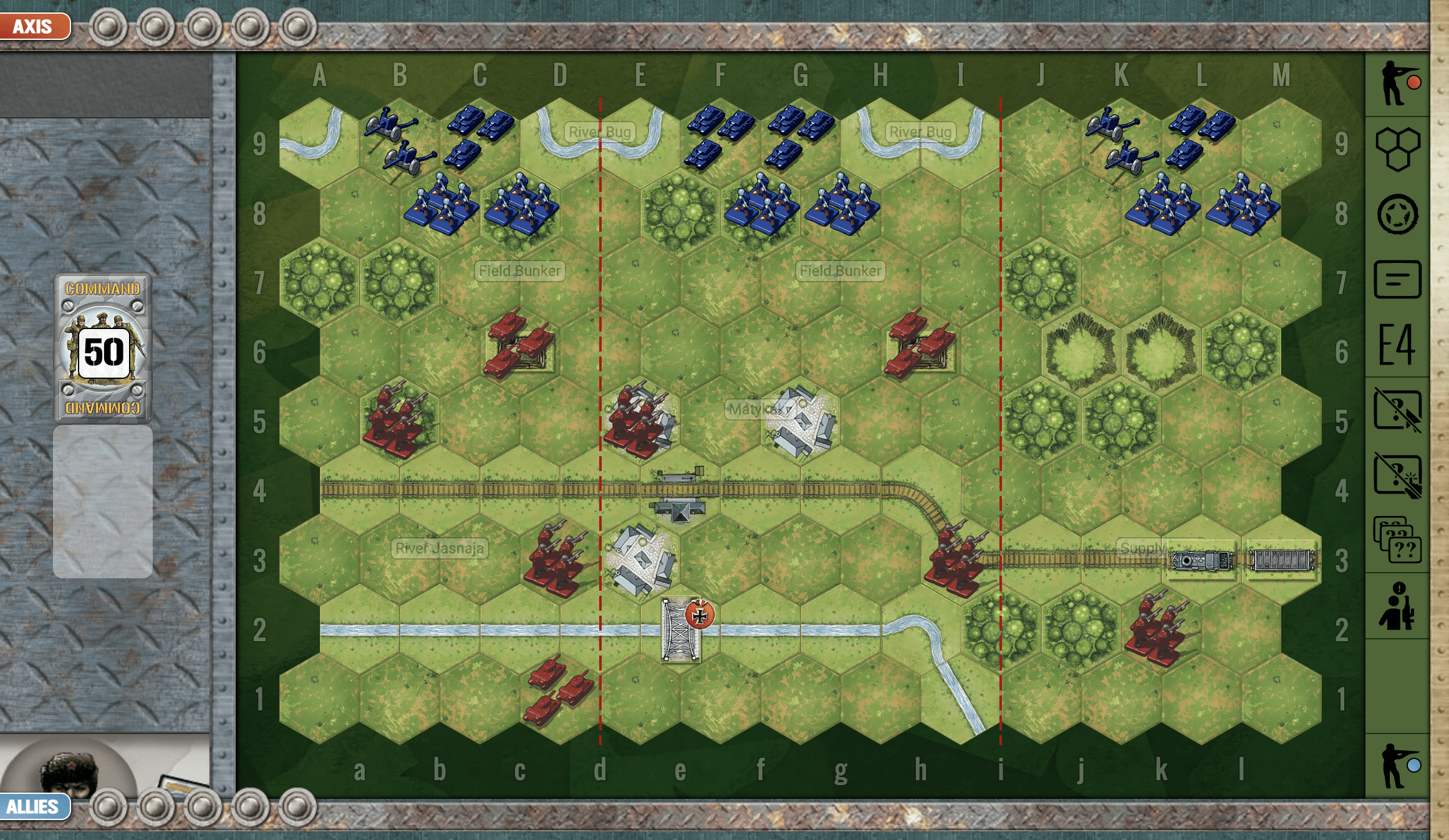
“Capturing the Crossing” refers to a World War II battle during the Normandy campaign, focused on securing a key bridge over the Odon River in late June to early July 1944.

Brief Summary:

  • Context:
    Part of Operation Epsom, launched by British forces to outflank Caen and push westward. The Odon River valley was a natural defensive barrier held by the Germans.

  • The Battle:
    British units, fought to capture and hold the bridge crossings over the Odon River.  German SS Panzer divisions mounted fierce counterattacks to repel the advance and regain control.

  • Tactics:
    The British used coordinated infantry, armor, and artillery to secure the crossings under heavy fire and poor weather conditions. Engineers rushed to reinforce and repair bridges under fire.

  • Outcome:
    British forces successfully captured and held key crossings, enabling a bridgehead south of the Odon. However, they faced continued German resistance and did not achieve a full breakthrough.

  • Significance:
    The battle was part of the slow Allied grind toward Caen, tying down German armor and paving the way for later operations like Goodwood and Cobra.

General Howitzer’s Summary:

“Boys, let me tell you about the push across the Odon in the summer of ‘44. It was part of Operation Epsom, the British aiming to outflank Caen and punch westward. The Odon River valley was no picnic—it was a natural fortress that the Germans, including those damn SS Panzer divisions, were ready to die defending.

The British didn’t flinch—they threw in everything they had: infantry, tanks, artillery, and those hard-as-nails engineers. They fought like devils in the mud and the rain, grabbing those bridge crossings under heavy fire and refusing to let go.

The Germans counterattacked like rabid dogs, but the British held firm. They didn’t smash through to Caen, but they sure as hell got a bridgehead south of the Odon, and that put Jerry on the back foot. That bridgehead was the key to bigger things—Goodwood and Cobra wouldn’t have happened without it.

So remember, men: sometimes it ain’t about the breakthrough—it’s about digging in, holding on, and bleeding the enemy dry!

6 VP’s

Card Balance:

Allies – 6 

Axis – 5

Complexity: 3

Conditions:

Countryside

Context:

Historical

Location:

France

Year:

1944

Theater:

Western Front

Campaign:

The Battle for Caen

Codename:

Operation Epsom

Summary:

Objectives:

6 VP’s, and a territorial objective medal for the Allies

Terrain:

Countryside with forests, hills, some villages and the Odon River.

Troops:

Allies – 9 Infantry, 5 Armor, 1 Artillery

Axis – 8 Infantry, 4 Armor, 1 Artillery

medal allies

Allied Strategy:

1.  Your left flank is strong. Your right flank is weak. The center section is more balanced. You have a bit more firepower, but the enemy has well protected Infantry in hedgerows.  You will need to take up secure positions in the woods facing the enemy and begin to degrade their defensive positions before you launch a frontal attack.

2.  Your artillery in the left corner should be moved forward into the nearby town to increase its effectiveness.

3.  Be aware that an armor battle from your position at L3 to j6 is likely to be lost due to the fact that the enemy Armor is sandbagged. You will need to bring in your additional Armor at i2 into the fray to even out the battle.


medal axis

Axis Strategy:

1.  The Odon River presents a mobility challenge for the armor units behind it, forcing them to angle to the left flank or cross the bridge before they can engage the enemy in the center or right flanks. You will need to get them mobile as soon as you can.

2.  The enemy has you at a disadvantage with slightly more Infantry and Armor, and one additional card, thus increasing their responsiveness.  You will need to compensate with strategic care and precision, and not waste resources on ill-conceived attacks.

3.  Your right flank is weak. Your left flank is strong. The center section is a little more balanced. Allies have a bit more firepower, but your sandbagged infantry will be hard to dislodge.

9
BR - Capturing the Crossing

Author.

URL

Bug River

Bug River

a memoir 44 game field

The Battle of the Bug River was the opening crack of thunder in the great storm called Operation Barbarossa, June 1941. When the Germans hurled their legions eastward, the Bug River stood before them—not just a line of water, but the first Soviet shield guarding their vast frontier. That river marked the edge of two empires, a tense, steel-cold border between Nazi-occupied Poland and the Red giant beyond.

But rivers don’t stop armies with purpose. At dawn, the German assault troops slammed across the Bug with the kind of ruthless precision that defines a well-oiled war machine. Pioneers threw down bridges under fire, infantry surged across in rubber boats, and armored columns rumbled forward the moment the crossings held. The Soviets, caught between disbelief and the sheer violence of the assault, fought hard in pockets, but they were hit before they could fully wake to the scale of the invasion.

What happened on the Bug wasn’t just a crossing—it was the first thrust of a colossal campaign, a declaration that the Germans intended to carve their way deep into the Soviet heartland. The river was supposed to be a barrier. Instead, it became the starting line for one of the most brutal struggles in human history.

~~ General Howitzer

5 VP’s

Card Balance:

Allies – 3
Axis – 6

Allies are seriously impaired on their card management options in this scenario.

Complexity:

4

Conditions:

Countryside


Location:

Russia

Year:

1941

Theater:

Eastern Front

Campaign:

Operation Barbarossa

Codename

Summary:

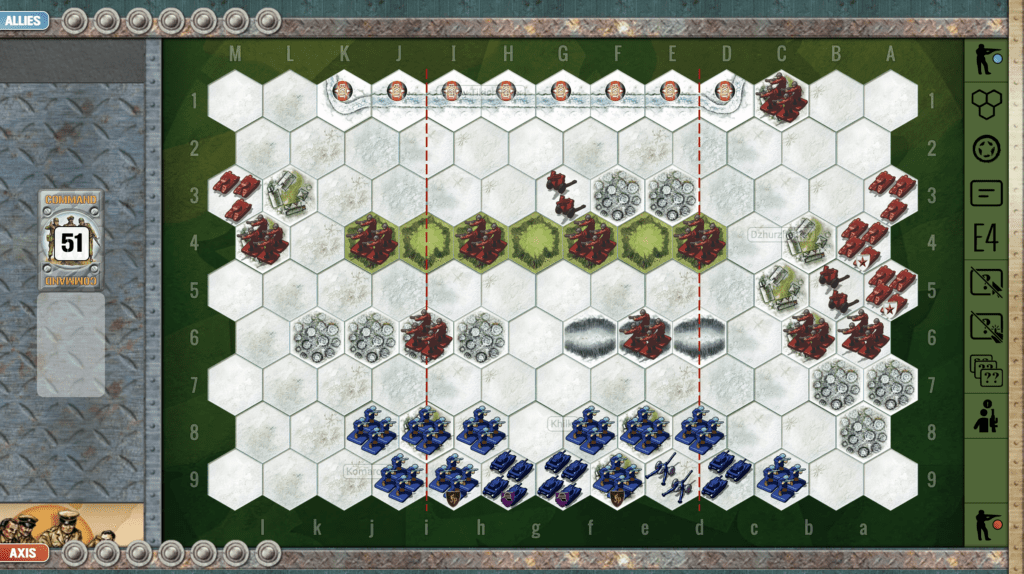
The Axis are making an attack against a fairly well-defended Russian army. It is a countrside terrain with forests and bunkers. There is also a supply train which can drop off additional defenders if it gets to its depot safely. This adds an interesting element to the battlefield game.

Objectives:
There are five VP’s in this scenario. There is also a bridge medal objective for the Axis to attain. Proper hits on the train will also gain VP’s for the Axis.

Battlefield:
The Russians begin with solid control of two sections. In fact their armor are poised in field bunkers only two hexes from Axis infantry which have no retreat available to them. The train tracks cut across the field also impairing movement. The Bug River weaves across the backline in Axis territory, hampering movement and preventing retreats.

Troops:
The Axis possess 6 infantry, 4 armor, and 2 artillery.
The Russians have 5 infantry, 3 armor, no artillery. Plus possibly two more infantry if the train reaches its destination.

Allied Strategy:

1. As the Russian Allied commander, you need to seek your VP’s. You need 5 and there are six enemy Infantry, which you can target initially. Then as the battle develops, see if any armor or artillery become candidates for attack.

2.  Note that the artillery is pressed up against the backwall with no retreat, so you can seek the chance to hit it with a three-dice armor attack. Your odds will be 33% per dice roll, vs. 16%. Take the chance to hit no-retreat artillery whenever you can. A Barrage card early in the game comes in very handy.

3.  Recognize that your armor in the field bunkers are going to get quickly overwhelmed by the larger Axis forces coming your way. The question is how much you can make them pay for it, before they do so.

Axis Strategy:

1.  You have four infantry hexes which have no retreat and are a mere two hexes away from enemy armor in bunkers. You should attack them immediately and quickly move in on them to maximize your attack. You may be able to neutralize one of the armor units before they do a lot of damage.  With a card like Move Out! you will be able to advance four infantry immediately and nearly surround both field bunkers for a series of two-dice attacks.  In just a couple of turns the enemy should be eliminated.

2.  Do not let the Allied Transport Train get to the train station. Because once they do, they will unload additional forces to fight.

3.  Use your two Artillery as much as possible to attack the enemy Armor in the field bunkers.

10
BR - Bug

Author:

Days of Wonder

URL

Breakout to Lisyanka

Breakout to Lisyanka

The Breakout to Lisyanka was a key engagement during World War II, fought in early 1944 on the Eastern Front. The battle saw Soviet forces encircling a large German force. The Germans attempted to break out from the encirclement to link up with their reinforcements near Lisyanka, with fierce fighting as they sought to escape Soviet attacks.

While some German units managed to break through, the escape was costly, with heavy losses in men and equipment. The Soviet success significantly weakened German capabilities in Ukraine, contributing to the broader Soviet advance in the region. The battle is often highlighted as a key moment in the Soviet efforts to liberate occupied Ukraine.

General Howizer summarizes it this way:

The Breakout to Lisyanka was a blood-soaked slugfest where the Soviets slammed the trap shut, and while some of the doomed Germans clawed their way out, they left behind a graveyard of men and machines—crippling their grip on Ukraine and fueling the Red steamroller westward.

7 VP’s

Card Balance:

Allies – 4

Axis – 5

Complexity:

3

Conditions:

Winter

Location:

Ukraine

Year:

1944

Theater:

Eastern Front

Campaign

Codename

Summary:

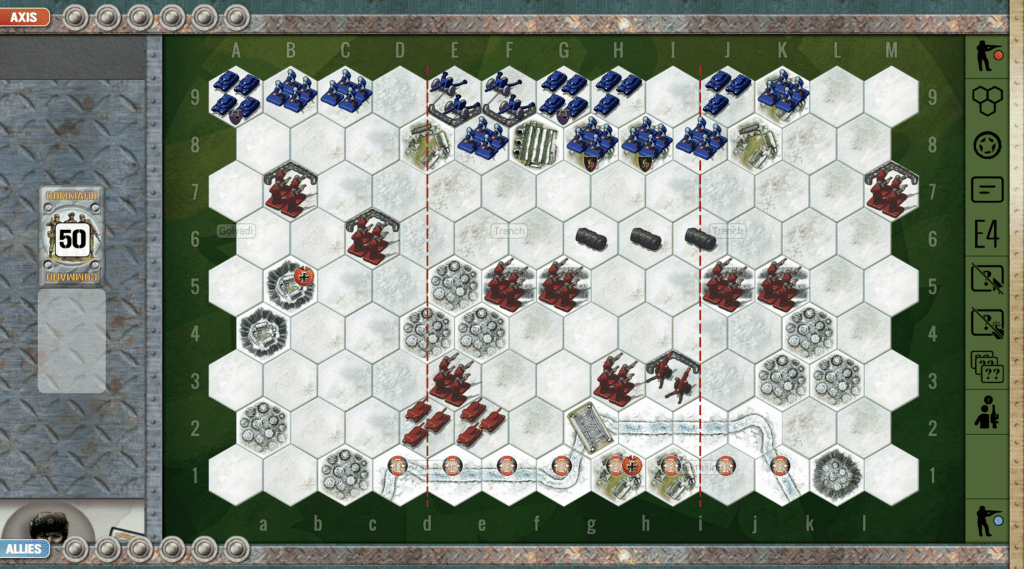
The goal for the Axis is to breakthrough, as the name implies, over the hilly ridge and across the river exits. For Allies, the goal is to of course prevent this. The forces begin in a non-symmetrical dispersion, which makes for a fun scenario.

Objectives:

7 VP’s, plus the Axis have Exit Medals they can try for.

Battlefield:

There is a ridge of hills going across the center, plus some ravines to provide a bit of cover to infantry.

Troops:

Allies – 10 Infantry, 4 Armor, 2 Artillery

Axis – 9 Infantry, 3 Armor, 1 Artillery

Allied Strategy:

1.  As the Allies you must defend against three objective medal locations, the two-hex towns of Golyadi, and Nekrasino, each worth one VP, there is also the frozen river exits along the bottom of the battlefield. Your objectives however, are simply to destroy six enemy units. There are seven enemy infantry units to target and some armor and artillery, if they give you the chance.

2. Be aware that the Axis have Combat Engineers who can attack your infantry in the trenches at close range – with no combat restrictions. So make it one of your early goals to finish them off.

3. Make good use of your artillery in the middle section to defend your troops in the trenches.

Axis Strategy:

1.  Attack with your frontline infantry right away, to create some movement space for your armor, and also to neutralize the nearby enemy who will quickly attack from close range.

2. Try to avoid your right flank which is packed with enemy forces ready to pounce with both armor, infantry, and artillery. You may have better luck on your left flank which has less enemy artillery power. 

3. You can also quickly overwhelm the enemy infantry at i6, to provide a proving ground for your forces to prepare for the breakout.

4.  Remember that if you get any of your Infantry across the Exit hexes, you will earn two! Medals per Infantry (and one for Armor).  So if you get a Behind Enemy Lines, this will provide you with the distance to move in, attack the enemy, and then quickly escape out the back row for an easy two medals.

Classic Battle Reports:

(percentage of Allied victories)

52%

Battle Reports:
18
BR - Lisyanka

Author:

Link:

Breakout at Klin

Breakout at Klin

  • When & Where:
    December 1941, near the town of Klin, northwest of Moscow, during the Soviet counteroffensive in the Battle of Moscow.

  • Context:
    After months of German advances toward Moscow, Soviet forces launched a major counterattack. German troops, particularly from Army Group Center, found themselves overextended and at risk of encirclement near Klin.

  • The Battle:
    Soviet forces attacked from multiple directions, threatening to trap German units in the Klin salient. The Germans, under pressure and facing severe winter conditions, conducted a fighting withdrawal, breaking out of the encirclement and retreating westward.

  • Outcome:
    The Soviet Red Army recaptured Klin, dealing a blow to German morale and momentum. The breakout marked a turning point in the Moscow campaign, with German forces now on the defensive for the first time in the war.

Lessons from General Howitzer:

“The Breakout at Klin wasn’t just a German retreat—it was the moment the Red Army showed the world it could counterpunch. And it was the first time the German war machine started to cough and stall. Learn from it, gentlemen: never overreach, never underprepare, and never, ever give your enemy a second chance to swing.

6 VP’s

Card Balance:

Allies – 3

Axis – 6

Complexity:

3

Conditions:

Winter

Location:

Russia

Year:

1941

Theater:

Eastern Front

Campaign:

Battle of Moscow

Codename

Summary:
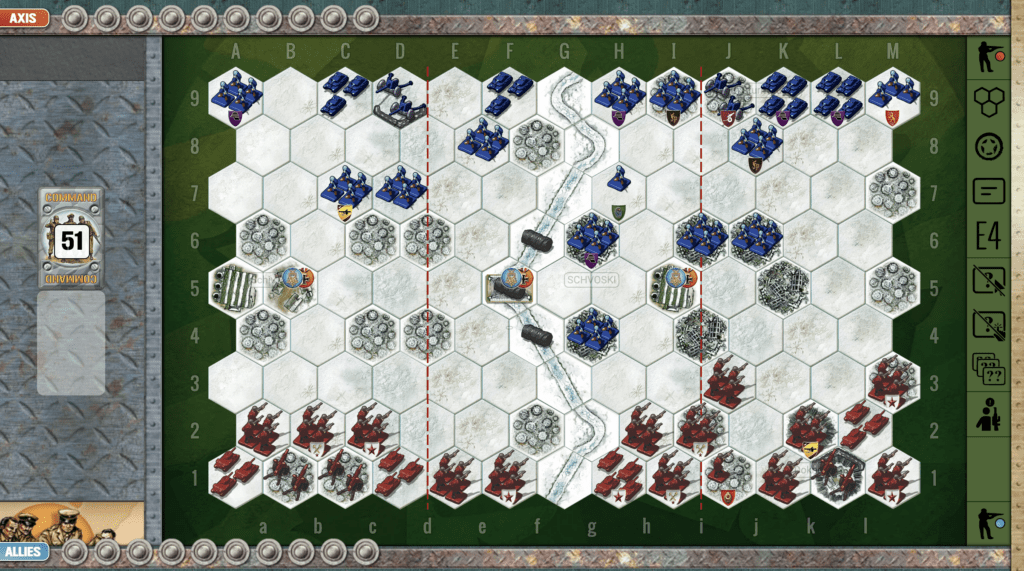
At the start, the Axis are line up mostly against the lower border, while the Russians have control of much of the board. The objective for the Axis is to either destroy the forces, or as the name implies breakout past them to the exit hexes at the top of the battlefield. If the Axis can effect rapid movement (and Blitz rules are in effect to help with this ) they can make it past the Russian troops blocking their path in excellent defensive positions, and achieve victory.

Objectives:
It is a long 6 VP game, fought at, often, close quarters, while they Axis seek two objectives, to destroy the enemy and to escape the enemy.

Battlefield:
This is a winter war with a mix of urban and countryside, making for an intersting battlefield deployment and field of play.

Troops:
The Axis –  7 infantry, 4 armor, 2 artillery.
The Russians –  9 infantry, 2 armor, 1 artillery.

Allies:

 1.  You are positioned very closely to the enemy  on your left flank, and in the center at the trenches.  Attack as much as you can before the enemy breaks out from their center section congestion.

2. You also have a well-placed center section artillery which you can use to decimate the enemy forces. Use it!

3. Your best opportunity for some significant kills is on your left flank.  You will need to get your armor up there to assist your forward infantry. But you need to do it quickly before they are wiped out by the nearby enemy.  And because of winter conditions, you can only move your armor two hex per turn, so don’t waste any time and get them moving!

Axis:

1. Axis, note that on your right flank the Russians are nearly on top of you, with a sandbagged infantry only two hexes away from your backwall, and another one three hexes away. Since you have two infantry hexes pressed against your back border, with no retreats, an early attack against you is going to result in several hits. If you can move on your right flank right away with a decisive attack, you can begin the breakout successfully.

2. The next immediate objective for the Axis forces is to get some mobility for your armored forces. Get them out from behind the town and factory hexes with which they begin the battle.

3. Note that you have two artillery units at your disposal in the center section. At the start of the battle, there are four enemy hexes within your full power two-hex attack. Use those artillery at every chance.

Class Battle Reports:

(percentage of Allied victories)

19%

20
BR - Klin

Author

URL

Braskir Offensive

Braskir Offensive

scenario_BraskirOffensive_start

Here is General Howitzer’s summary of this fictious battle:

The Braskir Offensive was a brutal winter clash between Axis and Allied forces fought amid snow-covered city ruins. The battlefield centered on three key objective territories, each representing vital control points.

The Allies began congested, bottled up in the eastern ruins, struggling to break out under heavy Axis fire. The Axis initially dominated the field, and using fortified positions to hammer any Allied advance.

Through grinding urban combat, flanking maneuvers, and coordinated assaults, the Allies sought to push past the chokepoints, seize the objectives, and turn the tide. The frozen, rubble-strewn city made every advance costly, turning the Braskir Offensive into a battle of attrition where each medal marked blood, grit, and survival.

~~ General Howitzer

VP’s

10

card

Card Balance:

Allies – 5

Axis – 4

Complexity:

4

Conditions:

Winter

winter

Context:

Fictional

Location:

The Baltics

Year:

1944

Summary:

Victory Points:

10, including some objective medals for the church, the Schiv, and the bridge.

Terrain:

There is a lot of complexity to this scenario, with city ruins, factory complexes, a navigable river, and forests. With 10 VP’s needed to win, each side must plan out a long, strategic campaign to degrade enemy forces until victory is achieved.

Troops:

Allies – 14 Infantry including 1 Sniper, 4 Armor, 3 Artillery

Axis – 13 Infantry including 1 Sniper, 4 Armor, 2 Artillery

medal allies

Allies:

1.  Your forces begin in a very congested configuration in the left and right corners. You need to get them mobile ASAP, to be prepared for the coming enemy attack.

 2.  The key to winning this battle is to soften the targets near the medal objectives, and then to position your infantry to take control of the targets in a final push. This will require you to save one card in reserve which allows for multi-sectional attacks, such as a Recon in Force, or Move Out!, or Direct from HQ.

medal axis

Axis:

1. The three Objective hexes in the center, can be quickly gained with some rapid infantry movements. Once gained the Allies will have to fight hard to take them from Axis control, resulting in many losses for them. This can start the Axis at as much as a 3 VP advantage from the first turn.

2. But do not take them too early. If you do not have the support forces around you, any advance forces that grab Objective hexes will get pummeled. This scenario is really about bringing all of your forces to bear upon your attack objectives.

12
BR - Braskir

Author.

URL

Bloody Ridge

Bloody Ridge

scenario_BloodyRidge_start

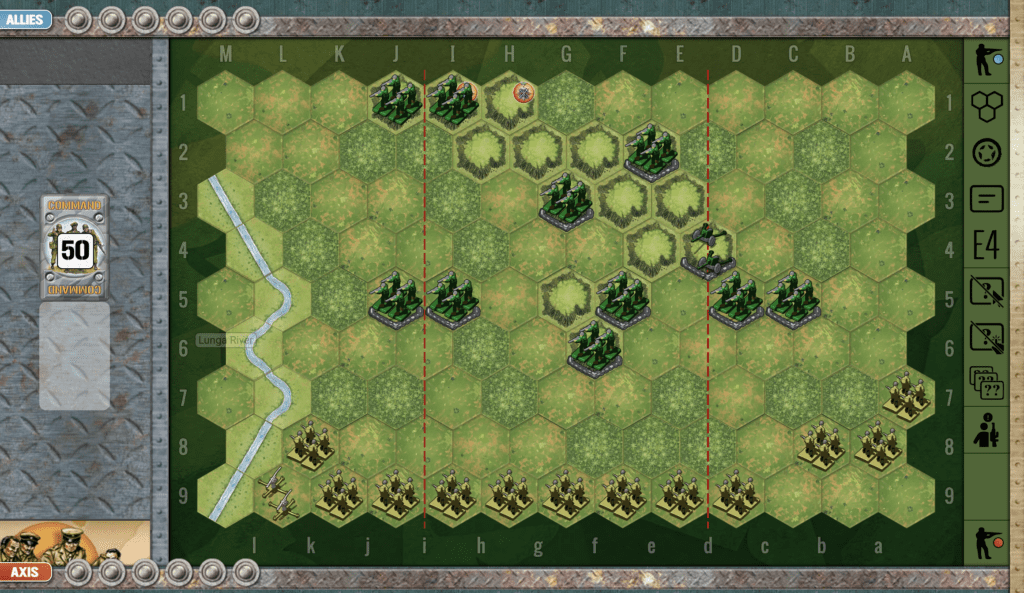
September 1942—Guadalcanal. The place? A godforsaken jungle. The mission? Hold Henderson Field—or lose the whole damn island.

The Japanese came in hard, full of fire and fury, dead set on taking back that airstrip. And standing in their way? A thin line of Marine Raiders and the 1st Marine Division, led by Colonel Merritt Edson—a man who knew how to fight.

They dug in on that ridge near the field, and when the sun went down, hell lit up. The enemy came in waves, screaming, charging, trying to break our line with steel and guts. But Edson’s boys? They didn’t break. They held, bled, and threw everything back in the enemy’s face.

For three nights it was chaos—bayonets, grenades, bullets in the dark. But when the smoke cleared, Henderson was still ours, and the ridge was soaked in blood—American and Japanese alike. That hill earned a new name—“Bloody Ridge”—and it damned well deserved it.

That stand turned the tide on Guadalcanal. It proved that the Japanese could be stopped. It proved that when the enemy thinks we’ll break—we dig in deeper.

That’s the kind of fight I respect—outnumbered, outgunned, and still coming out on top.

~~ General Howitzer

6 VP’s

Card Balance:

5 – 5 

Complexity:

2

Conditions:

Jungle

Context:

Historical

Location:

Guadalcanal

Year:

1942

Theater:

Pacific Theater

Campaign

Summary
Bloody Ridge has a large series of hills in the center of the battlefield, occupied by the Marines who are defending against a vast hoard of Japanese attackers.

Objectives:
6 VP’s, plus the Japanese can target two hexes at the top of the battlefield representing Henderson field as Objective Medals.

Battlefield:
Jungle with a series of bluffs in the center, controlled by the Marines.

Troops:
Marines, 10 infantry, 1 artillery
Japanese, 12 infantry, 1 artillery

Allies:

1.  One advantage you have as Allies is your artillery which is placed in the center of the battlefield, straddling the left and center sections.

2. Because the Marines are out-numbered, and behind sandbags, they have a primarily in a defensive role in this game, unless the cards cooperate. So do not rush out of your protection unless given a good reason by the cards and circumstances. And that’s an order!

3.  Because of the Seishin Kyoiku Doctrine, and the Banzai War Cry, you positively need to hit every full-power enemy hex unit at least once.  This will reduce their attack from the super-powered 4D attack.  If not, they will overwhelm your forces.

Axis:

1. The Japanese have a numerical advantage. This fact, combined with the principles of Seishin Kyoiku, and the Banzai War Cry mean that you should rush forward as quickly as possible while your infantry units are still fully intact to get the extra attack dice provided.

2. You have an advantage on your left flank with your artillery and infantry. That is your probably best forward option. Watch out for the Marine artillery on your right flank.  

13
BR - Bloody Ridge

Author.

URL