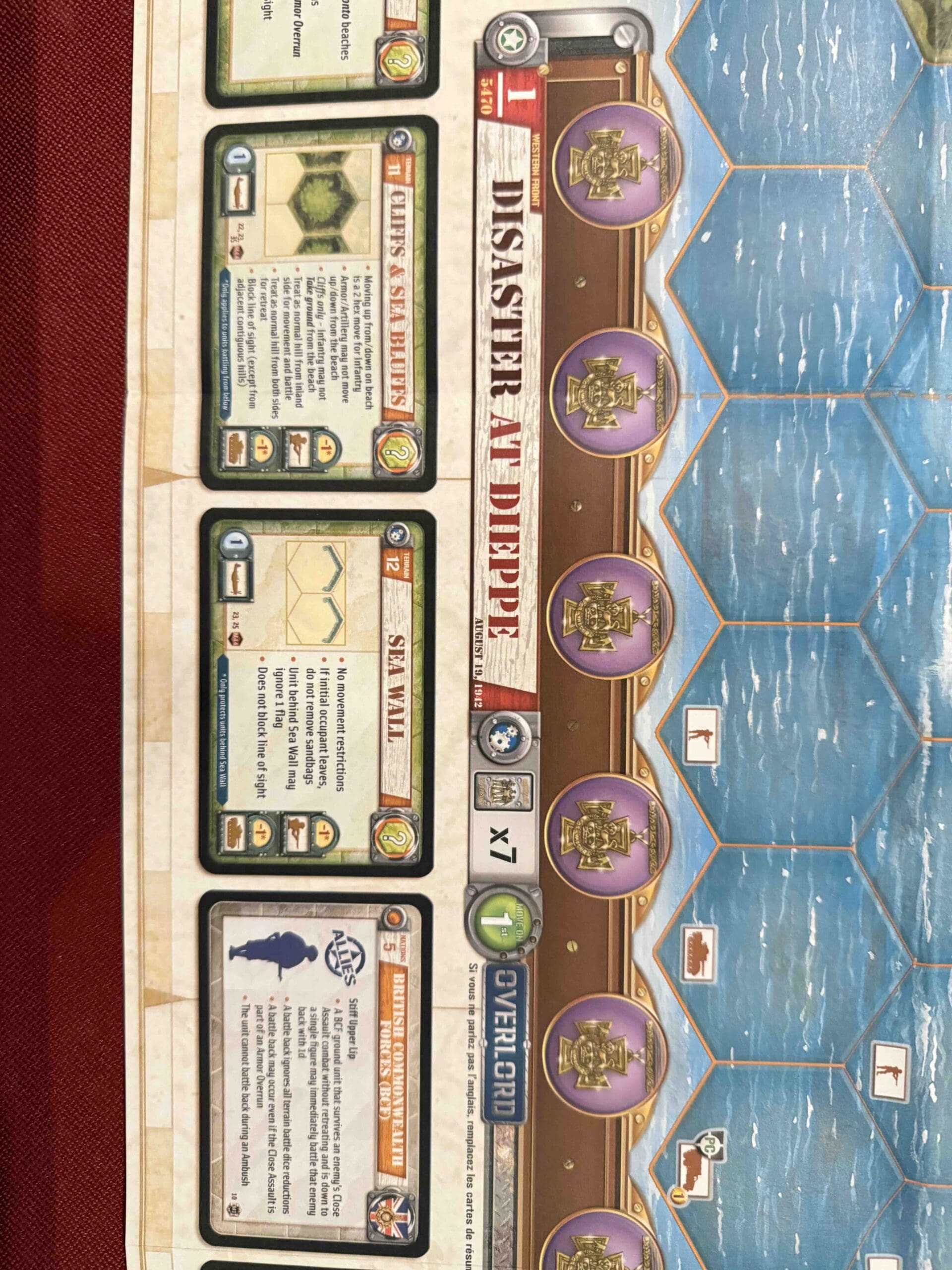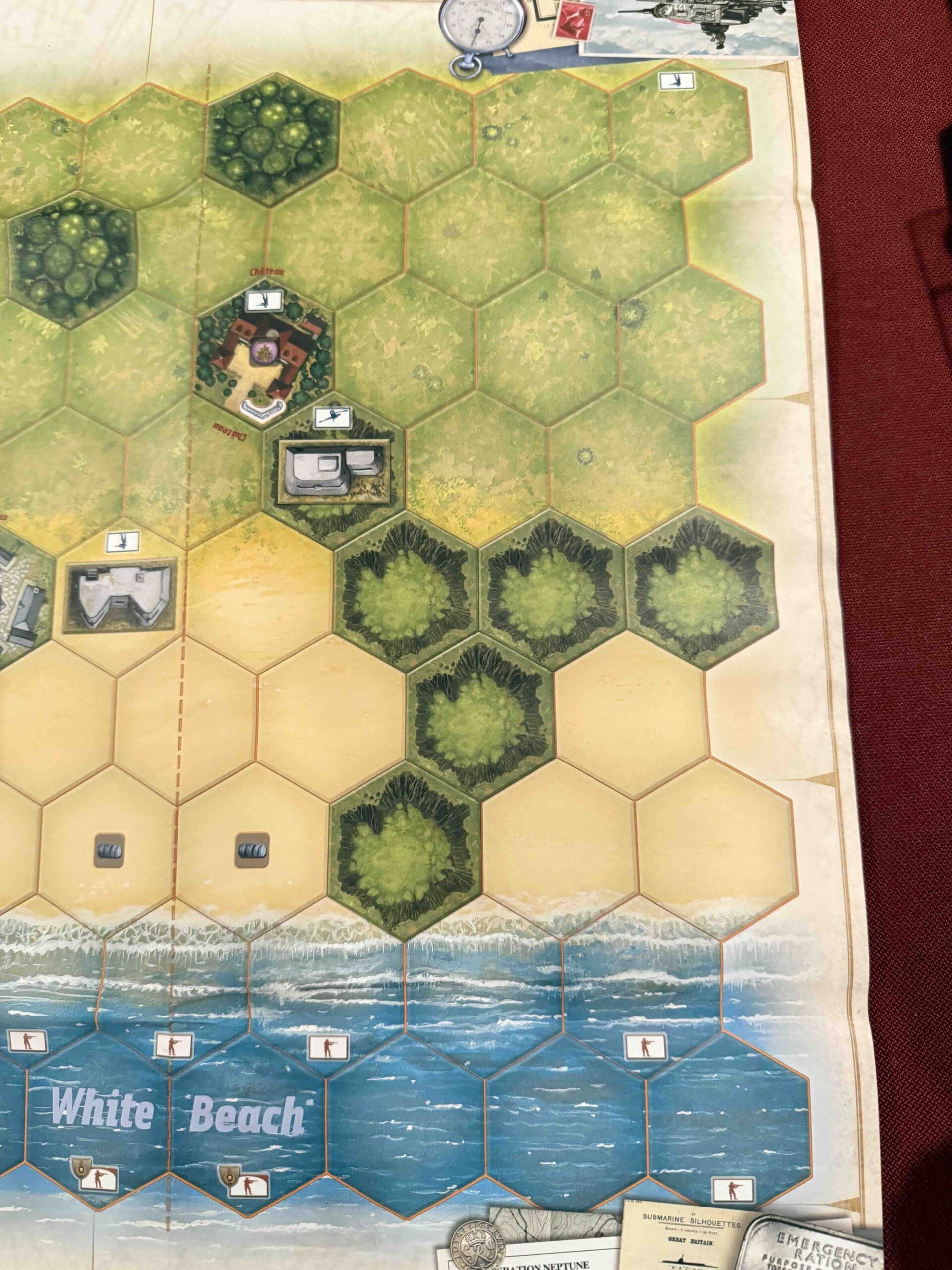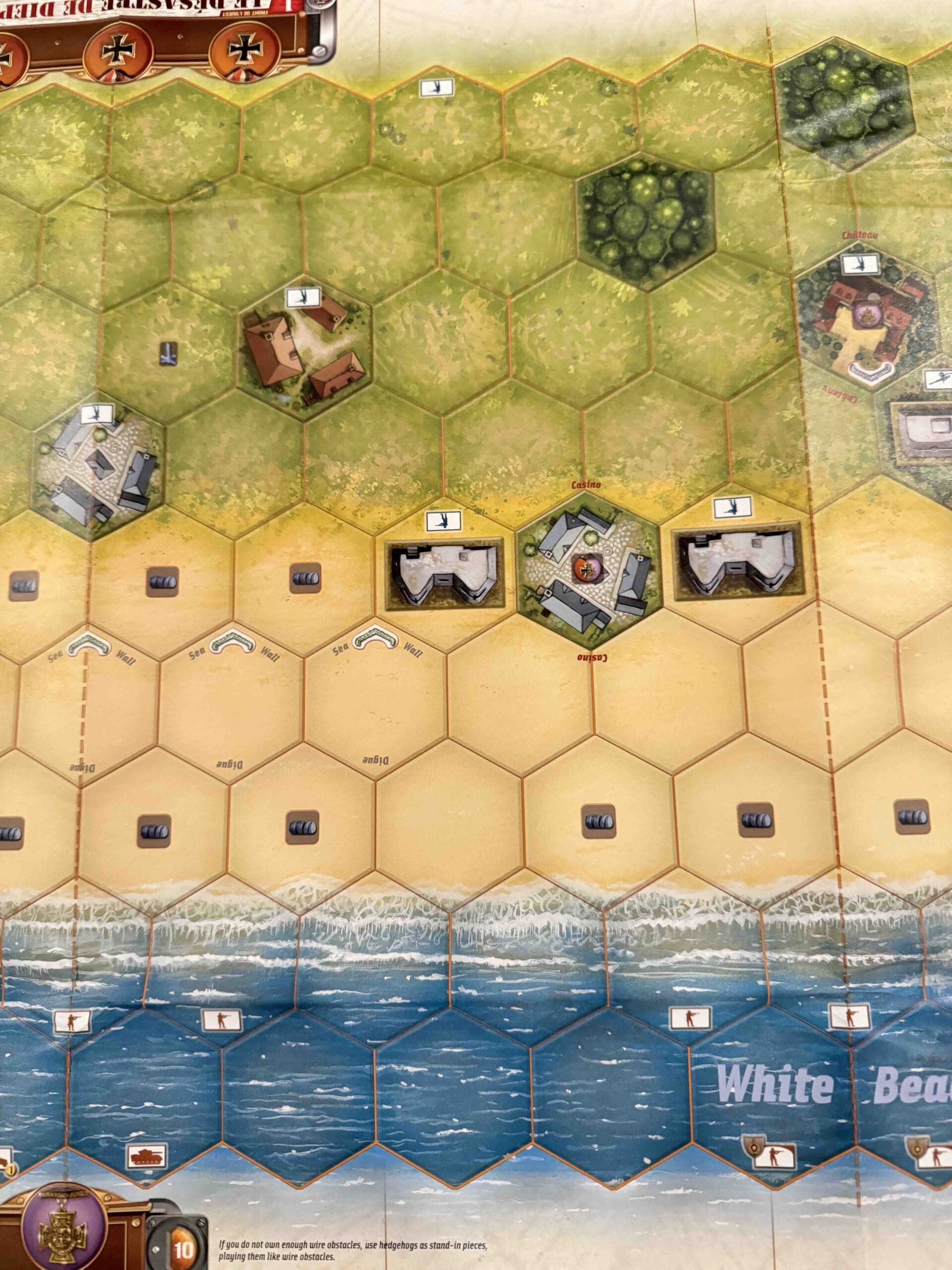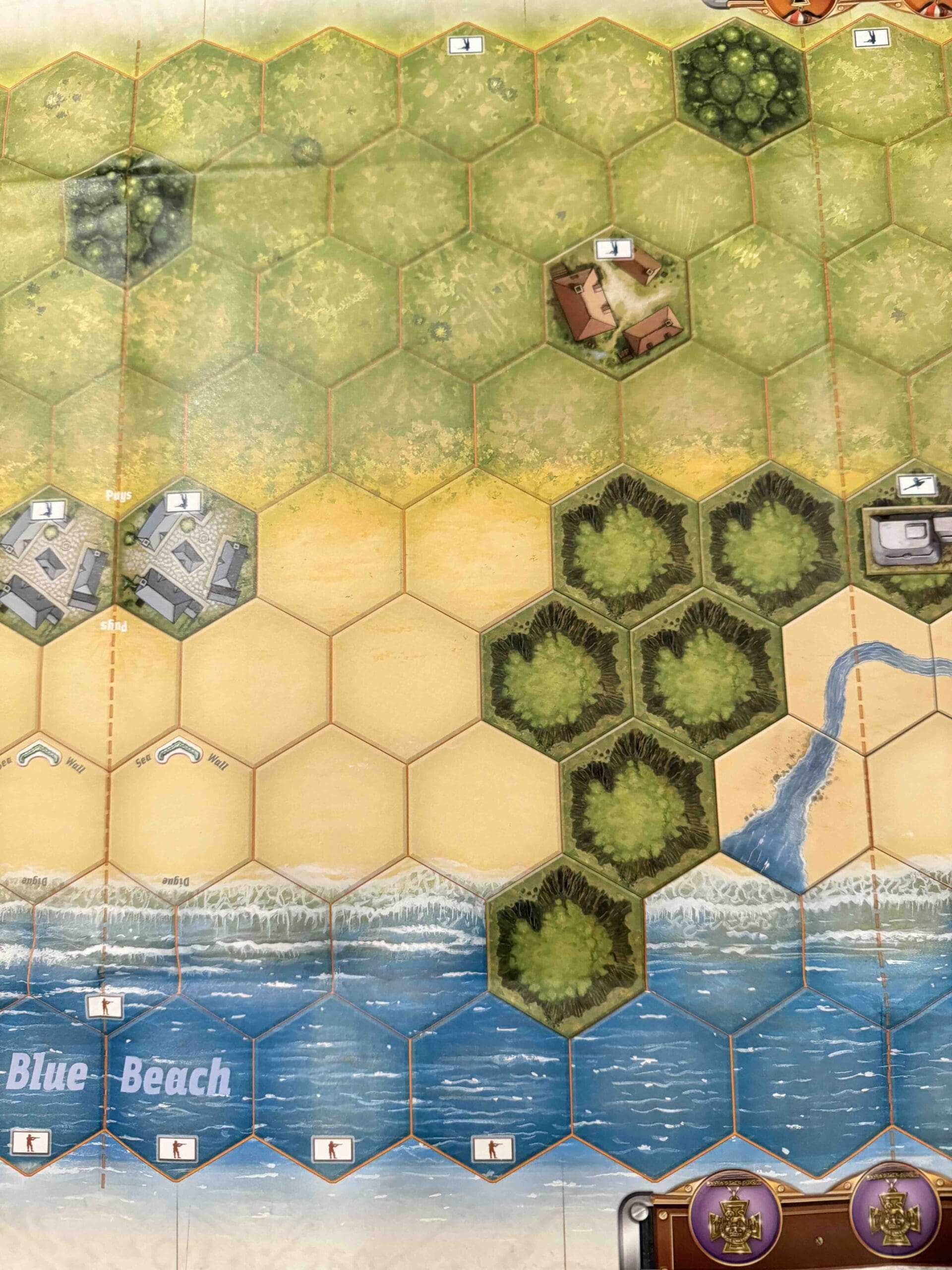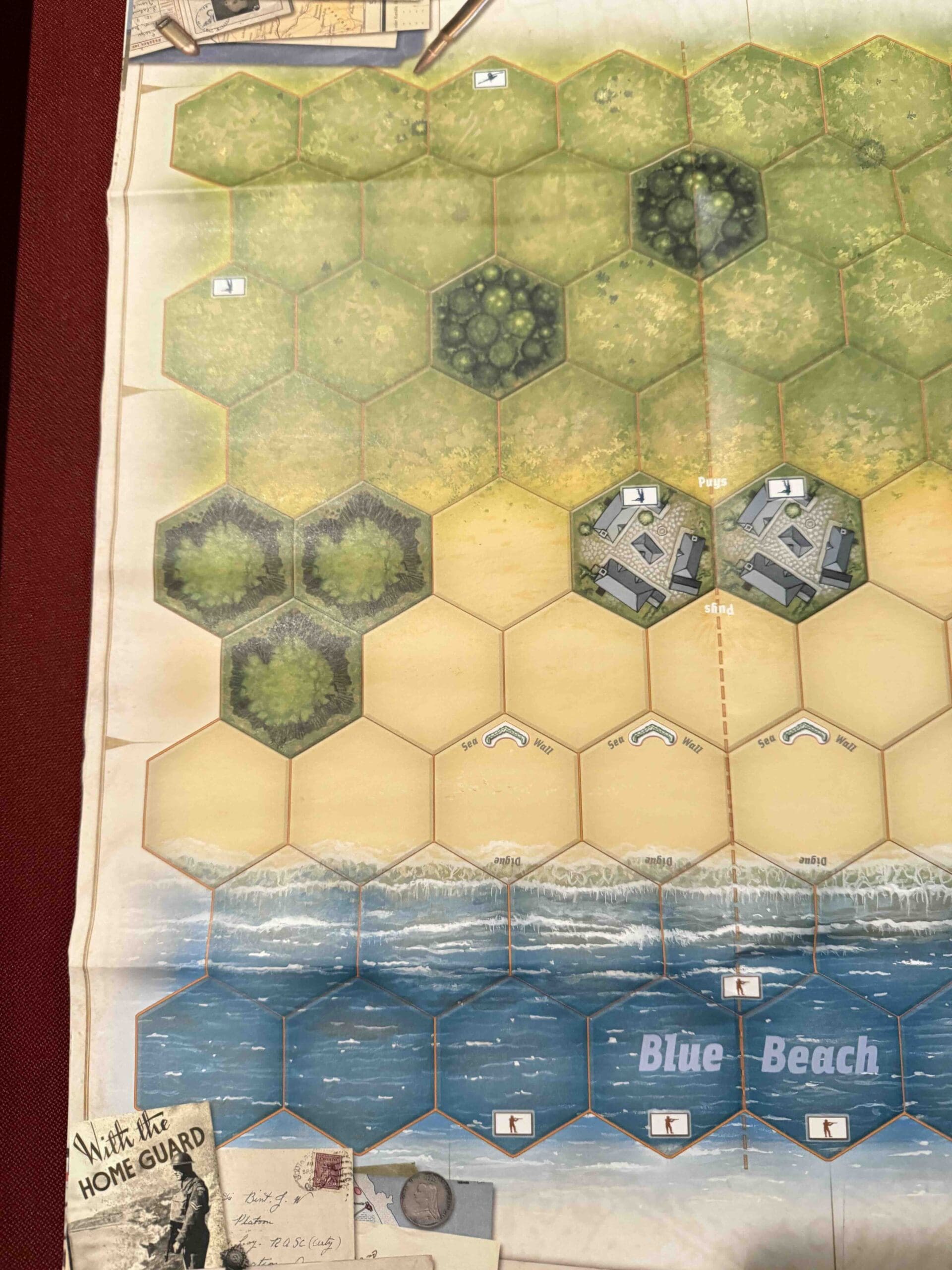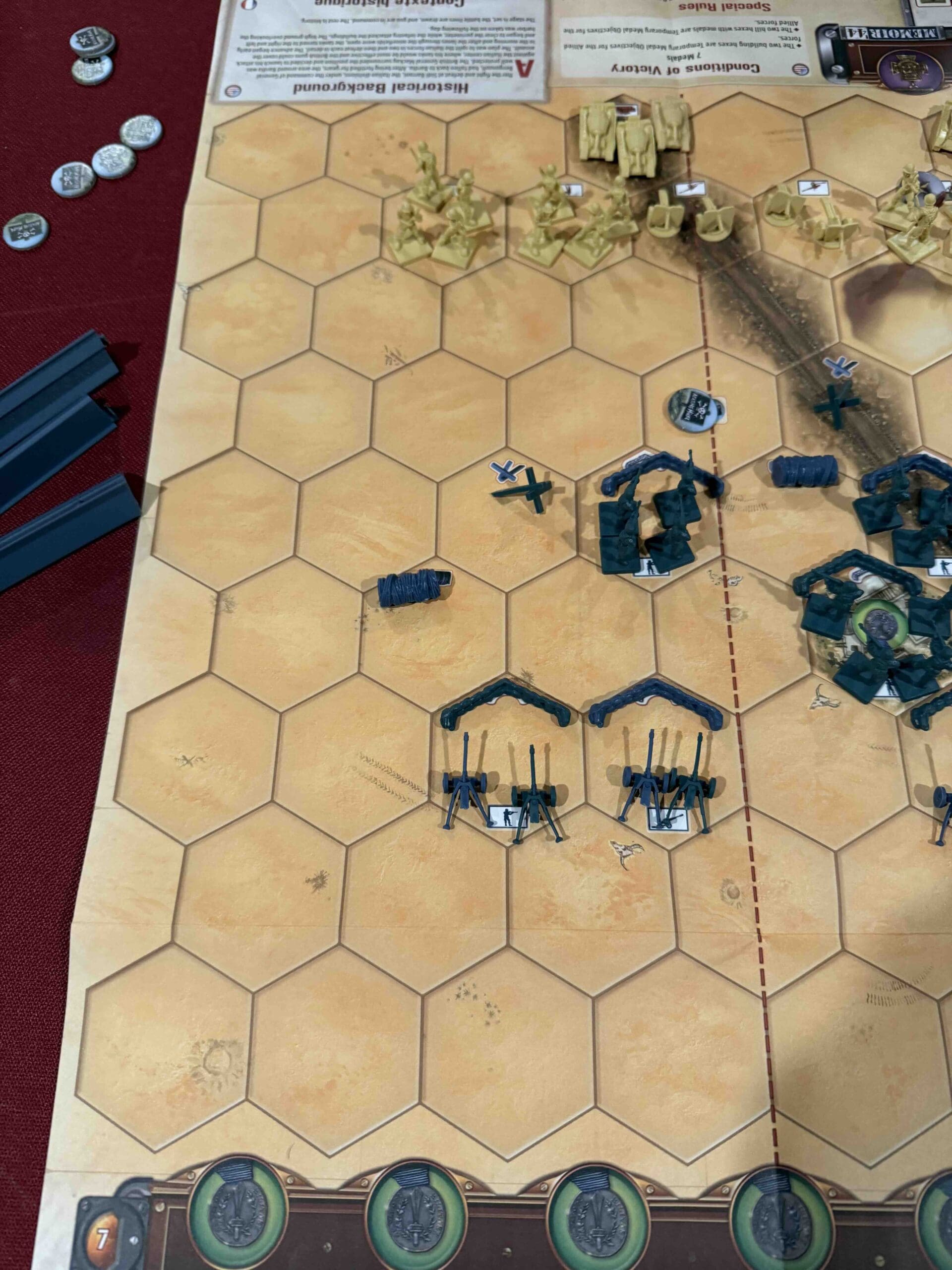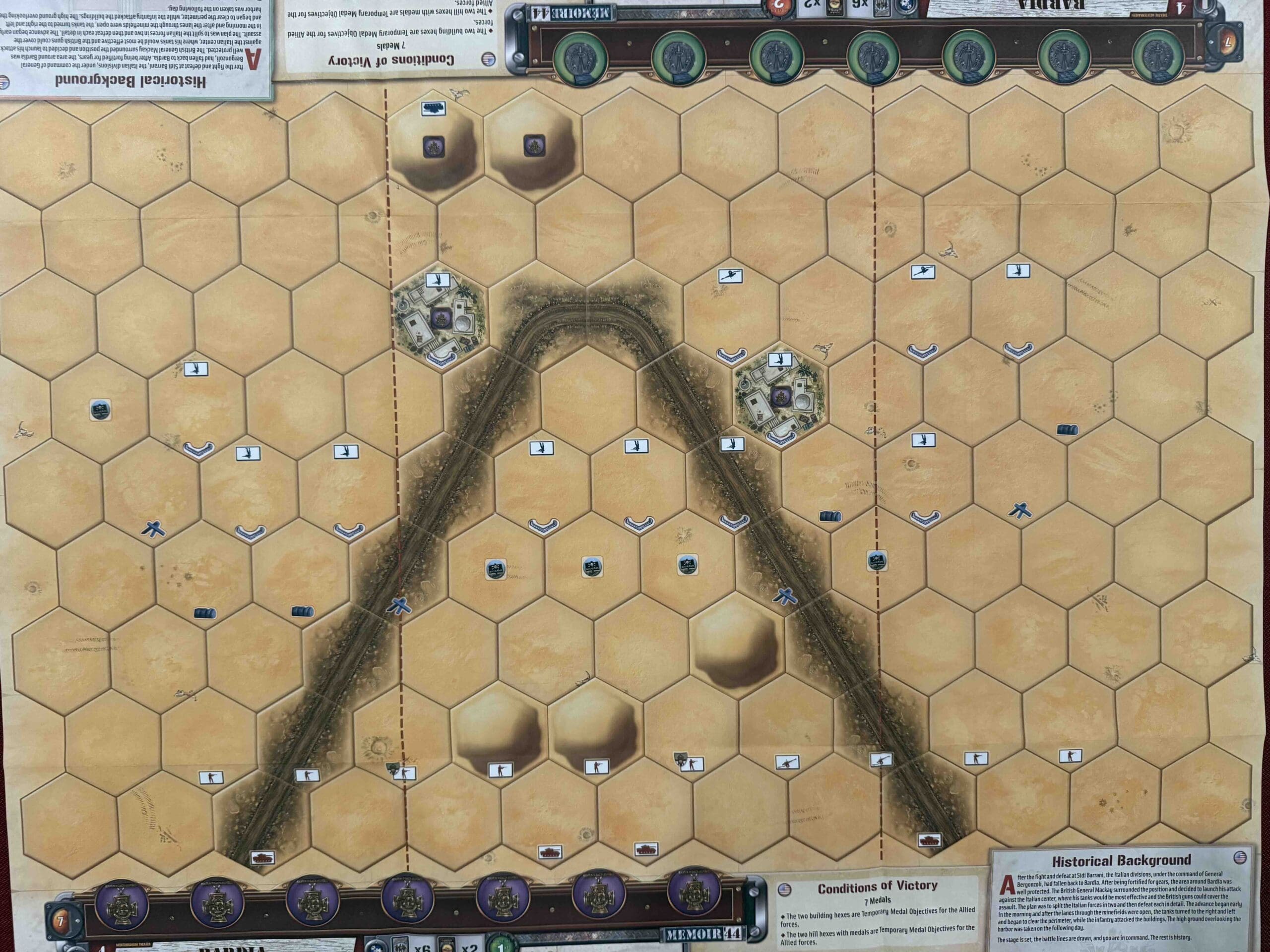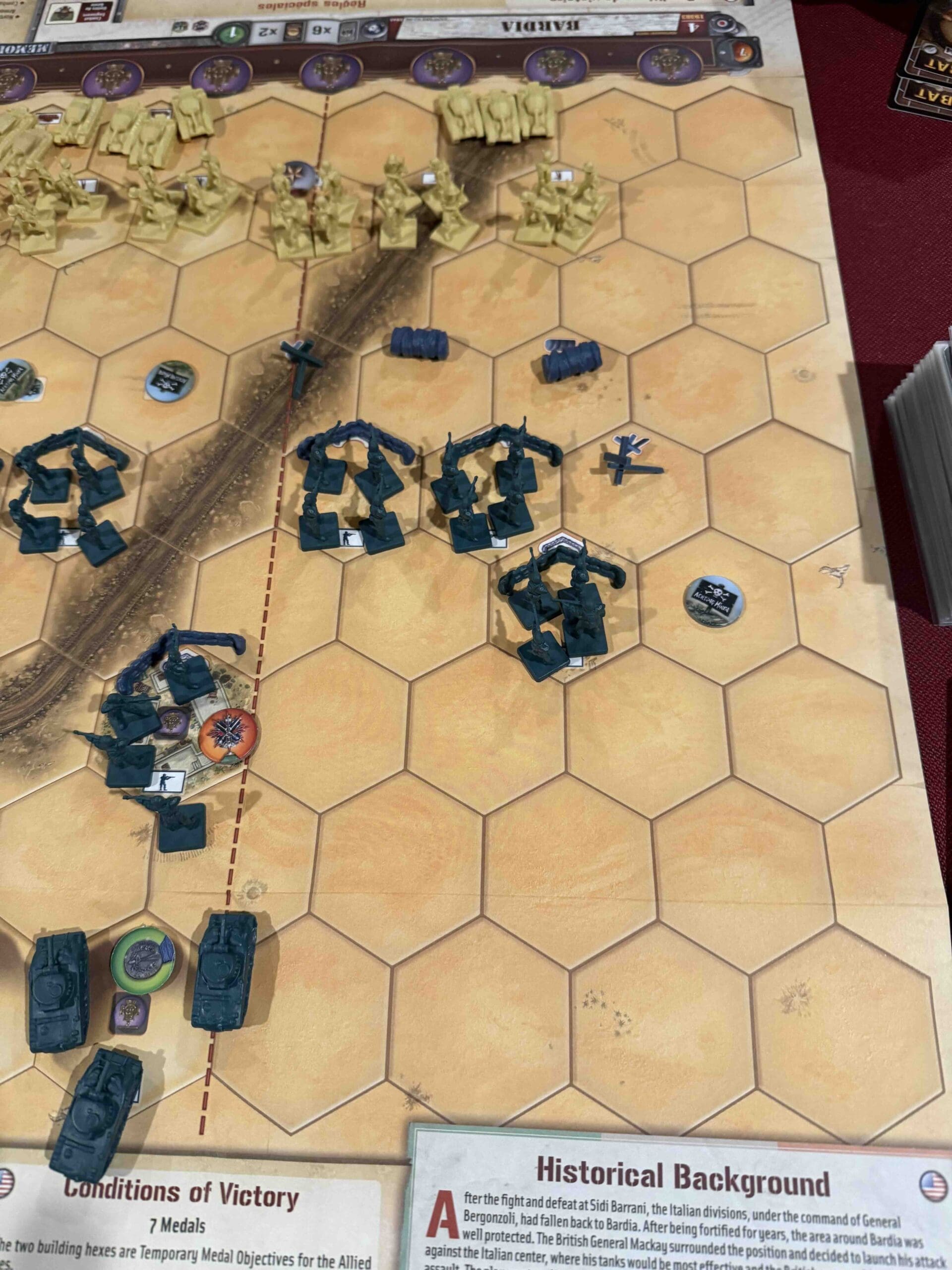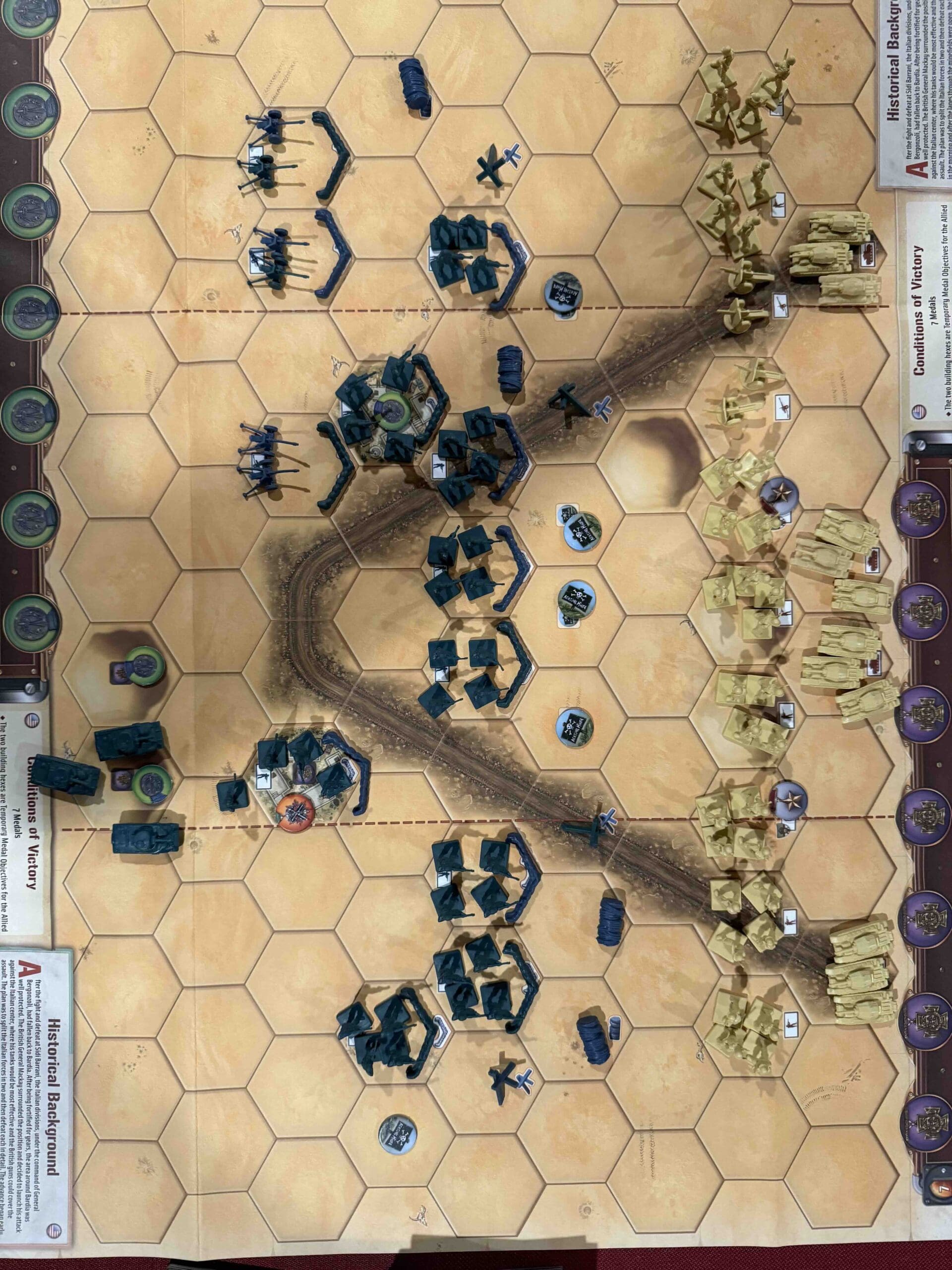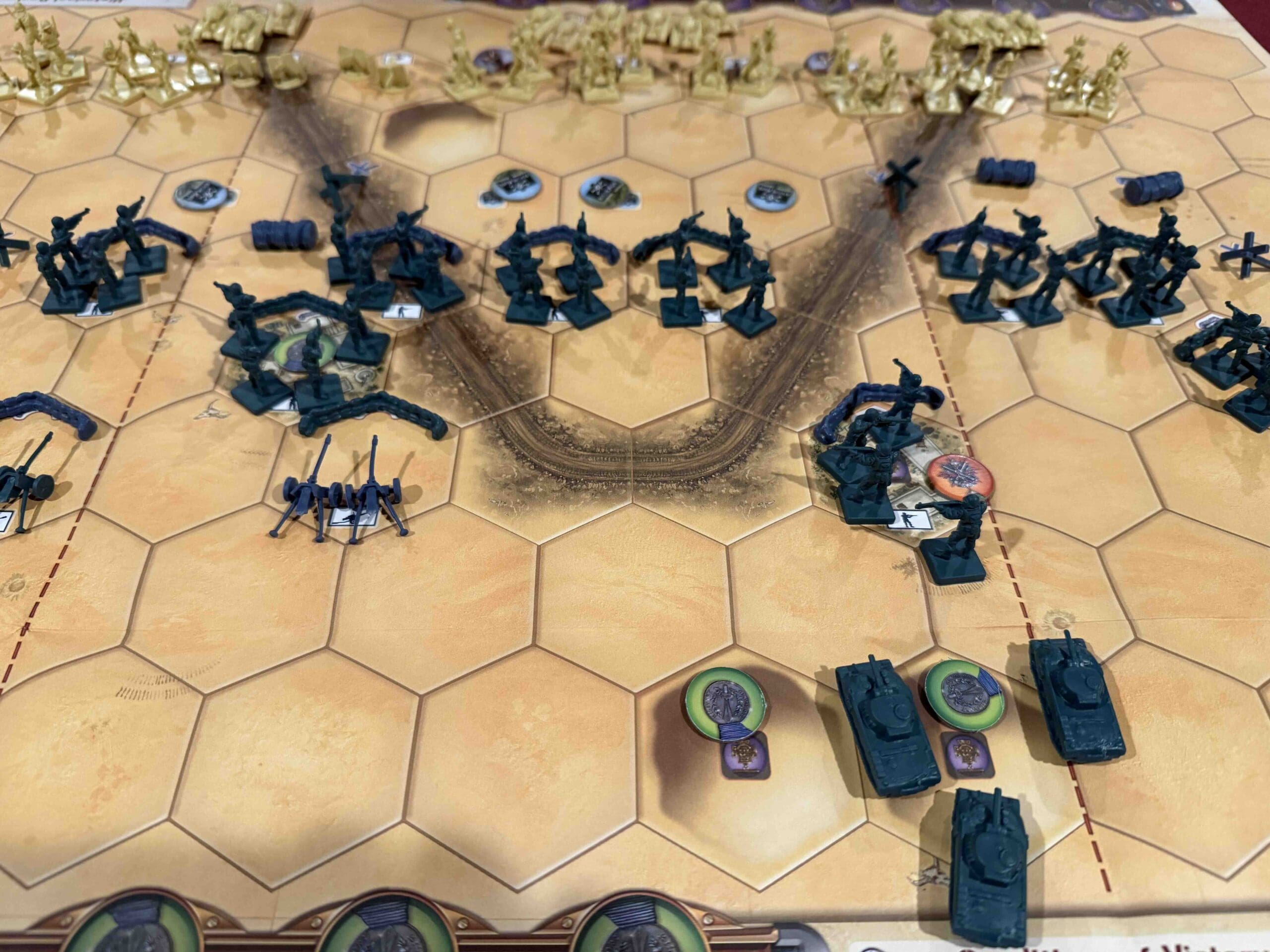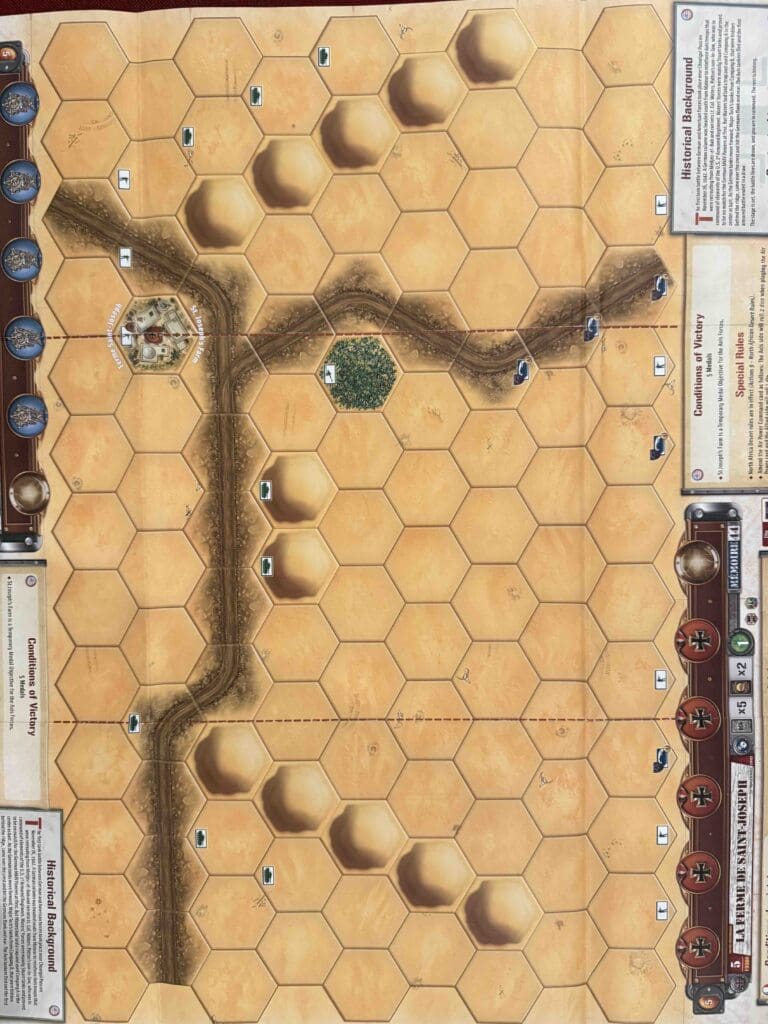
St. Joseph’s Farm

St. Joseph's Farm

St. Joseph's Farm

Chouigui Pass—November 1942. One hell of a day for the U.S. Army, and the first time our boys showed the Krauts what American steel could do.

We were green, no doubt about it. The 1st Battalion, 1st Armored Regiment—part of my beloved 1st Armored Division—rolled into action near a place called Chouigui Pass, northwest of Tebourba. The brass might call it St. Joseph’s Farm, but I’ll tell you—there was nothing holy about what went down there.

Our men, riding those M3 Stuarts and M4 Shermans, spotted a German convoy and didn’t hesitate. They tore into it with everything they had. And wouldn’t you know it? A short time later, they ran into the 10th Panzer Division—real hardened bastards—but our boys didn’t back down.

We hit ’em hard. Burned up their vehicles, shattered their lines, and let ’em know the Americans were here and we weren’t playing. It wasn’t some grand campaign-ending victory, but it mattered. It was the first time U.S. armor took the fight to the Wehrmacht and came out standing.

That fight at Chouigui Pass proved something: our tanks could run, our boys could fight, and American grit was just getting started. North Africa wasn’t going to be easy—but after that day, the Germans knew we were in the game.

And from there, we only got meaner, faster, and a whole lot more dangerous.

~~ General Howitzer

5 VP’s

Card Balance:

Allies – 5 + 2 Combat Cards

Axis – 5 + 2 Combat Cards

Complexity:

2

Conditions:

Desert

Context:

Historical

Location:

Tunisia

Year:

1942

Theater:

Mediterranean

Campaign:

Tunisia Campaign

Codename:

Summary:

Objectives:

5 VP’s, including St. Joseph’s Farm as a Temporary Objective for the Axis.

Battlefield:

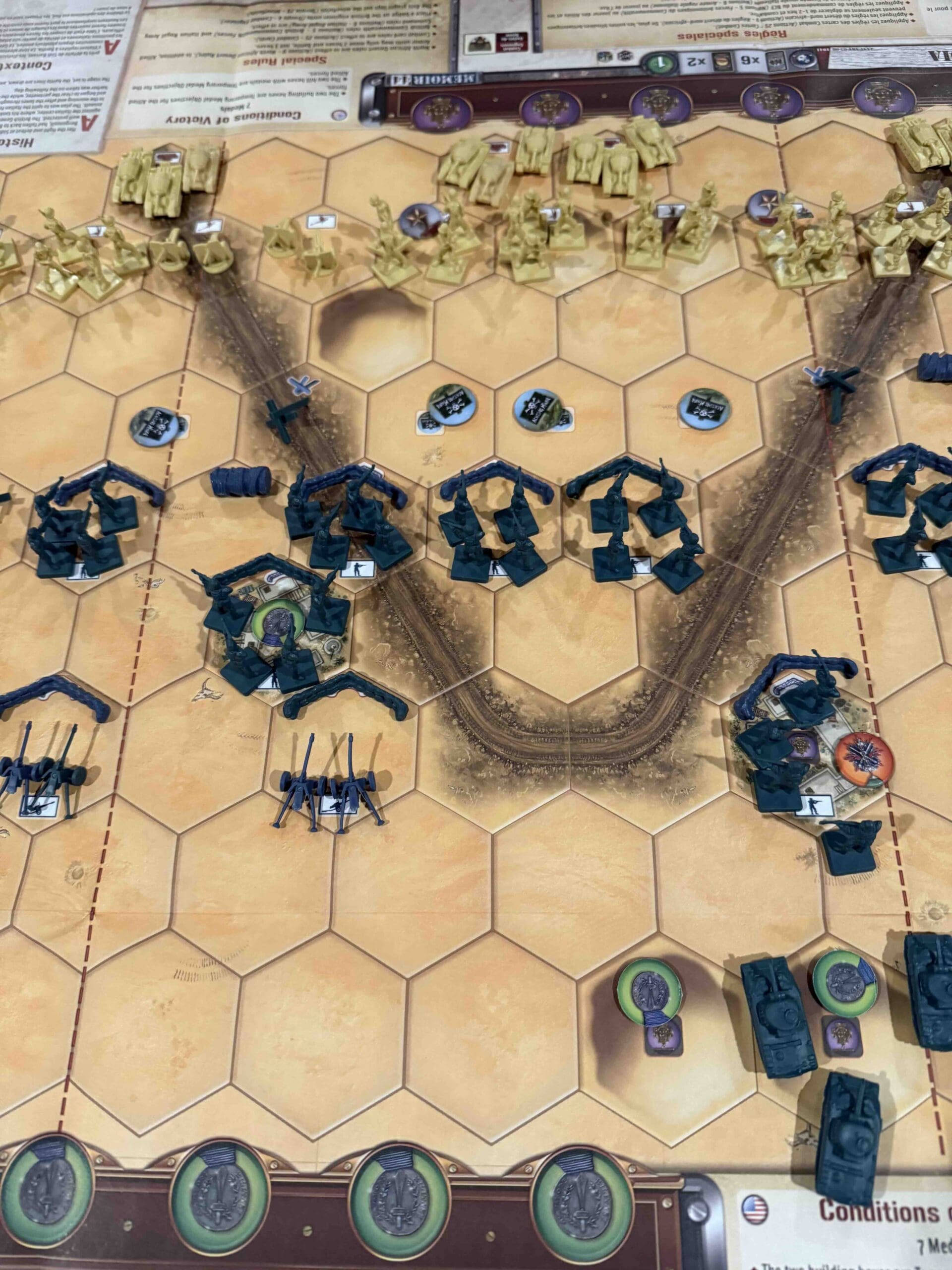
Desert terrain with a branching road running through it, and ridges on each flank, which provide the defensive surprise that historically occurred.

Troops:

Allies – 3 Infantry, 8 Armor, 1 Artillery

Axis – 5 Infantry, 5 Armor


Allied Strategy:

1.   Historically, the Allies surprised the Germans by hiding their Armor reserves behind the ridges.  In this scenario, the enemy obviously knows you are there, but you can still use the ridges as defensive protection until the Axis Armor gets close enough for you to launch your Armor assault, and maybe recreate history with an Allied victory. 

Axis Strategy

1. Historically, the Axis were surprised by the Allied forces hiding behind the ridges.  You know they are there, and they outnumber your forces, so you will need to score some quick hits against the forces in the center, to take them out of the action before their support shows up on the flanks.  

Battle Reports

0
BR - St. Joseph's Farm

Author:

Days of Wonder

Link:

Poterie Ridge

Poterie Ridge

BTH Scenario Map

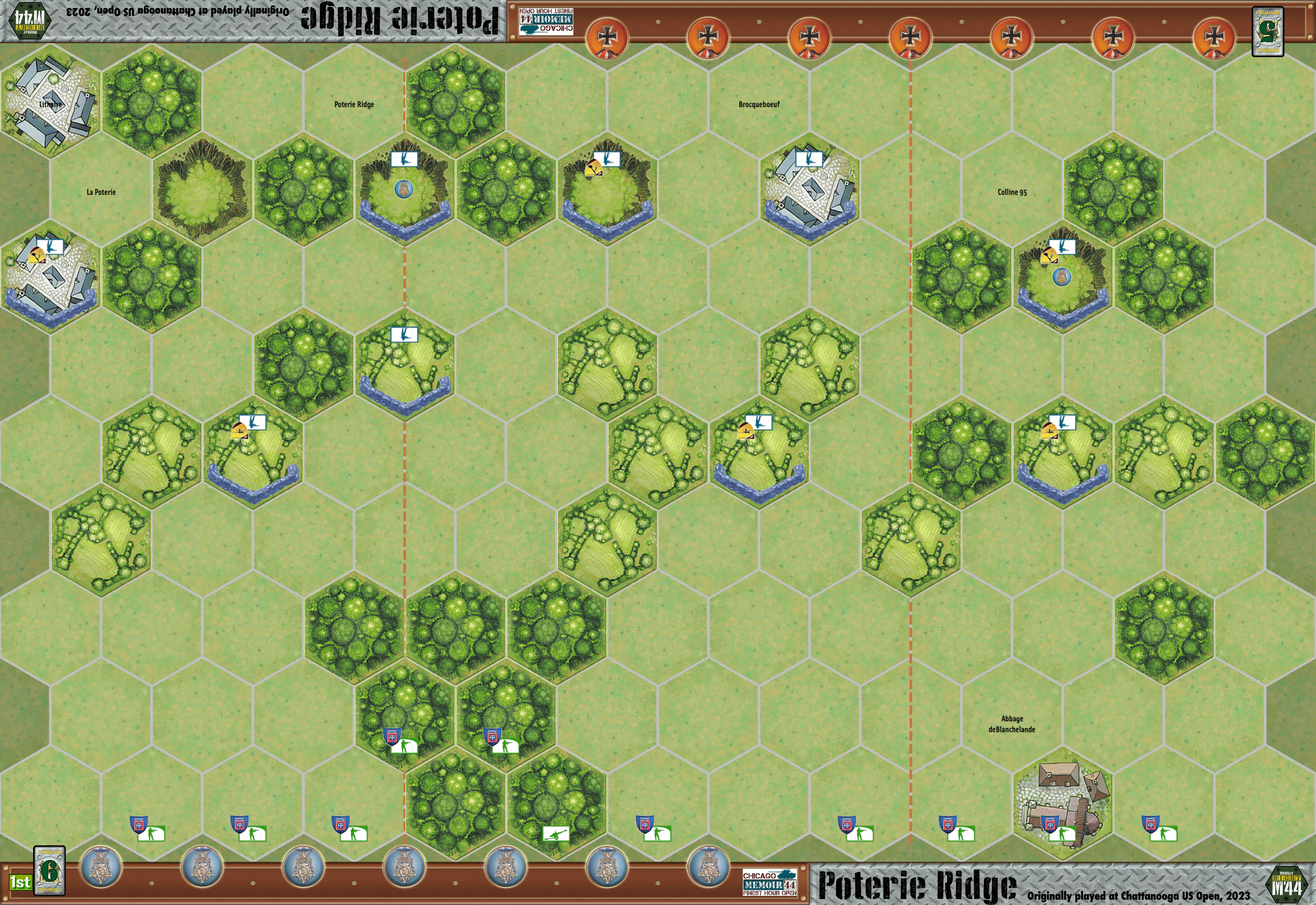
July 4th, 1944—while folks back home were waving flags and lighting fireworks, the boys of the 82nd Airborne were earning every damn star on that flag with blood and grit in the fields of Normandy.

The 325th Glider Infantry and 508th Parachute Infantry, fresh off taking Hill 131, were ordered to grab La Poterie Ridge and Hill 95—the last line before Mont Castre, the Germans’ last high ground in that sector. The order came, and they didn’t hesitate. On Independence Day, they moved—through the open, under artillery cover.

But then the guns stopped. Too soon. Our boys were still in the open. The Krauts opened up with machine guns and mortars, and all hell broke loose. Those fields became a slaughterhouse—but those troopers kept pushing, kept fighting, and by nightfall, they took that ridge.

They paid for every inch of it with guts and lives. That was the last fight the 82nd Airborne saw in Normandy. By July 11, they were pulled back, replaced by the 8th Infantry, and sent back to England to get ready for the next jump.

You’re in command now. The lines are drawn. The men are ready. What comes next? That’s up to you. Just remember: fortune favors the bold—and so do the history books.

~~ General Howitzer

7 VP’s

Card Balance:

Allies – 6

Axis – 5

Complexity:

3

Conditions:

Countryside

Context:

Historical

Location:

France

Year:

1944

Theater:

Western

Campaign:

The Invasion of Normandy

Codename:

Summary:

Objectives:

7 VP’s, plus two temporary medals for the Allies

Battlefield:

The battlefield is covered with many forest and hedgerow hexes.

Troops:

Allies – 10 Infantry, 1 Artillery

Axis – 9 Infantry, equipped with machine guns and mortars


Allied Strategy:

1. 

Axis Strategy

1. 

Battle Reports

0
BR - Porterie Ridge

Author:

Originally played at Chattanooga Open, 2023; and The Finest Hour Open, Chicago 2025.

Link:

Resistance on the Scheldt

Escaut - Schelde: Resistance on the Scheldt

Escaut _ Schelde -Resistance on the Scheldt_small

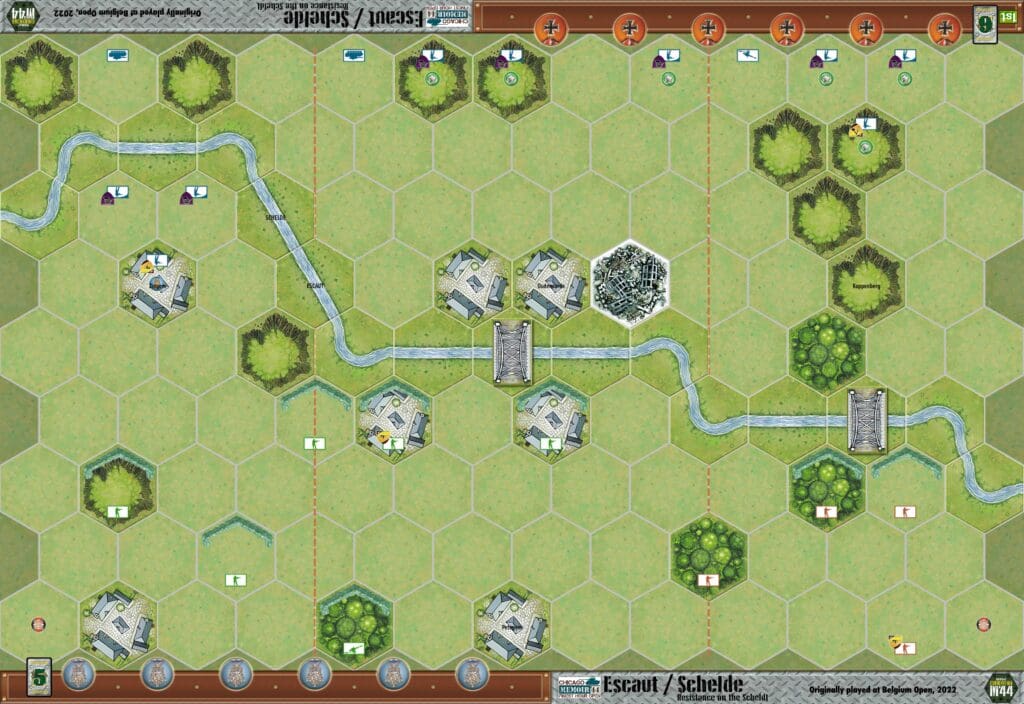
May 1940—Belgium. The Ghent bridgehead’s gone, the line’s buckling, and the enemy’s coming fast. But those Belgian boys? They didn’t flinch. They stood tall along the Upper Scheldt, and by God, they fought like hell.

May 20th, the Germans tried to cross near Gavere and Oudenaarde, slipping through the Scheldt loop. But the 10th Belgian Infantry Division wasn’t having it. They hit back hard at Zingem, backed by dead-on artillery, and shoved the enemy right back across that river like yesterday’s garbage.

Meanwhile, the British Expeditionary Force was dug in south of Oudenaarde, watching the flank all the way to the French border. And when it came time to blow the bridges? They did it right—every span destroyed, nothing left for the Nazis to use. That’s how you do a withdrawal—scorched and smoking.

But the Germans weren’t done. After licking their wounds at Zingem, they regrouped behind the Koppenberg and came back swinging on May 21—infantry, Luftwaffe, and the river running low enough to wade. Despite a hell of a stand by the Brits, the Krauts got a foothold. That foothold became a push—toward the Lys, toward the coast, toward the final stand.

May 28, King Leopold III surrendered. Belgium was down—but not for lack of courage.

You want to talk guts? Talk Zingem. Talk the Scheldt. Talk men who held the line until the last minute. The field was set, the players were in position, and history came charging through the smoke.

~~ General Howitzer

6 VP’s

Card Balance:

Allies – 5

Axis – 6

Complexity:

3

Conditions:

Countryside

Context:

Historical

Location:

Belgium

Year:

1940

Theater:

Western

Campaign:

Codename:

Summary:

Objectives:

    6 VP’s, plus Exit Rows for Axis; a town medal for Allies, and a Permanent Medal if the Allies blow up two bridges.

Battlefield:

    Countryside with a river cutting across the field.

Troops:

    Allies – 9 Infantry, some with machine guns, 1 Artillery

    Axis – 9 Infantry, some with machine guns and mortars , 2 Armor, 1 Artillery


Allied Strategy:

1. 

Axis Strategy

1. 

Battle Reports

0
BR - Schelde

Author:

Originally prepared for Belgium 2022; also used in The Finest Hour Open, Chicago 2025

Link:

View

Closing the Falaise Gap

Closing the Falaise Gap

Closing the Falaise Gap_small

August 1944—Falaise. The trap was nearly shut, and the Germans knew it. Hell, they could smell it.

By the 18th, the Canadians had taken Trun and St. Lambert, putting the lid on the Falaise Pocket. But it wasn’t locked down yet—hell no. The line was thin, the crossroads fragile, and both Allied and Axis forces were stampeding toward Chambois. It wasn’t just a battle—it was a goddamn race: the Germans racing to escape, and us racing to slam the door shut on their sorry rear ends.

The Poles and Americans came in hard, shoulder-to-shoulder, pushing east while the Germans were pushing west—like two trains headed for a crash in a one-track tunnel. The enemy made one last hellbound breakout near the Polish lines, and yeah, some of them got out—but not for long.

Because on the 19th, the line was reinforced. And in St. Lambert, one man—Major David Currie, a Canadian, led from the front like a true warrior. Under fire from both sides—his own artillery damn near clipping his boots—he stood his ground, gave no quarter, and turned that village into a graveyard for the Wehrmacht. He earned the Victoria Cross, and every inch of it.

By the time we closed that pocket, the Normandy campaign was finished—two months of blood, steel, and grit had paid off. The Liberation of Paris was just days away. Looked like it was over for Hitler’s goons—but we weren’t fooled.

The war wasn’t done until the last Nazi was crawling out of a foxhole with his hands in the air. And that took till ’45.

The lines are drawn, the orders are yours, and the clock is ticking.

Now go finish the job.

~~ General Howitzer

7 VP’s

Card Balance:

Allies – 5

Axis – 5

Complexity:

4

Conditions:

Countryside

Context:

Historical

Location:

France

Year:

1944

Theater:

Western

Campaign:

The Invasion of Normandy

Codename:

Summary:

Objectives:

7 VP’s, including Exit Row Objectives for the Axis

Battlefield:

Countryside with an impassible (except for bridges and fords) river going across the battlefield.

Troops:

Allies – 8 Infantry, 3 Armor

Axis – 9 Infantry, 1 Armor, 1 Artillery


Allied Strategy:

1. 

Axis Strategy

1. 

Battle Reports

1
BR - Closing Falaise Gap

Author:

Originally developed for the London Open, 2022. Also played at The Finest Hour Open, Chicago, 2025.

Link:

View

Battle of Westerplatte

Battle of Westerplatte

Battle of the Westerplatte_small

September 1st, 1939—0448 hours. That was the shot that lit the damn fuse on World War II.

The Germans kicked things off by bringing in the battleship Schleswig-Holstein, sitting nice and cozy in Danzig harbor, and then—boom—she opened up with a full broadside on the Polish outpost at Westerplatte. They thought they’d scare the Poles into folding before breakfast.

Then came the assault: crack German marines, three platoons strong, storming across the land bridge, expecting a little parade through the depot. They even blew open the rail gate like it was just another drill. They thought they were walking into a skirmish.

Wrong.

They walked straight into a kill zone. The Poles were locked, loaded, and waiting—concealed firing positions, crossfire, barbed wire, the whole damn package. And those German troops? They didn’t find a pushover—they found hell on Earth.

The plan was for the Poles to hold for twelve hours. Instead, they held that godforsaken strip of land for seven damn days—against artillery, naval fire, and relentless infantry assaults. They bled, they fought, and they showed the world what grit looks like under fire.

Westerplatte didn’t stop the war. But it told the Nazis one thing loud and clear: this wasn’t going to be easy. It became a symbol—of resistance, of courage, and of never giving an inch when everything’s on the line.

The lines were drawn, the fuse was lit, and history roared to life in a blaze of fire and steel.

Now the only question left is—when it’s your turn to hold the line… will you stand, or will you fold?

~~ General Howitzer

6 VP’s

Card Balance:

Allies – 5

Axis – 6

Complexity:

4

Conditions:

Countryside

Context:

Historical

Location:

Poland

Year:

September 1, 1939

Theater:

Western

Campaign:

The Invasion of Poland

Codename:

Fall Weiss / Case White

Summary:

Objectives:

6 VP’s, plus one Permanent Medal Objective for each side (The Destroyer and the Supply Shed.)

Battlefield:

Contains countryside with a road, a railway, and a river.

Troops:

Allies – 10 Infantry (3 figures each), 2 Artillery 

Axis – 10 Infantry, 1 Artillery, 1 Destroyer!


Allied Strategy:

1.  Because of the surprise nature of the attack, all of the Polish Allied Infantry only have three figures each.  They are therefore very quickly overrun by the German forces.  Gain the hits you can, and protect the Supply Shed!

Axis Strategy

1.  You have a Destroyer at your disposal, with massive range. Use it every chance you get. 

Battle Reports

1
BR - Westerplatte

Author:

Originally developed for the Belgium Open, 2017; Also used by The Finest Hour Open, Chicago, 2025.

Link:

View

Bain Tsagan Heights

Bain Tsagan Heights

BTH_map_breakthrough_overhead

“Listen up, boys! In early July ‘39, over in the dusty wilderness of Mongolia, the Japanese thought they’d pull a fast one at the Bain Tsagan Heights—cross the river, flank the Soviets, and wrap the whole show up in a bow. But Zhukov wasn’t about to let those plans play out!

Zhukov hit back hard and fast, bringing in tanks, artillery, and infantry to pound those Japanese troops into the dirt. They fought like hell on those heights—bayonets flashing, guns roaring, tanks rolling—and the Soviets broke that flanking move right in half.

This wasn’t just a local scrap, boys—it was a turning point. That Soviet victory at Bain Tsagan sent a clear message: you mess with the Red Army, you pay in blood. It helped push Japan to shift its focus away from Siberia and toward the Pacific, changing the whole game for the coming war.

So remember this—when you see the enemy making a move, you don’t wait—you smash him before he knows what hit him! That’s the way to win!

~~ General Howitzer

10 VP’s

Card Balance:

Allies – 7

Axis – 5

Complexity:

4

Conditions:

Countryside

Context:

Historical

Location:

Siberia

Year:

1939

Theater:

Eastern

Campaign:

Khalkin Gol

Codename:

Summary:

Objectives:

10 VP’s, including four! objective medals; ( two ridges and a 2-medal bridge)

Battlefield:

Countryside with a river cutting through the Allies left flank, and long road cutting at an angle through the terrain directly to the two-medal bridge.

Troops:

Allies (Russia) – 12 Infantry, 9 Armor, including two Armored Cars, plus two Supply Trucks, 1 Big Gun!

Axis (Japan) – 12 Infantry, 7 Armor, including 3 Tankettes, 2 Armored Cars, 1 Artillery.


Allied Strategy:

1.  Big Picture: Allies are initially on the defense, due to the attack by the Japanese.  But they have enormous armor resources at their disposal on their left flank to bring to bear upon the battle in both the left flank and the center section.  And historically, this is what General Zukhov did.  In fact a pivot by the Allied Armor on the left flank over the ridgeline at river will allow them to reign down terror upon the Japanese forces assaulting the Remisova Hill.

2.  Your puny Armor and Infantry forces in the right flank are pretty useless, as they need to cross the river before they can engage the enemy.  But if they can at least move forward one hex, so that they do not get pinned against the backwall, that will be sufficient.

3.  Guard the bridge crossing the river. It is worth two medals.

4.  You have a Big Tom Gun, which has massive range of 8 hexes, and allows you to zero in on forces in a hex and increase your attack strength by another 1D.  Use it early and often.

Axis Strategy

1.  Big Picture Strategy: this was a long-shot for the Japanese historically, which they lost, but they have been known to win this scenario.  Use your Tankettes, which have good movement, to get into the battle and score some wins.  Advance forcefully with your infantry and overwhelm them using your Seishin Kyoiku Doctrine might combined with your Bonzai speed.

Battle Reports

3
BR - Bain Tsagan Heights

Author:

Days of Wonder

Link: