Battle of Westerplatte

Battle of Westerplatte
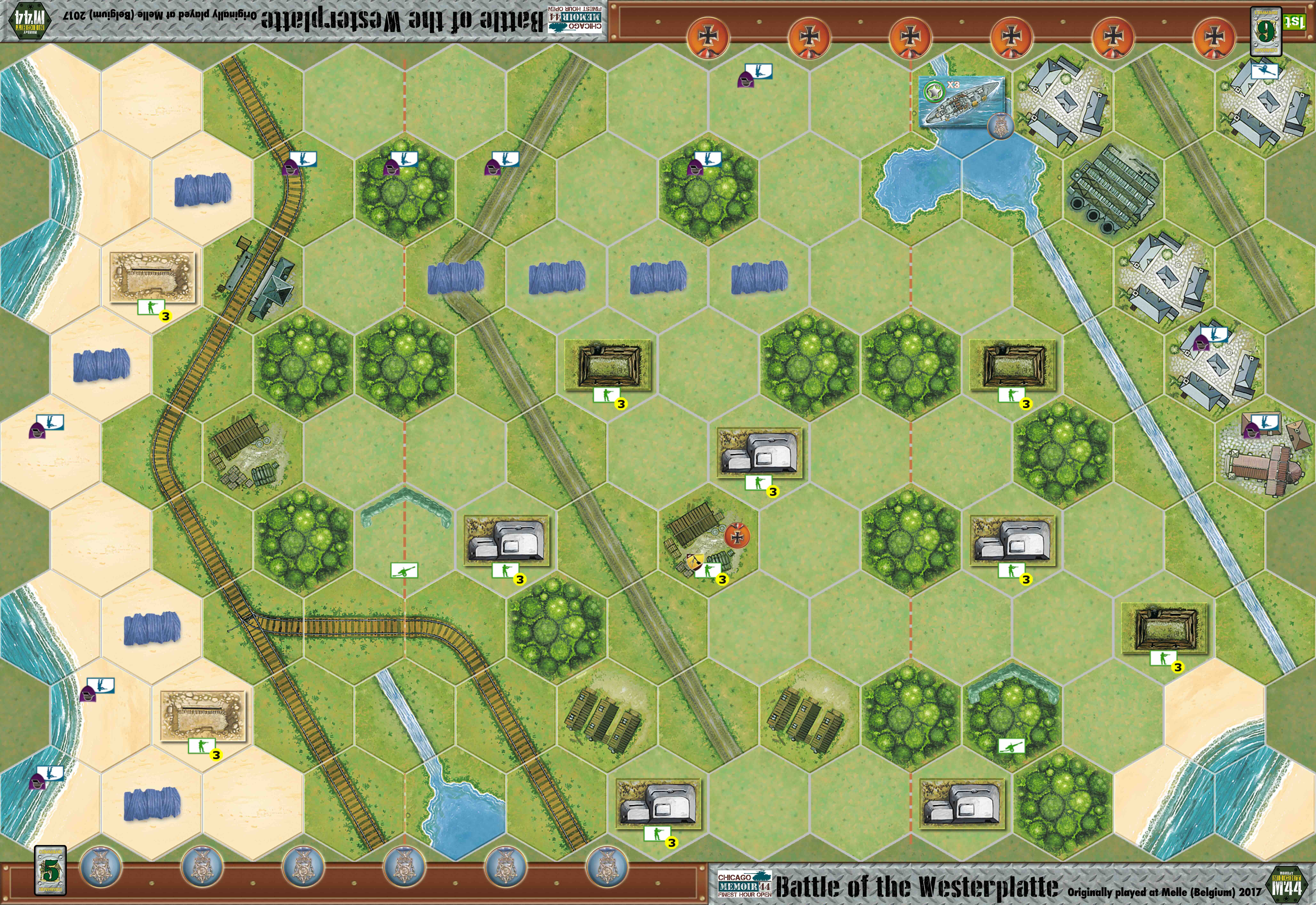
Battle of the Westerplatte_small

September 1st, 1939—0448 hours. That was the shot that lit the damn fuse on World War II.

The Germans kicked things off by bringing in the battleship Schleswig-Holstein, sitting nice and cozy in Danzig harbor, and then—boom—she opened up with a full broadside on the Polish outpost at Westerplatte. They thought they’d scare the Poles into folding before breakfast.

Then came the assault: crack German marines, three platoons strong, storming across the land bridge, expecting a little parade through the depot. They even blew open the rail gate like it was just another drill. They thought they were walking into a skirmish.

Wrong.

They walked straight into a kill zone. The Poles were locked, loaded, and waiting—concealed firing positions, crossfire, barbed wire, the whole damn package. And those German troops? They didn’t find a pushover—they found hell on Earth.

The plan was for the Poles to hold for twelve hours. Instead, they held that godforsaken strip of land for seven damn days—against artillery, naval fire, and relentless infantry assaults. They bled, they fought, and they showed the world what grit looks like under fire.

Westerplatte didn’t stop the war. But it told the Nazis one thing loud and clear: this wasn’t going to be easy. It became a symbol—of resistance, of courage, and of never giving an inch when everything’s on the line.

The lines were drawn, the fuse was lit, and history roared to life in a blaze of fire and steel.

Now the only question left is—when it’s your turn to hold the line… will you stand, or will you fold?

~~ General Howitzer

6 VP’s

Card Balance:

Allies – 5

Axis – 6

Complexity:

4

Conditions:

Countryside

Context:

Historical

Location:

Poland

Year:

September 1, 1939

Theater:

Western

Campaign:

The Invasion of Poland

Codename:

Fall Weiss / Case White

Summary:

Objectives:

6 VP’s, plus one Permanent Medal Objective for each side (The Destroyer and the Supply Shed.)

Battlefield:

Contains countryside with a road, a railway, and a river.

Troops:

Allies – 10 Infantry (3 figures each), 2 Artillery 

Axis – 10 Infantry, 1 Artillery, 1 Destroyer!


Allied Strategy:

1.  Because of the surprise nature of the attack, all of the Polish Allied Infantry only have three figures each.  They are therefore very quickly overrun by the German forces.  Gain the hits you can, and protect the Supply Shed!

Axis Strategy

1.  You have a Destroyer at your disposal, with massive range. Use it every chance you get. 

Battle Reports

1
BR - Westerplatte

Author:

Originally developed for the Belgium Open, 2017; Also used by The Finest Hour Open, Chicago, 2025.

Link:
View

Operation Market Garden (Overlord)

Operation Market Garden (Overlord Map)

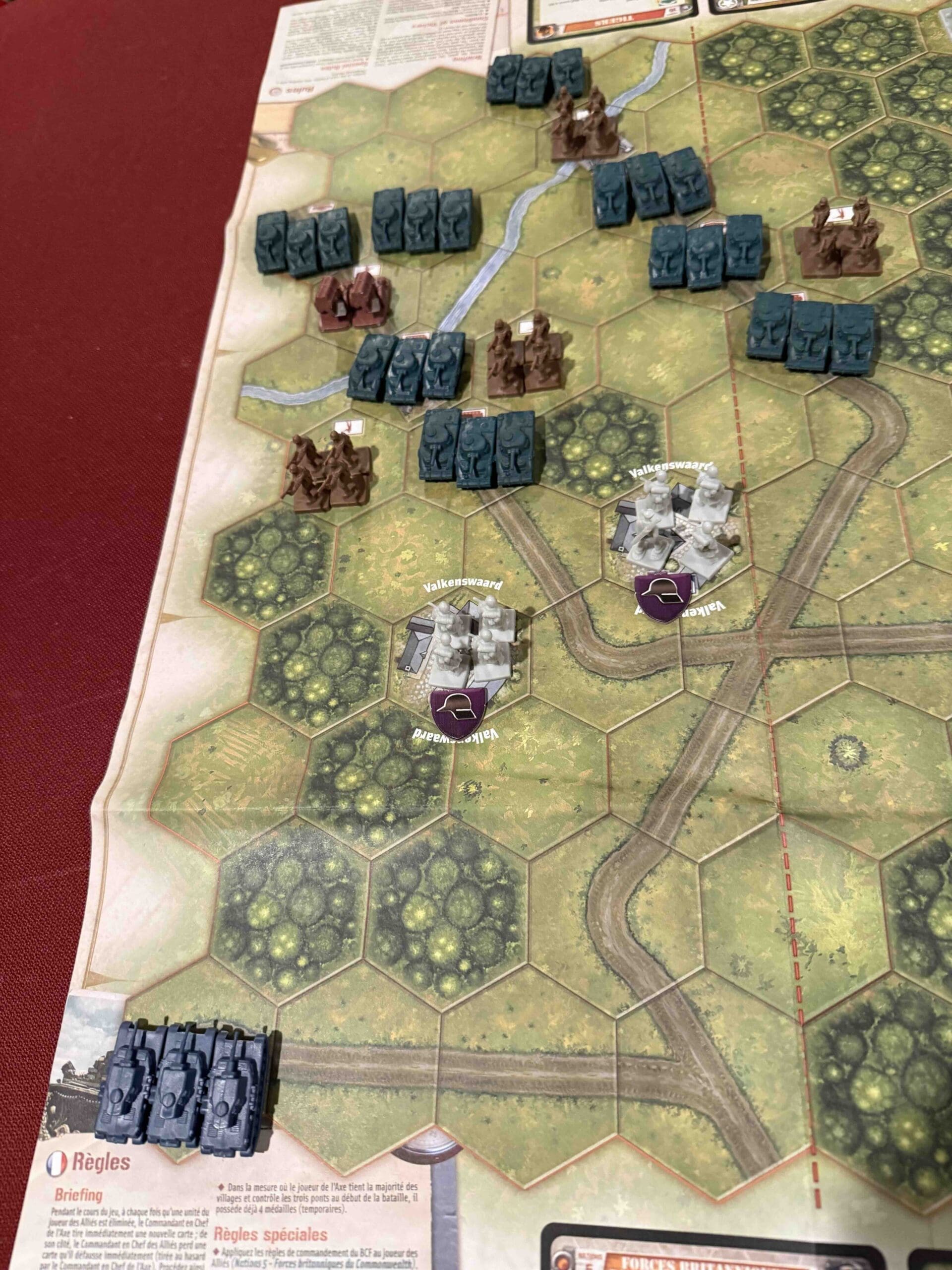
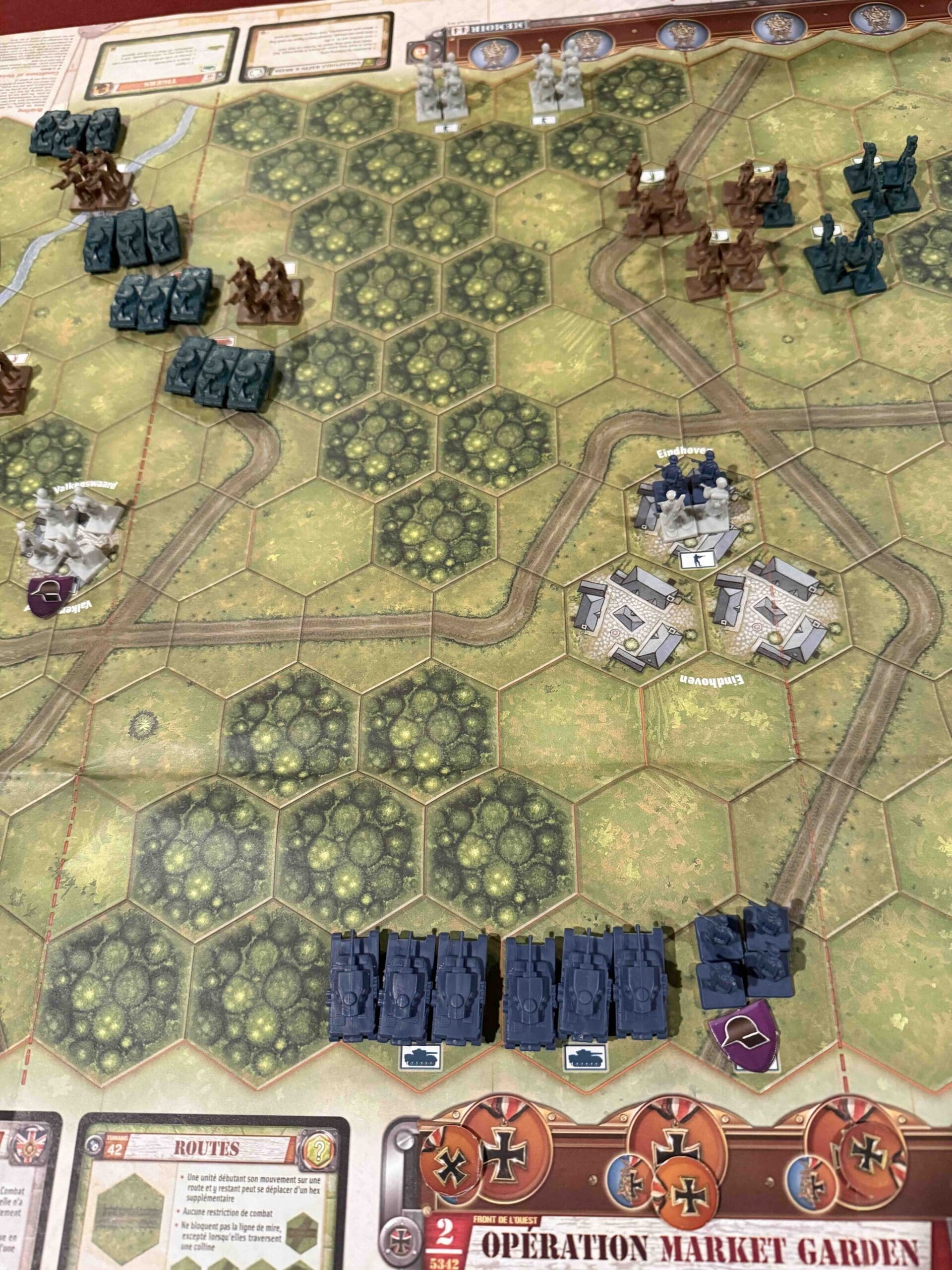
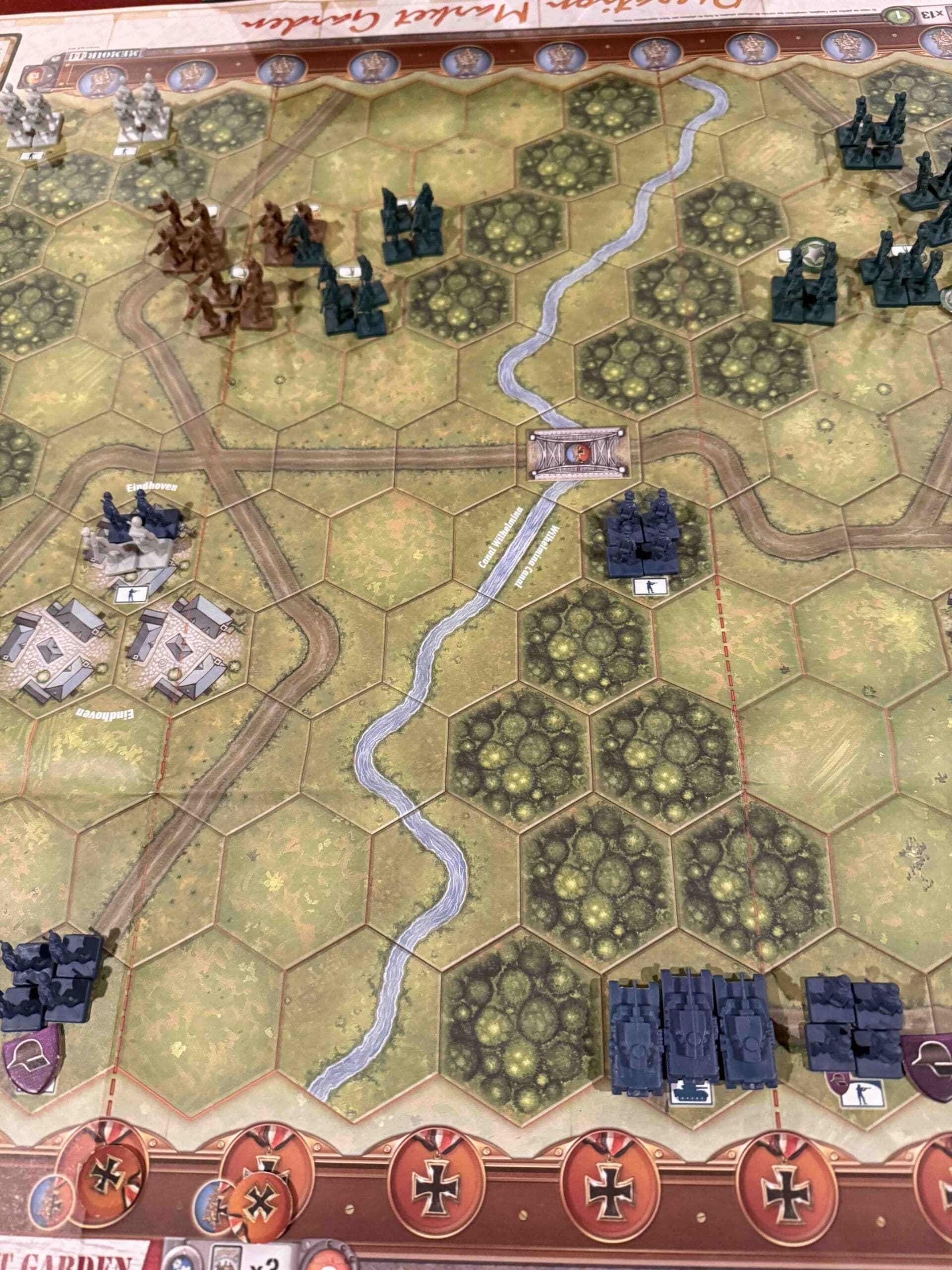
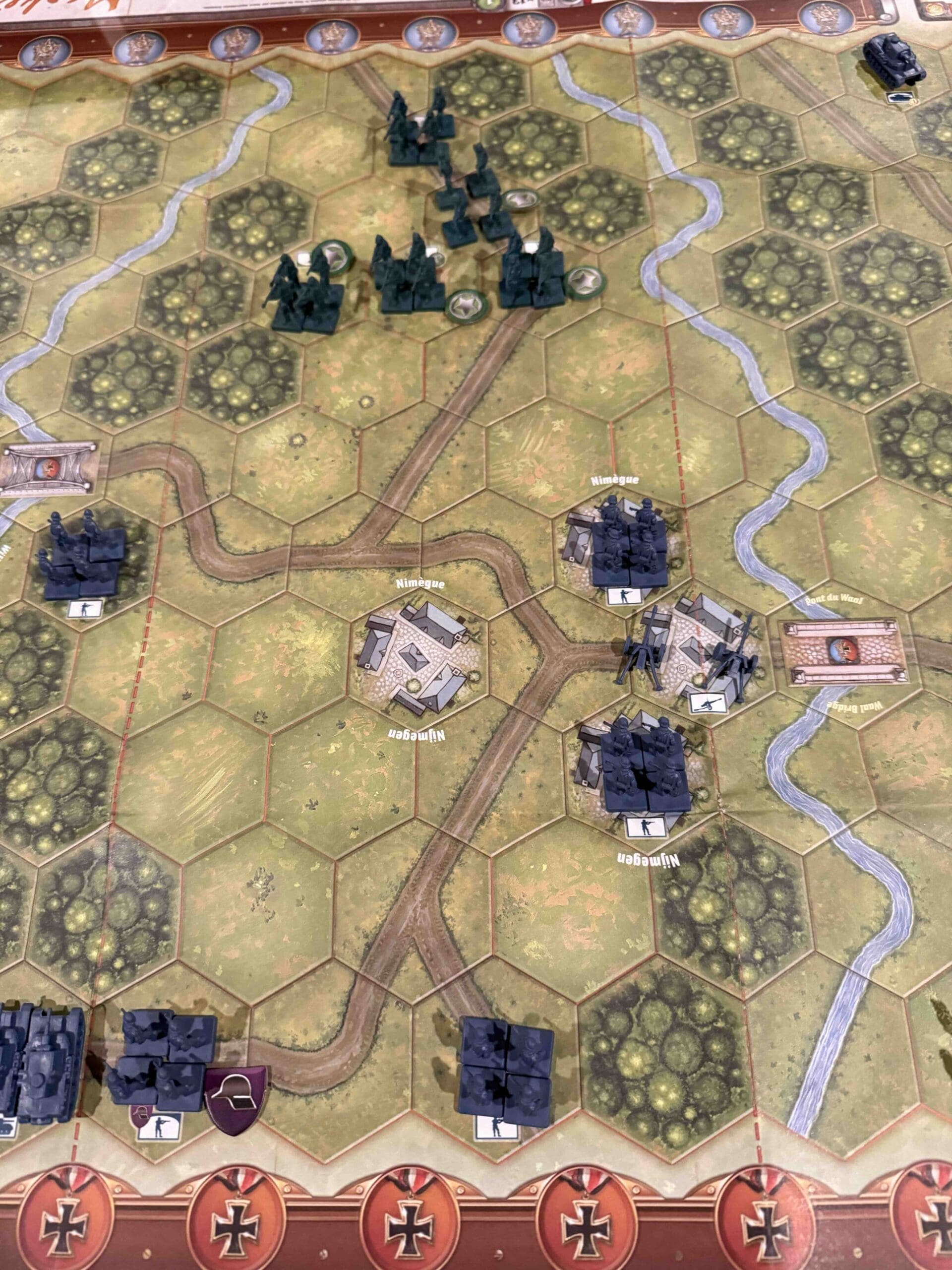
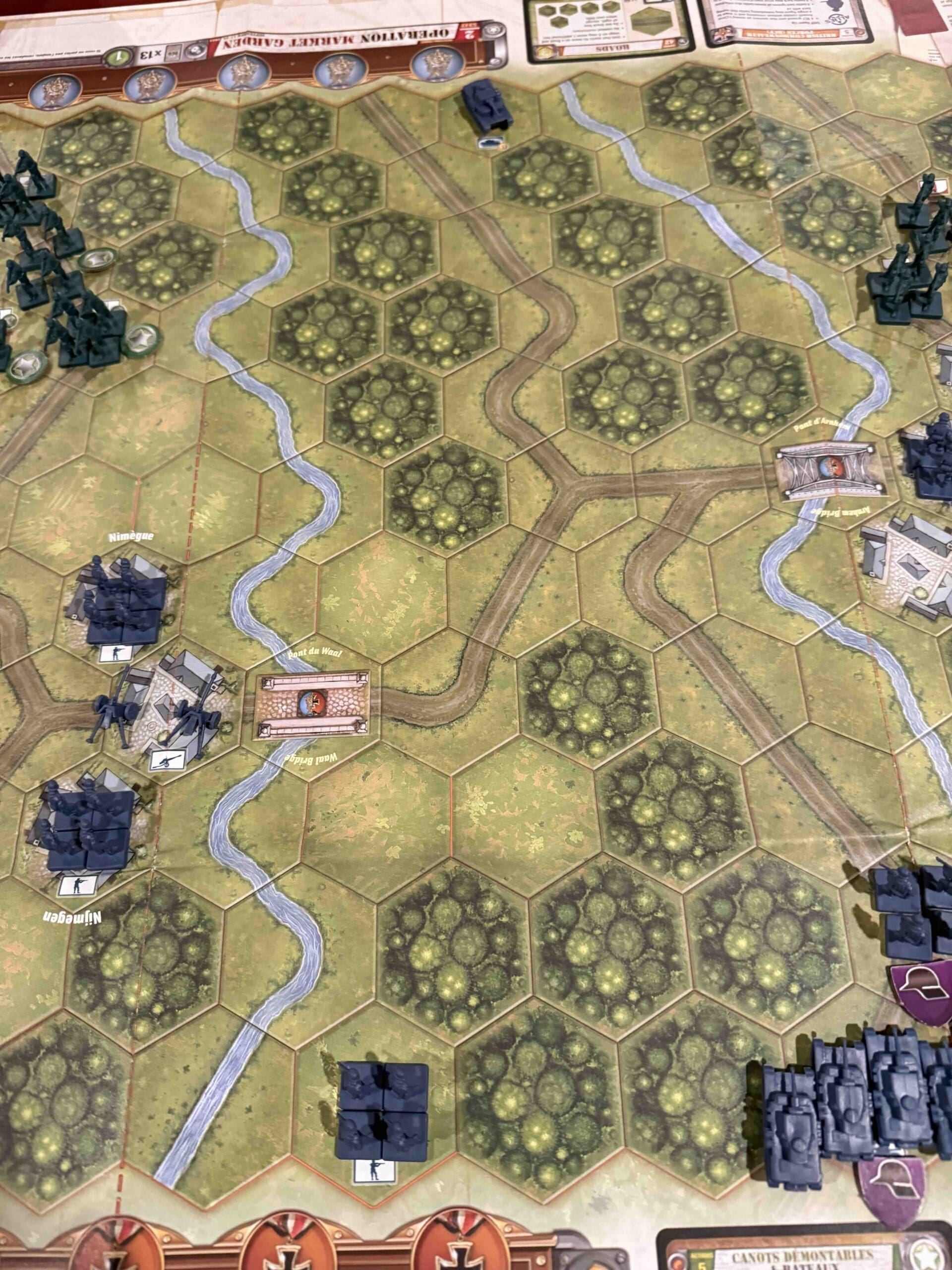
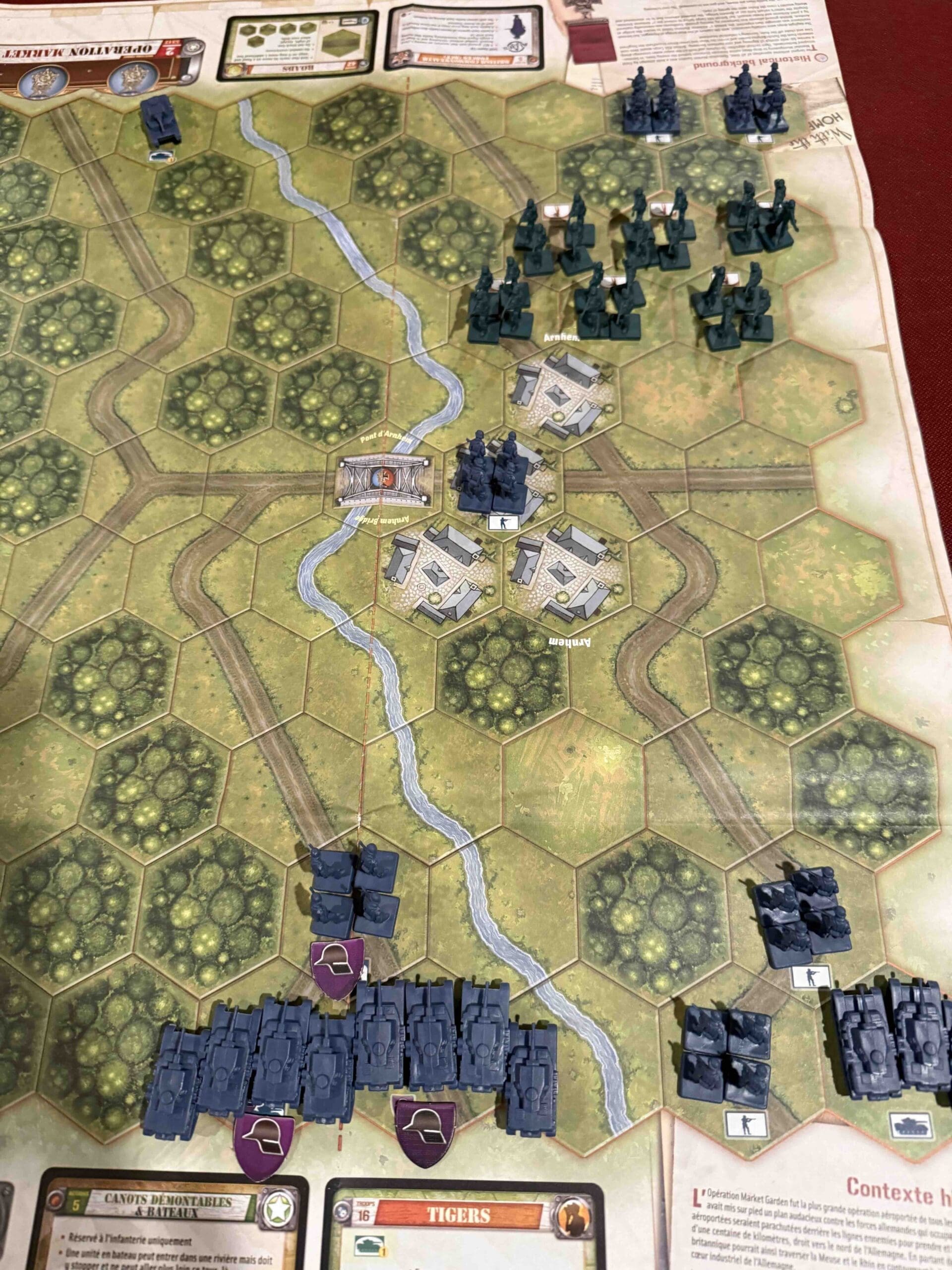
Operation Market Garden, fought in September 1944, was a major Allied offensive during World War II aimed at ending the war quickly by capturing key bridges in the Netherlands and entering Germany’s industrial heartland.

The operation combined a massive airborne assault (Market) by British, American and Polish paratroopers with a ground advance (Garden) by British XXX Corps. The goal was to seize bridges over several rivers, including the Rhine at Arnhem, to create a direct route into Germany.

Listen up, men—Operation Market Garden was bold, daring, and damned near brilliant on paper. Our boys dropped from the sky and stormed bridges across Holland like thunder on the move. They seized their early targets with guts and grit—but at Arnhem, the lion met the cage. The British 1st Airborne fought like hell for every inch, surrounded, outgunned, and cut off from relief.

In the end, the last bridge stayed in enemy hands. The link-up failed, and what was meant to end the war early turned into a costly lesson in overreach. We aimed for glory—and came up “a bridge too far”.

~~ General Howitzer

13 VP’s

Card Balance:

Allies – 13 (!)

Axis – 3 (!)

Complexity:

4

Conditions:

Countryside

countryside

Context:

Historical

Location:

Netherlands

Year:

1944

Theater:

Western

Campaign:

Codename:

Operation Market Garden

Summary:

Objectives:

13 VP’s with Temporary Majority Medal Objectives for whomever holds the majority of the 13 town hexes; plus Turn Start Temporary Uncontested Medal Objectives for the three key bridges.

Battlefield:

Countryside with many roads, towns, rivers, and forests

Troops:

Allies  – 20 Infantry, 8 Armor, 1 Artillery

Axis  – 17 Infanty, 7 Armor, 1 Artillery


  medal allies

Allied Strategy:

1.  The Allies have an overwhelming tank force on their right flank. They will need to attack vociferously and eliminate all enemy forces in that section, so that they can turn their armor to attack the central sections. 

2. You can get some early medals by attacking the enemy forces which were surprised and surrounded by your forces in the left and right sections. There are two infantry units on each side which you can quickly take out, and gain some early medals.

3.  Watch out for the Tiger Tank on your left flank. It can only be taken out with two successful rolls, first an armor or grenade roll, and then the second roll must be a grenade.

medal axis

Axis Strategy

1.  As Axis, because of the surprise nature of this attack, you only start with three Combat Cards vs. the Allies 13!.  But every time you take out an Allied unit, the Allied Commander loses a card (which you get to pull from his hand), and you are given a new card from the deck (not the one from his hand) and your total cards to use each turn increases.  So as the battle progresses the card ratio will begin to even out, until eventually the Axis will have more cards than the Allies.  Cards are attack-ability, so your attack-ability will increase, as the other’s declines.

2.  Your tanks, since you were not suspecting the airborne attack, are not in play at the start of the game. You will need to use some of your early turns to get them into attack positions.  And because the tanks can only move two hexes in this scenario (unless start and ending on a road, when they can move 4 hexes), it will take two to three turns to get them into place. So you need to start early.

3.  Control of the three bridge medals is based on being either on the bridge hex, or in the nearby vicinity of the six hexes surrounding it.  But note that if the enemy is able to get into the proximity of the bridge, you will lose that bridge medal until you clear them out. If the bridge is contested, then no one gets the medal. So keep the enemy forces well away from your bridges!  

Battle Reports

3
BR - Op. Market Garden

Author:

Days of Wonder

Link:

Closing the Gap

Closing the Gap

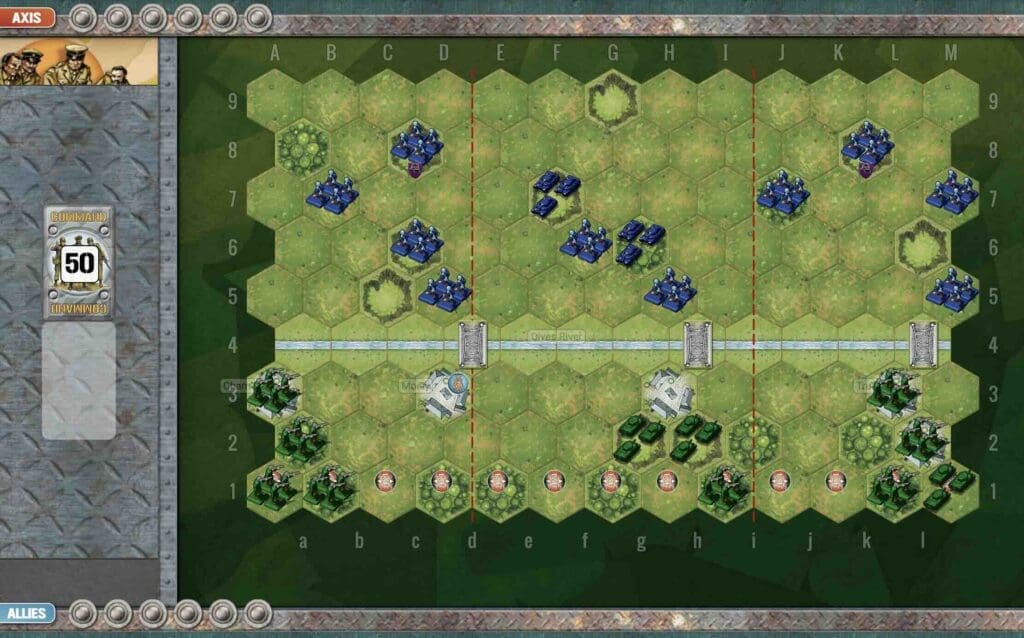
Memoir 44 scenario Closing the Gap

The Battle of Closing the Gap near Falaise from August 19–22, 1944, marked the final phase of the Falaise Pocket, where British, Canadian, Polish, and American forces worked to encircle and destroy retreating German units in Normandy.

Fighting was intense as the Allies tightened the noose, with the Polish 1st Armored Division holding key high ground at Mont Ormel against desperate German breakout attempts. Despite some Germans escaping, the Allies captured or killed tens of thousands, crushing what remained of German Army Group B in the West.

Closing that pocket slammed the door on the German army in Normandy—choked ’em off, chewed ’em up, and cleared the road straight to Paris. From there, it was full speed ahead into the heart of France.

~~ General Howitzer

6 VP’s

card

Card Balance:

Allies – 5

Axis – 5

Complexity:

3

Conditions:

Countryside

countryside

Context:

Historical

Location:

France

Year:

1944

Theater:

Western

Campaign:

The Battle of Normandy

Codename:

Operation Tractable

Summary:

Objectives:

6 VP’s, plus Territorial Objective Medals for Allies, and Exit Objectives for Axis

Battlefield:

Countryside with a road and the Dives River cutting off the Axis forces from their objective.

Troops:

Allies – 8 Infantry, 3 Armor

Axis  – 10 Infantry, 2 Armor

 Special Rules:

Rescue attempt aspect: Each side may order up to 2 armor units into battle as Armor Breakthroughs. Axis armor units that are sent in to rescue cannot escape through any of the Exit hexes.

Overall Strategy

This game is interesting because each side is given the opportunity to bring in two Armor units into the battle, right into the heart of the enemy territory.  And so within the first couple of turns it is a crazy mixed-up battle with enemy forces attacking from multiple directions. You must learn to engage in a two-front war.

medal allies

Allied Strategy:

1.  The challenge for the Allies is to get your forces across the bridges. Otherwise, you will be blocked and congested in your attack efforts. Of course, you also have to deal with the enemy armor that will show up on your end of the battlefield.

2.  If any of the original Axis forces (not the ones which spawned on that side) make it across the river, you must prevent them from exiting. 

3.  You can hide out in the towns near the river for a while and attack the enemy forces in an attempt to degrade their fighting ability, but eventually you may have to cross over and attack if the enemy doesn’t come to you.

medal axis

Axis Strategy

1.  On your right flank, you are evenly matched with the Allied forces with four Infantry units each. Due to their congested starting postion, there is an opportunity to move in and claim control of the town of Moisy and prevent the Allies from getting objective medal without a bitter fight.  Then from there, it is a short 3 hex run to exit through the Exit hex and gain a medal.

2.  You have a lot of forces, but you will need to get them up to the river to attack the enemy. But keep some in reserve to deal with the enemy forces that will show up to rescue their troops.

Battle Reports

19
BR - Closing the Gap

Author:

Days of Wonder

Drive on Caen

Drive on Caen

scenarios_DirveOnCaen_1

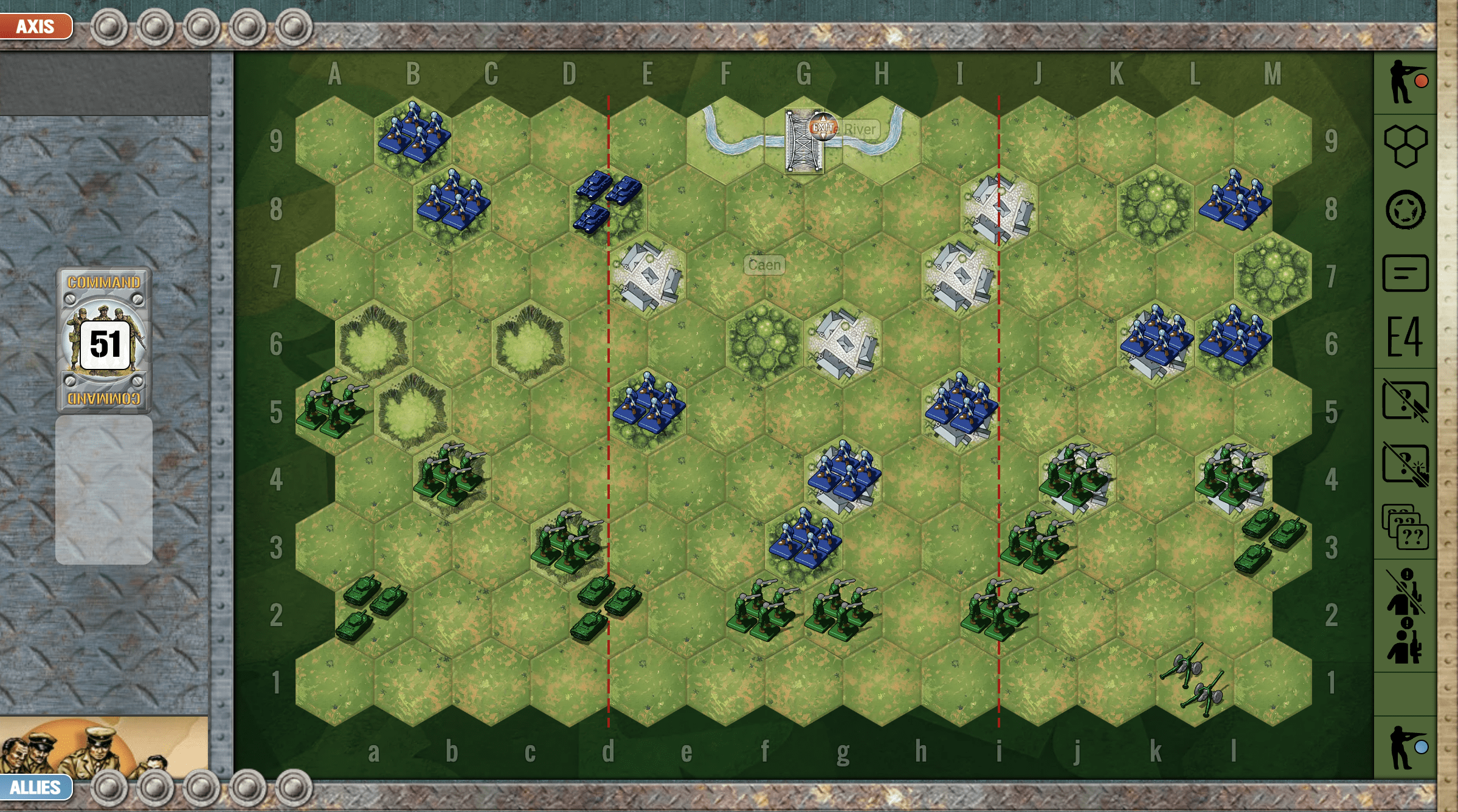
The “Drive on Caen” was a series of battles during the Normandy Campaign in World War II, aimed at capturing the city of Caen in France. This was a key objective for British and Canadian forces following the D-Day landings on June 6, 1944. The battle unfolded in multiple phases, including Operations Perch, Epsom, Charnwood, and Goodwood, as the Allies attempted to break through German defenses.

The city of Caen was heavily defended by the German 21st Panzer Division and SS Panzer units, leading to intense urban combat and bombardment. While the British and Canadian forces faced stiff resistance, they gradually secured portions of Caen by mid-July 1944. The battle played a crucial role in drawing German forces away from the U.S. sector, aiding the overall success of Operation Overlord.

“Listen up! The Drive on Caen wasn’t just one fight—it was a whole series of hammer blows aimed at the heart of the German line in Normandy. The British and Canadians were tasked with taking that key city after D-Day, and by God, they were going to get it.

It wasn’t easy—21st Panzer, SS Panzer, and every last German who could hold a rifle was dug in deep. It turned into a meat grinder—street fights, rubble, tanks trading shots at point-blank range. Operations Perch, Epsom, Charnwood, Goodwood—each one was another turn of the screw, breaking those Germans down piece by piece.

By mid-July, they finally cracked Caen open. It didn’t just put that city back on the map for the Allies—it kept Germany’s attention right there, which meant the Americans could make their big breakout in the west.

So remember, boys—it’s not always about speed; it’s about grinding down the enemy, one bloody inch at a time, until they crack! That’s how you win a campaign!

~~ General Howitzer

5 VP’s

card

Card Balance:

Allies – 5

Axis – 5

Complexity:

3

Conditions:

Countryside

Context:

Historical

Location:

France

Year:

1944

Theater:

Western Front

Campaign:

Battle of Normandy Campaign

Codename:

Operation Charnwood

Summary:

Objectives:

5 VP’s, plus the objective medals

Battlefield:

Countryside with a few forests

Troops:

Allies – 8 Infantry, 4 Armor, Artillery

Axis – 7 Infantry, 2 Armor, 1 Artillery


medal allies

Allied Strategy:

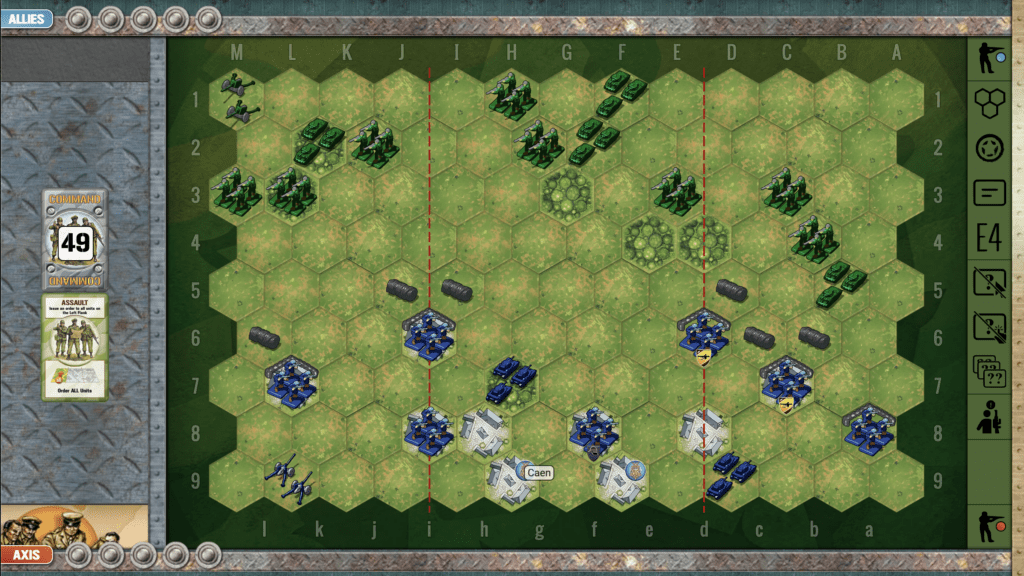
1.  Big picture strategy for Allies is to make a relentless push towads the town of Caen, which has medal objectives, as you also attack the enemy.

2.  Be aware that on your left flank, are Anti-tank equipped Infantry forces.  And on your right flank, the enemy has an Artillery.  This means, the center section may actually be your best way forward.

medal axis

Axis Strategy:

1.  Big picture strategy for the Axis is that this is primarily a defensive scenario for the Axis as they attempt to prevent the historical push of the Allies toward the city of Caen.

2.  The Allies have you outnumbered with armor, but if you put your two Anti-Tank Infantry to good use, you may be able to even the score.  

3.  You have two Medal Objectives to protect in the city of Caen.  Make sure the enemy does not get close enough to capture it.

4.  Be careful of moving your Armor into unprotected territory in the center section. The Allies have two armored units which can very quickly attack.

22
BR - Drive on Caen

Author:

Days of Wonder

Link:

Night Withdrawal

Night Withdrawal

scenario_NightWithdrawal_start

“Listen up, boys! In the summer of ‘44, near Caen, the Germans knew the writing was on the wall. The British and Canadians were hammering them day and night with everything they had—artillery, tanks, and raw guts—as part of Operations Atlantic and Goodwood.

So what did those Germans do? They pulled a night withdrawal, slipping out under the cover of darkness to dodge the hammer blows and set up shop further south. It was a smart move to avoid being boxed in and crushed outright, but let’s be clear: they gave up precious ground and lost their grip on Caen.

That’s the way of war, boys—sometimes you gotta know when to pull back before the jaws of encirclement snap shut. But every step back they took was another step forward for us—paving the road for our breakout from Normandy and the final drive to finish the job.

Remember this—you can run, but you can’t hide forever!

~~ General Howitzer

5 VP’s

card

Card Balance:

Allies – 4

Axis – 5

Complexity:

2

Conditions:

Countryside

countryside

Context:

Historical

Location:

France

Year:

1944

Theater:

Western Front

Campaign:

Normandy Campaign

Summary:

Objectives:

5 VP’s, plus the a exit row medals for the Axis(!) forces.

Terrain:

The battlefield is scattered with hills, towns, hedgerows, and forests.

Troops:

Allies – 9 Infantry, 3 Armor, 1 Artillery

Axis – 9 Infantry, 1 Armor


medal allies

Allied Strategy:

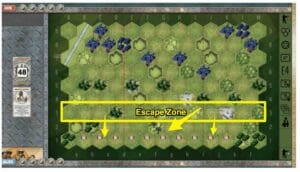
1.  The goal for the Allies is to pick off the Axis forces as they seek to escape across the Orne River.  If you can get one of your armor units in front of the bridge, you are almost guaranteed a victory. 

medal axismedal allies

Overall Strategy:
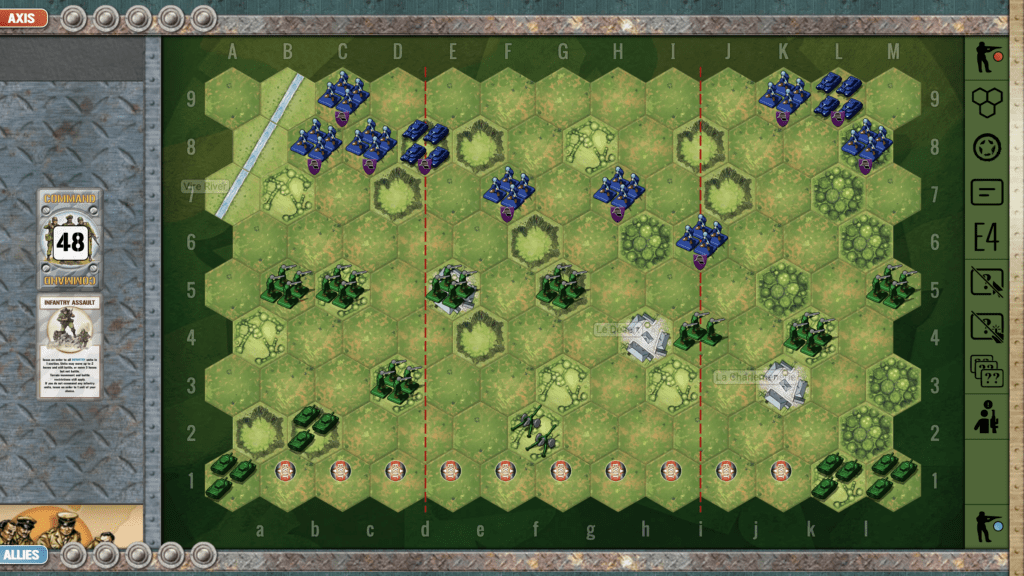
1.  You will need to play any powerful Tactic cards like Airpower and Barrage within the first one or two turns before night falls. Once a single star is rolled on the night meter, those two cards will be reduced to simple one unit command cards.


medal axis

Axis Strategy:

1. The goal for the Axis is to make a successful ‘Night Withdrawal’.  But the scenarios starts in daylight, while the Allies are able to blast you with Barrage, Air Power, and Artillery Bombardment.  So escape out the backdoor as soon as you are able to do so.

2.  Be wary of just running, as your forces will be picked off by the overwhelming Allied force before you can get away. So you need to do a strategic retreat in which some of your forces which are better positioned to either win, or quickly escape, can do so.

32
BR - Night Withdrawal

Author:

Days of Wonder

Link:

Panzer Lehr Counter Attacks

Panzer Lehr Counter-Attacks

scenario_PanzerLehr_1

The Panzer Lehr Counterattacks occurred in July 1944 during the Normandy Campaign in World War II. The Panzer Lehr Division, an elite German armored unit, launched a series of counterattacks against advancing Allied forces, particularly around the town of Saint-Lô, in an effort to halt the Allies’ breakout from the beachheads.

Listen up, men—Panzer Lehr was no ragtag outfit. It was Germany’s pride: tanks gleaming, engines roaring, veterans in every seat. But when the hammer fell, all that iron and swagger met the full fury of Allied steel and sky. Our fighter-bombers tore them apart from above, our artillery shook the ground beneath them, and when the dust cleared, Lehr was bleeding oil and fire across the Norman fields.

Their counterattacks? Brave but doomed—crushed under the weight of Operation Cobra, the breakout that ripped open Hitler’s precious front and sent his armies reeling toward the Falaise trap. Panzer Lehr learned the hard way what happens when you stand in the path of an army that’s rolling for victory.

~~ General Howitzer

5 VP’s

card

Card Balance:

Allies – 6

Axis – 5

Complexity:

2

Conditions:

Countryside

Context:

Historical

Location:

France

Year:

1944

Theater:

Western Front

Campaign:

Normandy Campaign

Summary:

Objectives:

5 VP’s, plus the a exit row medals for the Axis

Terrain:

The battlefield is scattered with hills, towns, hedgerows, and forests.

Troops:

Allies – 8 Infantry, 4 Armor, 1 Artillery

Axis – 8 Infantry, 2 Armor


medal allies

Allied Strategy:

1.  You have an Armor superiority, but only if you get your armor that are stuck in the right corner, out into the action. It will take two turns to get them out and mobile.

2.  You have an Artillery in the center, protect it, and use it.

medal axis

Axis Strategy:

1.  Big Picture strategy is that your forces begin in disarray.  You need to consolidate your forces, and coordinate your efforts.  The Allies begin with control of two-thirds of the battlefield. They are protected by hedgerows, towns, and hills.  You will need to develop a strategy to attack those units one by one with concentrated firepower until each one is eliminated.

2.  Because there are a row of exit hexes which can provide additional medals for you,  you should continue a relentless push deep into the enemy territory.  If you can bring in your flank forces toward the center, it will make your forces unstoppable.

17
BR - Panzer Lehr

Author:

Days of Wonder

Link: