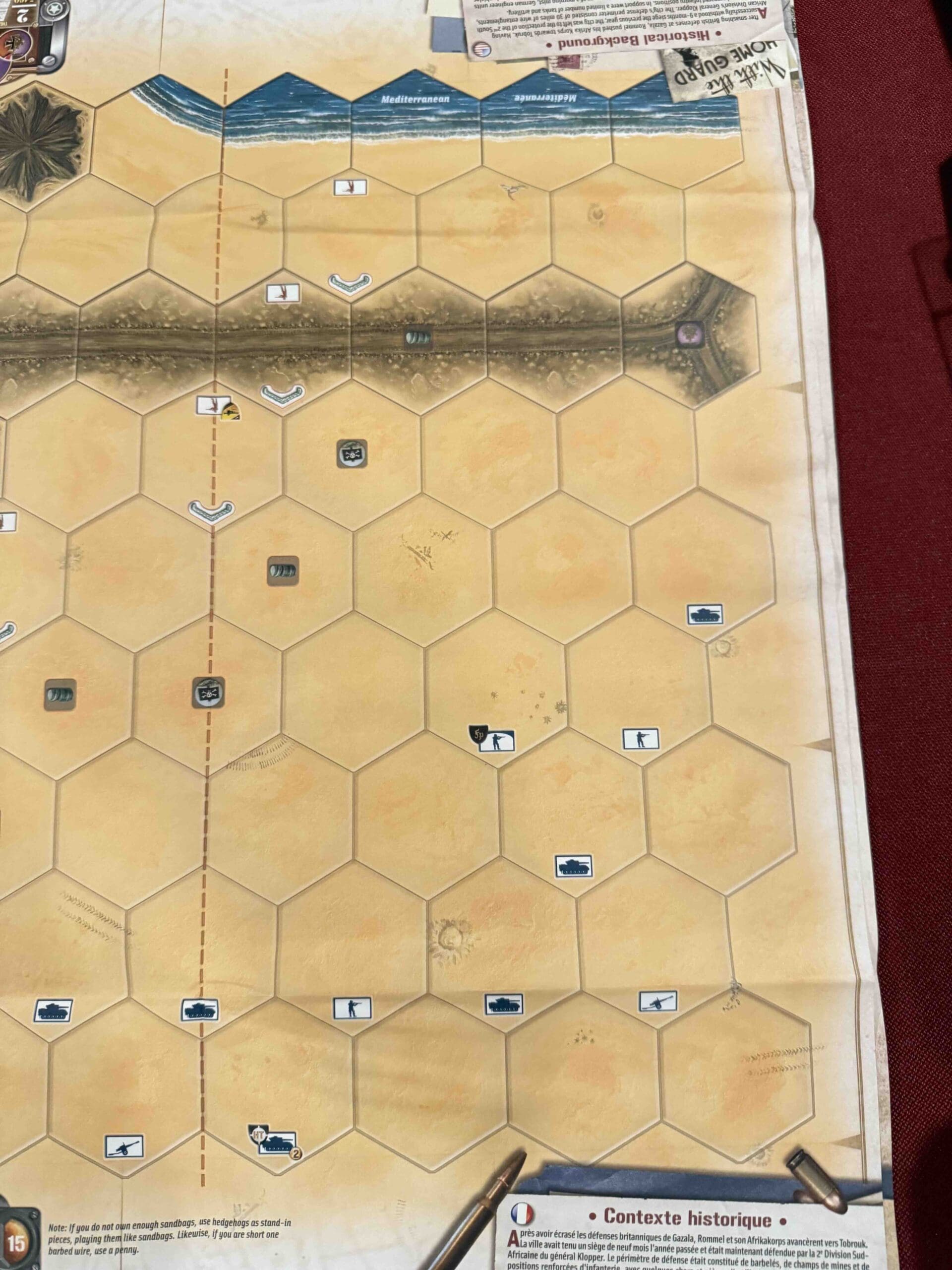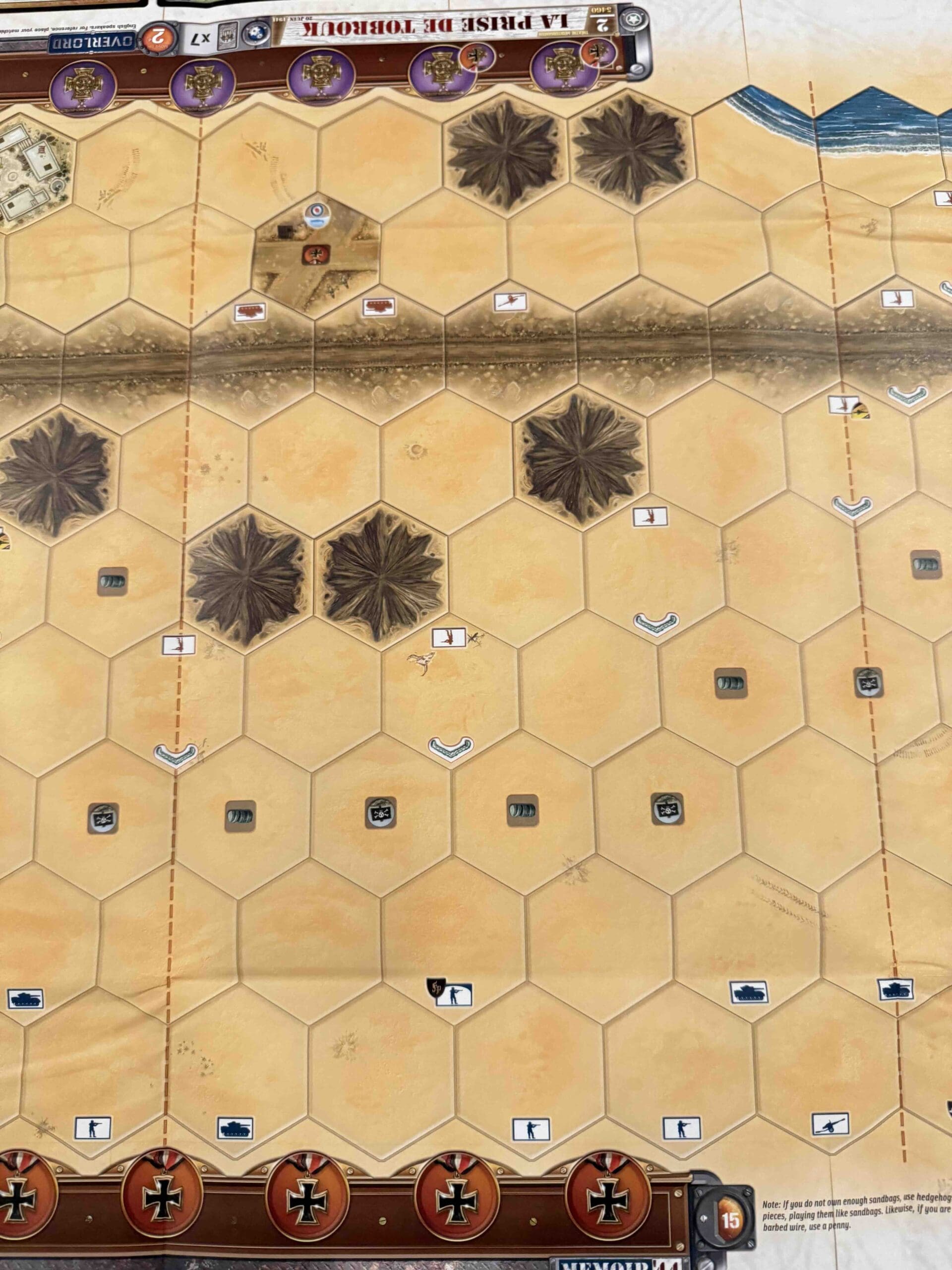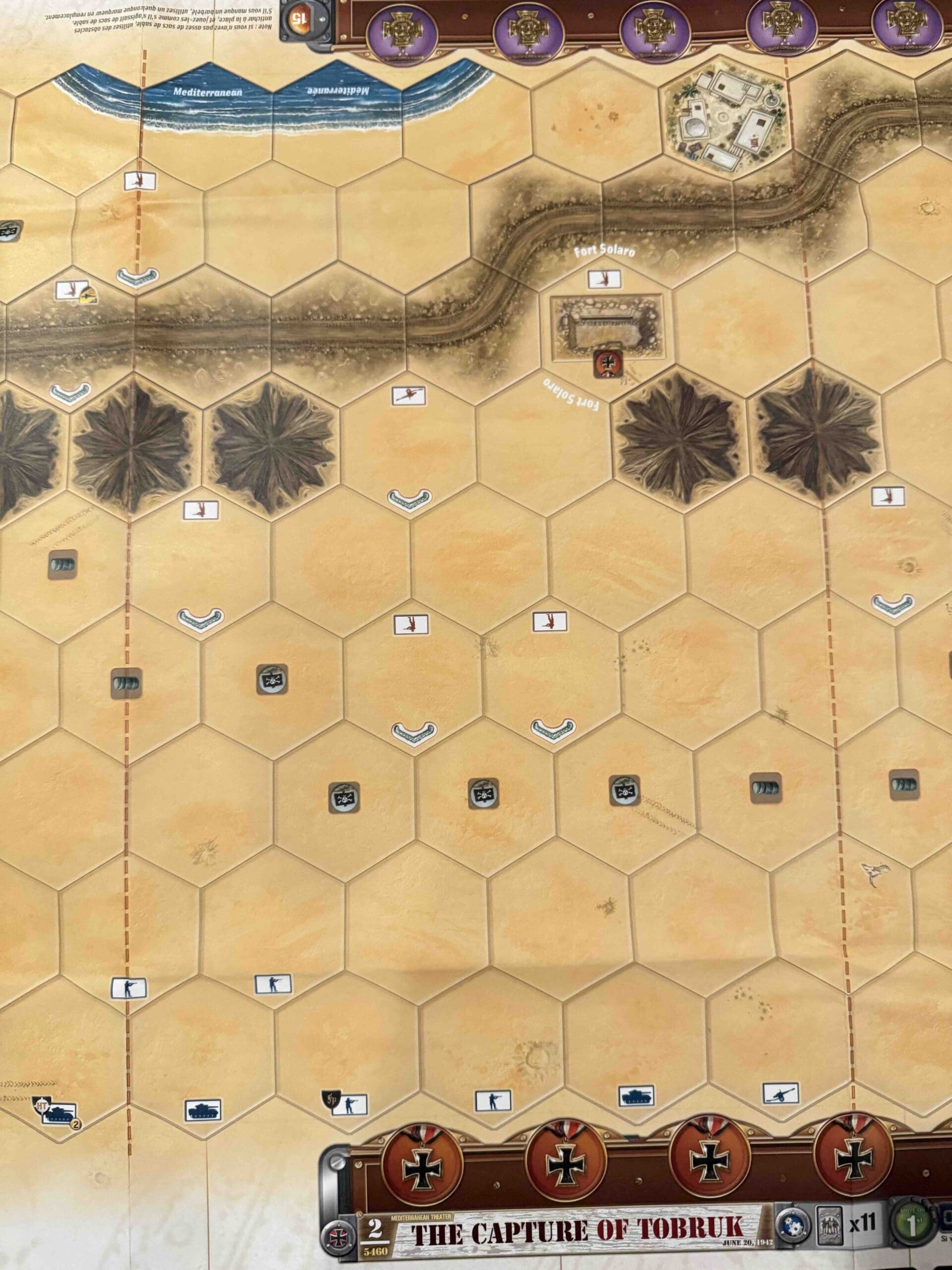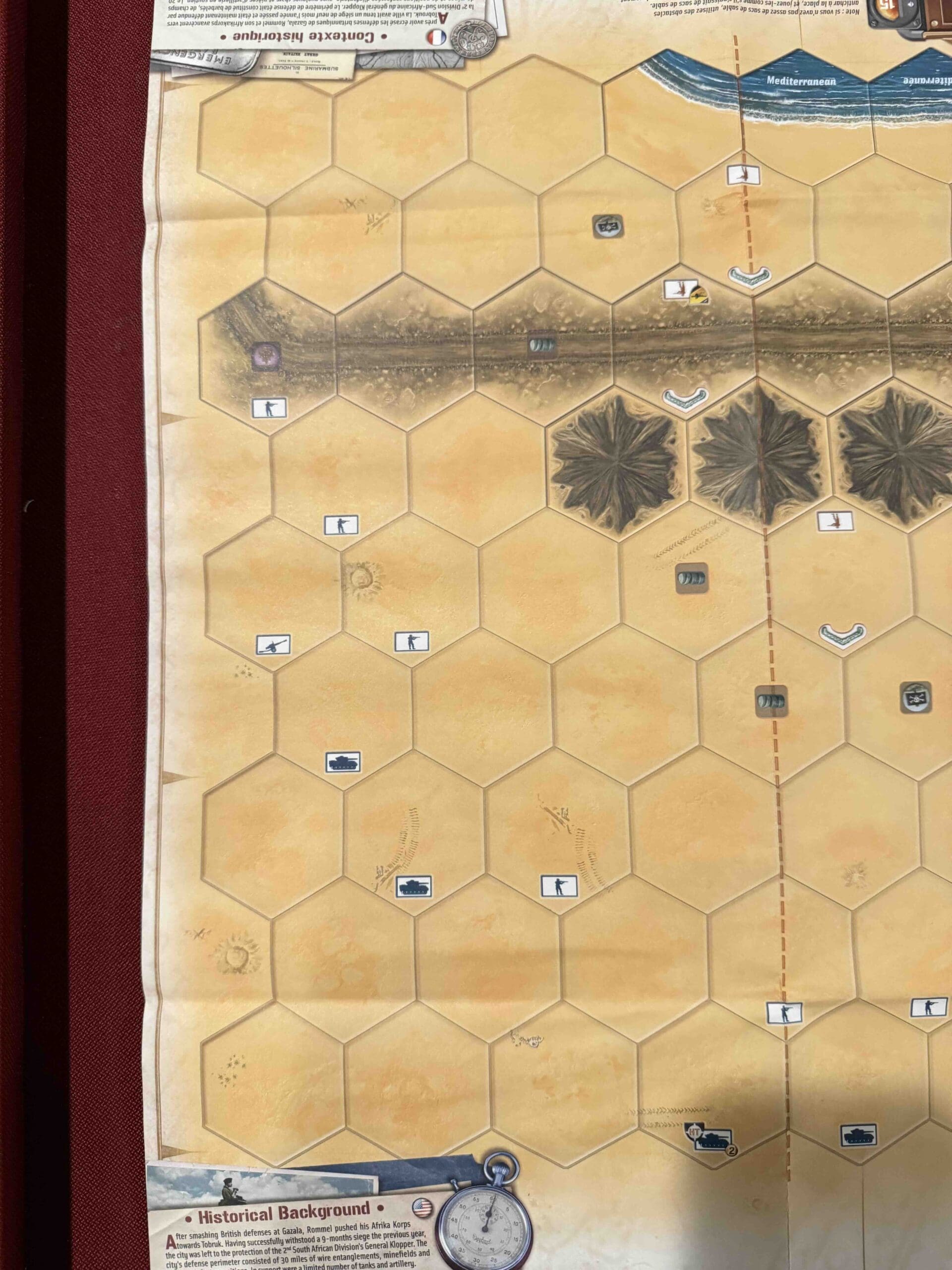

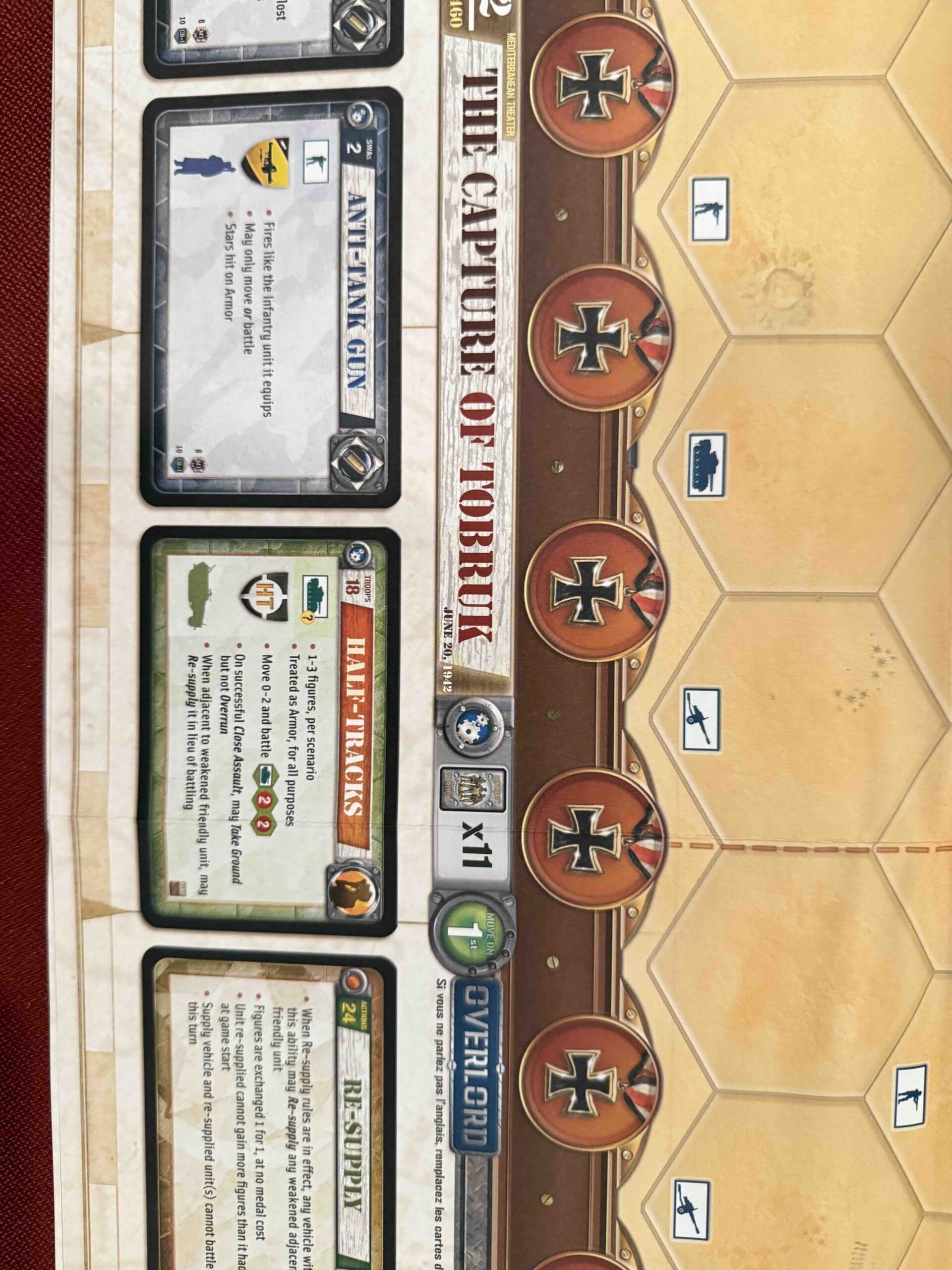
The Capture of Tobruk

The Capture of Tobruk (Overlord Map)
June 21, 1942—Tobruk falls, and Rommel gets his moment in the sun.

The Desert Fox came tearing across North Africa like a bat outta hell, and when he set his sights on Tobruk, he didn’t waste time. That place had held out before—but not this time. Rommel hit it hard, fast, and surgical. In no time flat, he smashed through the lines, bagged 30,000 Allied troops, and scooped up a mountain of supplies.

It was a gut punch to the British—morale wrecked, command shaken, and the enemy thumping their chests from Berlin to Rome. Tobruk was supposed to be a fortress. Instead, it became a prize.

But here’s the truth: Rommel’s victory was real—but it was short-lived. You don’t win a war with flash and headlines. You win it by bleeding the enemy dry, taking ground, and never letting up. And that’s what we did.

By the time we met him again at El Alamein, the tables had turned. Rommel’s advance stalled, and the Allies came back with a vengeance.

You want to take a city? Fine. But you’d better be ready to hold it when the real fight starts.

~~ General Howitzer

15 VP’s

Card Balance:

Allies – 7

Axis – 11

Complexity:

3

Conditions:

Desert

Context:

Historical

Location:

North Africa

Year:

1942

Theater:

Mediterranean

Campaign:

Codename:

Summary:

Objectives:

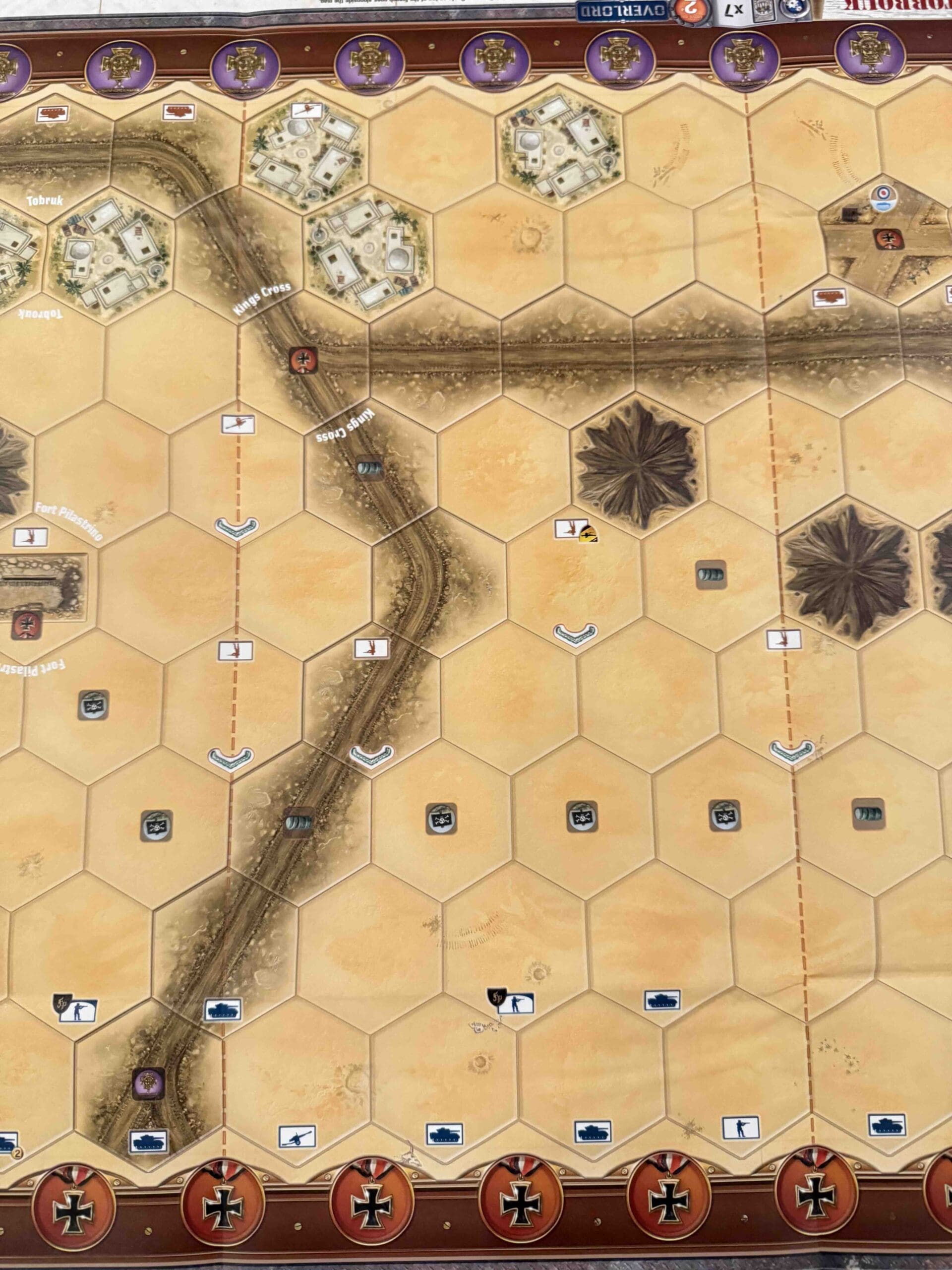
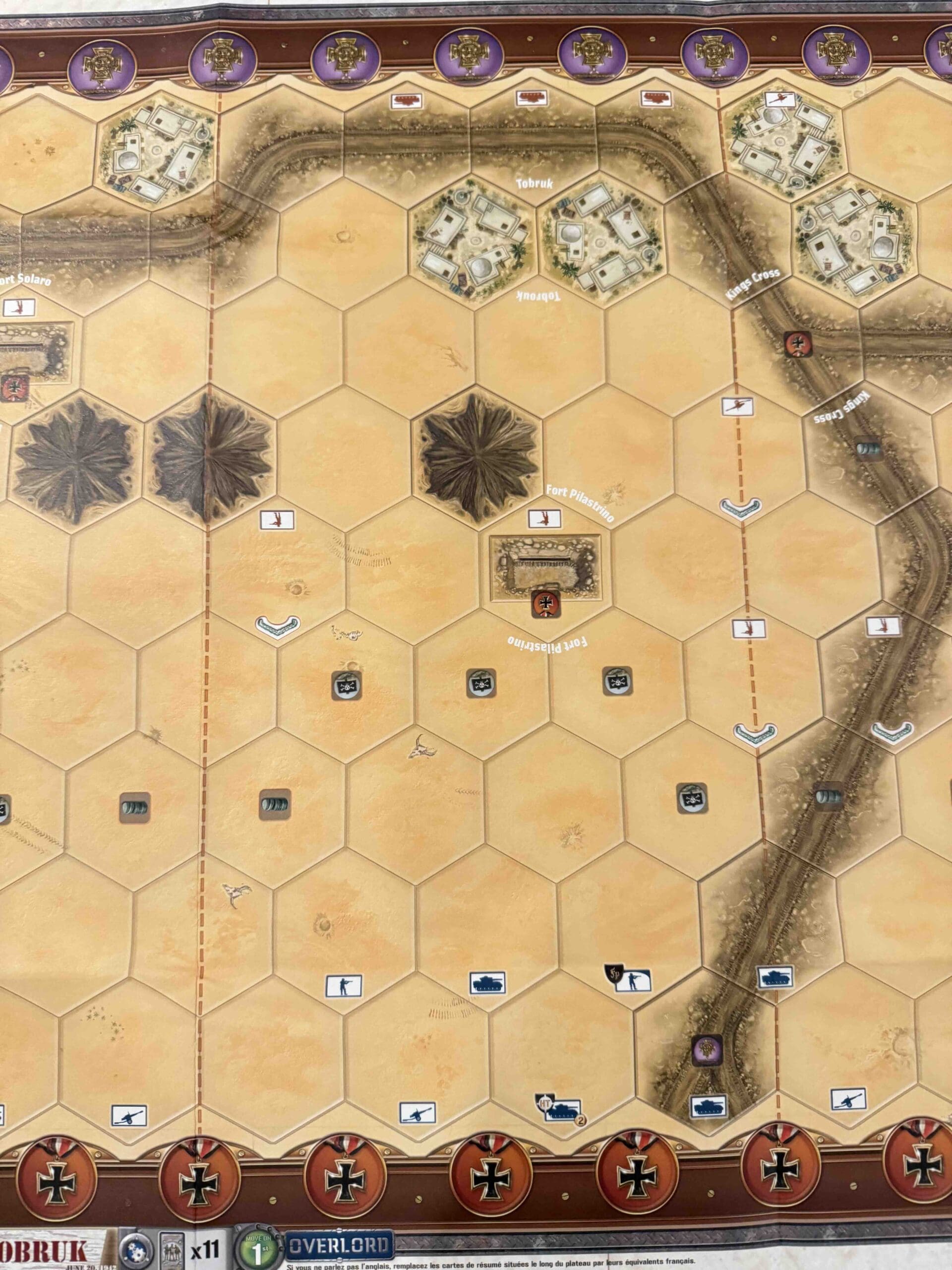
15 VP’s with many territorial Medal Objectives, some Temporary and some Permanent.

Battlefield:

A desert with a couple of roads crossing the area in both directions

Troops:

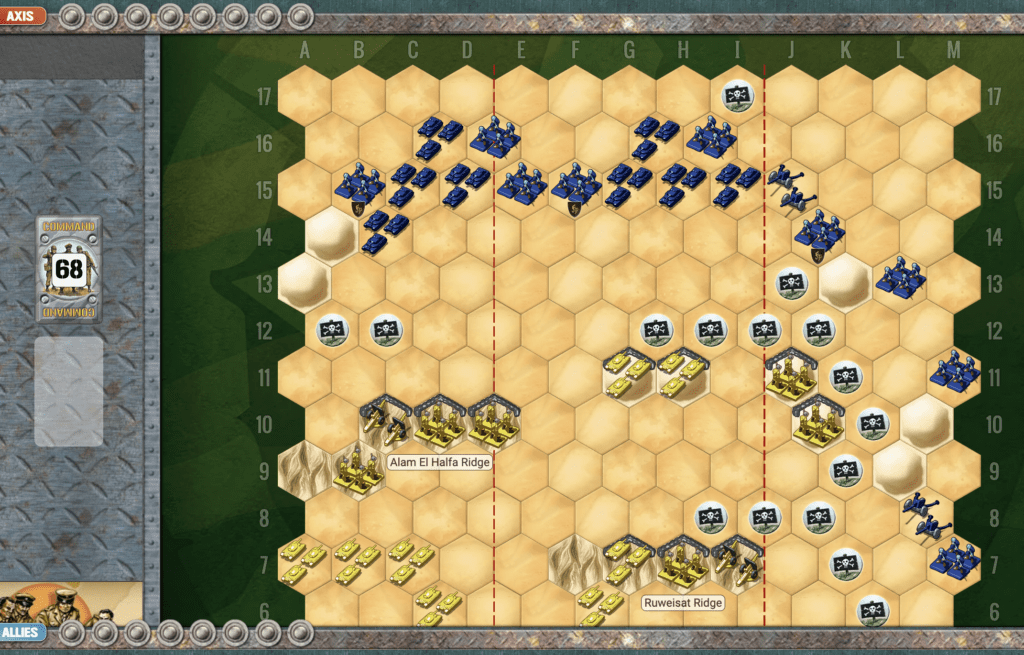
Allies  – 17 Infantry some with Special Weapons, 5 Armor, 2 Artillery

Axis  – 17 Infanty, 16 Armor including some Half-Tracks, 6 Artillery


Allied Strategy:

1.  

Axis Strategy

1.  

Classic Battle Reports

45% Allied Wins

0
BR - Capture of Tobruk

Author:

Days of Wonder

Link:
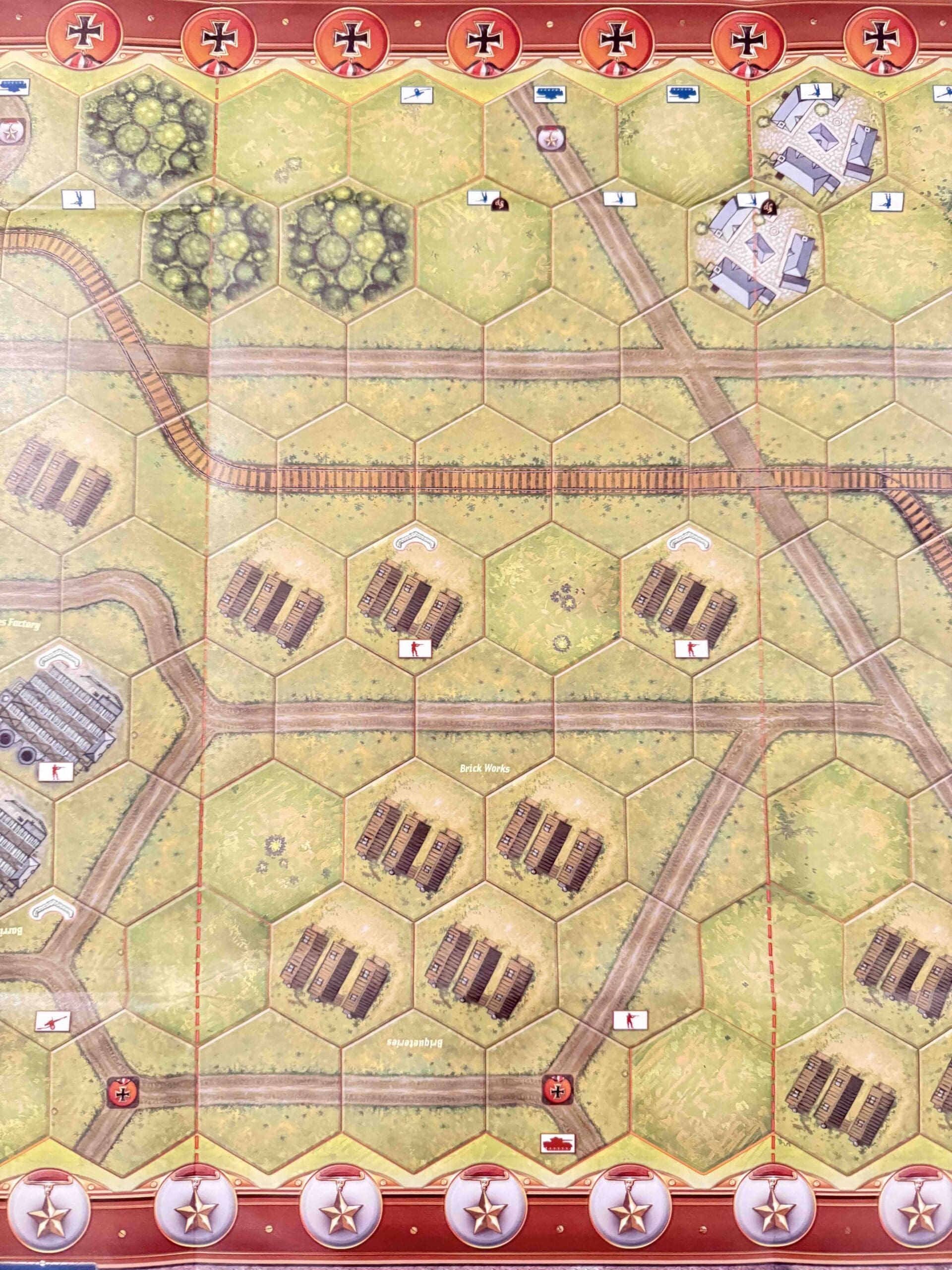
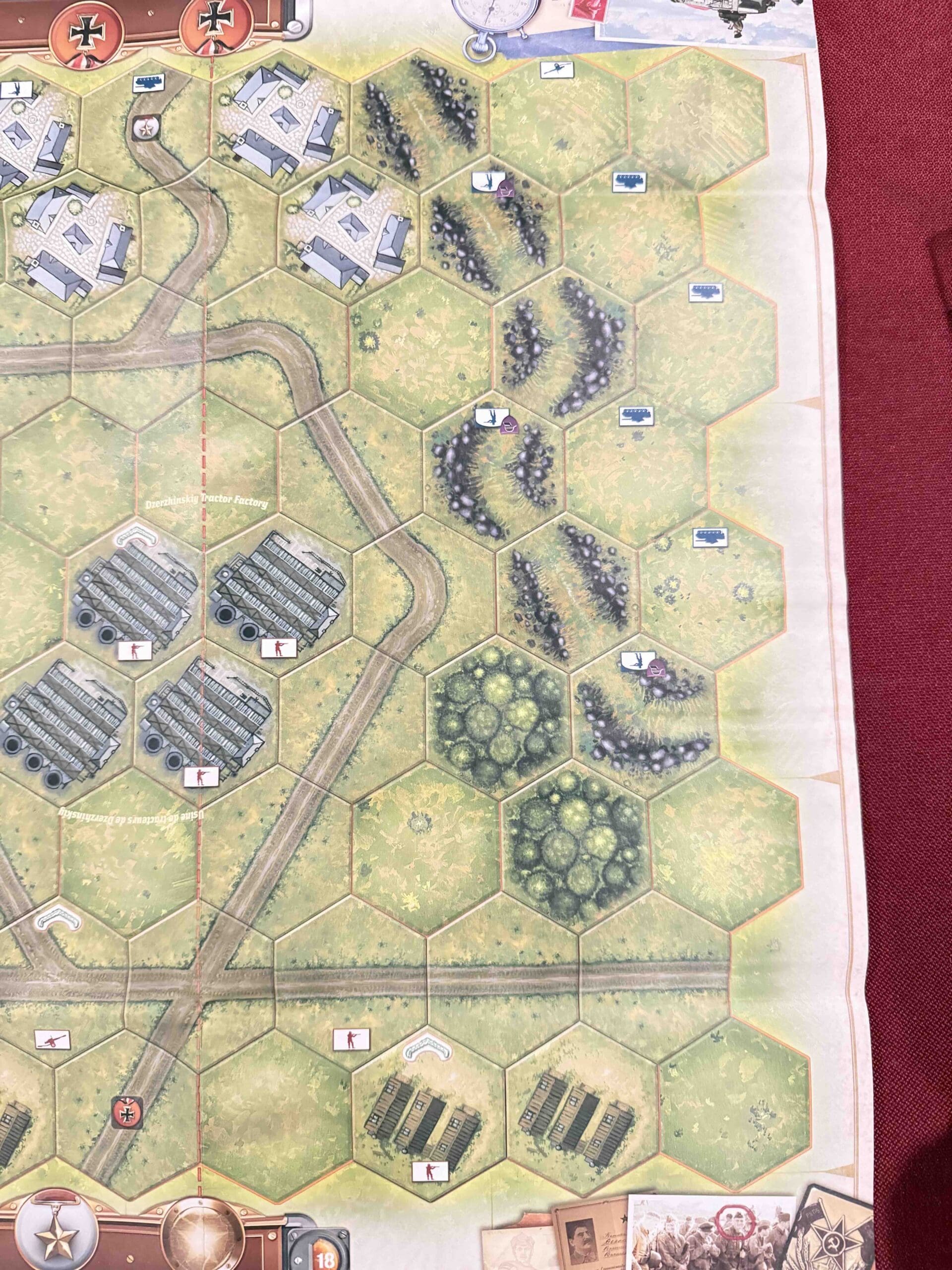
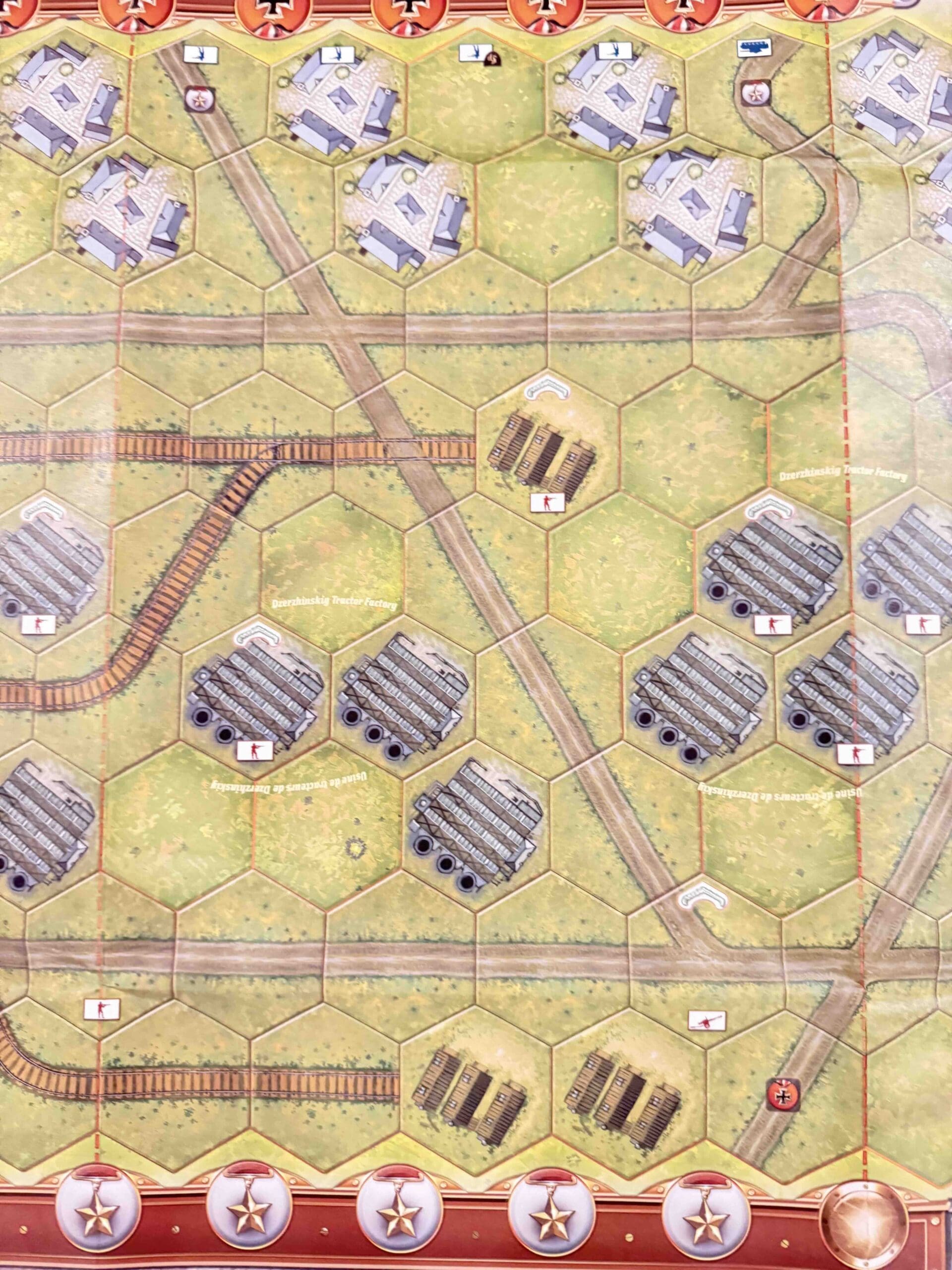
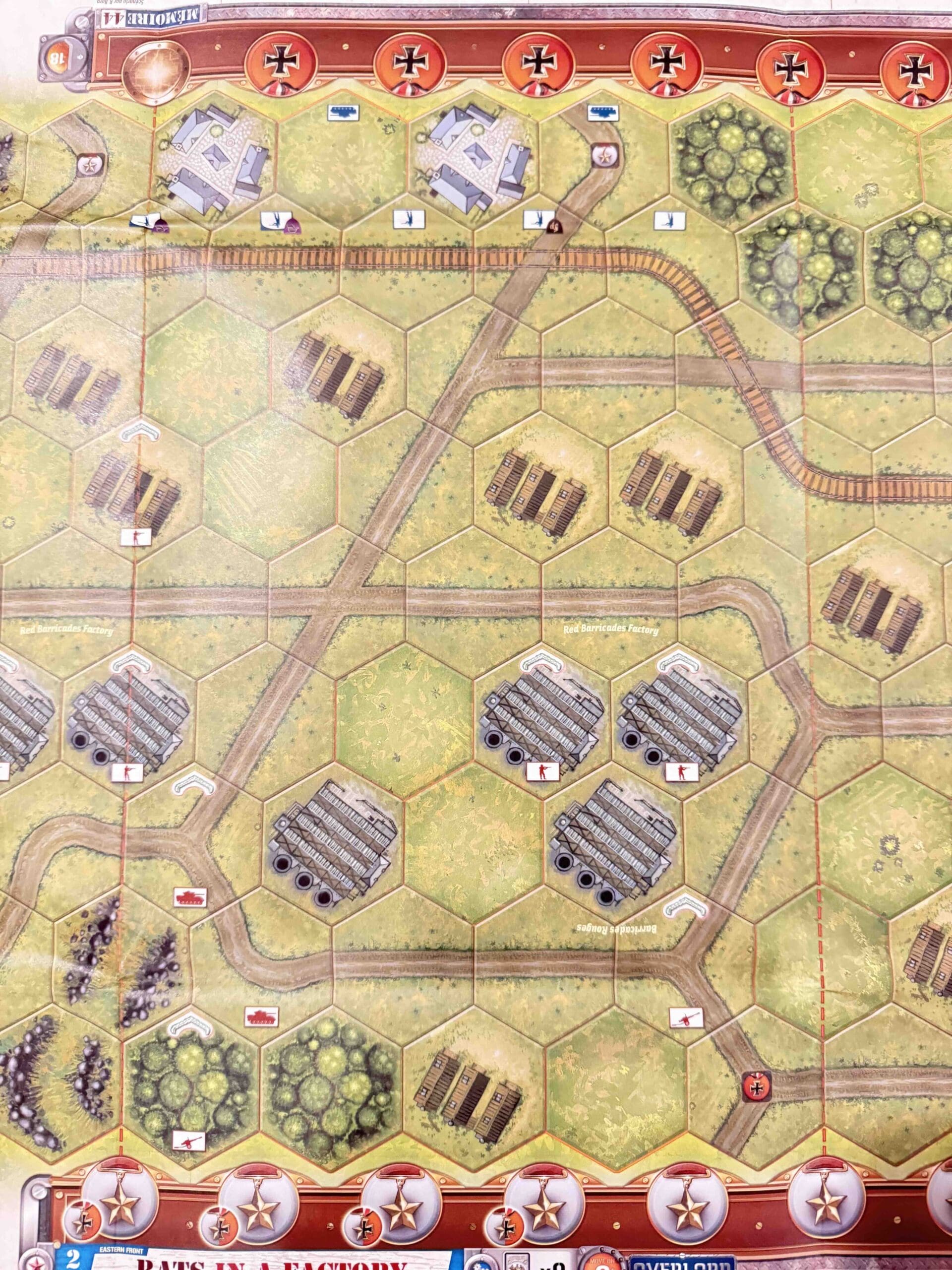
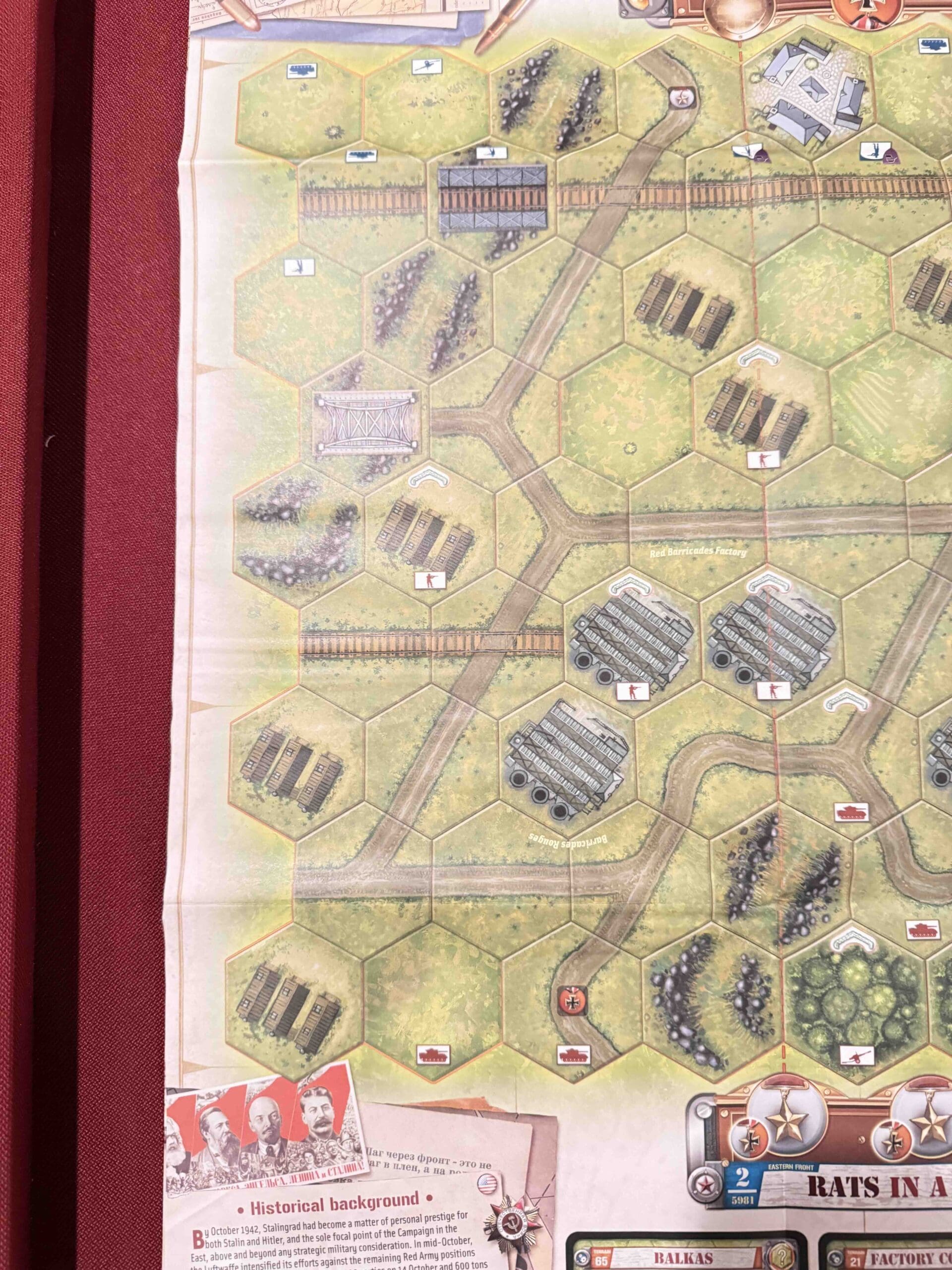
Rats in a Factory

Rats in a Factory [ Overlord ]

“Rats in a Factory”—Stalingrad, late ’42. You want to know what hell looks like? This was it.

The Germans thought they could storm into those Red October, Barrikady, and Tractor factories like it was just another checkpoint. What they walked into was a damn grinder. Concrete, steel, smoke, and blood—that’s what those factories became.

The Soviets didn’t fight for blocks—they fought for bricks, for stairwells, for every bolt and beam. One room would belong to the Germans, the next to the Soviets. Sometimes they were fighting in the same building—on different floors. It was war in a cage, and every inch came with a cost.

The term “Rats in a Factory” wasn’t poetry—it was reality. Men crawled, fought, and died like animals in a twisted maze of rubble and twisted metal. **Snipers in shadows, ambushes around corners, grenades down stairwells—**no rules, no rest, no mercy.

And guess what? The Soviets held. They bled the German 6th Army dry, right there in that industrial slaughterhouse. That stand helped snap the spine of the Nazi push in the East.

You want a lesson in raw, unbreakable resolve? Look no further. That’s what it means to fight like you’ve got nothing left to lose—and no intention of backing down.

~~ General Howitzer

18 VP’s

card

Card Balance:

Allies – 9 

Axis – 10

Complexity:

5

Conditions:

Urban

Context:

Historical

Location:

Stalingrad

Year:

1942

Theater:

Eastern

Campaign:

Summary:

This is an Overlord game.

Objectives:

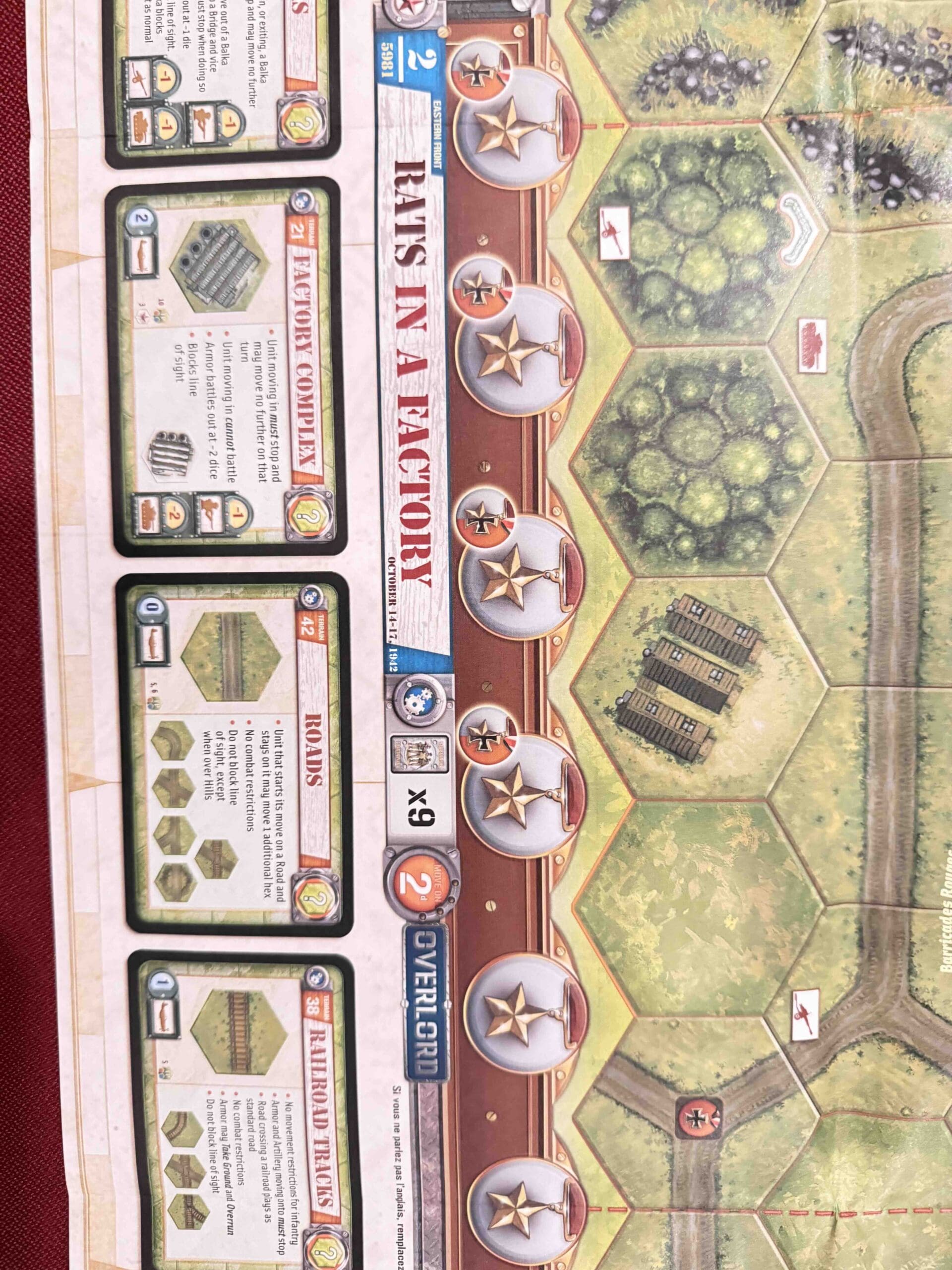
  • 18 Medals including both Permanent and Temporary Medal Objectives.
  • The 5 road hexes exiting the Axis player’s baseline are Permanent Medal Objectives for the Allied forces. The Allied player gains the Medal when he occupies the hex at the start of his turn.
  • The 5 road hexes on the Allied player’s baseline are Permanent Medal Objectives for the Axis forces. The Axis player gains the Medal when he occupies the hex at the start of his turn.
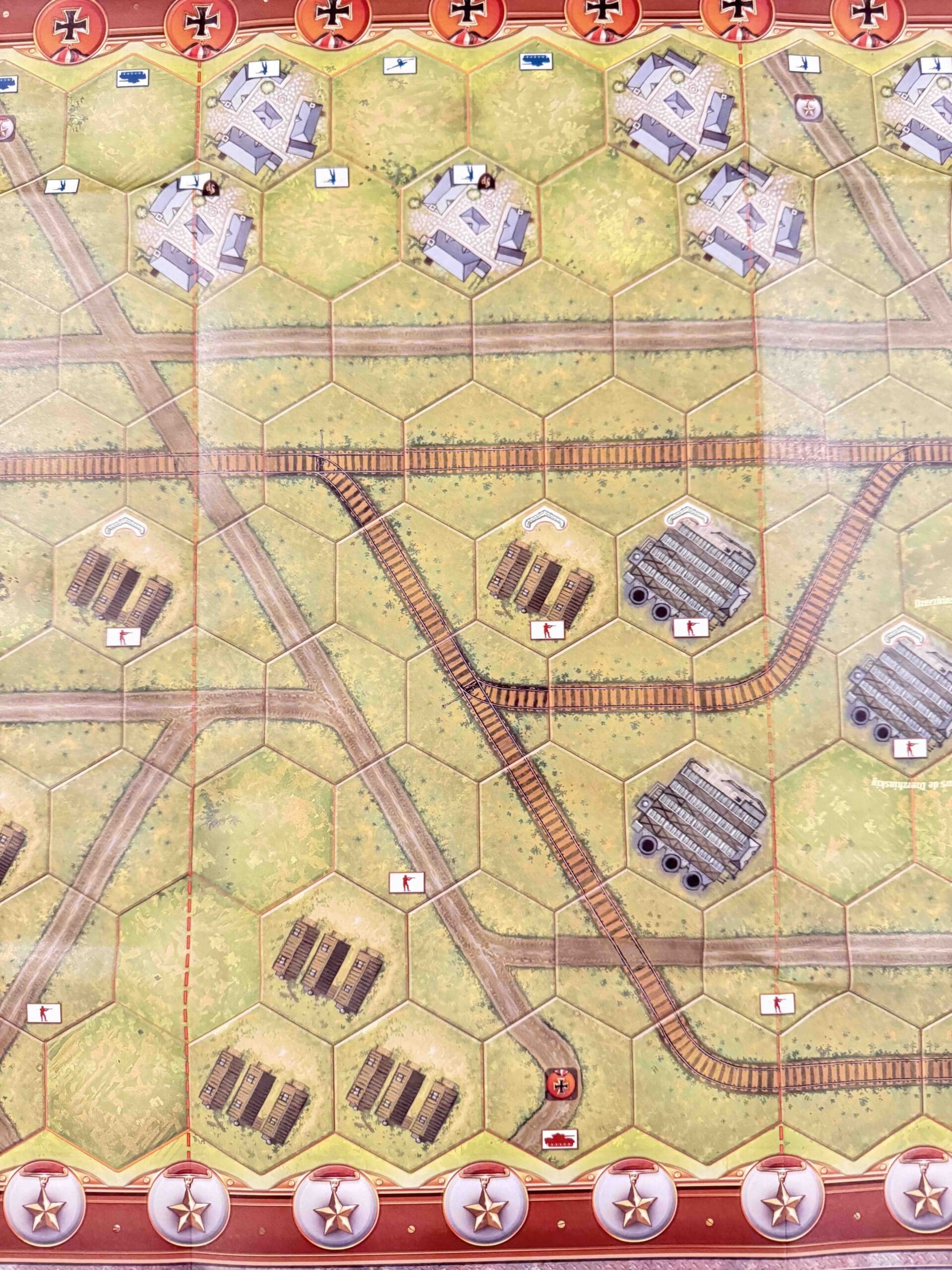
  • The 9 factory hexes of the Dzerzhinskiy Tractor Factory form a Temporary Majority Medal Objective worth 2 Medals for whoever controls the majority of its hexes.
  • The 7 factory hexes of the Red Barricades Factory form a Temporary Majority Medal Objective worth 2 Medals for whoever controls the majority of its hexes.

Terrain:

Urban factory complex with any factory and city hexes.

Troops:

Allies – 21 Infantry, 6 Armor, 3 Artillery

Axis – 20 Infantry, 12 Armo, 4 Artillery

Special Rules:

1.  Temporary Medal Objectives   

2.  Permanent Medal Objectives

3.  Temporary Majority Medal Objectives


medal allies 

Allied Strategy:

1.

medal axis

Axis Strategy

1.  

0
BR - Rats in a Factory

Author:

Days of Wonder

Link:

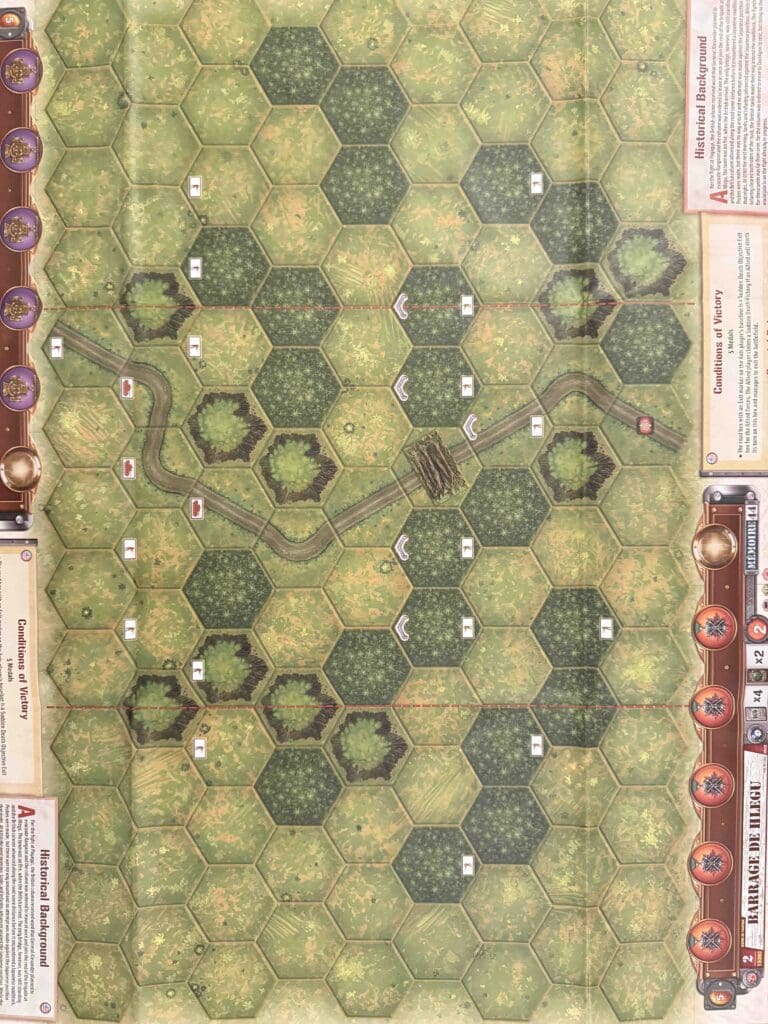
Hlegu Burma

Hlegu Burma

Hlegu-Burma

The engagement at Hlegu in March 1942 was a minor yet notable skirmish during the British retreat from Rangoon amid the Japanese invasion of Burma in World War II.

As part of the broader Battle of Pegu, British forces, including the 7th Queen’s Own Hussars equipped with Stuart “Honey” light tanks, advanced toward Hlegu, only to find it occupied by Japanese troops who had established a roadblock. The Japanese defenders employed Molotov cocktails, successfully disabling one British tank. Despite this resistance, the British forces ultimately overcame the roadblock, forcing the Japanese to retreat under heavy fire. 

This encounter was part of a strategic effort by the British to delay the Japanese advance and facilitate the evacuation of Rangoon. Although the city fell shortly thereafter, the actions at Hlegu exemplify the determined resistance offered by British and Commonwealth forces during the challenging Burma campaign.

6 VP’s

Card Balance:

Allies – 6 + 2 Combat Cards

Axis – 4 + 2 Combat Cards

Complexity:

2

Conditions:

Jungle

Context:

Historical

Location:

Burma

Year:

1942

Theater:

Pacific

Campaign:

Codename:

Summary:

Objectives:

5 VP’s, plus a Sudden Death Exit Hex for the Allies.

Battlefield:

A jungle scenario with a road running vertically through the map, with a roadblock in the center.

Troops:

Allies – 8 Infantry, 3 Armor

Axis – 9 Infantry

Special Rules:

Roadblock Rules in “Hlegu, Burma”

According to the Terrain Pack Rulebook, roadblocks have the following effects:1j1ju

  • Movement: Only Infantry units may enter a hex containing a roadblock. Upon entering, the Infantry unit must stop and cannot move further that turn.

  • Combat:

    • A unit positioned on a roadblock hex is protected on all sides.

    • When attacked by Infantry or Armor, the attacking unit rolls one fewer Battle die.

    • Artillery attacks are unaffected; they roll their normal number of Battle dice.

    • A unit on a roadblock hex may ignore the first flag rolled against it.

  • Line of Sight: Roadblocks do not obstruct line of sight

Allied Strategy:

1. The Allies have a Sudden Death Exit Hex Objective Medal. If a unit begins the turn on the hex and exits, a victory is declared for the Allies. 

2.  You have Armor units, and the enemy has none.  Use them to good effect, but don’t get too close or they will hit you with Molotov cocktails.

Axis Strategy

1. At all costs, defend the Exit Hex.

2.  The roadblock is your best chance to surround and destroy the enemy.  As they try to cross it, bring all your Infantry to bear against them.

Battle Reports

0
BR - Hlegu Burma

Author:

Days of Wonder

Link:
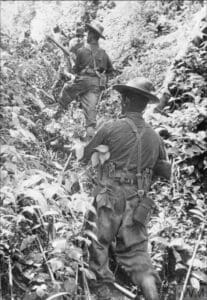
Burma Troops

Courtesy of Imperial War Museum

Payagyi Burma

Payagyi Burma

Payagyi-Burma

The Battle of Payagyi occurred in early March 1942 during the Burma Campaign of World War II. British forces, specifically ‘B’ Squadron of the 7th Queen’s Own Hussars, engaged Japanese troops near the village of Payagyi, north of Pegu. The British operated American-made M3 Stuart light tanks, while the Japanese fielded Type 95 Ha-Go light tanks.

Upon arrival, the British encountered Japanese forces already present in the village. Despite poor visibility and challenging radio communications, the British launched an attack. In the ensuing combat, they destroyed two Type 95 tanks, disabled two more, and captured four Japanese anti-tank guns. However, the British also suffered losses, including the disabling of a Stuart tank by enemy fire.

The Battle of Payagyi exemplifies the intense and fluid nature of the early stages of the Burma Campaign, highlighting the challenges faced by Allied forces in the face of the Japanese advance.

6 VP’s

Card Balance:

Allies – 6 + 2 Combat Cards

Axis – 4  + 2 Combat Cards

Complexity:

3

Conditions:

Jungle

Context:

Historical

Location:

Burma

Year:

1942

Theater:

Pacific

Campaign:

Burma Campaign

Codename:

Summary:

Objectives:

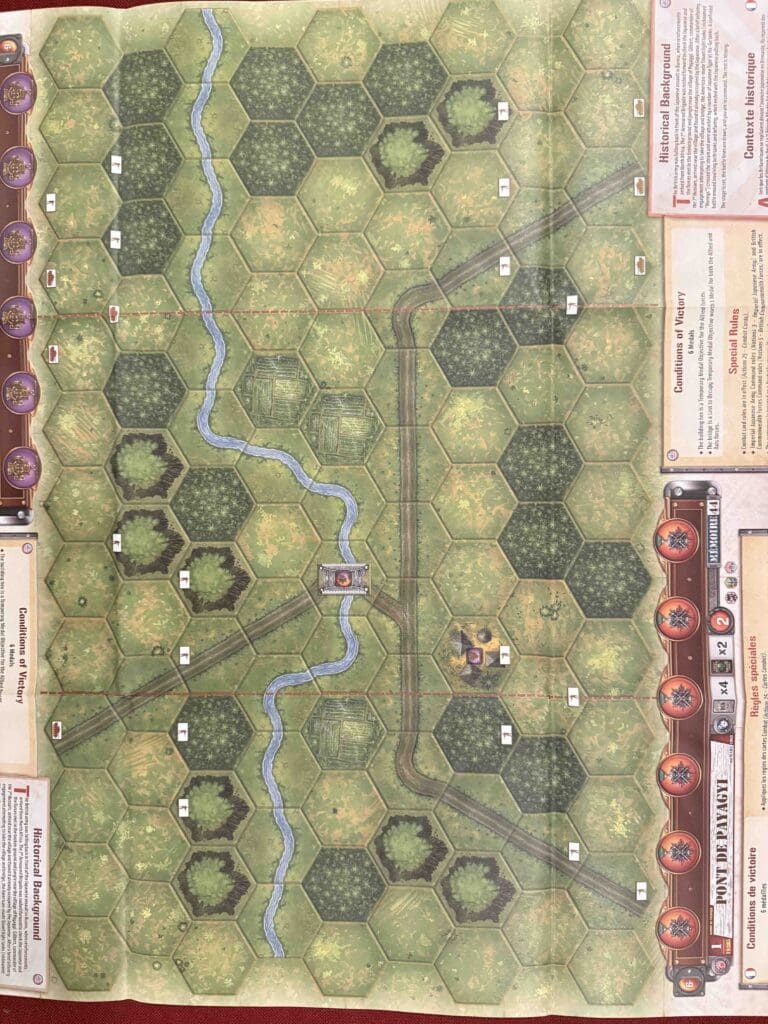
6 VP’s, plus the building hex as a  Temporary Medal objective for the Allied forces, and the bridge hex is a Last to Occupy Temporary Medal Objective for both sides.

Battlefield:

A jungle map with jungle, rice paddies, hills, and a river cutting across the entire map, and intersecting roads which come together at the bridge hex.

Troops:

Allies – 8 Infantry, 4 Armor

Axis – 9 Infantry, 3 Armore


Allied Strategy:

1.  The key objective for the Allies is to capture the bridge hex, and then as a bonus the building hex. 

2.  Your Armor is back on the left flank. You will need to get it into action as soon as you can. This will be hampered by the river,so while some may breach the river, some other Armor units will need to head toward the road in the center to support the approach and capture of the bridge hex, and its accompanying Medal.

Axis Strategy

1.  The Axis begin the scenario with control of the building hex and its Last to Occupy Temporary Objective Medal.  Maintain this territory, and push to the Bridge Hex Medal Objective when you are ready. But do not do so prematurely, or your forces will be destroyed by the British counter-attack.

2.  Your Armor is stuck in the corner on the right flank. You will need to get them and the nearby Infantry up into the action right away.

Battle Reports

0
BR - Payagyi Burma

Author:

Days of Wonder

Link:

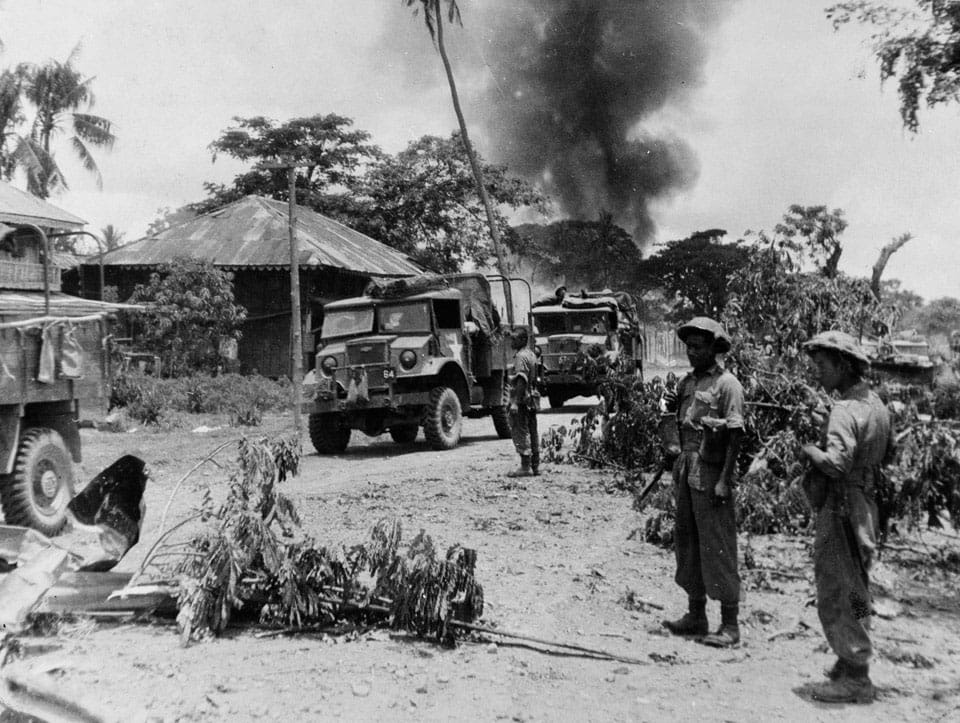
Indian-Troops-17th-Division-Payagyi-1945

Courtesy of National Army Museum

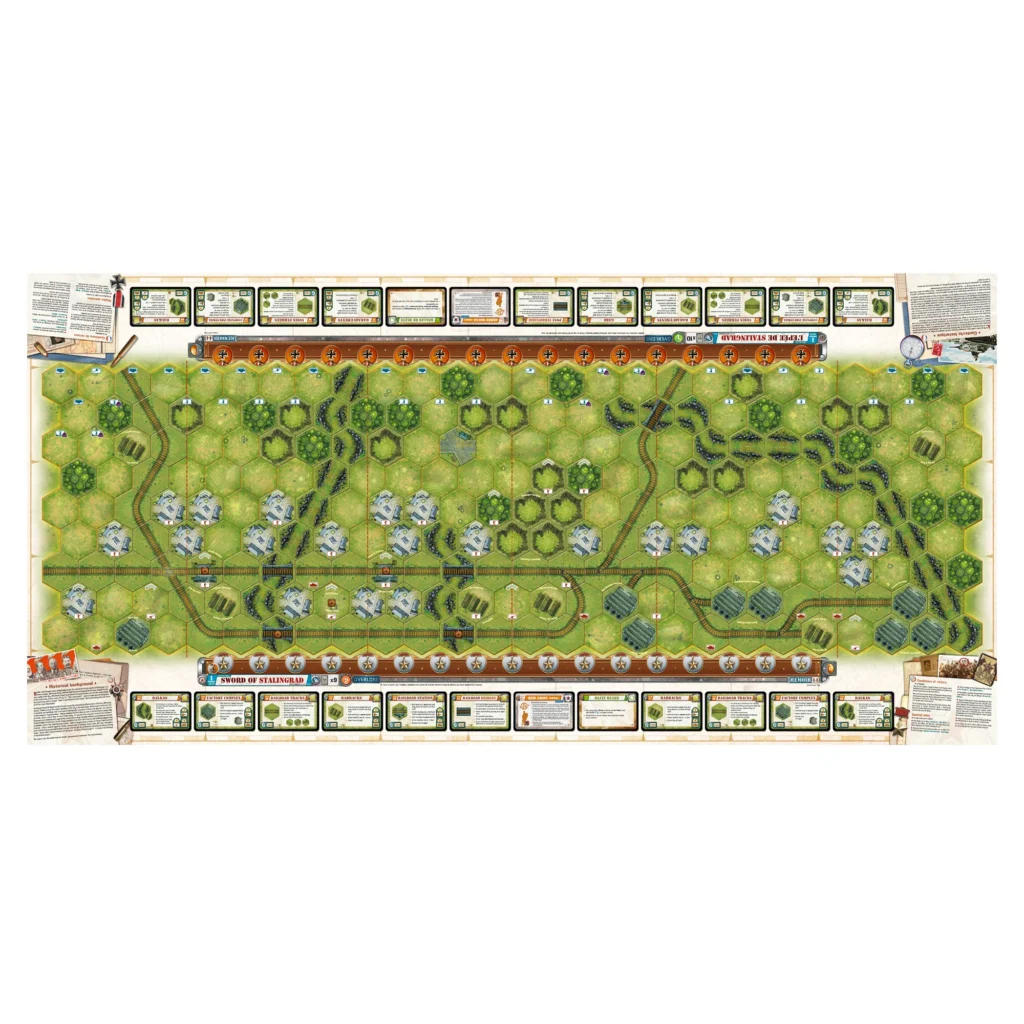
Sword of Stalingrad

Sword of Stalingrad

Sword-Stalingrad

Stalingrad. July ’42 to February ’43. One of the bloodiest, ugliest slugfests in the history of war—and the place where Hitler’s dreams started bleeding out in the snow.

The Germans charged in hard, aiming to take the city and crack open the Soviet underbelly on their way to the Caucasus oil fields. They bombed Stalingrad to rubble, thinking they could steamroll the Soviets in the ashes.

But rubble favors the defender—and the Soviets fought like wild dogs in every street, every cellar, every damn staircase. House-to-house, room-by-room, tooth-and-nail. The Germans took ground, lost it, and bled for every inch.

And then came the real punch: a Soviet counterattack that closed the trap, surrounded the German 6th Army, and squeezed until there was nothing left but cold, hunger, and surrender.

Stalingrad wasn’t just a Soviet victory—it was the beginning of the end for the Nazi war machine. From that frozen hellhole, the Red Army started marching west—and they didn’t stop till they hit Berlin.

You want to talk grit? Talk Stalingrad. That’s what happens when an enemy pushes too far and meets a defender with nothing left to lose.

~~ General Howitzer

17  VP’s

Card Balance:

Allies – 9

Axis – 10

plus Combat Cards

Complexity:

5

Conditions:

Urban

Location:

Russia

Year:

1942

Theater:

Eastern Front

Campaign:

Context:

Historical

Summary:

This is a massive and complex scenario with many strategic elements that makes for an exciting and challenging game.

Objectives:

17 VP’s (!), including numerous territorial medals

Battlefield:

This battlefield has countryside on the Axis side, and urban factories, towns, and other buildings on the Allied side. It is a quite complex battlefield.

Troops:

Allies – Infantry, Armor, Artillery

Axis – Infantry, Armor, Artillery 

Allied Strategy

1.  Historically, the Russians were defending themselves from the Nazi’s, so much of this scenario is spent behind sandbags, attacking the enemy where you can, to degrade their offensive capabilities.

2.  You need to protect the territorial medals which are available to the Axis, should they gain control of various railroad stations, the central hills, or the factory complexes.  At the start of the game, you will be granted control of these and the three medals that go with them. But as the game proceeds it will be increasingly difficult to defend and keep this territory and its medals. 

3.  Your left flank is the most medal-rich area for the Axis to target.  So be prepared for an attack there. Manage your cards so that you can respond to aggression.

Axis Strategy

1. This game is won by making your forces mobile.  Invade the city hexes with your infantry, and get your armor onto the Allied back row to start snatching those territorial medals. 

2. There is a large hill and woods complex in the center section which is worth two VP territorial medals. Control it with both infantry and armor.

0
BR - Sword of Stalingrad

Author:

Days of Wonder

Battle Maps, Vol. 3

Link:

Tunisia

Tunisia

Memoir 44 Tunisia

The Battle for Tunisia (1942–1943) was a key campaign in the North African theater of World War II. Following the Allied invasion of North Africa (Operation Torch) in November 1942, German and Italian forces, under Field Marshal Erwin Rommel, sought to hold Tunisia as a defensive stronghold. The Axis aimed to counter the Allied advance from Algeria and Morocco while securing supply lines to Italy.  The Allies, under the command of General Dwight D. Eisenhower, faced challenges due to difficult terrain, logistical issues, and initial inexperience.

General Howitzer’s observation:
The Battle for Tunisia was one tough brawl—Rommel dug in with his Axis boys trying to make Tunisia a fortress, but we weren’t about to let that desert rat keep his grip. Ike had green troops, bad roads, and a chaotic supply headache, but we pushed through it all, hammering east from Torch and learning fast. Tunisia was the doorway to Italy, and by God, we were kicking it open.

6 VP’s

Card Balance:

Allies – 4

Axis – 6

Complexity:

3

Conditions:

Countryside

countryside

Location:
Tunisa, North Africa

Year:

1942

Theater:

Mediterranean

Codename
Operation Torch

Summary:

Objectives

6 medals, no territorial objectives

Terrain:

The many woods and hills in the center section present an excellent opportunity for whomever can gain control of them.

Troops:

Allies – 8 Infantry, 4 Armor, 2 Artillery

Axis – 7 Infantry, 5 Armor, 2 Artillery

medal allies

Allied Strategy:

1.  Big picture strategy for Allies is that when the battle starts you have partial control of the central hills.  If you can consolidate that control by moving in additional infantry and armor, plus move your center-section artillery forward, you can hold on and fight the battle from there.  However, if the enemy gets an immediate push forward with cards like Armor Assault or Infantry Assault, they will very quickly be on top of that hill. If you have not yet consolidated power, you may have to either fight to the death right there, or pull back to the nearby town and mini-hills and fight from there. 

medal axis

Axis Strategy:

1.  Big picture strategy for Axis is that they win this two-thirds of the time against the Allies, because you have a lot of firepower very close to the central hills where the primary battle is fought.  If you can mobilize all the forces stuck in the right-flank corner, you can bring a massive attack against the enemy.  With a few well placed cards, you can very quickly have your forces battling for control of the central hills.

Battle Reports

(percentage of Allied victories):

31%

18
BR - Tunisia

Author:

Link: