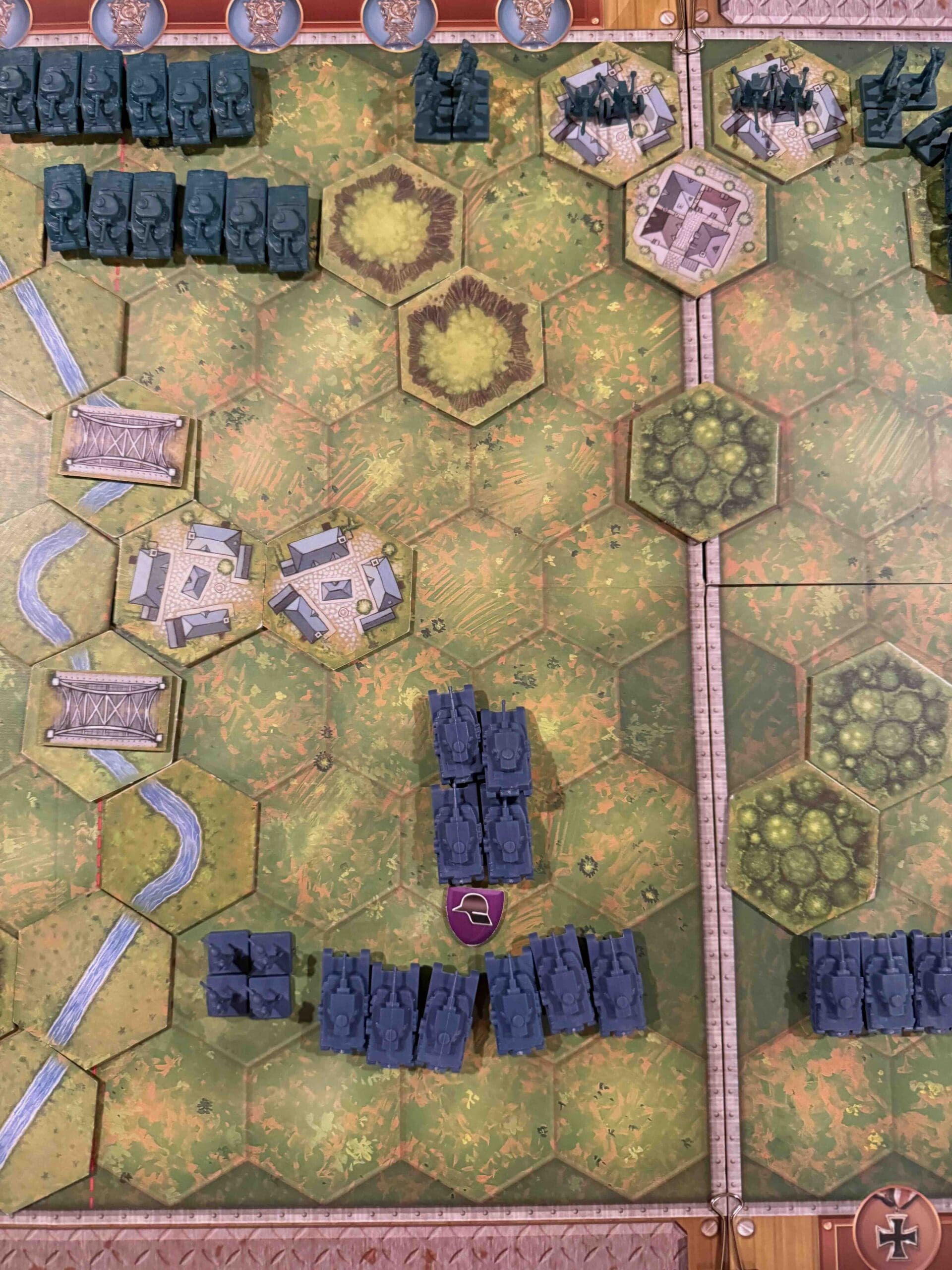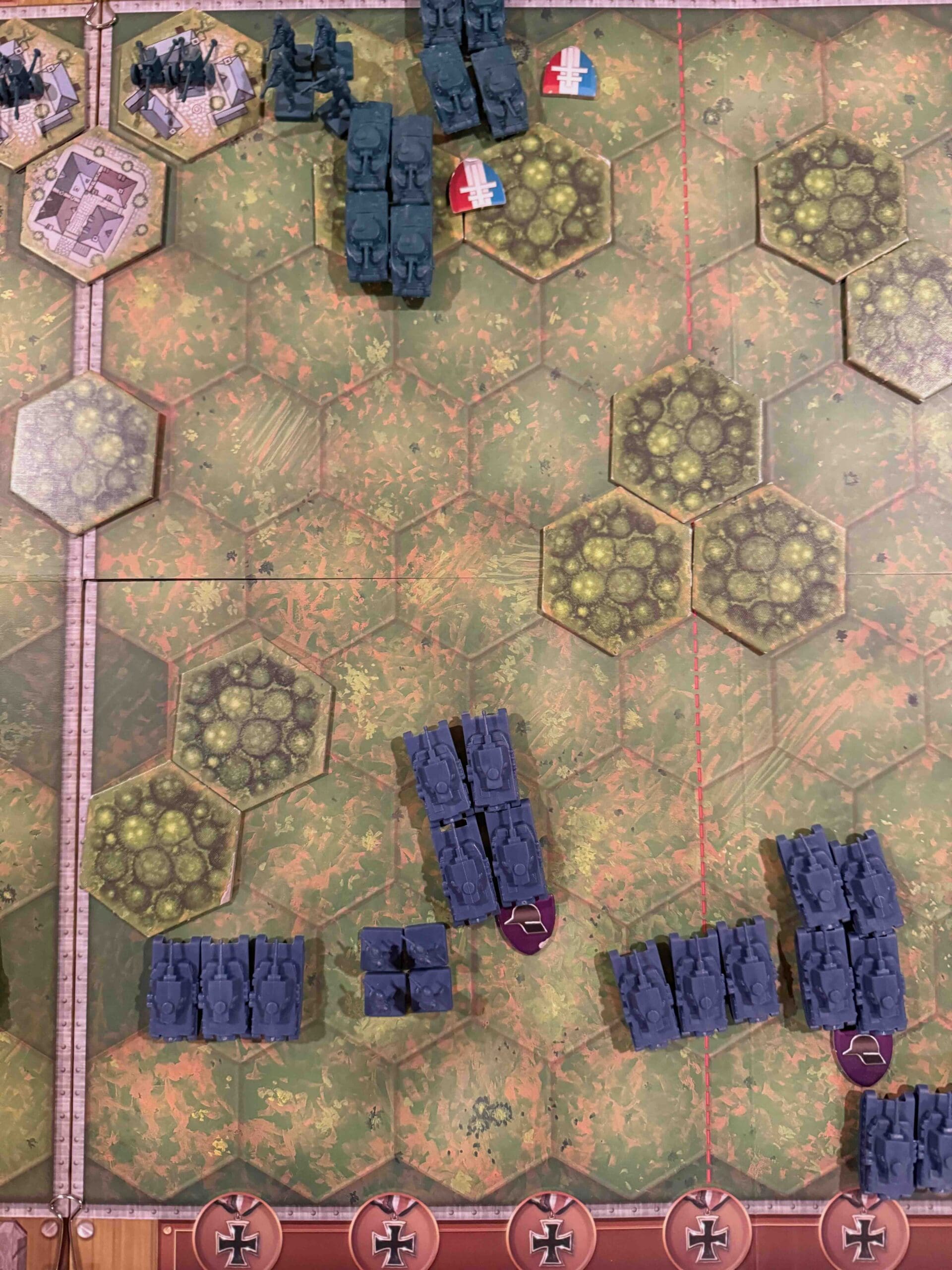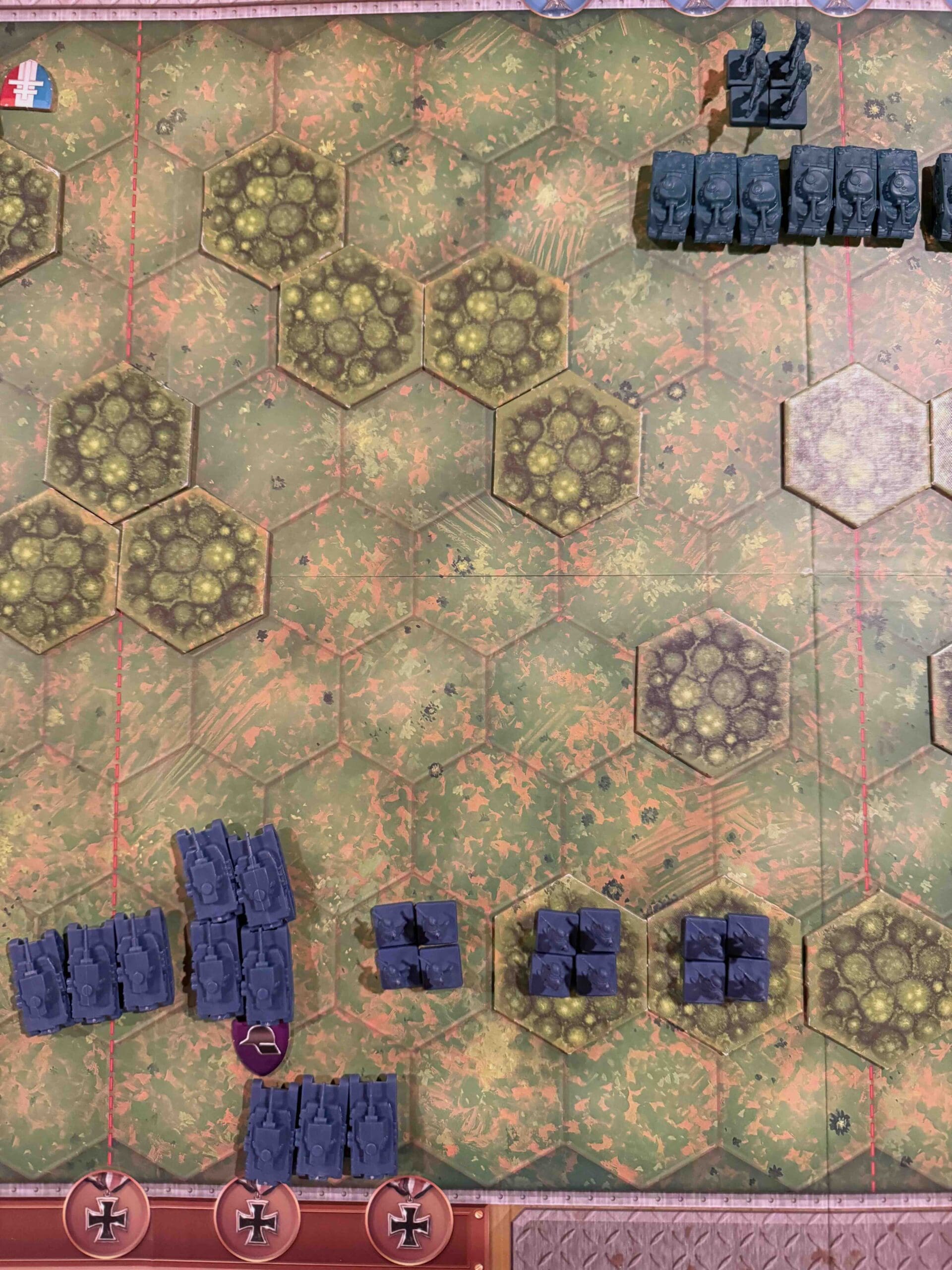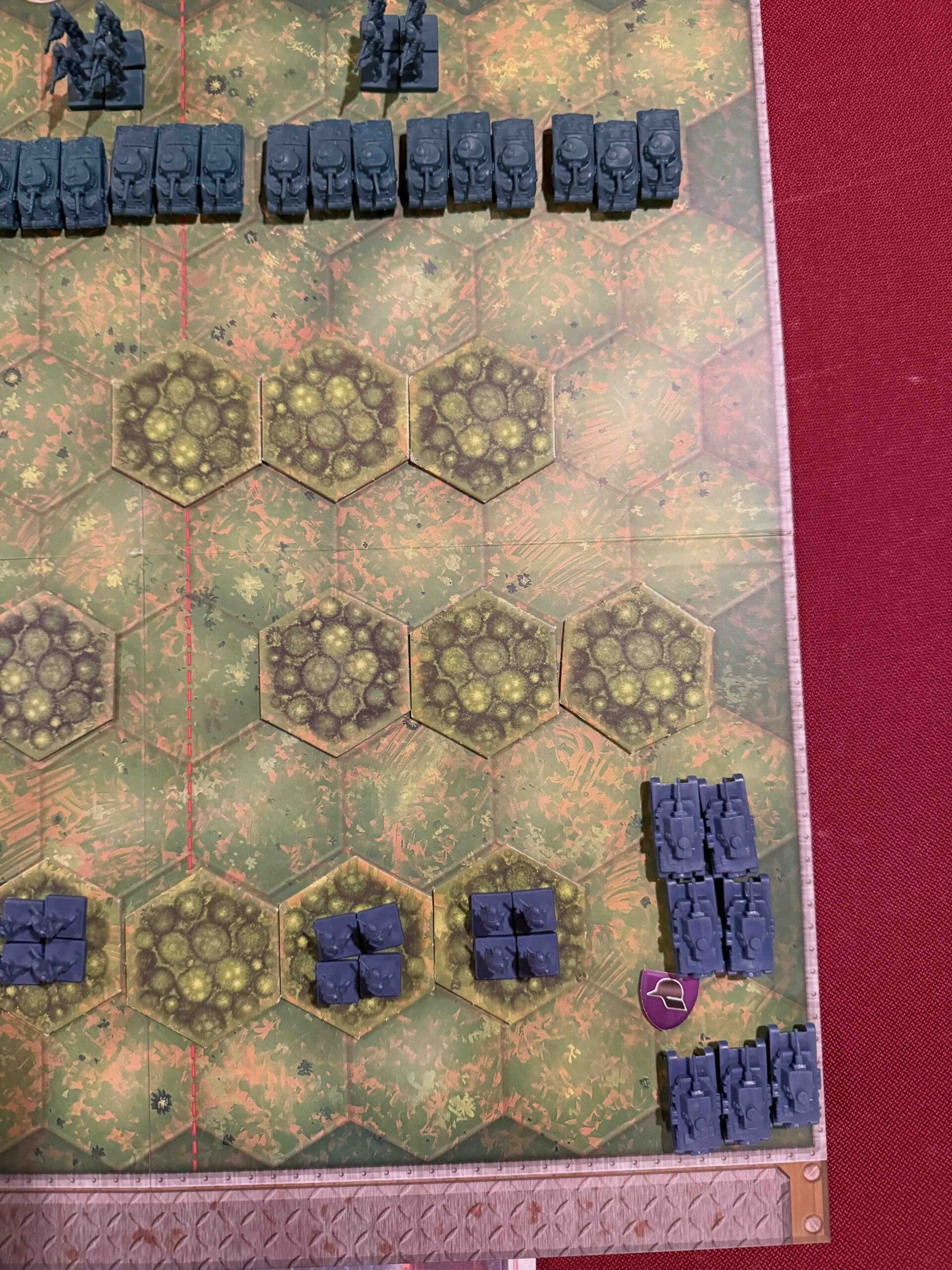
Battle of Dubno – Brody

Force vs. Finesse: Battle of Dubno - Brody
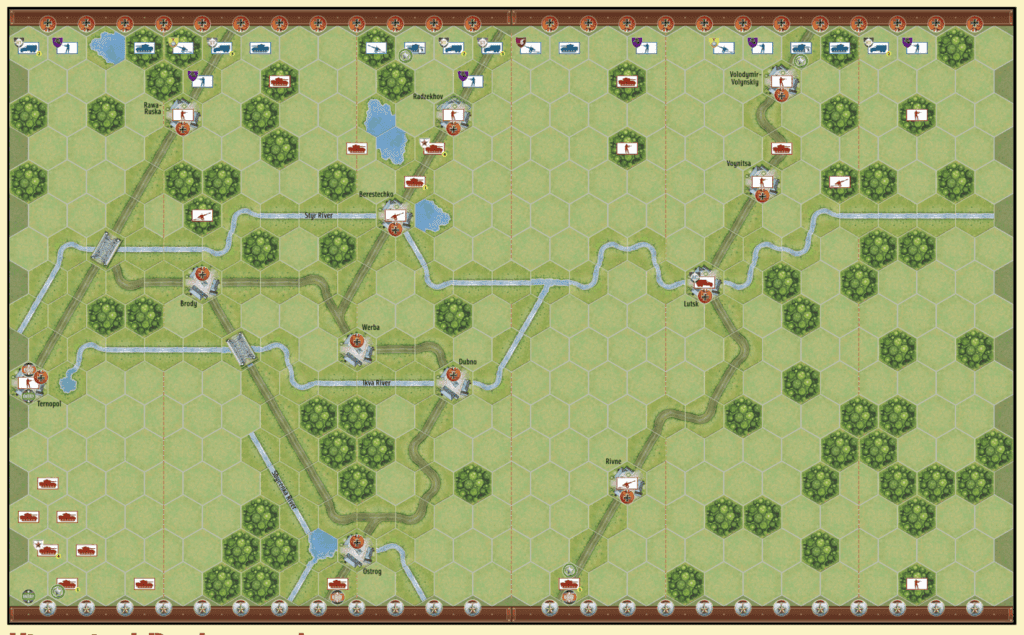
Scenario_Toulon_start_Allies

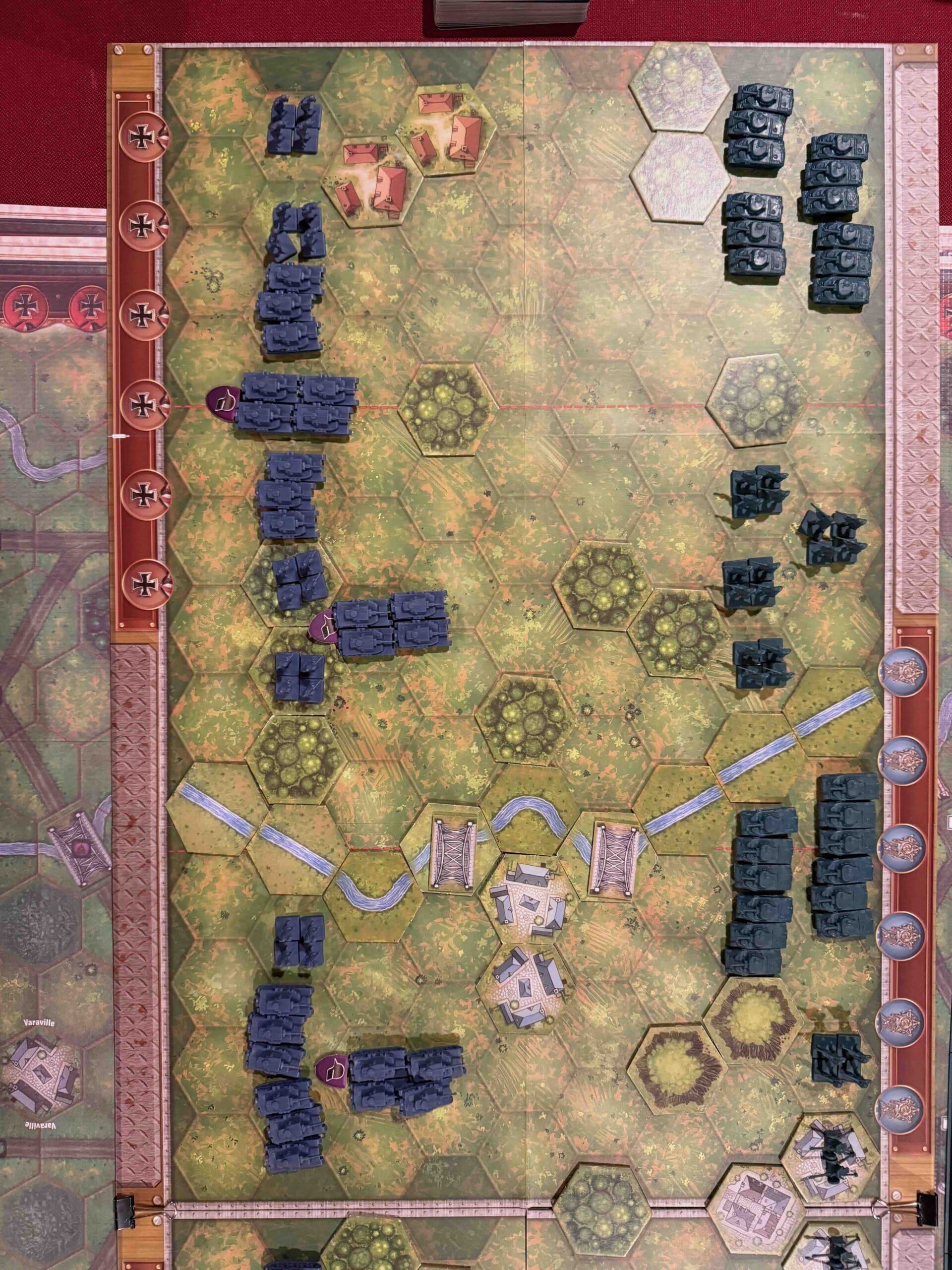
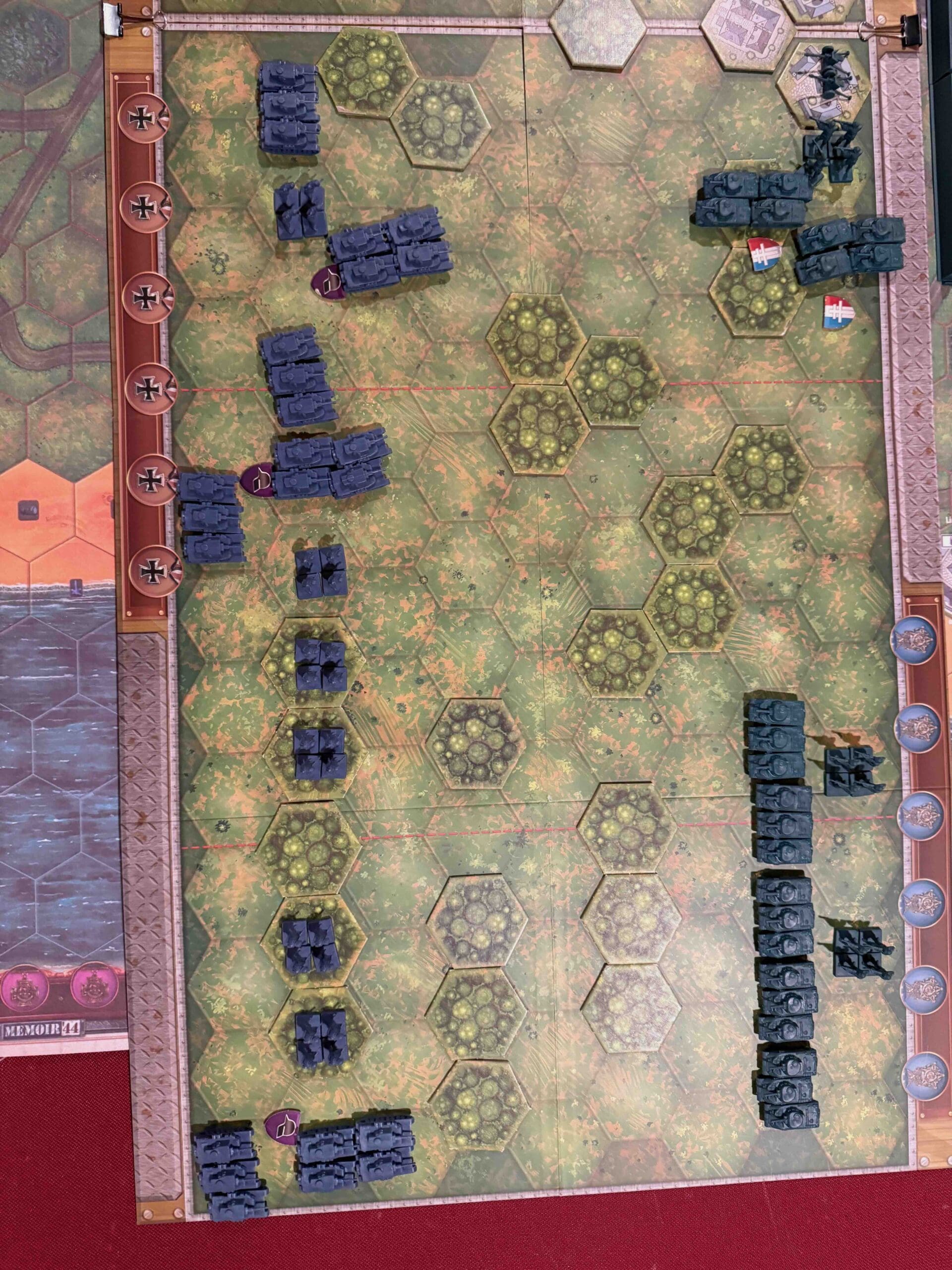
The Battle of Dubno–Brody (June 23–30, 1941) was one of the largest tank battles of World War II, fought during the opening phase of Operation Barbarossa between Germany’s Army Group South and the Soviet Southwestern Front.

Results:

  • German Panzer forces decisively defeated the numerically superior Soviet armored units, destroying or capturing thousands of tanks.

  • Soviet forces suffered catastrophic losses and were forced into retreat.

Strategy:

  • The Germans used fast, coordinated Panzer thrusts and encirclement tactics to neutralize Soviet armor.

  • Soviet forces, hampered by poor coordination, mechanical breakdowns, and weak communications, failed to execute an effective counteroffensive.

General Howitzer summarizes its impact:
That win at Dubno–Brody blew the road wide open for the Germans into Ukraine and straight toward Kiev. It showed the Soviets their armor doctrine was a mess, and they paid for it in steel and blood. But they’re stubborn—those losses lit a fire under them, and the lessons they learned there would come back to bite the Germans hard later in the war.

24 VP’s (!)
[ This is a ‘break-lord’ scenario ]

card

Card Balance:

Allies –

  • 4 cards for each half of the board

Axis –

  • 6 cards for each half of the board

Complexity:

5

Conditions:

Countryside

countryside

Context:

Historical

Location:

Russia

Year:

1941

Theater:

Eastern Front

Campaign:

Codename:

Operation Barbarossa

Summary:

Objectives:

24 VP’s, plus many other conditions. Read the PDF special rules.

Terrain:

Countryside with rivers and roads 

Troops:  (check the PDF for specific the specific troop deployments)

medal allies

Allied Strategy:

1.  

medal axis

Axis Strategy

1. 

0
BR - Dubno-Brody

Author:

Willem Boersma

Complete Scenario Link:

https://generalhowitzer.com/bsk-pdf-manager/battle-of-dubno-brody/

Valkenburg Airfield

Valkenburg Airfield

The Battle for Valkenburg Airfield (May 10–14, 1940) occurred during the German invasion of the Netherlands at the start of World War II. The airfield, located near Valkenburg in South Holland, was a key target for German forces as part of their broader plan to quickly secure control over the Netherlands.

German paratroopers and airborne troops launched a surprise attack, landing at and around the airfield. However, the airfield was incomplete and unsuitable for heavy aircraft, causing damage to many German planes upon landing. Despite this, the German troops initially managed to capture the airfield and establish a foothold.

Dutch forces launched determined counterattacks to retake the airfield, engaging in fierce fighting. The incomplete state of the airfield and the strong Dutch resistance, including effective use of artillery, hindered the Germans’ ability to reinforce their position. After several days of intense combat, Dutch forces were unable to fully regain control, but the German position at Valkenburg became irrelevant as the broader campaign concluded with the Dutch surrender on May 15, 1940.

The battle demonstrated both the challenges of airborne operations and the resilience of the Dutch defenders during the German blitzkrieg.

6 VP’s

card

Card Balance:

Allies – 5

Axis – 5

Complexity:

3

Conditions:

Countryside

Context:

Historical

Location:

Netherlands

Year:

1940

Theater:

Western Front

Campaign:

Summary:

Objectives:

6 VP’s

Terrain:

Troops:

Allies – 

Axis – 


medal allies

Allied Strategy:

medal axis

Axis Strategy:

0
BR - Valkenburg Airfield

Author:

jdrommel 

Link: View Here

Payback! – Operation Bagration, Phase 1

Payback! - Operation Bagration, Phase 1

Scenario_Toulon_start_Allies

Exactly 4 years after the Nazi invasion of the Soviet Union, the Russians were now ready to pay back the Germans in kind! The Allies had finally landed in France and the German forces were stretched thin. Moreover, an elaborate campaign of deception had the Germans convinced the Russian Summer Offensive would be launched further to the South in Ukraine. Therefore, Army Group Center had been stripped of much of its armour and artillery. The main objective of the offensive was to liberate Belorussia and its capital Minsk. The success was to prove so enormous, however, that by the end of Operation Bagration the Soviets found themselves at the gates of Warsaw and the shores of the Baltic. German Army Group Center, which three years earlier, had come so close to capturing Moscow, had ceased to exist. Will you be able to duplicate this success as the Russian player or will you be able to slow them down and thereby save a substantial number of German troops, playing the Germans? The battle lines are drawn, you are in command and the rest is history!

36 VP’s (!)

card

Card Balance:

Allies –

  • Allied player [ Soviet Union ]
  • 6 Command cards for each Breakthrough board
  • You move first.

Axis –

  • Axis player [ Germany ]
  • Start with 3 Command cards for each Breakthrough board
  • Draw 2 cards each turn until you have 5 for each Breakthrough board

Complexity:

5

Conditions:

Countryside

countryside

Context:

Historical

Location:

Year:

1944

Theater:

Eastern Front

Campaign:

Codename:

Operation Bagration

Summary:

Objectives:

36 VP’s, plus many other conditions. Read the PDF special rules.

Terrain:

Countryside with rivers and roads 

Troops:  (check the PDF for specific the specific troop deployments) 

medal allies

Allied Strategy:

1.  

medal axis

Axis Strategy

1. 

0
BR - Payback

Author:

Willem Boersma

Complete Scenario Link:

https://generalhowitzer.com/62ne

Battle Of Tannenburg Line (BT,EF,TP)

Battle Of Tannenburg Line (BT,EF,TP)

map

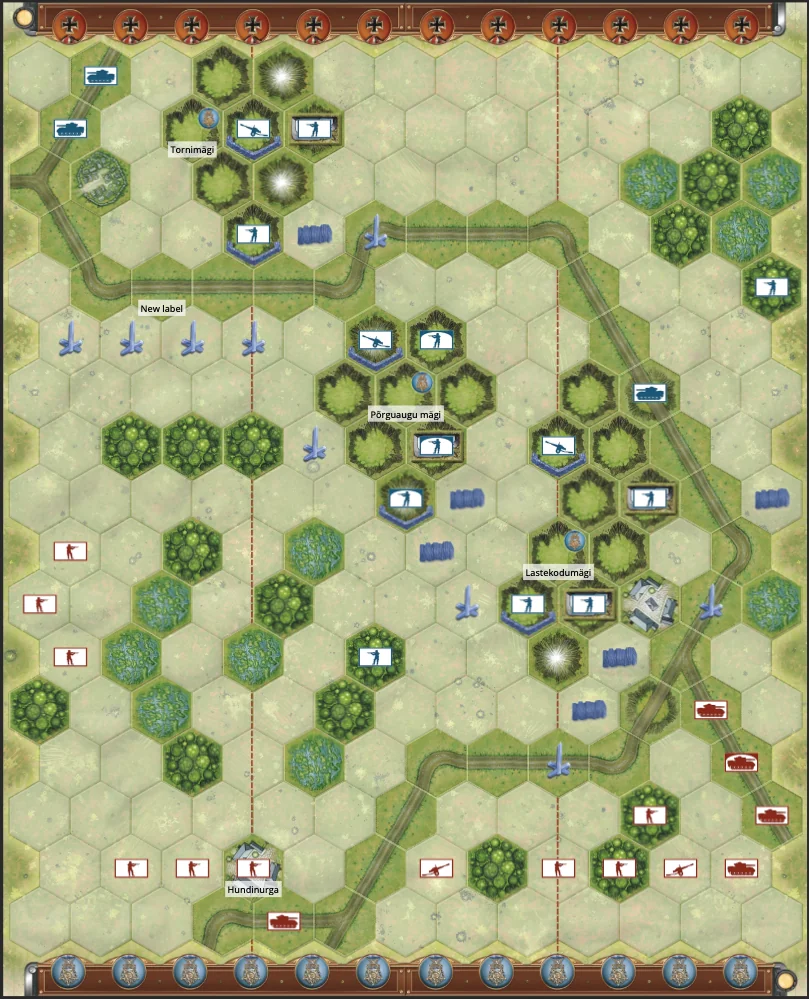
By the summer of 1944, the Soviet Red Army was on the offensive, pushing westward toward the Baltic Sea in a bid to crush the German Army Group North. One of the most critical defensive positions for the Germans lay in northeastern Estonia, on the Tannenberg Line. This line was anchored by the Sinimäed Hills — a series of three steep elevations known as Lastekodumägi, (Children’s Home Hill), Põrguaugu (Hell’s Hole), and Tornimägi (Tower Hill). These hills provided a natural defensive barrier, and the Germans had heavily fortified them with bunkers, trenches, and artillery positions.


Facing them was the Soviet Leningrad Front, under the command of Marshal Leonid Govorov, tasked with breaking through the Tannenberg Line and opening the path to the Baltic Sea. Soviet forces included powerful infantry, armor, and artillery units, determined to seize the high ground. However, the rugged terrain and Axis fortifications posed a formidable challenge. Swamps, forests, and anti-tank obstacles complicated the Soviet advance, making coordinated assaults difficult. The German defenders, led by General Johannes Frießner, included regular Wehrmacht units and elite Estonian Waffen-SS forces, fighting tenaciously to hold their positions on the Sinimäed Hills. These defensive positions offered a clear advantage, giving the Axis the ability to rain down fire on Soviet units struggling to traverse the open ground and difficult terrain below.


The Soviet assault began on July 25, 1944, with fierce fighting erupting on the hills. Over the course of the battle, Soviet forces launched wave after wave of attacks, while the Axis defenders, outnumbered but well-entrenched, fiercely resisted.

The stage is set, the battle lines are drawn, and you are in command. The rest is history.

12 VP’s

Card Balance:

Allies – 5

Axis – 6

Complexity:

4

Conditions:

Countryside

Context:

Historical

Location:

Estonia

Year:

1944

Theater:

Eastern Front

Summary:

Objectives:

12 VP’s, including some territorial objectives:

Lastekodumägi, Põrguaugu mägi and Tornimägi are Permanent Medal Objectives for the Allied forces.

Terrain:

Includes a series of three steep elevations known as Lastekodumägi, (Children’s Home Hill), Põrguaugu (Hell’s Hole), and Tornimägi (Tower Hill). These hills provided a natural defensive barrier, and the Germans had heavily fortified them with bunkers, trenches, and artillery positions.

Troops:

Allies – 9 Infantry, 5 Armor, 2 Artillery

Axis – 10 Infantry, 3 Armor, 3 Artillery

Special Rules:

Russian command rules are in effect


Allied Strategy:

Axis Strategy

1
BR - Tannenburg Line

Author:

raikster

Prokhorovka (Kursk)

La Prokhorovka ( Kursk ) [Overlord]

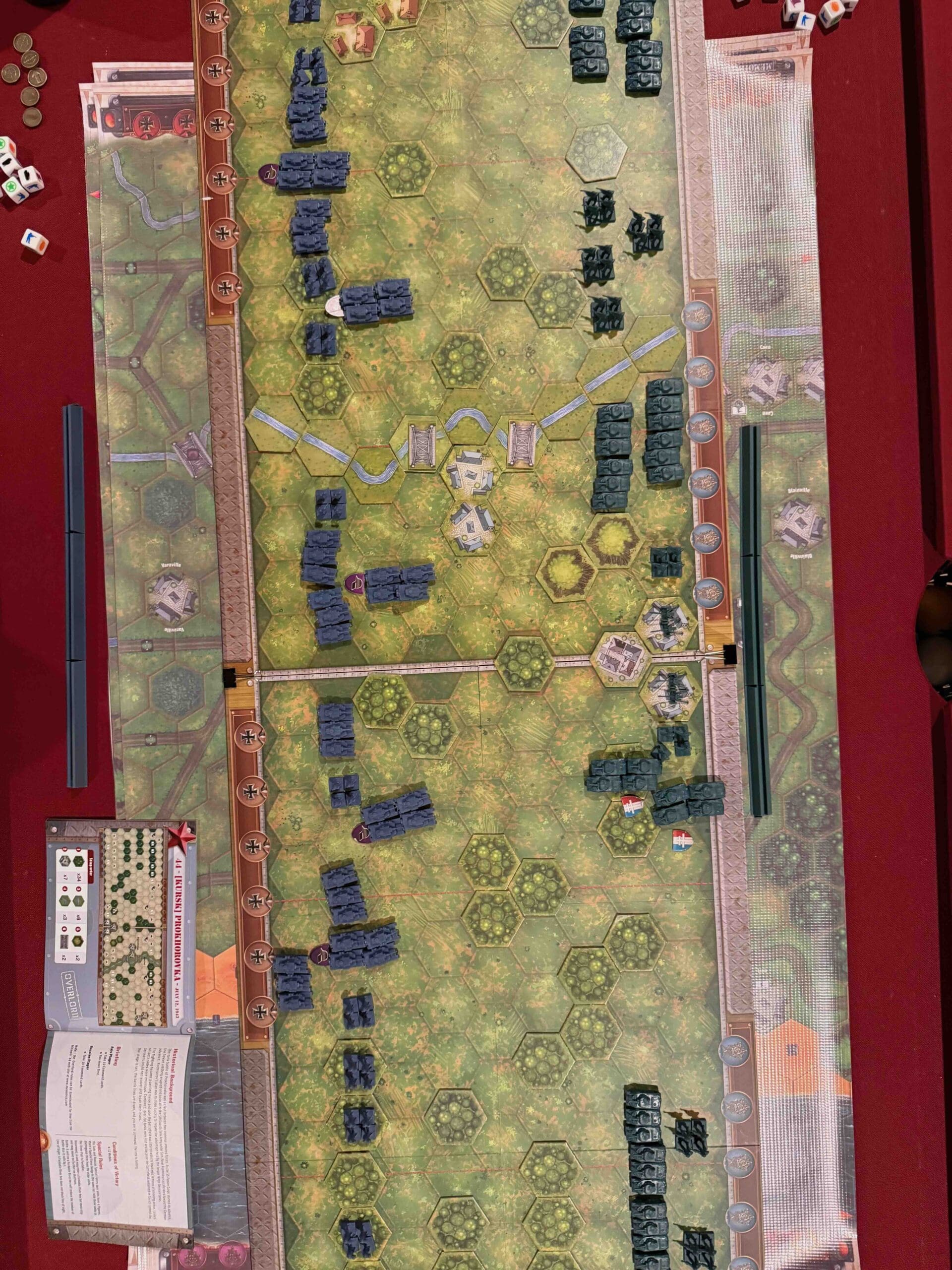
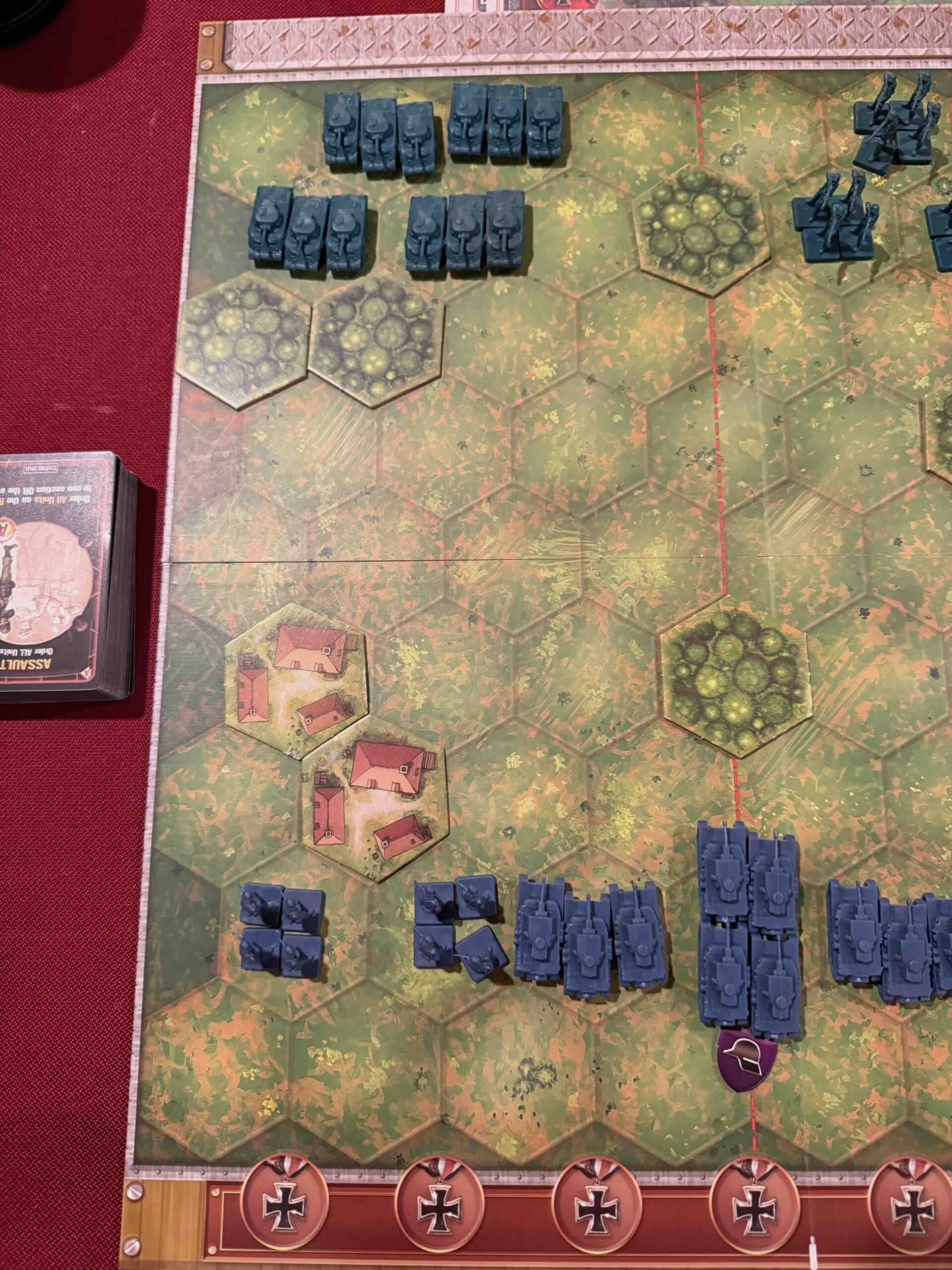
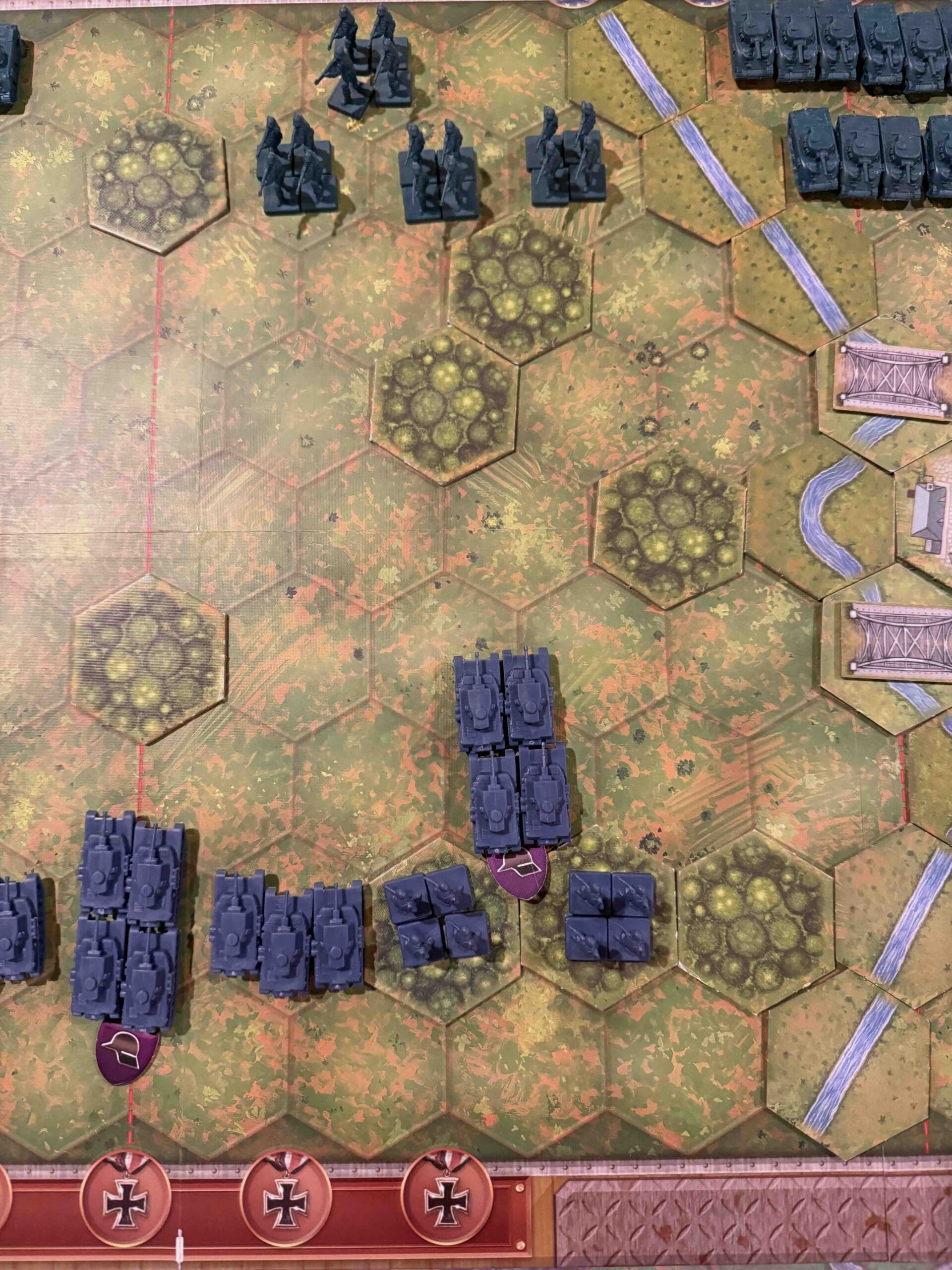
The Battle of Prokhorovka on July 12, 1943, was one of the largest tank clashes of World War II, fought between Soviet forces and Germany’s II SS Panzer Corps during the Battle of Kursk. The Soviets launched a massive counterattack to halt the German advance, resulting in brutal close-quarters fighting.

General Howitzer summarizes the results:

Prokhorovka was the kind of fight that strips war down to raw courage and cold steel. On July 12, 1943, the Germans drove forward with their elite SS Panzer divisions, thinking they’d punch a clean hole through the Soviet lines and finish the Kursk offensive on their terms. Instead, they ran headfirst into a Soviet counterattack that came on like a tidal wave of T-34s.

This wasn’t long-range dueling — this was knife-fight range, tank against tank, guns blazing at fifty yards, machines ramming each other like charging bulls. The battlefield turned into a cauldron of smoke, fire, and shattered armor. And in that chaos, the Russians did what mattered most: they stopped the Germans cold.

The Panzers never got their breakthrough. Kursk slipped from Hitler’s grasp. And Prokhorovka proved once again that in war, the side that holds its ground with grit and fury — not just fancy equipment — is the side that turns the tide.

12 VP’s

Card Balance:

Allies – 10

Axis – 10

Complexity:

4

Conditions:

Countryside

Context:

Historical

Location:

Russia

Year:

1943

Theater:

Eastern

Campaign:

Battle of Kursk

Codename:

Operation Citadel

Summary:

Objectives:

12 VP’s

Battlefield:

A countryside with the River Pesl cutting vertically through the left section. 

Troops:

Allies – 8 Infantry, 15 Armor, 2 Artillery

Axis – 11 Infantry, 14 Armor

Special Rules:

1.  The River Psel is fordable.


medal allies

Allied Strategy:

1.  You have two Artillery placed right in the center of the battlefield hidden in the town hexes.  They will be much more useful to you, if you can move them forward a hex or two.

2.  Move your Armor unit which is in the forest hex just to the left of the city of Prokhorovka up into the forest hex which is exactly in the center of the battlefield. It will give you a magnificent view of the battlefield in all directions.  

3.  Your Armor units stuck in the right corner, need to come forward to be prepared for attack in that section. 

STRATEGIC OVERVIEW

1.  This is a 12 medal game so there is a lot of strategic placement which will pay dividends for you to win later on in the game.  

2.  So grab the forest and town hexes as quickly as possible, so that you can attack the enemy forces from a safe location.  There are so many tanks in this scenario that if you leave any of your forces out in the open, they will get wiped out.

3.  There are so many tank figures in this game that as many as 50 armor figures could get wiped out before the game is over.  

medal axis

Axis Strategy:

1.  The Axis have an attack vector on the right section. They can move their Infantry two hexes forward and capture the woods in the very center of the battlefield.  Also, your Armor in the right need to be move forward quickly and placed into the forest hexes to be prepared to attack the enemy.

2.  Get all of your Armor which is sitting out in the open in the center section into defensive positions, or they will be wiped out.

Battle Reports

1
BR - Prokhorovka

Author:

Days of Wonder

Link: