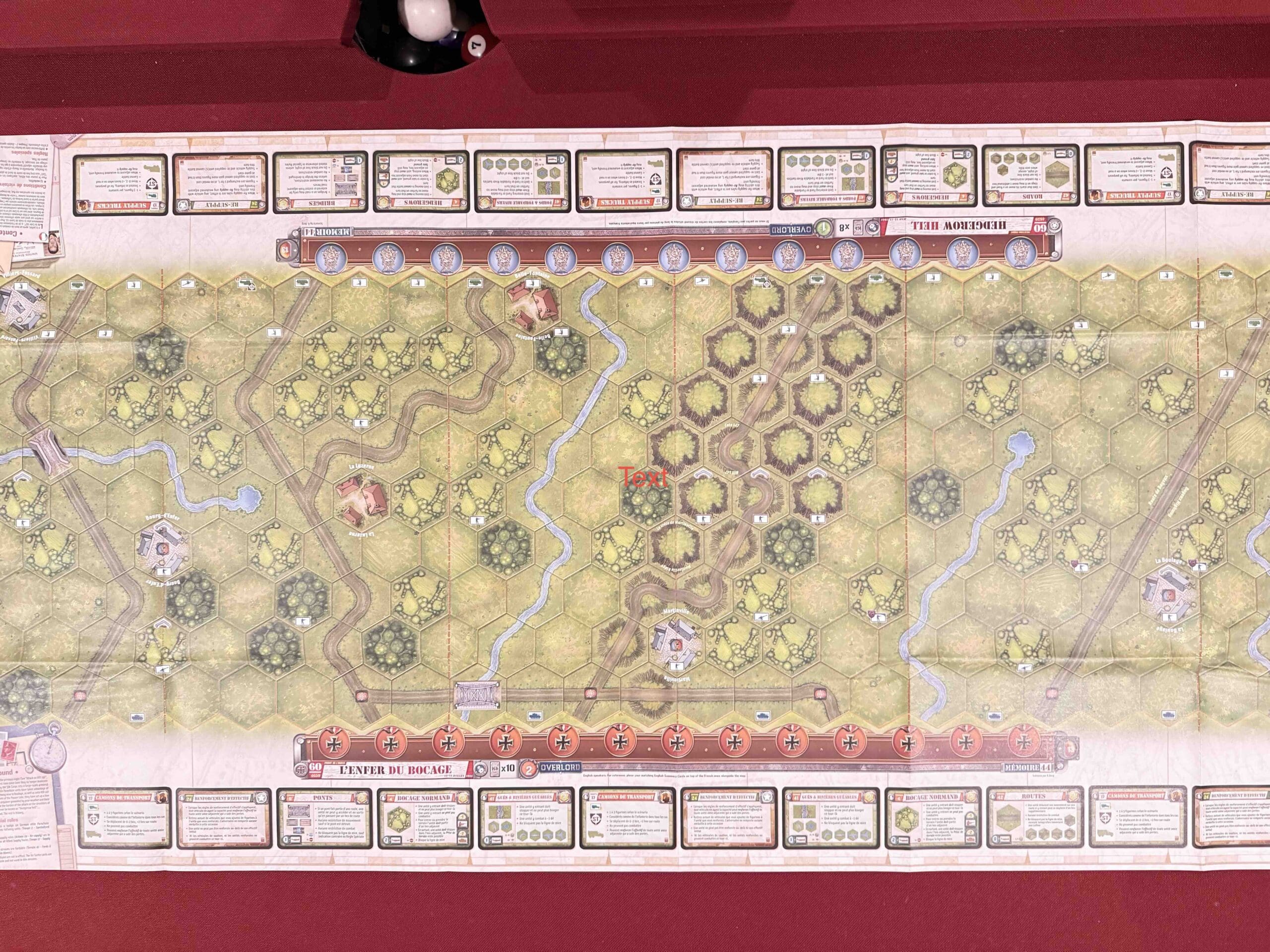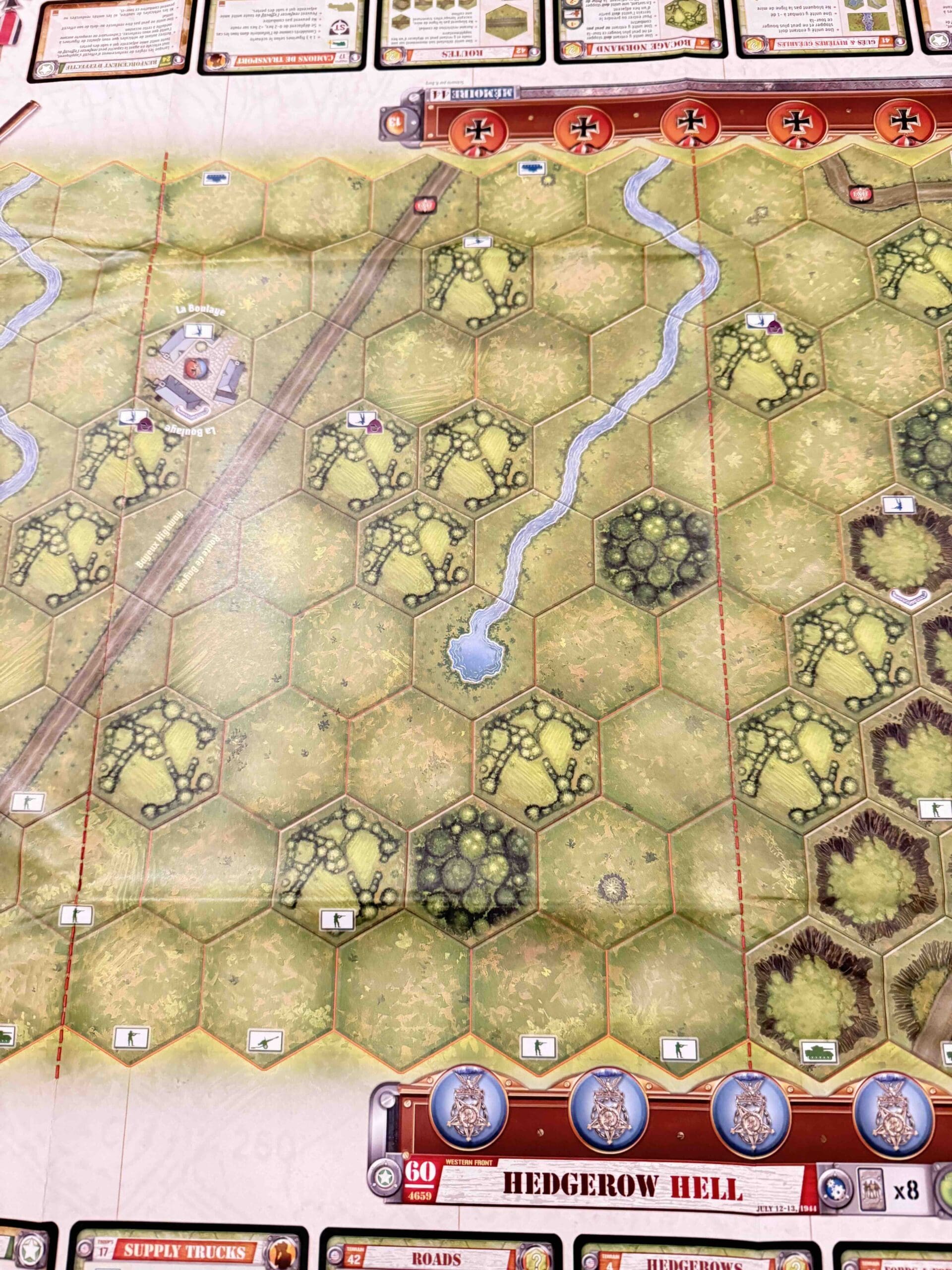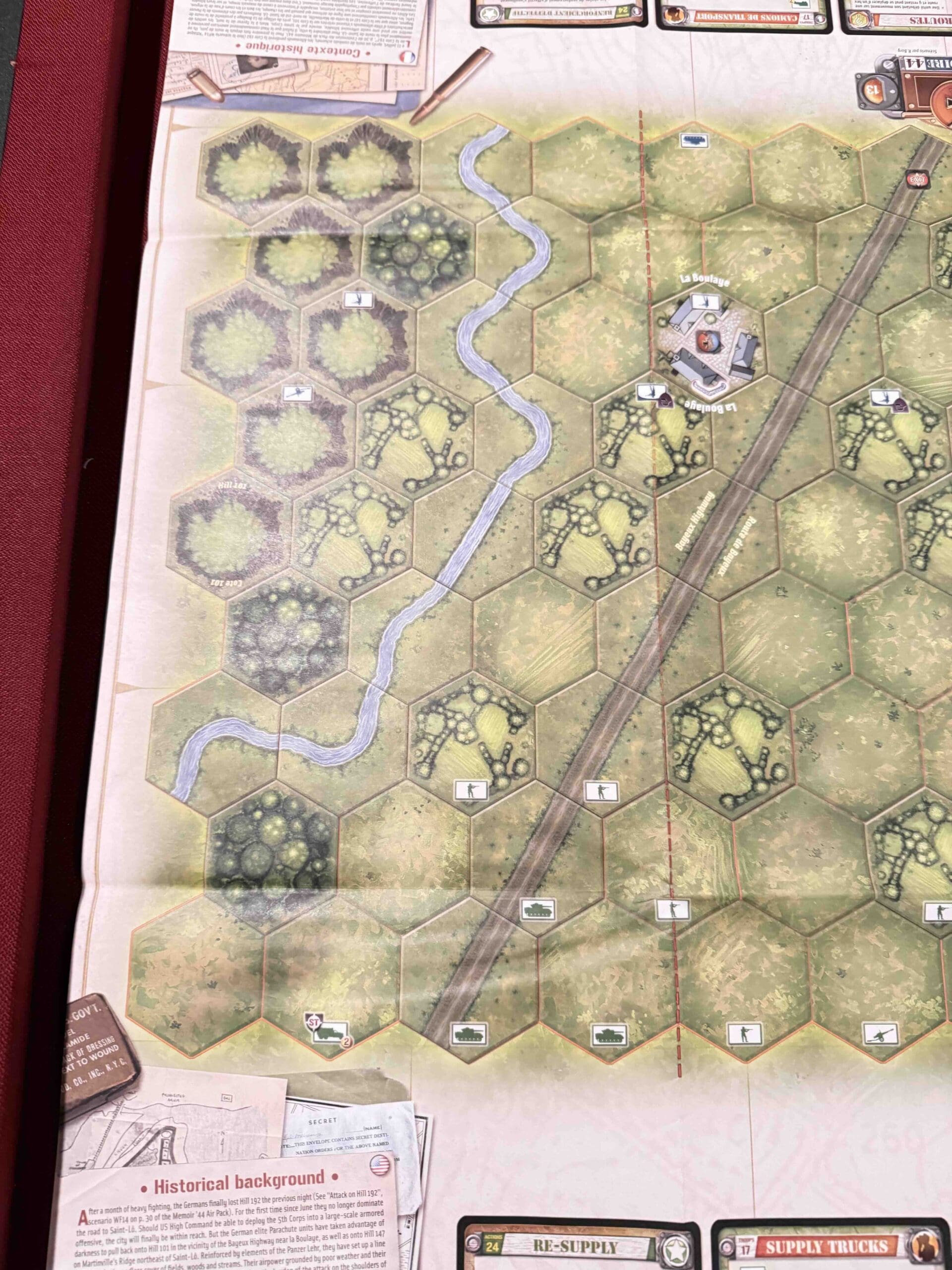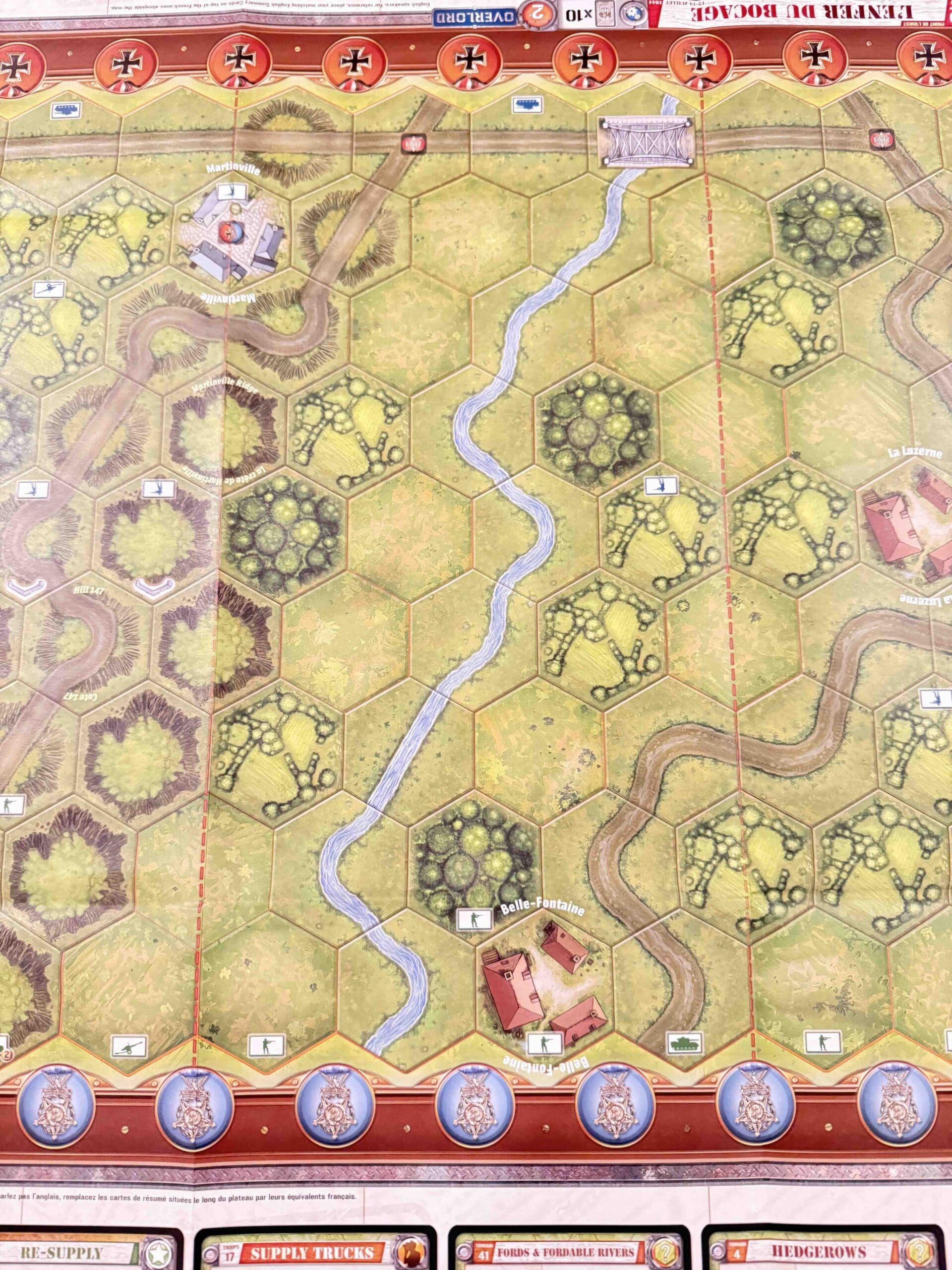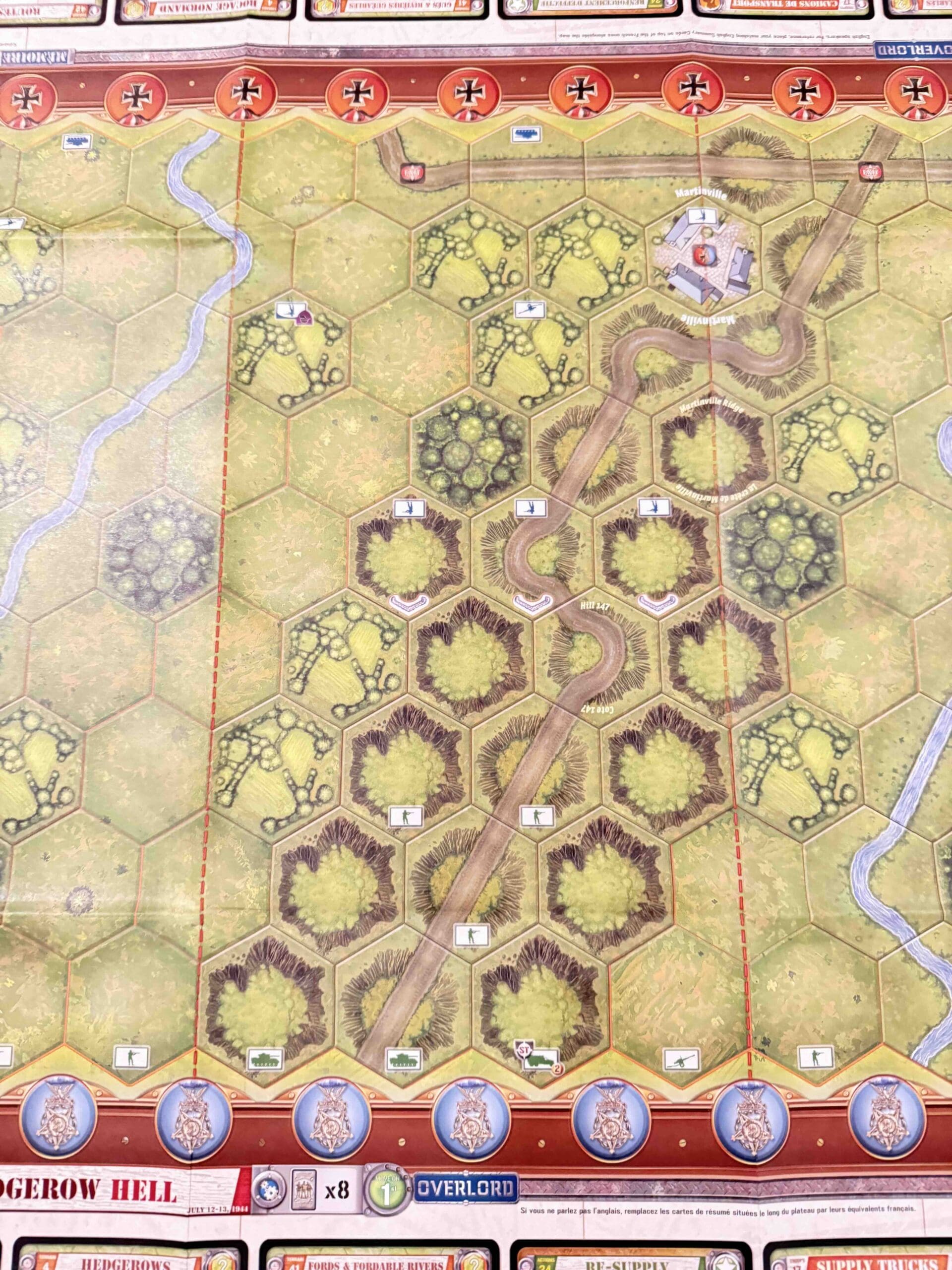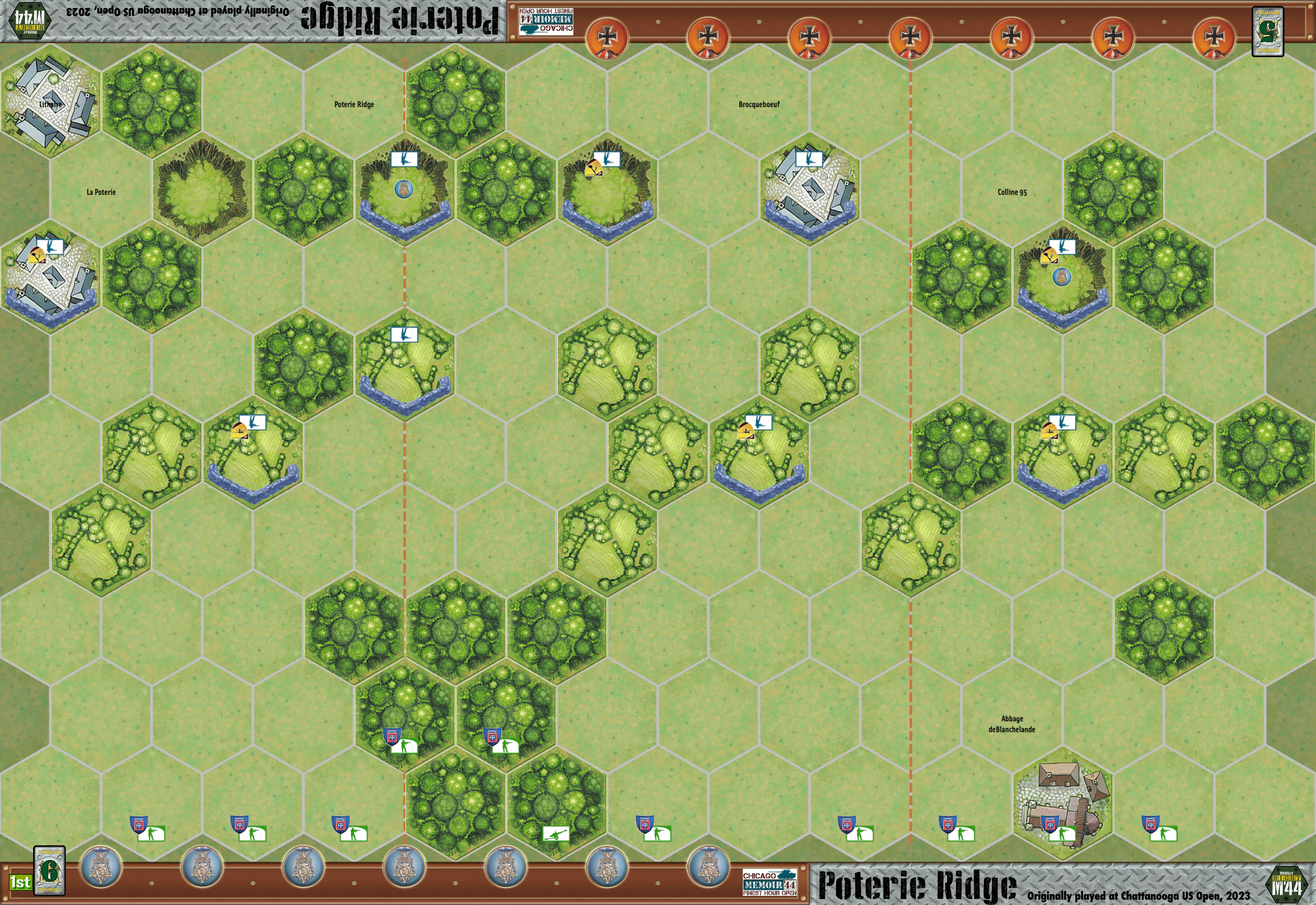
Escouves Forest

Escouves Forest

Ecouves Forest_small

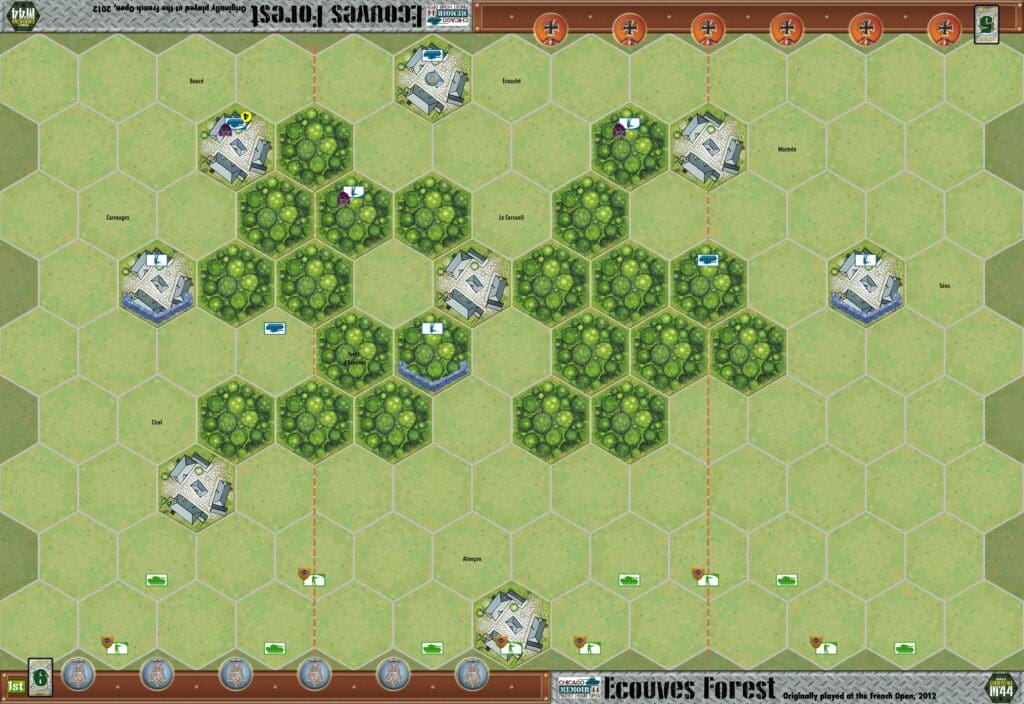
August 1944—Écouves Forest. Thick woods, rough country, and Germans with their backs to the wall. Perfect place for a fight.

After we busted out of Normandy, the Krauts tried to make a stand in that damned forest north of Alençon, thinking trees and shadows would stop the Allied hammer. Well, General Leclerc’s French 2nd Armored Division rolled in and showed ’em that no terrain—no matter how dense—can save you when the Allies are coming.

It wasn’t clean. It wasn’t easy. The fighting was up close, personal, and vicious—tanks blasting through trees, infantry ambushed from behind every stump. But the French didn’t blink. They cut through that forest like a buzz saw through timber, rooting out the enemy one foxhole at a time.

And when the smoke cleared, the Écouves Forest was ours—and the jaws of the Falaise Pocket slammed tighter on those retreating bastards.

That fight mattered. It sped up the collapse of the German line in France and helped crack the door wide open on the road to Paris.

Moral of the story? You corner a desperate enemy in the woods, you don’t tiptoe in—you charge in, guns blazing, and don’t stop till the last one runs or drops.

~~ General Howitzer

6 VP’s

Card Balance:

Allies – 6

Axis – 5

Complexity:

2

Conditions:

Countryside

Context:

Historical

Location:

France

Year:

1944

Theater:

Western

Campaign:

Codename:

Summary:

Objectives:

6 VP’s, plus the City of Ecouche for the Allies

Battlefield:

The center of the battlefield is dominated by the large Ecouves forest which is hiding some Germans.

Troops:

Allies – 6 Infantry, 6 Armor

Axis – 5 Infantry, 4 Armor


Allied Strategy:

1. 

Axis Strategy

1. 

Battle Reports

0
BR - Ecouves Forest

Author:

French Open, 2022; Also played at The Finest Hour Open, Chicago 2025.

Link:

View

Closing the Falaise Gap

Closing the Falaise Gap

Closing the Falaise Gap_small

August 1944—Falaise. The trap was nearly shut, and the Germans knew it. Hell, they could smell it.

By the 18th, the Canadians had taken Trun and St. Lambert, putting the lid on the Falaise Pocket. But it wasn’t locked down yet—hell no. The line was thin, the crossroads fragile, and both Allied and Axis forces were stampeding toward Chambois. It wasn’t just a battle—it was a goddamn race: the Germans racing to escape, and us racing to slam the door shut on their sorry rear ends.

The Poles and Americans came in hard, shoulder-to-shoulder, pushing east while the Germans were pushing west—like two trains headed for a crash in a one-track tunnel. The enemy made one last hellbound breakout near the Polish lines, and yeah, some of them got out—but not for long.

Because on the 19th, the line was reinforced. And in St. Lambert, one man—Major David Currie, a Canadian, led from the front like a true warrior. Under fire from both sides—his own artillery damn near clipping his boots—he stood his ground, gave no quarter, and turned that village into a graveyard for the Wehrmacht. He earned the Victoria Cross, and every inch of it.

By the time we closed that pocket, the Normandy campaign was finished—two months of blood, steel, and grit had paid off. The Liberation of Paris was just days away. Looked like it was over for Hitler’s goons—but we weren’t fooled.

The war wasn’t done until the last Nazi was crawling out of a foxhole with his hands in the air. And that took till ’45.

The lines are drawn, the orders are yours, and the clock is ticking.

Now go finish the job.

~~ General Howitzer

7 VP’s

Card Balance:

Allies – 5

Axis – 5

Complexity:

4

Conditions:

Countryside

Context:

Historical

Location:

France

Year:

1944

Theater:

Western

Campaign:

The Invasion of Normandy

Codename:

Summary:

Objectives:

7 VP’s, including Exit Row Objectives for the Axis

Battlefield:

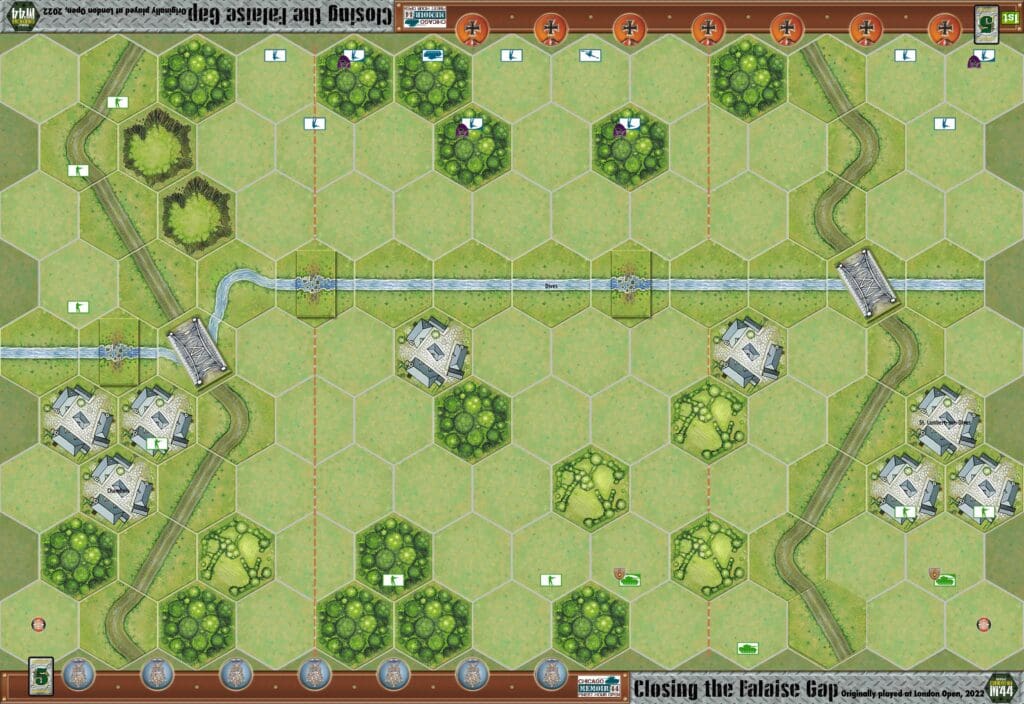
Countryside with an impassible (except for bridges and fords) river going across the battlefield.

Troops:

Allies – 8 Infantry, 3 Armor

Axis – 9 Infantry, 1 Armor, 1 Artillery


Allied Strategy:

1. 

Axis Strategy

1. 

Battle Reports

1
BR - Closing Falaise Gap

Author:

Originally developed for the London Open, 2022. Also played at The Finest Hour Open, Chicago, 2025.

Link:

View

Closing the Gap

Closing the Gap

Memoir 44 scenario Closing the Gap

The Battle of Closing the Gap near Falaise from August 19–22, 1944, marked the final phase of the Falaise Pocket, where British, Canadian, Polish, and American forces worked to encircle and destroy retreating German units in Normandy.

Fighting was intense as the Allies tightened the noose, with the Polish 1st Armored Division holding key high ground at Mont Ormel against desperate German breakout attempts. Despite some Germans escaping, the Allies captured or killed tens of thousands, crushing what remained of German Army Group B in the West.

Closing that pocket slammed the door on the German army in Normandy—choked ’em off, chewed ’em up, and cleared the road straight to Paris. From there, it was full speed ahead into the heart of France.

~~ General Howitzer

6 VP’s

card

Card Balance:

Allies – 5

Axis – 5

Complexity:

3

Conditions:

Countryside

countryside

Context:

Historical

Location:

France

Year:

1944

Theater:

Western

Campaign:

The Battle of Normandy

Codename:

Operation Tractable

Summary:

Objectives:

6 VP’s, plus Territorial Objective Medals for Allies, and Exit Objectives for Axis

Battlefield:

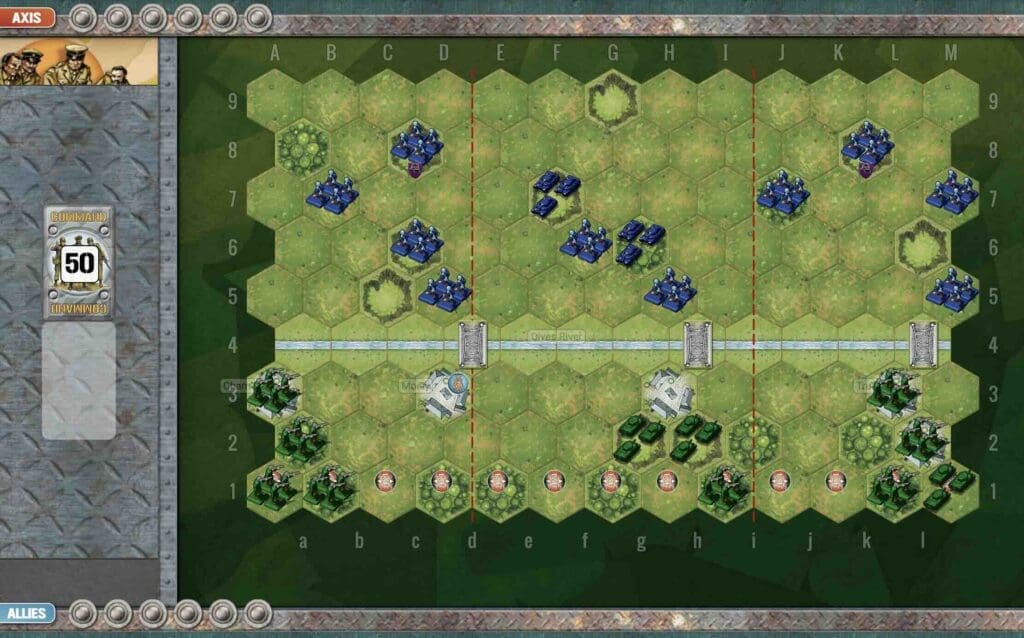
Countryside with a road and the Dives River cutting off the Axis forces from their objective.

Troops:

Allies – 8 Infantry, 3 Armor

Axis  – 10 Infantry, 2 Armor

 Special Rules:

Rescue attempt aspect: Each side may order up to 2 armor units into battle as Armor Breakthroughs. Axis armor units that are sent in to rescue cannot escape through any of the Exit hexes.

Overall Strategy

This game is interesting because each side is given the opportunity to bring in two Armor units into the battle, right into the heart of the enemy territory.  And so within the first couple of turns it is a crazy mixed-up battle with enemy forces attacking from multiple directions. You must learn to engage in a two-front war.

medal allies

Allied Strategy:

1.  The challenge for the Allies is to get your forces across the bridges. Otherwise, you will be blocked and congested in your attack efforts. Of course, you also have to deal with the enemy armor that will show up on your end of the battlefield.

2.  If any of the original Axis forces (not the ones which spawned on that side) make it across the river, you must prevent them from exiting. 

3.  You can hide out in the towns near the river for a while and attack the enemy forces in an attempt to degrade their fighting ability, but eventually you may have to cross over and attack if the enemy doesn’t come to you.

medal axis

Axis Strategy

1.  On your right flank, you are evenly matched with the Allied forces with four Infantry units each. Due to their congested starting postion, there is an opportunity to move in and claim control of the town of Moisy and prevent the Allies from getting objective medal without a bitter fight.  Then from there, it is a short 3 hex run to exit through the Exit hex and gain a medal.

2.  You have a lot of forces, but you will need to get them up to the river to attack the enemy. But keep some in reserve to deal with the enemy forces that will show up to rescue their troops.

Battle Reports

19
BR - Closing the Gap

Author:

Days of Wonder

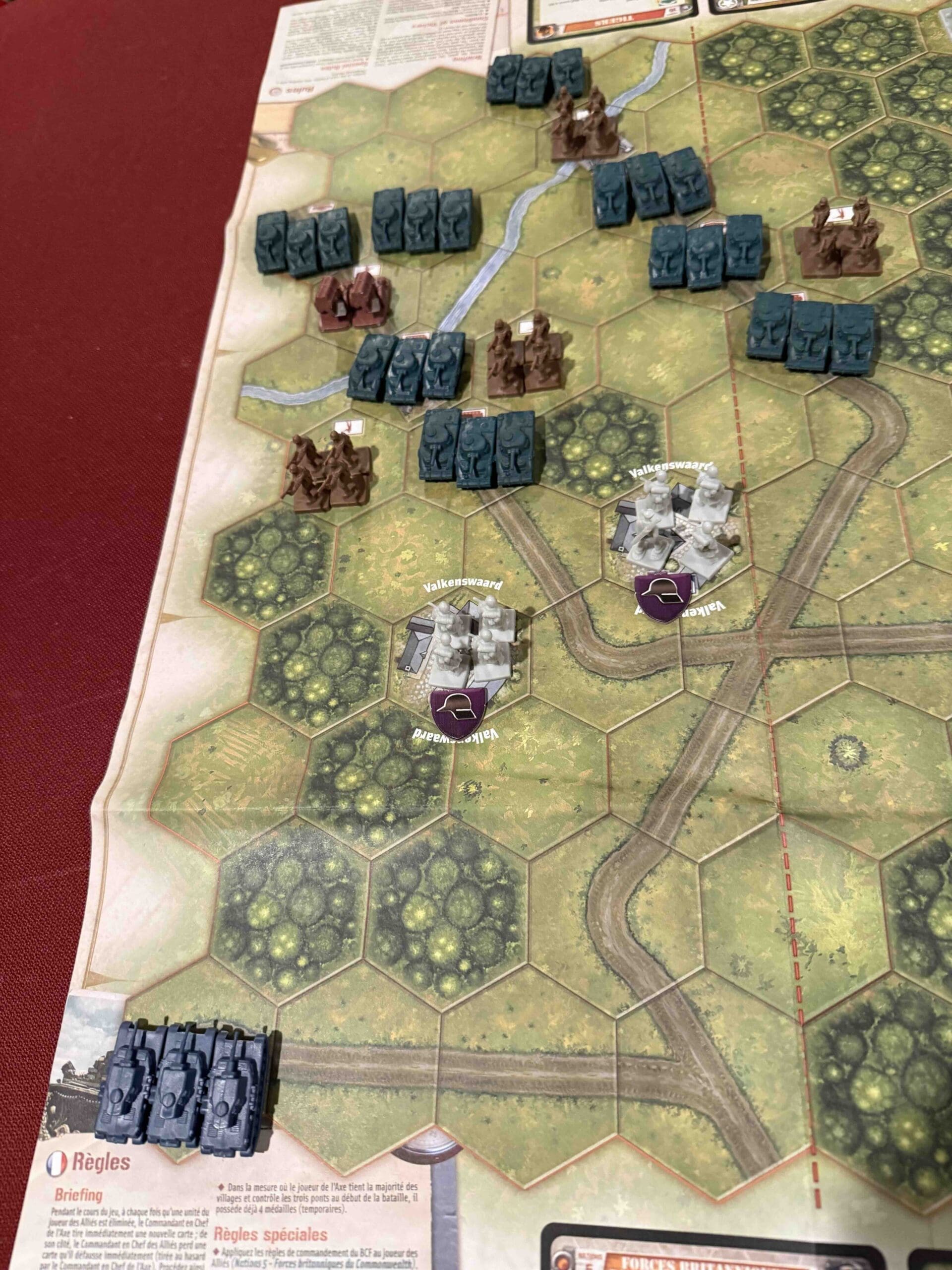
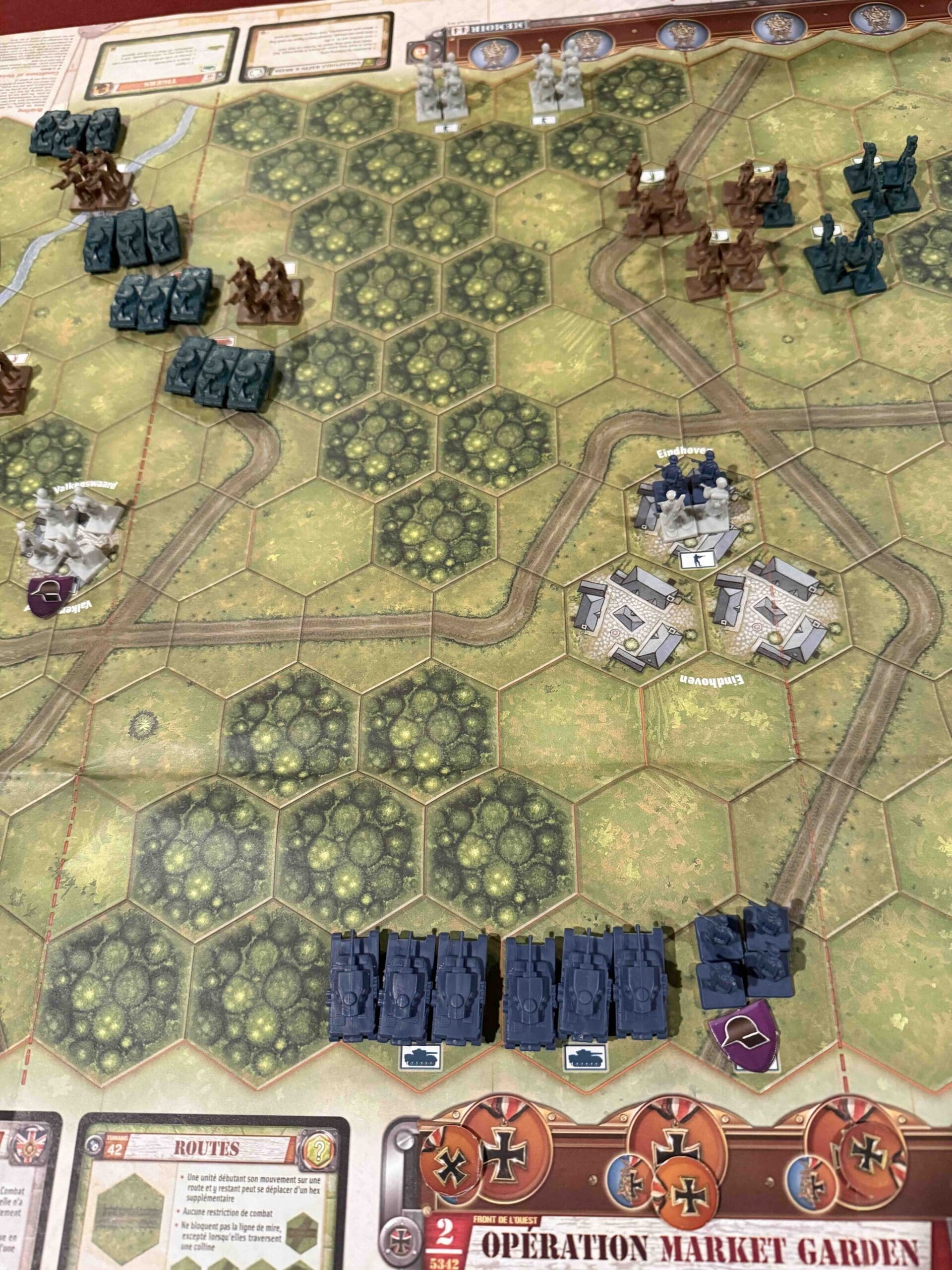
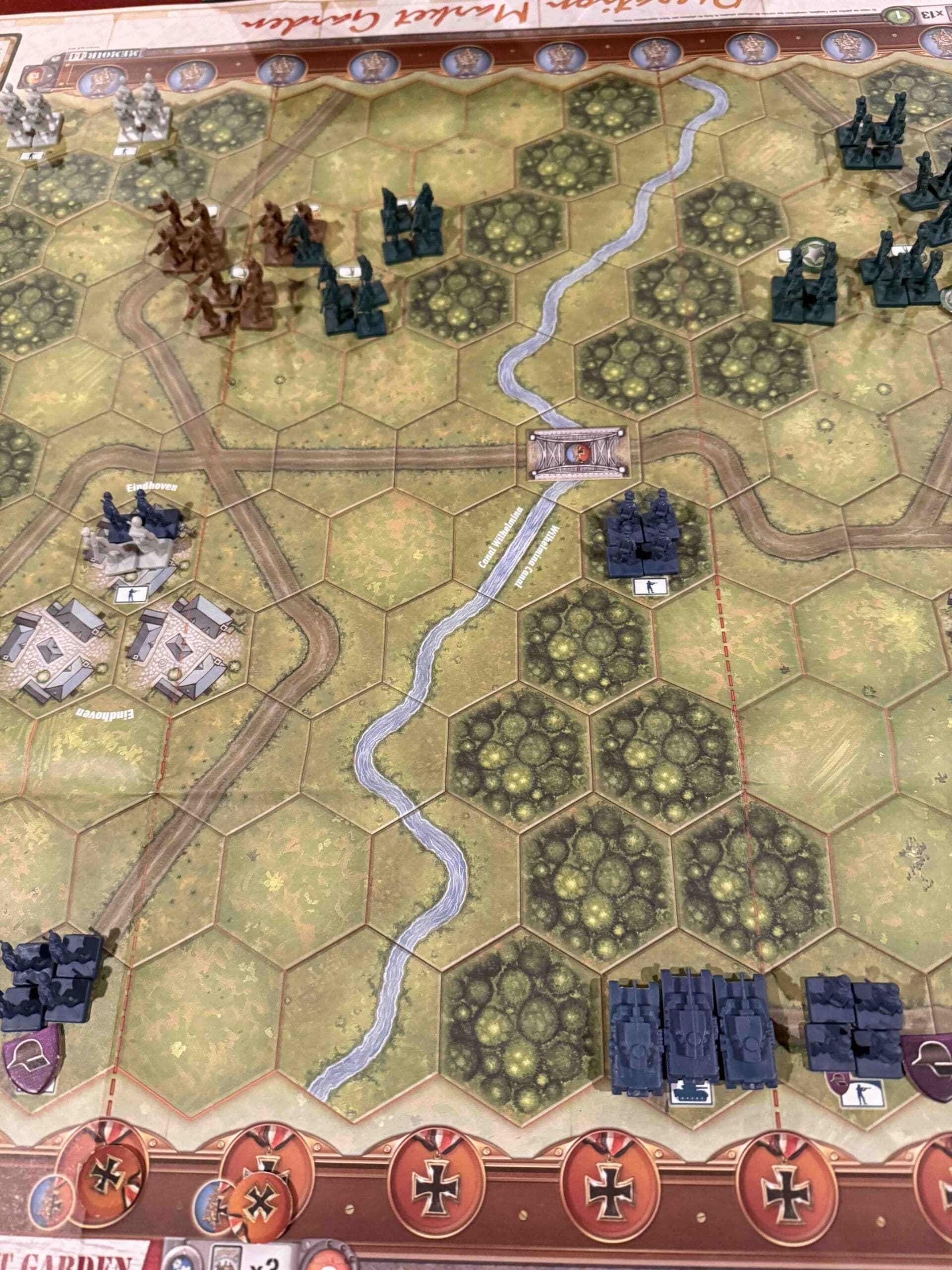
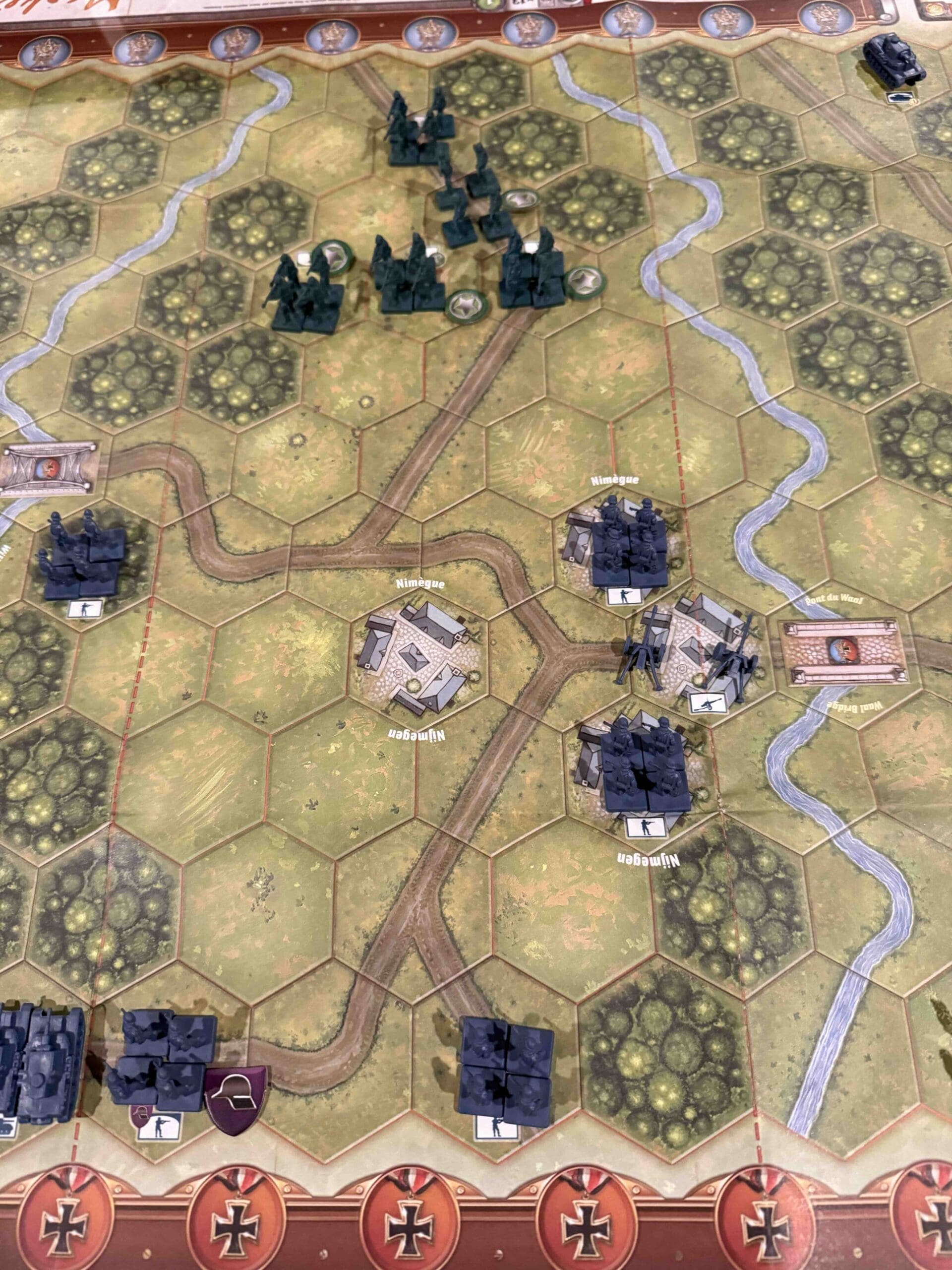
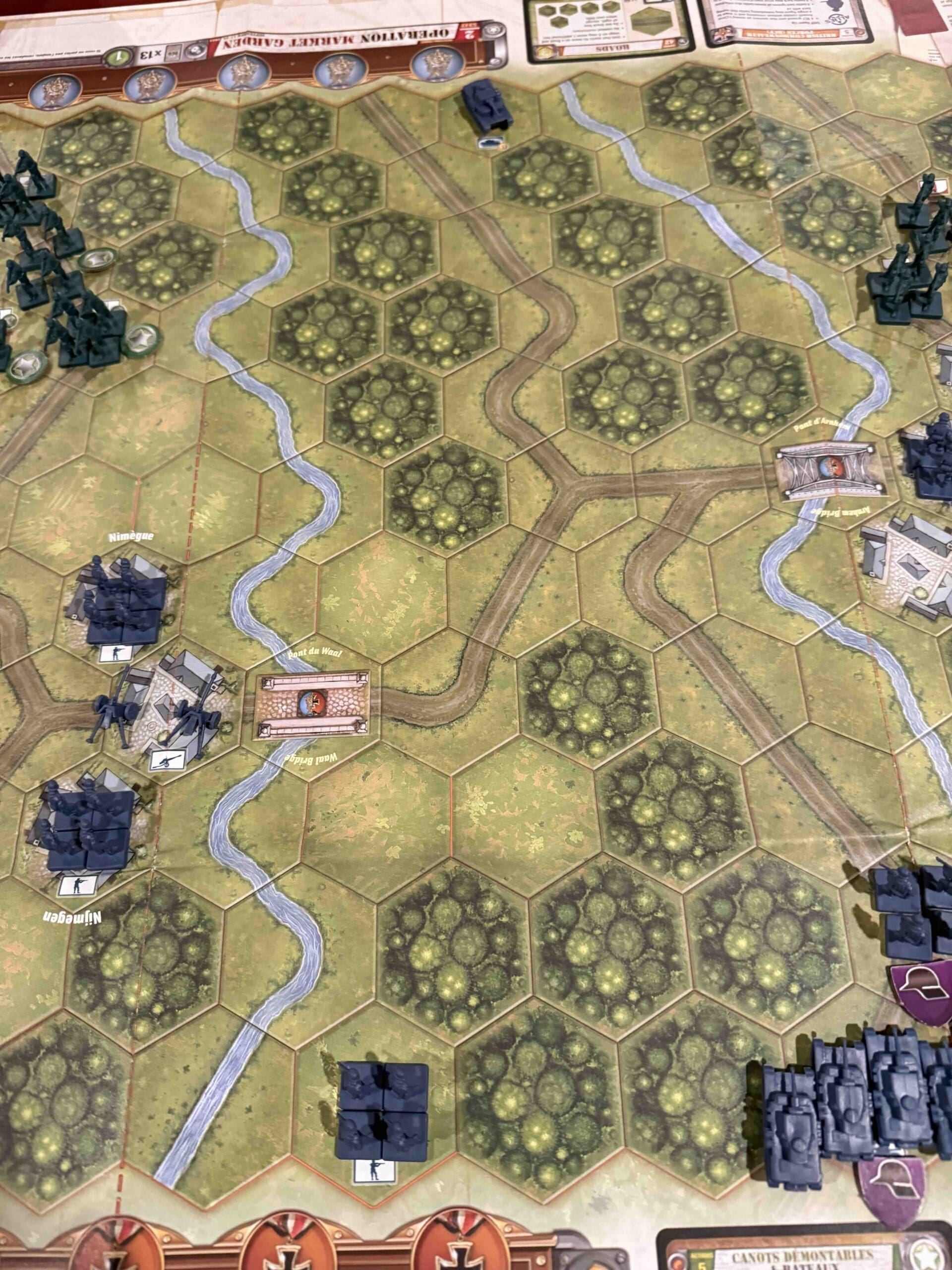
Operation Market Garden (Overlord)

Operation Market Garden (Overlord Map)

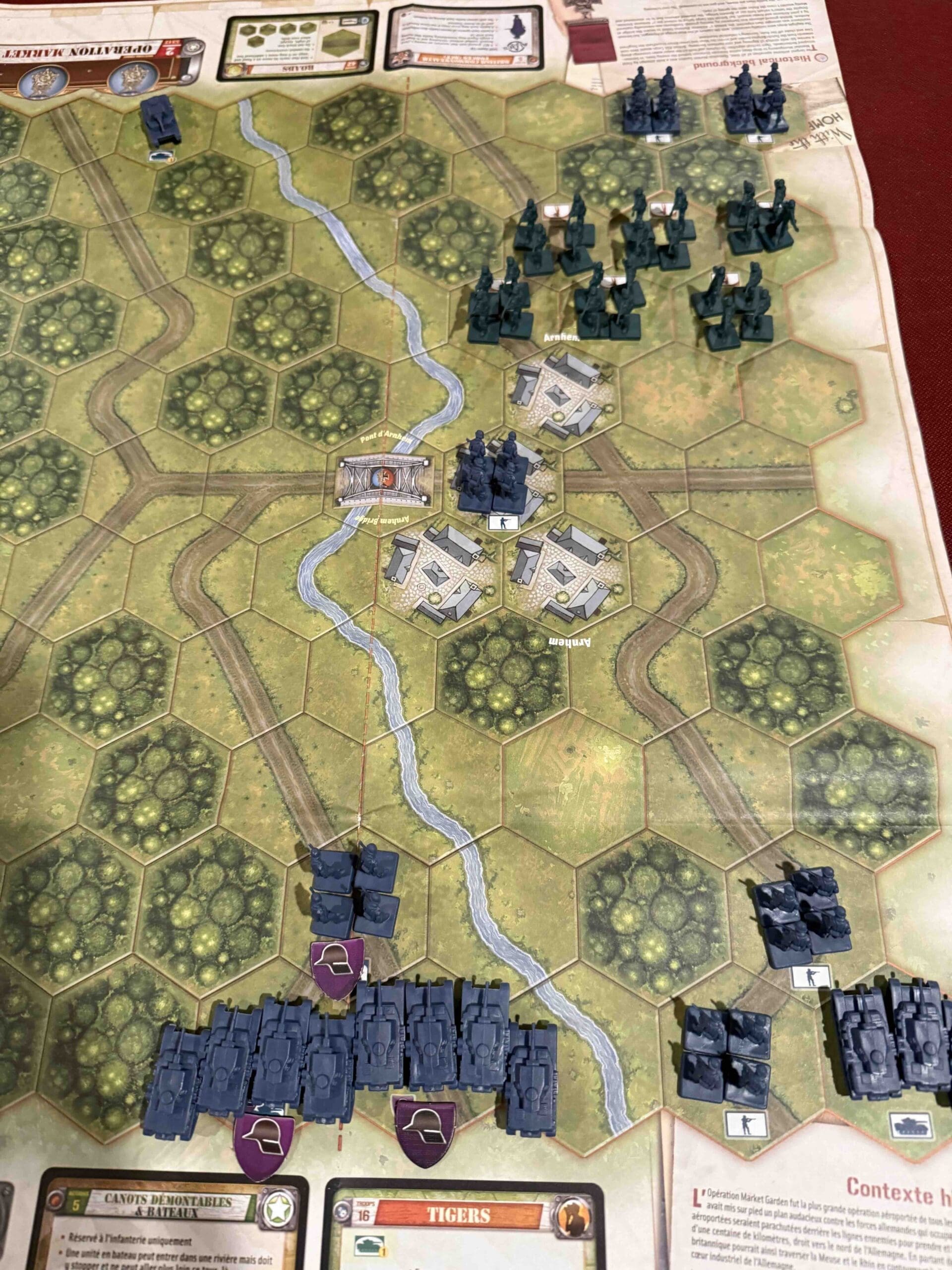
Operation Market Garden, fought in September 1944, was a major Allied offensive during World War II aimed at ending the war quickly by capturing key bridges in the Netherlands and entering Germany’s industrial heartland.

The operation combined a massive airborne assault (Market) by British, American and Polish paratroopers with a ground advance (Garden) by British XXX Corps. The goal was to seize bridges over several rivers, including the Rhine at Arnhem, to create a direct route into Germany.

Listen up, men—Operation Market Garden was bold, daring, and damned near brilliant on paper. Our boys dropped from the sky and stormed bridges across Holland like thunder on the move. They seized their early targets with guts and grit—but at Arnhem, the lion met the cage. The British 1st Airborne fought like hell for every inch, surrounded, outgunned, and cut off from relief.

In the end, the last bridge stayed in enemy hands. The link-up failed, and what was meant to end the war early turned into a costly lesson in overreach. We aimed for glory—and came up “a bridge too far”.

~~ General Howitzer

13 VP’s

Card Balance:

Allies – 13 (!)

Axis – 3 (!)

Complexity:

4

Conditions:

Countryside

countryside

Context:

Historical

Location:

Netherlands

Year:

1944

Theater:

Western

Campaign:

Codename:

Operation Market Garden

Summary:

Objectives:

13 VP’s with Temporary Majority Medal Objectives for whomever holds the majority of the 13 town hexes; plus Turn Start Temporary Uncontested Medal Objectives for the three key bridges.

Battlefield:

Countryside with many roads, towns, rivers, and forests

Troops:

Allies  – 20 Infantry, 8 Armor, 1 Artillery

Axis  – 17 Infanty, 7 Armor, 1 Artillery


  medal allies

Allied Strategy:

1.  The Allies have an overwhelming tank force on their right flank. They will need to attack vociferously and eliminate all enemy forces in that section, so that they can turn their armor to attack the central sections. 

2. You can get some early medals by attacking the enemy forces which were surprised and surrounded by your forces in the left and right sections. There are two infantry units on each side which you can quickly take out, and gain some early medals.

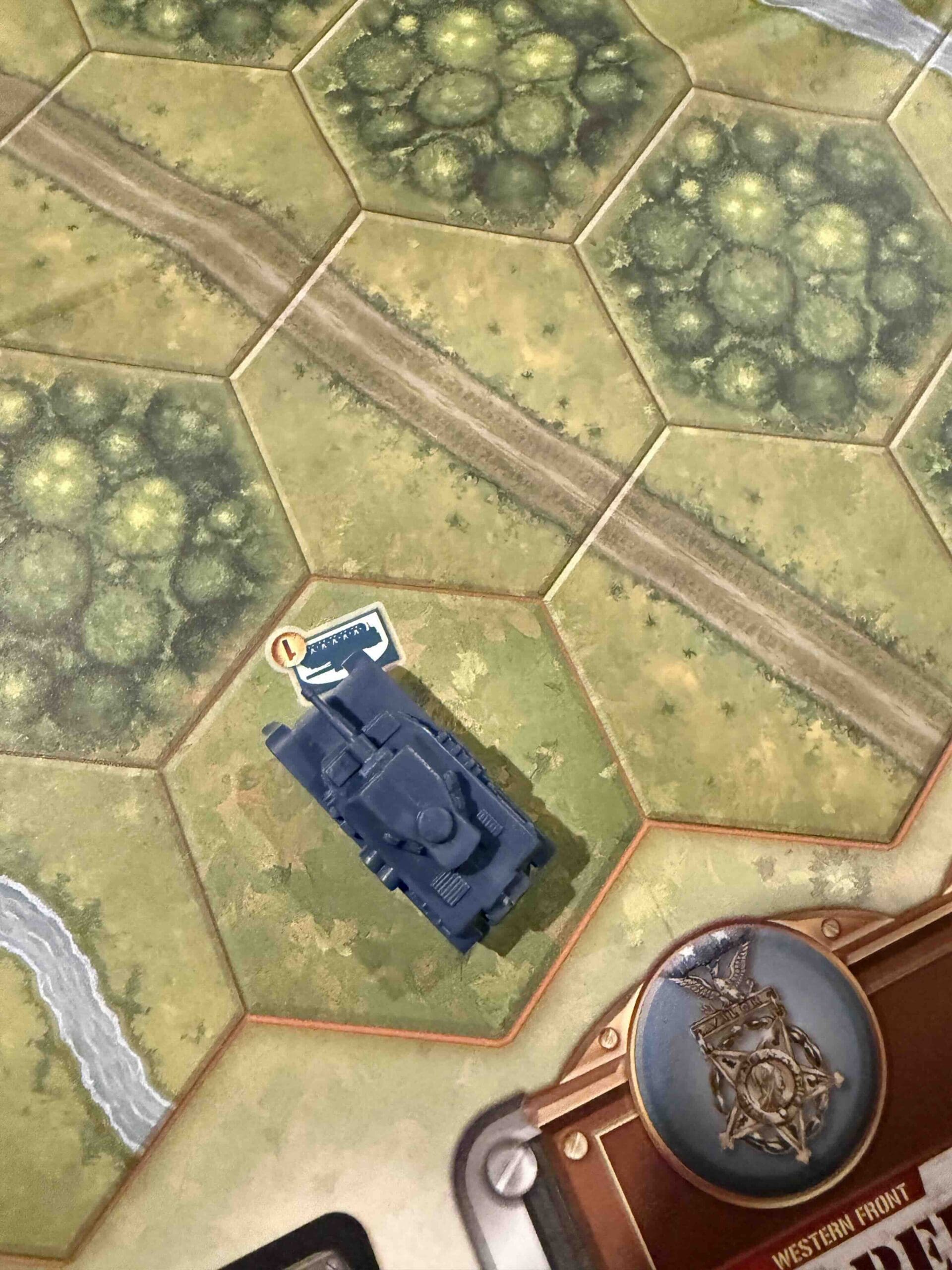
3.  Watch out for the Tiger Tank on your left flank. It can only be taken out with two successful rolls, first an armor or grenade roll, and then the second roll must be a grenade.

medal axis

Axis Strategy

1.  As Axis, because of the surprise nature of this attack, you only start with three Combat Cards vs. the Allies 13!.  But every time you take out an Allied unit, the Allied Commander loses a card (which you get to pull from his hand), and you are given a new card from the deck (not the one from his hand) and your total cards to use each turn increases.  So as the battle progresses the card ratio will begin to even out, until eventually the Axis will have more cards than the Allies.  Cards are attack-ability, so your attack-ability will increase, as the other’s declines.

2.  Your tanks, since you were not suspecting the airborne attack, are not in play at the start of the game. You will need to use some of your early turns to get them into attack positions.  And because the tanks can only move two hexes in this scenario (unless start and ending on a road, when they can move 4 hexes), it will take two to three turns to get them into place. So you need to start early.

3.  Control of the three bridge medals is based on being either on the bridge hex, or in the nearby vicinity of the six hexes surrounding it.  But note that if the enemy is able to get into the proximity of the bridge, you will lose that bridge medal until you clear them out. If the bridge is contested, then no one gets the medal. So keep the enemy forces well away from your bridges!  

Battle Reports

1
BR - Op. Market Garden

Author:

Days of Wonder

Link:
Saint-Martin and Bull Bridge

Saint-Martin and Bull Bridge

Bull Bridge
  • After the Allied breakout from Normandy (Operation Cobra, late July 1944), U.S. forces rapidly advanced across northern France. As they pursued retreating German forces, small but fierce battles flared up at key defensive points.

  • Battle Overview:
    In early August 1944, elements of the U.S. Army (likely from Patton’s Third Army) encountered stiff German resistance at St. Martin and the nearby Bull Bridge, vital crossings over local waterways.
    The Germans, using hastily organized rear-guard units, attempted to delay the American advance by holding these positions. Fighting involved close-quarters combat, sniper fire, artillery strikes, and quick assaults to seize the bridge intact before the Germans could demolish it.

  • Outcome:
    U.S. forces ultimately captured St. Martin and secured Bull Bridge, helping to maintain the momentum of the Allied advance toward the Seine River.
    German forces were forced into further retreat, suffering losses in men and equipment.

  • Significance:
    Though a relatively small engagement compared to larger battles like Falaise, holding key river crossings like Bull Bridge was critical for sustaining the speed of the Allied liberation of France.

General Howitzer’s observation:
We took St. Martin and locked down Bull Bridge—small on the map, but damned vital. Every bridge we held kept our boys rolling toward the Seine and sent the Germans running with their tails between their legs, bleeding men and steel all the way.

5 VP’s

Card Balance:

Allies – 5

Axis – 5

Complexity:

3

Conditions:

Countryside

Context:

Historical

Location:

France

Year:

1944

Theater:

Western

Campaign:

Operation Cobra

Codename:

Summary:

Objectives:

5 VP’s, plus the temporary Allied Objectives of city of St. Martin and Bull Bridge

Battlefield:

Countryside with forests and hedgerows, and a small river in the corner with Bull Bridge crossing it.

Troops:

Allies – 8 Infantry, 4 Armor

Axis – 6 Infantry, 3 Armor, 2 Artillery


Allied Strategy:

1.  Big picture strategy is that you can put the pressure on the enemy by both attacking units, and pushing towards the Bull Bridge medal objective.  This is only a 5 medal game, so there is not a lot of time for deep strategy.  You mainly just have to get into good attacking positions, and take out the enemy.

2.  The Axis have two Artillery units and a Mortar Infantry unit. This means they have a lot of range for their attacks. It may be best to hunker down in hedgerows and on hills and wait for the enemy to attack you. Use your Armor to attack the enemy Infantry while you wait. 

Axis Strategy

1.  Big picture strategy is that you need to defend the town of St. Martin and the Bull Bridge.  Historically, the bridge was completely undefended, so you need to get some forces near there to protect it from enemy capture.  

2.  You have an Infantry Mortar unit.  With it you can ignore terrain restrictions and attack anything that comes near you with a range of 3,2,1,1.  Use it to defend the town of St. Martin.

Battle Reports

41
BR - St. Martin

Author:

Link:

Counter-Attack with Assault – or Not?

STRATEGY SMACKDOWN:

Take a look at this situation in the Drive on Caen scenario.

Historically, in 1944, the Allies, through Operation Charnwood, were attempting to take the city of Caen.

In this battle, the Allies have just barraged and taken out the Axis armor in the center section at h6.  With the armor out of the way, the Allies have a dominating position in the center.

Axis has just played Assault on the Center, and made a couple of defensive moves with their infantry.

Now an Assault on the Center would be a pretty powerful move for the Allies. They have six units in the center section.

So the question is, do the Allies take advantage of their Counter-Attack card and also play Assault on the Center? Or, would that be a waste of a good counter-attack card? (Since they would not be in a position to do great damage to the enemy.) ?

GeneralHowitzer.com