|
|
|
|
The Command Card
March 18th, 2026
|
|
|
Play Smarter. Strike Harder.
|
|
|
|
|
|
|
Memoir '44 News
|
Attention Memoir ’44 Commanders!
|
Your battlefield intelligence just got an upgrade. The new Scenario Guides are here—designed to help you plan, play, and prevail with confidence.
|
Attention Memoir ’44 Commanders!
|
|
Your battlefield intelligence just got an upgrade.
|
The new Scenario Manuals are here—designed to help you plan, play, and prevail with confidence.
|
|
--> Field Manual 44: Tactics, Tenacity & Triumph – A collection of hard-won battlefield wisdom and proven strategies for seasoned and new commanders alike.
|
|
--> Field Manual 17: Base Game Scenarios – Every official base game mission summarized and organized for quick reference at the table.
|
|
--> Field Manual 8A: Pacific Theater
|
--> Field Manual 8B: Eastern Theater
|
2️⃣ Individual Scenario Guides – Focused, printable briefings for each battle—perfect for studying tactics or sharing with friends.
|
Sharpen your strategy, master every map, and lead your troops to victory. Your next campaign begins here!
|
|
|
|
STRATEGY & TACTICS
|
Focus: Strategic Retreats
|
|
Sometimes, as they say, discretion is the bettor part of valor.
|
In Memoir 44, if you can retreat early during a major enemy onslaught, you get to deny your enemy many dice rolls, and essentially cause him/her to waste a great attack card.
|
|
If you are in a city hex, and can backup into an adjacent city hex, that is a wonderful outcome.
|
Sometimes, however, you may be in a sand-bagged position. Then the decision of whether or not to bug out becomes a bit more complex, for when you leave the hex, you will lose your sandbags. The question is whether you will survive staying in the current hex, protected by sandbags. You need to make this assessment.
|
But if it is early on in the attack, and the enemy has a number of additional dice attacks to throw at you, it may be better to escape while you can, and deny your opponent the attack.
|
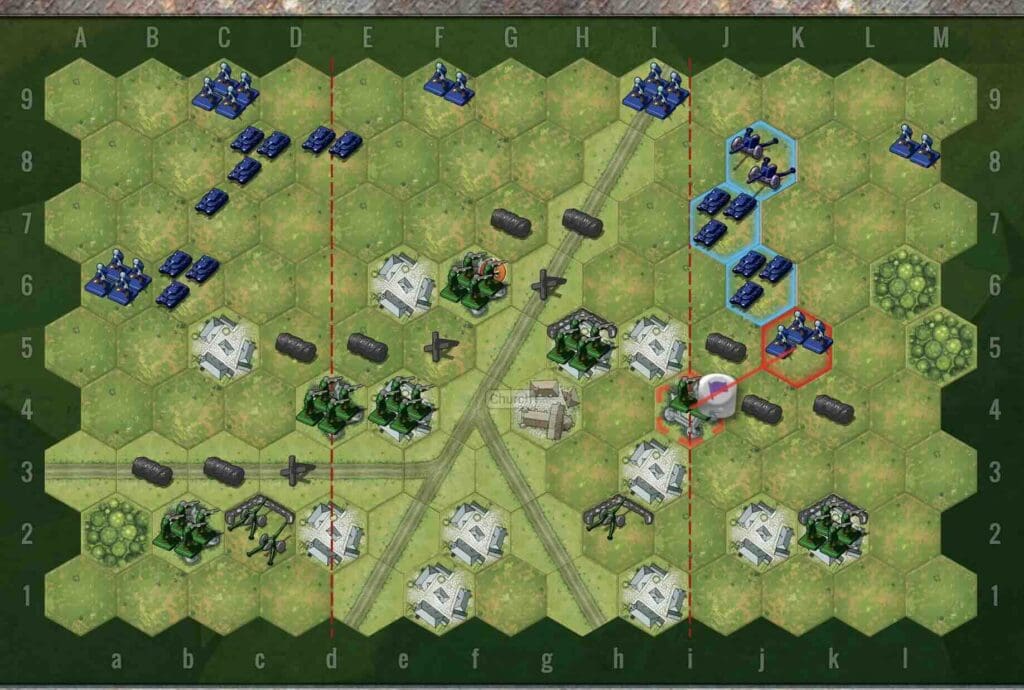
Take a look at this example from the Battle of Warsaw.
|
|
|
|
The enemy is attacking with four units at once, and it stands at only two figures.
|
|
Fortunately, the very first roll is a flag.
|
|
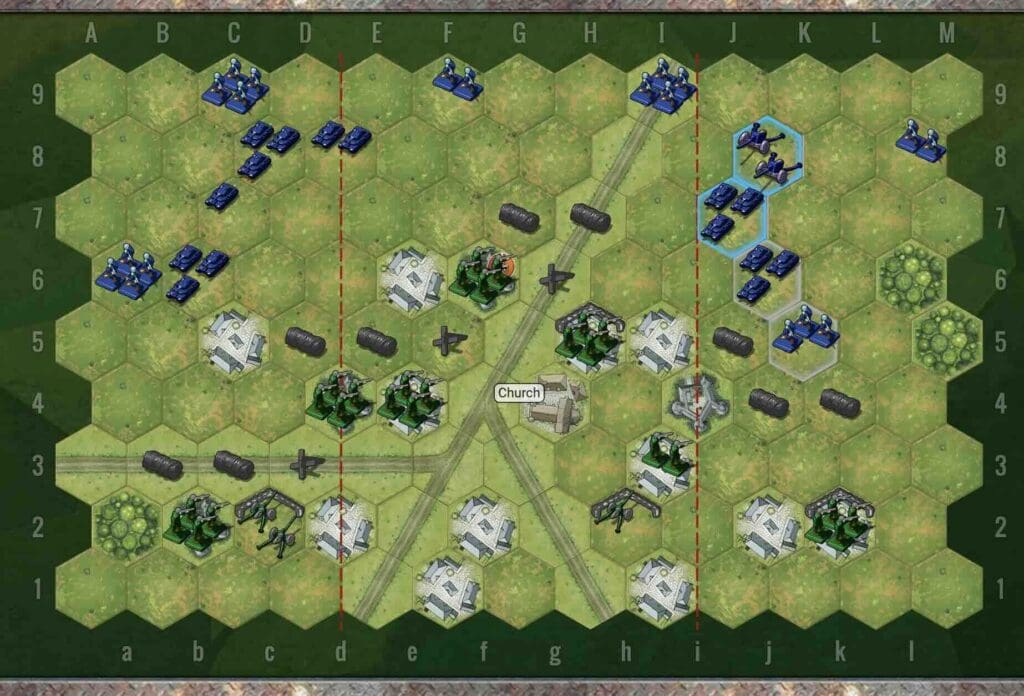
So the Allies retreat, and entire attack against the two Infantry is diminished to a single dice roll from the Artillery.
|
|
|
|
All thanks to a strategic retreat.
|
|
|
|
|
|
|
From General Howitzer:
Battle of Moscow (1941) — German Winter Retreat
|
Operation Typhoon and the Drive on Moscow
|
|
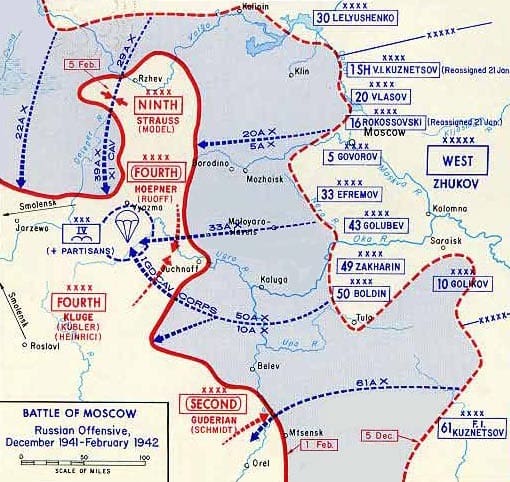
In October 1941, Hitler launched Operation Typhoon, the final push to seize Moscow before winter. The Wehrmacht advanced rapidly at first, encircling Soviet forces at Vyazma and Bryansk and coming within 15–20 miles of the city. German troops could see Moscow’s defensive outskirts; reconnaissance units could see the city’s suburbs.
|
|
|
|
Map of the Soviet 1941-1942 winter counteroffensive.
|
|
( This work is in the public domain in the United States because it is a work prepared by an officer or employee of the United States Government as part of that person’s official duties.)
|
|
|
|
But the offensive was running on fumes:
|
- Exhausted infantry
- Overextended supply lines
- Mud from the autumn rasputitsa
- Insufficient winter clothing
- Dwindling fuel and ammunition
|
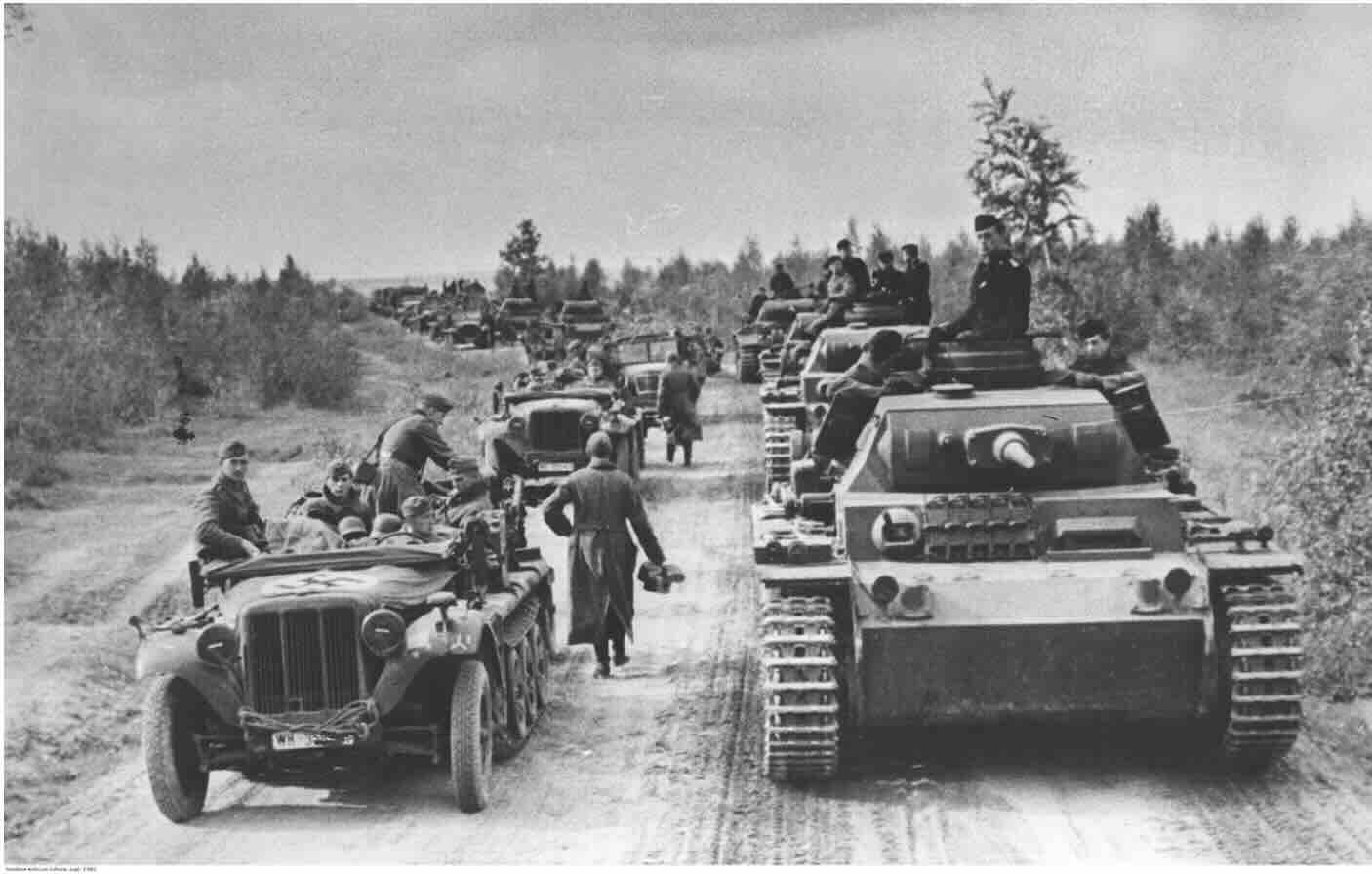
By late November, the offensive stalled along a broad arc west of Moscow.
|
|
|
|
(Narodowe Archiwum Cyfrowe, Warsaw/Public domain)
|
|
On December 5–6, the Red Army launched a massive, coordinated counterattack along the entire front. Newly arrived Siberian divisions—battle-hardened, well-equipped for subzero fighting, and freed from service in the East—joined the fray.
|
Soviet advantages at this moment:
|
- Proper winter gear
- T-34 tanks performing reliably in –30°C
- Superior mobility on snow
- High morale defending the capital
The German Winter Retreat (December 1941 – January 1942)
|
This retreat was not a chaotic collapse but a painful, disciplined fallback that preserved the army from destruction.
|
Key features of the retreat:
|
- Army Group Center pulled back 60–150 miles to more defensible winter lines.
- Front-line units executed fighting withdrawals, using rearguards to slow Soviet advances.
- German command ordered “hedgehog” positions—villages fortified into strongpoints to resist Soviet breakthroughs.
- Temperatures plunged to –40°C, immobilizing equipment and killing unprotected troops.
Despite these conditions, the Wehrmacht avoided total disaster through:
|
- Exceptional small-unit discipline
- Nighttime withdrawals
- Hastily prepared winter strongpoints
- Concentration of remaining armor for mobile defense
The winter retreat marked the first major strategic defeat of the Wehrmacht in WWII.
|
- The myth of German invincibility was broken.
- The Soviets proved they could absorb massive losses and return with overwhelming strength.
- Hitler lost confidence in his generals, intervened more directly, and forbade retreats later in the war—often with disastrous results.
- The Eastern Front entered a long, grinding, attritional phase that Germany could not win.
|
Most importantly, Moscow did not fall, and Germany failed to knock the USSR out of the war in 1941—the failure that ultimately sealed the Reich’s fate.
|
|
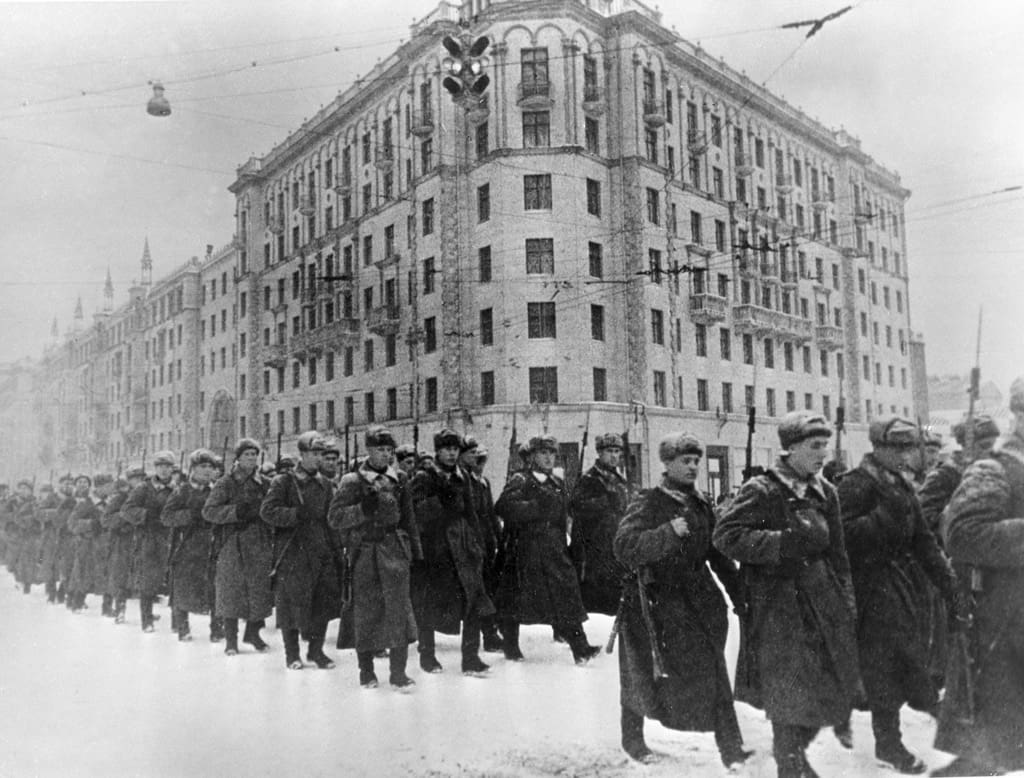
|
|
Fresh forces going to the front from Moscow.
|
|
(This file is licensed under the Creative Commons Attribution-Share Alike 3.0 Unported license.
|
|
Attribution: RIA Novosti archive, image #429 / Oleg Ignatovich / CC-BY-SA 3.0)
|
|
|
|
|
|
Recent Updates to the General Howitzer Community
|
|
|
Scenario of the Week: Pegasus Bridge
|
|
Friday, October 16, 2026: Pegasus Bridge. Lead British infantry against German defenders in the base-game battle for two Normandy bridges.
|
|
|
|
|
|
|
|
Scenario of the Week: Arracourt
|
|
Scenario of the WeekArracourtWestern Front · LorraineComplexity: 46 medals to winSeptember 1944: German Panzer forces counterattacked the U.S. 4th Armored Division near Arracourt, France. Hilly ground and limited visibility turned the battle into a test of maneuver, timing and concentrated armored firepower.Strategy tipsAllies: Use the hills and strong command-card advantage to concentrate fire and isolate exposed German armor.Axis: Coordinate your …
|
|
|
|
|
|
|
|
Scenario of the Week: Sainte-Mère-Église
|
|
Scenario of the WeekSainte-Mère-ÉgliseWestern Front · NormandyDifficulty: 2 · Moderate4 medals to winIn the first hours of D-Day, paratroopers of the U.S. 82nd Airborne dropped around Sainte-Mère-Église to seize the town and block German reinforcements from reaching Utah Beach. The scattered landing turned the fight into a fast, unpredictable struggle.Strategy tipsAllies: Check your command cards before the opening paradrop, then …
|
|
|
|
|
|
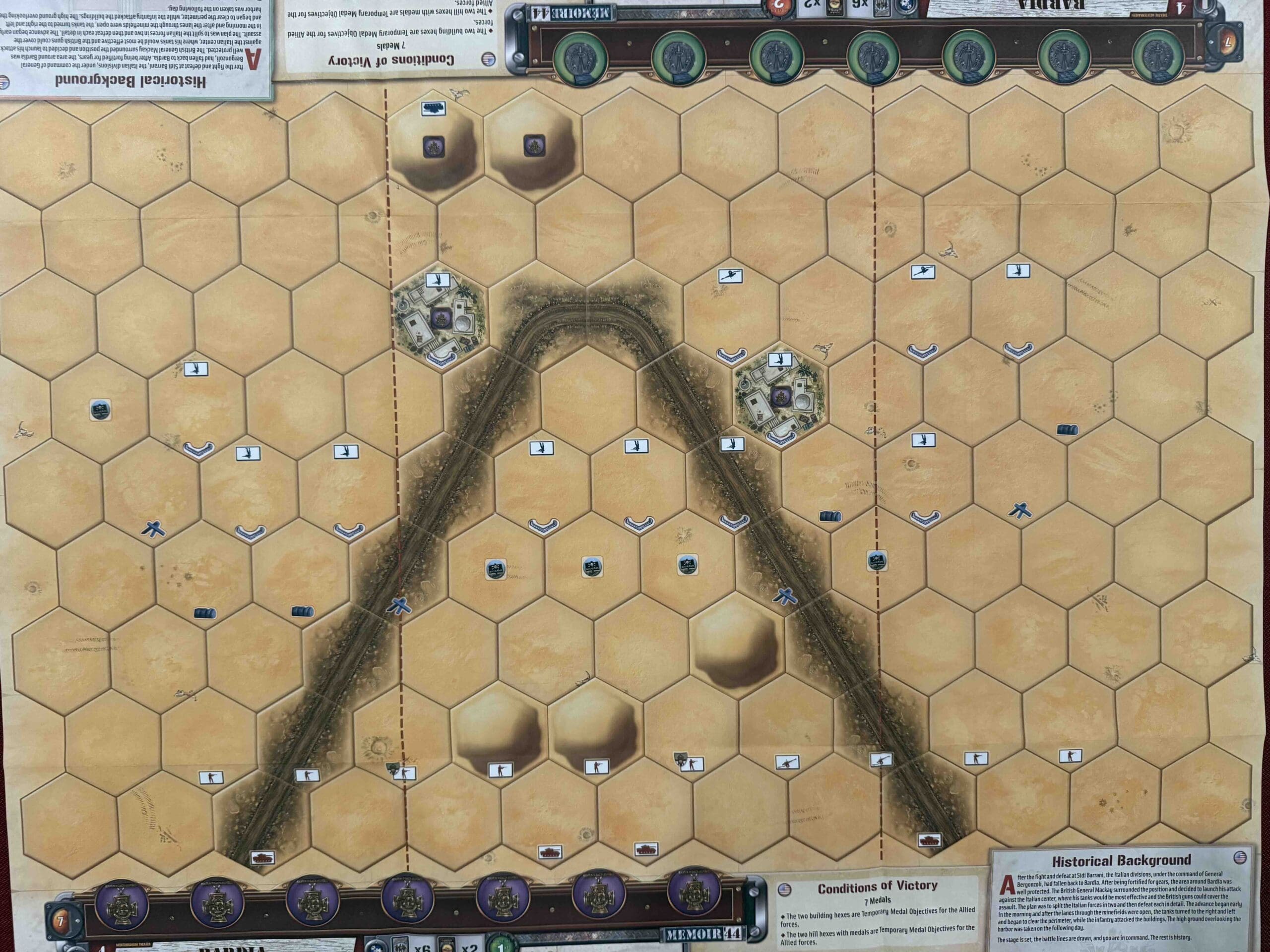
Memoir ’44 Battlefield Map: Bardia / Taukyan Roadblock
|
|
|
Days of Wonder Memoir ’44 double-sided battlefield map featuring Bardia / Taukyan Roadblock.
|
Map only — no pieces or figures included.
|
Includes a nice 12 × 12-inch plastic envelope to protect the map and help keep it in excellent condition.
|
Condition: Lightly Used, Excellent Condition
|
$20.00
|
|
|
|
|
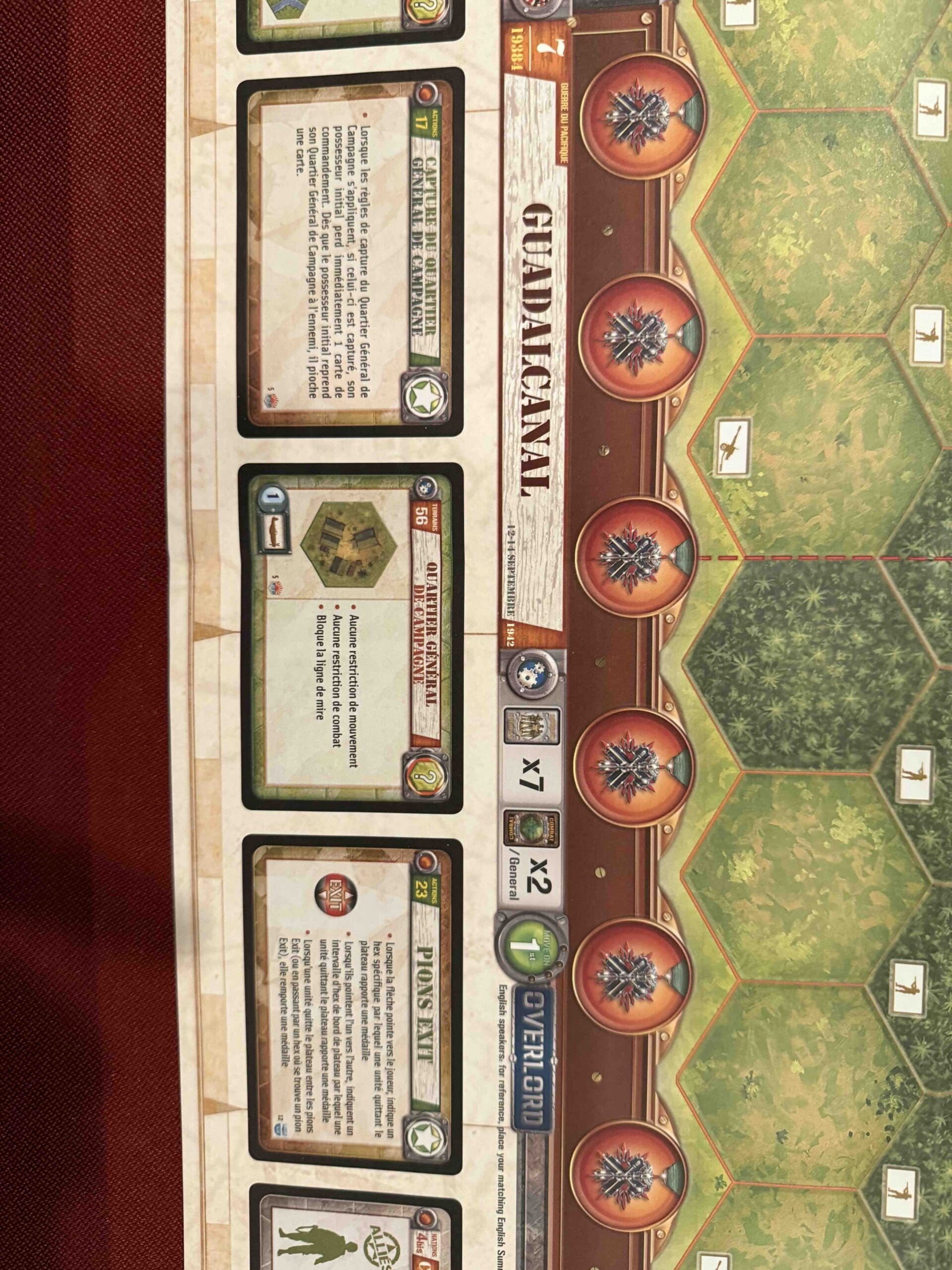
Memoir ’44 Battlefield Map: Guadalcanal / Operation Lightfoot
|
|
|
Days of Wonder Memoir ’44 double-sided battlefield map featuring Guadalcanal / Operation Lightfoot.
|
Map only — no pieces or figures included.
|
Includes a nice 12 × 12-inch plastic envelope to protect the map and help keep it in excellent condition.
|
Condition: Lightly Used, Excellent Condition
|
$20.00
|
|
|
|
|
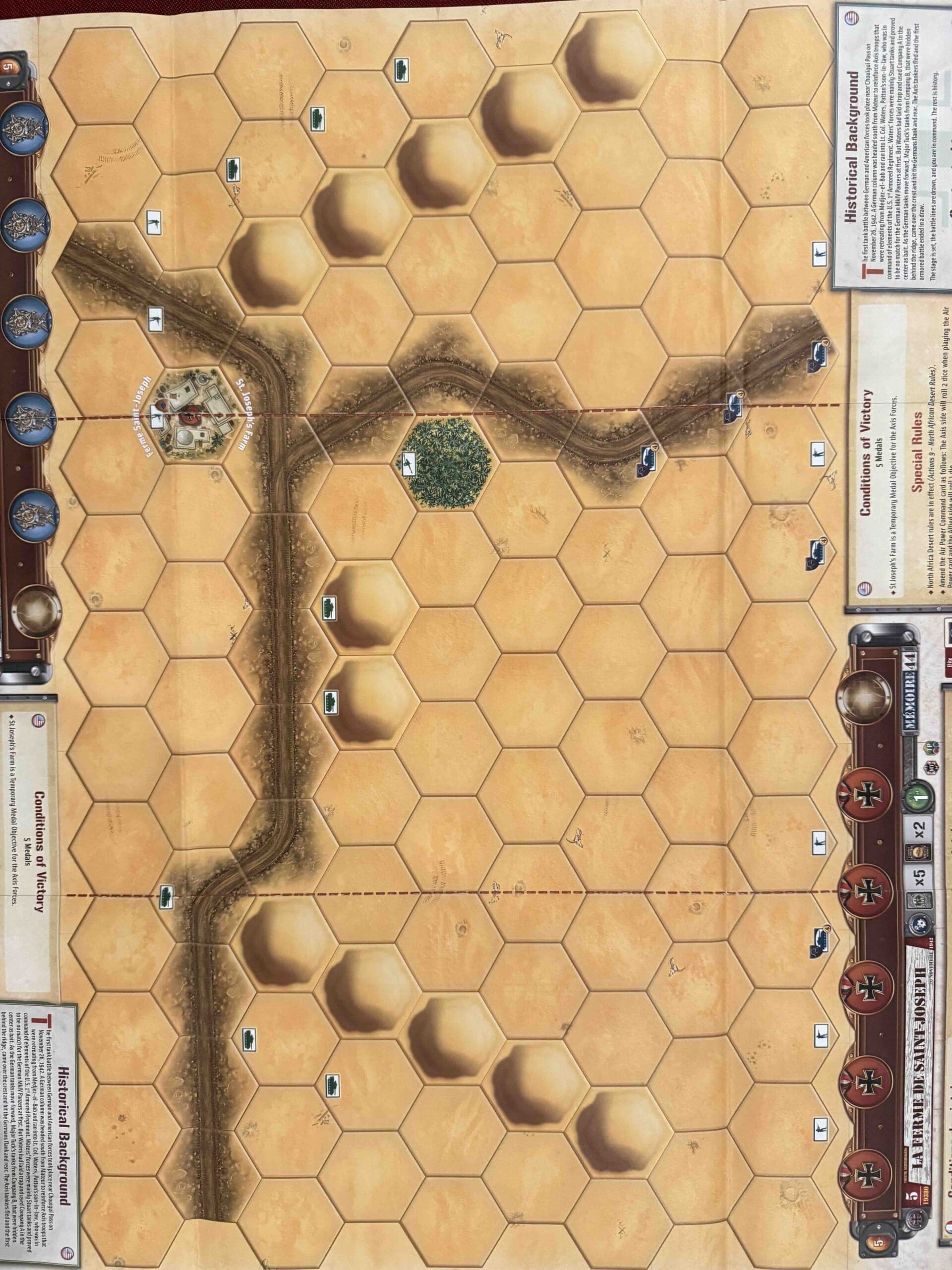
Memoir ’44 Battlefield Map: St. Joseph's Farm / Sbeitla Tunisia
|
|
|
Days of Wonder Memoir ’44 double-sided battlefield map featuring St. Joseph's Farm / Sbeitla Tunisia.
|
Map only — no pieces or figures included.
|
Includes a nice 12 × 12-inch plastic envelope to protect the map and help keep it in excellent condition.
|
Condition: Lightly Used, Excellent Condition
|
$20.00
|
|
|
|
|
Keep track of wins & losses for Axis vs. Allies in each scenario!
|
|
|
|
|
Events, Sitelinks, & Resources
|
|
|
|
|
|
|
Upcoming Memoir 44 EVENTS!
|

|
Their Finest Hour Open
|
Chicago, IL - April 2026 TBD
|
|
|
|
|
|
|
|
|
|
|
|
|